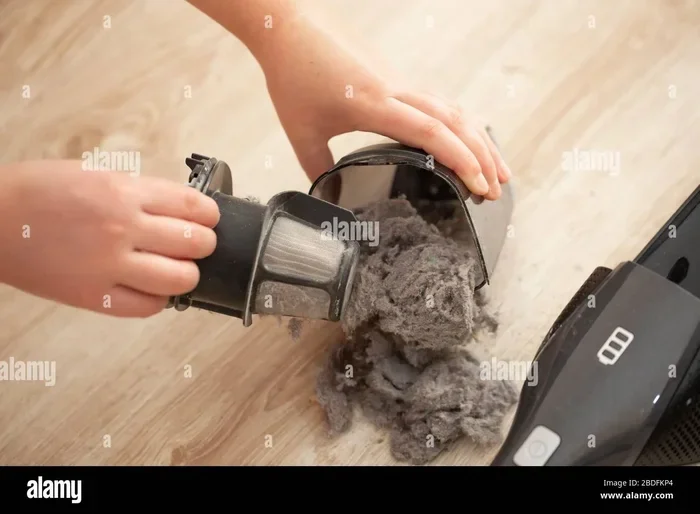
What Happens When You Never Clean a Vacuum Filter
This guide shows you how to What Happens When You Never Clean a Vacuum Filter with practical steps.
A vacuum filter is a small but mighty component. It traps microscopic particles so they don’t get blown back into your home. When you never clean a vacuum filter, that little screen or foam pad becomes a solid wall of dust. Here’s what happens step by step.
📑 Table of Contents
- The Immediate Consequence: Loss of Suction Power
- Motor Strain and Overheating: The Silent Damage
- Energy Bills Go Up
- Health Risks: When Your Vacuum Spreads Allergens
- Unpleasant Odors: The Smell of Neglect
- Reduced Cleaning Efficiency: You Vacuum More, Clean Less
- Damage to Other Parts of the Vacuum
- Your Warranty Might Become Void
- How Often Should You Clean or Replace a Vacuum Filter?
- How to Clean a Vacuum Filter: Simple Steps
- Common Mistakes When Cleaning Filters
- Conclusion
The Immediate Consequence: Loss of Suction Power
The first thing you’ll notice is weaker suction. Your vacuum sounds louder but picks up less. Why? Because the motor can’t pull air through the clogged filter. Instead of creating a strong airflow, it just spins its wheels.
How a Clogged Filter Kills Suction
Think of the filter like a clogged straw. Air has to squeeze through tiny gaps, so the motor has to work overtime. This means:
- Dust and debris stay on your floors.
- You have to go over the same spot multiple times.
- Your vacuum feels heavy and hard to push.
If you’ve been dealing with poor pickup, check the filter first. It’s often the culprit. For a deeper clean on your whole machine, see our guide on how to clean a stick vacuum.
Motor Strain and Overheating: The Silent Damage
When the filter is blocked, the motor can’t cool itself properly. Most vacuum motors rely on the moving air to keep temperatures down. Without that airflow, the motor overheats. Continuous overheating can melt internal components or burn out the motor entirely.
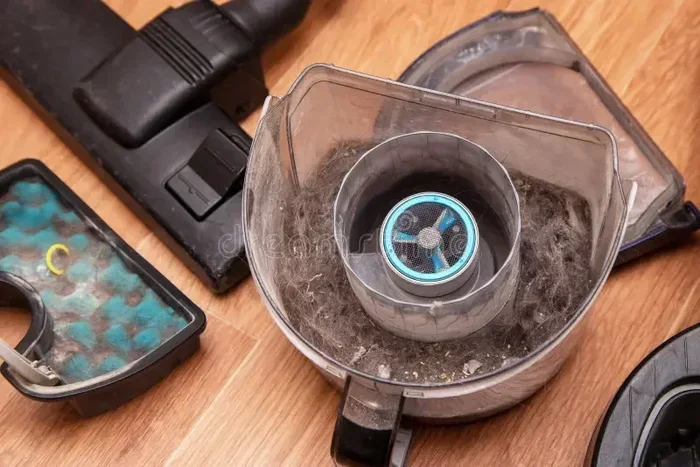
Visual guide about how to dirty vacuum filter close-up
Image source: thumbs.dreamstime.com
Signs Your Motor Is Overheating
- A burning rubber or plastic smell.
- The vacuum suddenly turns off (thermal shutdown).
- Strange noises like whining or grinding.
Once the motor fails, replacing it often costs more than buying a new vacuum. That’s why regular filter maintenance is so important.
Energy Bills Go Up
A vacuum with a dirty filter has to work harder to maintain any suction. That extra effort means it draws more electricity. Over time, those small increases add up. You might not notice a few cents per use, but over a year, it can be significant.
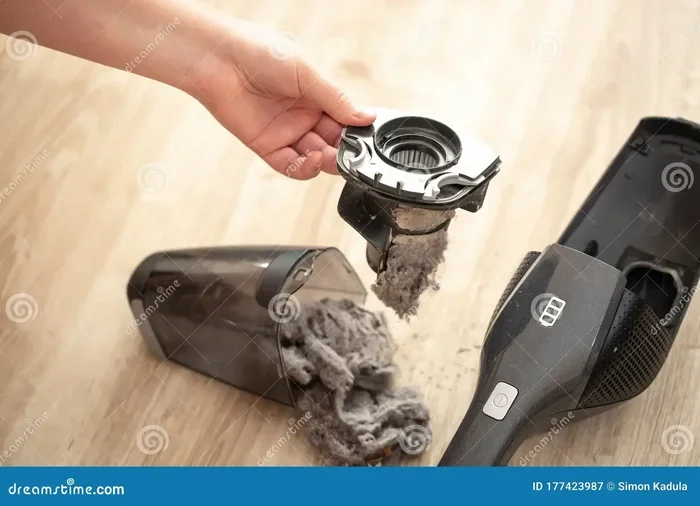
Visual guide about how to dirty vacuum filter close-up
Image source: thumbs.dreamstime.com
According to energy efficiency studies, a clogged filter can increase energy consumption by up to 40%. That’s like running your vacuum on high all the time, even when you’re just picking up light dust.
Health Risks: When Your Vacuum Spreads Allergens
Your vacuum filter is supposed to trap allergens like dust mites, pollen, pet dander, and mold spores. A clean HEPA filter (or high-efficiency filter) captures 99.97% of particles. But a never-cleaned filter becomes so clogged that air bypasses it completely. Then all those trapped particles get blown right back into the room.
What You Breathe In
- Dust mites and their droppings
- Pet dander
- Mold spores
- Bacteria and viruses
For people with asthma or allergies, this can trigger attacks. Even if you don’t have allergies, breathing in concentrated dust over time isn’t healthy. To keep your home truly clean, you need a properly functioning filter. You can learn more about deep cleaning your carpets in our guide on how to deep clean carpets with a vacuum.
Unpleasant Odors: The Smell of Neglect
That musty or sour smell coming from your vacuum? It’s the filter. Trapped dust, moisture, pet dander, and bacteria start to decompose inside the filter. Every time you turn the vacuum on, that smell gets pushed into your home.
How to Fix Vacuum Odors
Cleaning or replacing the filter is the first step. You can also deodorize using baking soda. For persistent smells, check out our detailed guide on how to remove odors from a vacuum cleaner.
Reduced Cleaning Efficiency: You Vacuum More, Clean Less
When suction drops, you instinctively spend more time on each area. You push slower, go over spots repeatedly, and even bump up the power setting. All of that extra effort still doesn’t get your carpets as clean as a simple filter change would. You’re essentially wasting your time.
Comparison: Clean Filter vs. Clogged Filter
| Aspect | Clean Filter | Clogged Filter |
|---|---|---|
| Suction power | 100% | 40% or less |
| Time to clean a room | Normal | 2x longer |
| Energy use per session | Standard | Up to 40% more |
| Air quality | Improved | Worse than before |
| Motor temperature | Safe | Overheating risk |
Damage to Other Parts of the Vacuum
A dirty filter doesn’t just hurt the motor. It affects everything downstream. For bagless vacuums, the cyclones and dustbin can get clogged with fine dust that the filter would normally catch. Brush rolls get coated in grime. Hoses can even collapse under the strain of trying to pull air through a blocked filter.
Parts That Suffer
- Brush roll: Wraps in hair and debris because suction can’t lift it.
- Hose: Clogs more easily.
- Seals and gaskets: Can warp from heat.
- Electronics: Overheating can fry circuit boards.
Regularly cleaning your filter can prevent this domino effect. Learn how to maintain the rest of your machine with our guide on how to clean a bagless vacuum.
Your Warranty Might Become Void
Most vacuum manufacturers state in the manual that filters must be cleaned or replaced according to a schedule. If your motor fails and the technician finds a clogged filter, they can deny your warranty claim. That means you could be paying for an expensive repair out of pocket just because you forgot to rinse a piece of foam.
Always keep your receipts and set a reminder to check the filter monthly.
How Often Should You Clean or Replace a Vacuum Filter?
The answer depends on your filter type and usage. Here’s a quick guide:
- Foam filters: Rinse every 1–2 months, replace every 6 months.
- HEPA filters (washable): Rinse every 3 months, replace annually.
- HEPA filters (non-washable): Tap or brush monthly, replace every 6–12 months.
- Cyclonic vacuums: Clean the pre‑motor filter monthly, post‑motor filter every 3–6 months.
If you have pets or allergies, clean twice as often. For deep instructions on taking care of different filter types, see our complete how to clean vacuum exhaust filter guide.
How to Clean a Vacuum Filter: Simple Steps
Cleaning a filter is easier than you think. Always check your manual first, then follow these general steps.
For Washable Filters
- Turn off and unplug the vacuum.
- Remove the filter according to the manual.
- Tap off loose dust over a trash can.
- Rinse under cold running water (no soap unless instructed).
- Squeeze out excess water – never wring or twist.
- Let dry completely for 24 hours before reinstalling.
For Non‑Washable Filters
- Remove the filter.
- Gently brush or tap it to dislodge dust.
- Use a vacuum with a brush attachment to clean the filter surface.
- If it’s heavily clogged, replace it.
Common Mistakes When Cleaning Filters
- Using soap or detergent on a foam filter – can break down the material.
- Putting a wet filter back in – leads to mold and motor damage.
- Washing a non‑washable HEPA filter – ruins the fibers.
- Forgetting to clean the pre‑motor filter – even cyclonic vacuums need it.
- Using the vacuum without a filter at all – dirt enters the motor.
Conclusion
What happens when you never clean a vacuum filter? Loss of suction, higher energy bills, poor indoor air quality, and possible motor burnout. It’s a small piece of foam or paper, but ignoring it can wreck your vacuum and your home’s air. The good news is that cleaning your filter takes just a few minutes. Set a monthly reminder, check your manual, and follow the steps above. Your vacuum – and your lungs – will thank you.
Key takeaway: Don’t let a dirty filter turn your cleaning tool into a dust spreader. A little maintenance goes a long way in extending your vacuum’s life and keeping your home truly clean.