
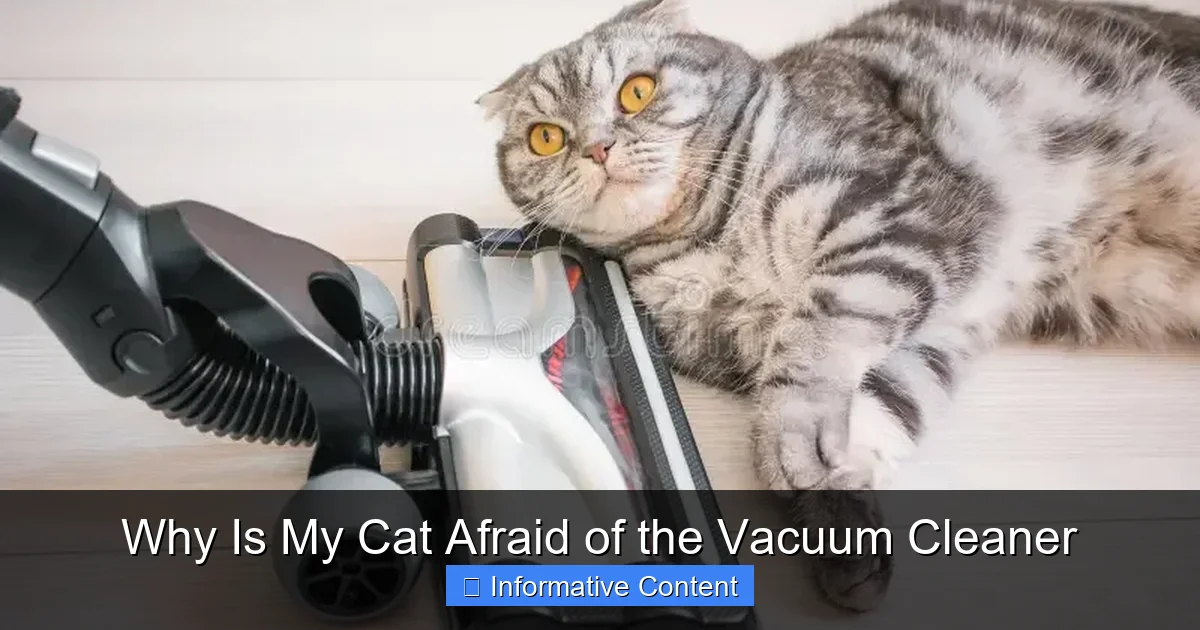
Most cats fear the vacuum cleaner due to its overwhelming noise, sudden movements, and unfamiliar appearance, which trigger their natural predator and prey instincts. This fear isn’t just about sound; it’s a sensory assault combined with a perceived threat. Understanding these underlying causes is key to helping your feline friend feel safer and less stressed during cleaning time.
Why Is My Cat Afraid of the Vacuum Cleaner
Ah, the dreaded vacuum cleaner. For many cat owners, the mere sight or sound of this household appliance signals an impending feline meltdown. Your graceful, confident companion transforms into a terrified fluffball, bolting under the nearest piece of furniture, eyes wide with fear. If you’ve ever found yourself wondering, “Why is my cat afraid of the vacuum cleaner?” you’re certainly not alone. It’s one of the most common and perplexing behaviors cat parents observe.
This isn’t just a quirky cat habit; it’s a genuine fear response rooted in their instincts, senses, and perception of their environment. Understanding the underlying reasons why your cat reacts this way can help you empathize with their distress and, more importantly, develop strategies to make vacuuming less traumatic for everyone involved. Let’s delve deep into the feline psyche to uncover the mystery behind this universal cat-vacuum phobia.
When that noisy monster emerges from the closet, your cat isn’t just being dramatic; they’re genuinely experiencing stress and fear. From their highly tuned senses to their innate survival instincts, there are multiple factors at play. By exploring these reasons, we can begin to create a more harmonious home where both you and your feline friend can coexist peacefully, even during chore time.
Key Takeaways
- Sensory Overload: The vacuum cleaner’s loud, high-pitched noise and strong vibrations are often overwhelming and frightening to a cat’s sensitive ears and bodies.
- Perceived Threat: Its large, moving, unpredictable nature can trigger a cat’s instinct to flee from a potential predator or an unfamiliar, dangerous object.
- Lack of Control: Cats thrive on predictability and control. The vacuum’s sudden appearance and unpredictable path make them feel helpless and stressed.
- Negative Associations: Past traumatic experiences or even just consistent unpleasantness during vacuuming can create a lasting fear response.
- Individual Differences: A cat’s personality, past experiences, and breed can influence how intensely they react to the vacuum cleaner. Some are more sensitive than others.
- Gradual Desensitization: Helping your cat involves slow, positive introductions, reducing the vacuum’s perceived threat, and creating safe zones.
Quick Answers to Common Questions
Can cats ever get used to the vacuum cleaner?
Yes, many cats can learn to tolerate the vacuum cleaner, especially with gradual desensitization and positive reinforcement. Some may never love it, but they can learn to cope by retreating to a safe space.
Is it okay to force my cat to stay in the room while I vacuum?
No, it is generally not recommended to force your cat to stay in the room. This can increase their fear and stress, potentially leading to anxiety-related behavioral issues or aggression towards you.
Should I give my cat treats while the vacuum is running?
You can try, but only if your cat is calm enough to take the treat. If they are too scared to eat, it means they are past their coping threshold. The goal is to provide treats when the vacuum is far away or off, gradually associating the vacuum’s presence with positive things.
My cat hides for hours after vacuuming. Is this normal?
Yes, it’s quite normal for very fearful cats to hide for an extended period after a stressful event like vacuuming. Allow them to emerge on their own time, and ensure their hiding spot is undisturbed.
Are quiet vacuums better for cats?
Absolutely. A quieter vacuum cleaner can significantly reduce the sensory overload for your cat, making the experience less frightening and potentially easier for them to tolerate or ignore.
📑 Table of Contents
The Sensory Overload: Sound, Vibration, and Smell
One of the primary reasons why your cat is afraid of the vacuum cleaner lies in its profound impact on their highly sensitive sensory organs. What might be a tolerable noise to us is an assault on their ears, and what feels like a mild vibration to our hands is a tremor throughout their entire body.
A Symphony of Stress: The Noise Factor
Cats possess an incredible sense of hearing, far superior to our own. While human hearing typically ranges up to 20,000 Hz, cats can hear frequencies up to 64,000 Hz. This means they pick up sounds we can’t even perceive. The vacuum cleaner, by human standards, is already quite loud (often 70-80 decibels or more). To a cat, that volume is amplified, making it an unbearable, jarring racket.
Think about it: many vacuums emit a high-pitched whine, often accompanied by a deep rumble. These sounds mimic distress signals or the roars of large animals in the wild, triggering an immediate fight-or-flight response. The sudden onset and unpredictable nature of these sounds further exacerbate their anxiety. It’s not just the volume, but the quality of the sound that sends shivers down their feline spines.
Vibrations and Air Currents: More Than Just Sound
It’s not just the noise that spooks them. Vacuums create significant vibrations. These vibrations travel through the floor and objects, which a cat can feel through their paws and entire body. To a cat, this might feel like the ground is shaking, signaling a natural disaster or the approach of a very large, heavy creature. This tactile sensation, combined with the auditory assault, creates an overwhelming sensory experience.
Additionally, vacuum cleaners displace a lot of air. While not as significant as sound or vibration, the sudden gusts of air or the strong suction at the nozzle can be unsettling. A cat’s whiskers are incredibly sensitive to air currents, and these unexpected changes in their immediate environment can contribute to their feeling of unease and vulnerability.
The Smell of “Clean”: An Unfamiliar Odor
While less common than sound and vibration, the smell emitted by a vacuum cleaner can also play a role. The scent of hot motor oil, dust, or even cleaning agents caught in the exhaust can be novel and therefore suspicious to a cat’s keen sense of smell. Cats are creatures of routine and familiar scents, and anything new or artificial can be perceived as a potential threat or just plain unpleasant.
The Threat Assessment: Size, Movement, and Predator Instincts
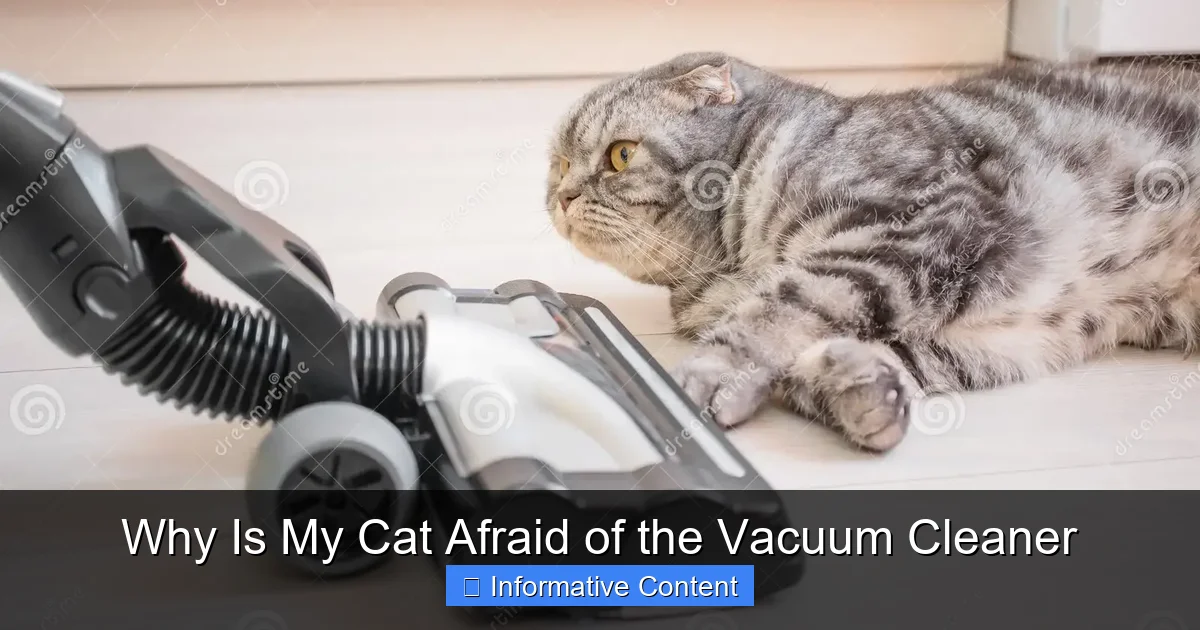
Visual guide about Why Is My Cat Afraid of the Vacuum Cleaner
Image source: thumbs.dreamstime.com
Beyond the sensory overload, the physical attributes and behavior of the vacuum cleaner itself trigger deep-seated instincts in your cat. It’s a large, looming, unpredictable object that defies all their expectations of a safe environment.
A Large, Unfamiliar, Moving Object
Imagine a large, strange creature suddenly appearing in your home, moving erratically and making a terrifying noise. That’s how many cats perceive the vacuum. Its size alone can be intimidating. Cats are small predators and prey animals, hardwired to assess threats. A vacuum cleaner is much larger than them, moving purposefully and seemingly independently.
The way it moves is also unsettling. It might dart around corners, change direction suddenly, or approach them without warning. This unpredictable movement is a huge red flag for a cat, as unpredictable movement often signals a predator or something dangerous that needs to be avoided. Unlike humans, cats don’t understand that the vacuum is controlled by you; to them, it’s a self-propelled monster.
Defying Natural Laws: No Obvious Predator
Cats rely on visual cues to identify threats. They understand what a dog or another cat looks like. The vacuum cleaner, however, doesn’t fit any known category. It has no eyes, no discernible face, no fur, and no recognizable body language. This alien appearance makes it even more frightening because their brains struggle to classify it, leading to heightened anxiety.
In the wild, unusual, large, noisy objects are almost always dangerous. A cat’s instinct tells them to flee or hide from such anomalies. The vacuum cleaner, therefore, triggers their innate prey response, even if they are accomplished predators themselves in other contexts. Their priority is self-preservation, and the vacuum represents a significant challenge to their safety.
Lack of Control and Unpredictability
Cats are creatures of habit and control. They thrive in predictable environments where they understand the rules and know what to expect. The vacuum cleaner shatters this sense of control and introduces a high degree of unpredictability into their world.
Disruption of Routine and Territory
Your cat views your home as their territory, a safe haven where they are the masters. The vacuum cleaner invades this territory, moving into spaces usually reserved for quiet naps or confident patrols. It disrupts their scent markers and alters the familiar landscape, if only temporarily. This intrusion is a direct challenge to their sense of security and ownership.
When the vacuum comes out, their usual routine is thrown into disarray. Their favorite napping spot might suddenly become a no-go zone, or their escape routes might be blocked by the moving machine. This lack of predictability can be incredibly stressful for an animal that finds comfort in established patterns.
No Escape from the “Monster”
While some cats might bravely hiss or swat at the vacuum, most opt for immediate flight. They seek refuge in high places or secluded spots where they feel safe and hidden. The problem arises when the vacuum cleaner continues its relentless pursuit, seemingly cornering them or blocking their perceived escape routes.
The feeling of being trapped or having their safe spaces invaded without warning is terrifying. Cats need to feel that they have an escape plan, that they can retreat to a secure location where they won’t be bothered. If the vacuum keeps moving closer, or if they feel their hiding spot is compromised, their fear intensifies dramatically. This feeling of helplessness is a major contributor to why your cat is afraid of the vacuum cleaner.
Negative Associations and Past Experiences
A cat’s learning experiences, both positive and negative, profoundly shape their behavior. If early encounters with the vacuum cleaner were traumatic, or if they’ve consistently associated it with unpleasant events, their fear can become deeply ingrained.
The First Frightening Encounter
Perhaps your kitten had a particularly startling first encounter with the vacuum. Maybe it suddenly turned on right next to them, or they got accidentally bumped. Such an experience, especially during critical developmental periods, can create a lifelong aversion. Cats have excellent long-term memory for things that cause them fear or pain.
Even if there wasn’t a single traumatic event, repeated exposure to the loud noise and sudden movements without any positive reinforcement can solidify their negative perception. Every time the vacuum comes out, the cat remembers the unpleasantness, and the fear response is reinforced.
No Positive Counter-Conditioning
Often, we don’t intentionally try to make vacuuming a positive experience for our cats. We simply vacuum, and they get scared. Without any efforts to counter-condition their fear, the negative association continues unchecked. Unlike dogs, who might be trainable to associate the vacuum with treats or play, many cats are too overwhelmed to process such positive inputs during the event itself. The goal, then, becomes managing their environment to minimize the negative impact.
Understanding Individual Cat Personalities and Sensitivities
Just like people, every cat is an individual with their own personality, past, and sensitivities. Not all cats react to the vacuum cleaner with the same intensity.
Nature vs. Nurture: Genetics and Early Life
Some cats are naturally more timid or anxious due to their genetics. Certain breeds might also be predisposed to higher anxiety levels. For instance, highly sensitive or skittish breeds might react more strongly than more laid-back or confident cats.
Early life experiences also play a huge role. A cat that was poorly socialized as a kitten or had traumatic experiences before adoption might be more prone to fear responses, including the vacuum cleaner. A cat that grew up in a noisy household might be more accustomed, but even then, the vacuum is a special kind of noise.
Confidence Levels and Resilience
A confident cat, secure in their territory and comfortable with novelty, might exhibit less extreme fear. They might simply observe from a distance or retreat calmly. A less confident cat, however, might panic, hide for hours, or even exhibit stress-related behaviors like inappropriate urination or aggression.
Understanding your cat’s baseline personality is crucial. If your cat is generally anxious, their reaction to the vacuum cleaner will likely be more pronounced. If they’re typically calm and bold, their vacuum-induced fear might be more about the immediate sensory assault than a general anxiety problem.
Strategies to Help Your Cat Cope
Now that we understand why your cat is afraid of the vacuum cleaner, what can you do about it? While you might not turn your cat into a vacuum enthusiast, you can certainly help reduce their stress and make cleaning days a little more bearable.
Create a Safe Retreat
The simplest and often most effective strategy is to provide your cat with a clear escape route and a designated safe haven *before* you start vacuuming. This could be a room you don’t plan to vacuum, a high cat tree, a cozy cat cave, or even a carrier covered with a blanket.
- Clear Communication: Let your cat know vacuuming is about to happen. A gentle ritual, like putting them in their safe room with a treat, can help them associate the upcoming noise with a pleasant departure.
- Access Denied: Close the door to the room you’re vacuuming to prevent them from entering and getting too close to the machine.
- Comfort Zone: Ensure their safe space has fresh water, a litter box, and perhaps a favorite toy or blanket.
Desensitization and Positive Reinforcement (Gradual Approach)
This method involves slowly introducing the vacuum cleaner in a non-threatening way, pairing it with positive experiences. This requires patience!
- Phase 1: Silent Presence: Start by simply bringing the vacuum out and letting it sit in a visible spot without turning it on. Reward your cat with treats or praise if they remain calm, curious, or even just don’t bolt. Do this for a few days.
- Phase 2: Muted Sounds: Plug in the vacuum and turn it on for a second or two in another room, far away from your cat. Immediately turn it off and offer a high-value treat. Gradually increase the duration and decrease the distance over several sessions, always stopping before your cat shows signs of panic.
- Phase 3: Controlled Movement: Once your cat tolerates the sound from a distance, try moving the *unplugged* vacuum a short distance. Again, pair this with treats. Slowly introduce brief, quiet vacuuming sessions, starting far away and gradually getting closer.
- Interactive Play: Use a wand toy to play with your cat while the vacuum is *off* and present. This helps create a positive association with the vacuum’s presence.
Minimize the Noise and Disruption
There are practical steps you can take to make the vacuum less intrusive.
- Invest in a Quieter Vacuum: If you’re in the market for a new vacuum, consider models specifically designed for quiet operation. Robotic vacuums, while still noisy, can often be scheduled to run when your cat is less present or in their safe room.
- Use Attachments: Handheld attachments can sometimes be quieter or allow you to clean smaller areas without firing up the main unit.
- Schedule Strategically: Try to vacuum when your cat is typically asleep, eating, or already distracted. Some owners vacuum when their cat is getting fed, providing a strong positive distraction.
- Ear Protection: While not practical for every cat, some highly sensitive felines might benefit from specialized calming ear muffs designed for pets during extremely loud events. This is rare but an option for severe cases.
Don’t Force Interaction or Comfort
When your cat is scared, forcing them out of their hiding spot or trying to pick them up can worsen their fear and erode trust.
- Respect Their Space: Allow them to retreat and hide. Their instinct is to find safety.
- No Punishment: Never punish your cat for being scared. This will only increase their anxiety and negatively impact your bond.
- Avoid the Chase: Don’t vacuum directly towards your cat or corner them. This will make the vacuum seem even more aggressive and threatening.
Consider Professional Help
If your cat’s fear is extreme, leading to significant stress, health issues, or aggression, consult your veterinarian. They may recommend anti-anxiety medication, pheromone diffusers (like Feliway), or refer you to a certified feline behaviorist who can provide tailored strategies.
In conclusion, understanding why your cat is afraid of the vacuum cleaner isn’t about simply dismissing it as a silly fear. It’s about recognizing that this common household appliance represents a multi-sensory assault and a perceived threat to your feline friend’s deeply ingrained instincts. By appreciating their unique perspective, creating safe spaces, and implementing gradual, positive reinforcement techniques, you can transform vacuuming day from a source of terror into a manageable, less stressful event for your beloved cat. Patience, empathy, and consistent effort are your best tools in helping your furry companion cope with the “monster” in the closet.
🎥 Related Video: Help! My Cat is Afraid of Vacuum Cleaners (A Behaviorist Explains)
📺 The Cat Chronicles
Liked this video? See the full version on the main All About Cats YouTube channel: …
Frequently Asked Questions
Why do some cats seem unfazed by the vacuum cleaner while others panic?
Individual cat personalities, early life experiences, and genetic predispositions play a significant role. Cats that were well-socialized to various sounds as kittens or have naturally more confident temperaments might be less bothered, while anxious or timid cats will likely react more strongly.
Can vacuum cleaner fear lead to other behavioral problems?
Yes, chronic stress from vacuum cleaner fear, or any other fear, can manifest in other behavioral problems. These might include inappropriate urination or defecation, increased aggression, excessive grooming, or withdrawal, as stress can undermine a cat’s overall well-being.
Is it better to vacuum frequently for short periods or infrequently for long periods?
Generally, vacuuming for shorter, more frequent periods can be less stressful than infrequent, long sessions. This way, the cat experiences less prolonged exposure to the stressor, and they may learn that the “threat” passes quickly.
What if my cat tries to attack the vacuum cleaner?
If your cat attacks the vacuum, they are likely experiencing extreme fear and trying to defend themselves or “fight” the perceived threat. In this scenario, it’s crucial to remove your cat to a safe, quiet room immediately and avoid provoking further aggression. Consult a vet or behaviorist for aggressive responses.
Are pheromone diffusers helpful for cats afraid of vacuums?
Pheromone diffusers, like Feliway, can help create a calmer environment for some cats by releasing synthetic feline facial pheromones that mimic a cat’s natural calming signals. While not a cure, they can reduce overall anxiety, potentially making your cat more receptive to desensitization techniques during vacuuming.
Should I try to calm my cat with petting while the vacuum is running?
It’s generally best to avoid trying to pet or hold a scared cat while the vacuum is running. Your cat might be too stressed to appreciate the comfort, and you could inadvertently reinforce their fear by drawing attention to their anxious state. Instead, focus on providing a safe retreat where they can calm down on their own terms.