

If you’re asking, “why does my dog bark at the vacuum cleaner?” know you’re not alone! This common behavior stems from a mix of sensory overload, instinctual reactions to perceived threats, fear, and even learned attention-seeking. Understanding these root causes is the first step to helping your dog feel more comfortable and turning stressful cleaning times into peaceful moments.
Ah, the vacuum cleaner. To us, it’s a modern marvel, a necessary tool for a clean home. To many of our beloved canine companions, however, it’s a roaring, moving monster, a sworn enemy, or perhaps even a mischievous playmate. If you’ve ever found yourself asking, “why does my dog bark at the vacuum cleaner?” as your furry friend goes into a frenzy of barks, growls, and lunges, you are certainly not alone. This scene plays out in homes all over the world, turning routine chores into a chaotic battleground.
It’s natural to feel a mix of frustration and amusement when your usually calm dog transforms into a valiant (or terrified) warrior at the sight and sound of the vacuum. But beneath the comical antics, there are legitimate reasons for your dog’s strong reaction. Understanding these reasons is the first step toward helping your dog cope, reducing their stress, and reclaiming peace during cleaning time. Let’s delve deep into the canine mind to uncover why this household appliance can cause such a ruckus.
Key Takeaways
- Sensory Overload: The vacuum cleaner is loud, moves erratically, vibrates, and smells unusual, overwhelming a dog’s sensitive senses and making it seem like a large, threatening intruder.
- Instinctual Responses: Dogs often perceive the vacuum as a predator, prey, or an intruder invading their territory, triggering natural fight, flight, or herding instincts.
- Fear and Anxiety: Past negative experiences, a lack of early socialization, or a general noise phobia can cause genuine fear and anxiety, leading to barking as a coping mechanism.
- Learned Behavior: Sometimes, dogs learn that barking at the vacuum gets them attention (even negative attention) or makes the “monster” go away, inadvertently reinforcing the behavior.
- Desensitization and Counter-Conditioning: Gradually exposing your dog to the vacuum in a controlled, positive way, paired with treats and praise, is key to changing their emotional response.
- Environmental Management: Creating a safe, quiet space for your dog during vacuuming, or using gates and leashes, can prevent reactive behaviors and reduce stress.
- Patience and Consistency: Addressing why your dog barks at the vacuum cleaner requires time, patience, and consistent positive reinforcement to help them adapt and feel secure.
Quick Answers to Common Questions
Why do dogs go crazy when you vacuum?
Dogs often “go crazy” when you vacuum due to a combination of sensory overload (loud noise, erratic movement, strange smells), instinctual responses (seeing it as prey or an intruder), fear, or even learned behavior where barking gets them attention.
Can I train my dog not to bark at the vacuum?
Yes, absolutely! You can train your dog not to bark at the vacuum using techniques like desensitization, counter-conditioning, positive reinforcement, and by creating a safe space for them during cleaning time.
Is it fear or aggression when my dog barks at the vacuum?
It can be either, or a mix. Barking and lunging can stem from fear (trying to make the scary thing go away) or from instinctual aggression (trying to protect territory or chase perceived prey). Observing other body language cues is important to distinguish between them.
Should I just put my dog in another room when I vacuum?
Yes, separating your dog by putting them in another room or a crate with a comforting chew toy can be an effective management strategy. This prevents them from practicing the unwanted behavior and reduces their stress during vacuuming.
Why does my dog bark at the vacuum cleaner even if it’s off?
If your dog barks at the vacuum cleaner even when it’s off, it’s likely due to a strong negative association or learned fear. They might perceive the visual presence of the vacuum as a threat, anticipating its future noise and movement.
📑 Table of Contents
The Sensory Overload: Why Vacuums Are So Threatening
Imagine experiencing the world with senses far more acute than your own. That’s what it’s like for your dog. For them, a vacuum cleaner isn’t just a noisy machine; it’s a multi-sensory assault that can be genuinely overwhelming and frightening. When you ask yourself, “why does my dog bark at the vacuum cleaner?”, remember their incredible sensory abilities.
The Roaring Monster: Loud Noises and Frequencies
One of the most obvious reasons for your dog’s reaction is the sheer volume. Vacuum cleaners are loud, often emitting sounds in the 70-80 decibel range, which can be perceived as significantly louder by dogs whose hearing is far superior to ours. They can hear sounds at much higher frequencies than humans, meaning the high-pitched whine of the motor or the suction mechanism can be particularly grating or even painful. The sudden start-up, the constant drone, and the unpredictable changes in pitch as it sucks up debris can be very unsettling. This isn’t just a nuisance for them; it can genuinely feel like a threat.
Erratic Movement and Intrusive Presence
Beyond the noise, consider how the vacuum moves. It’s a large, strange object that rolls erratically across the floor, often directly into what your dog perceives as their personal space or territory. It seems to have a mind of its own, bumping into furniture, changing direction suddenly, and getting closer and closer. To a dog, this unpredictable, seemingly aggressive movement can mimic the behavior of a predatory animal or an intruder. It’s not a friendly, familiar object; it’s a looming presence that invades their safe zones, prompting a defensive reaction.
Strange Smells and Vibrations
While less obvious to us, smell and vibration also play a significant role. Vacuums can emit peculiar odors – a mix of dust, stale air, and hot motor oil – which are entirely foreign and potentially alarming to a dog’s sensitive nose. Dogs experience the world through scent, and an unusual, strong smell emanating from a moving object can be deeply unsettling. Furthermore, dogs can feel the vibrations of the vacuum through the floor. These low-frequency tremors can be disorienting and contribute to the overall sense of unease, making the vacuum cleaner feel like a larger, more powerful entity than it actually is.
Instinctual Responses: The Prey Drive and Territoriality
Dogs are creatures of instinct, and many of their reactions to the vacuum cleaner can be traced back to ancient behavioral patterns. When your dog barks at the vacuum, they might be responding to something deep-seated in their evolutionary past.
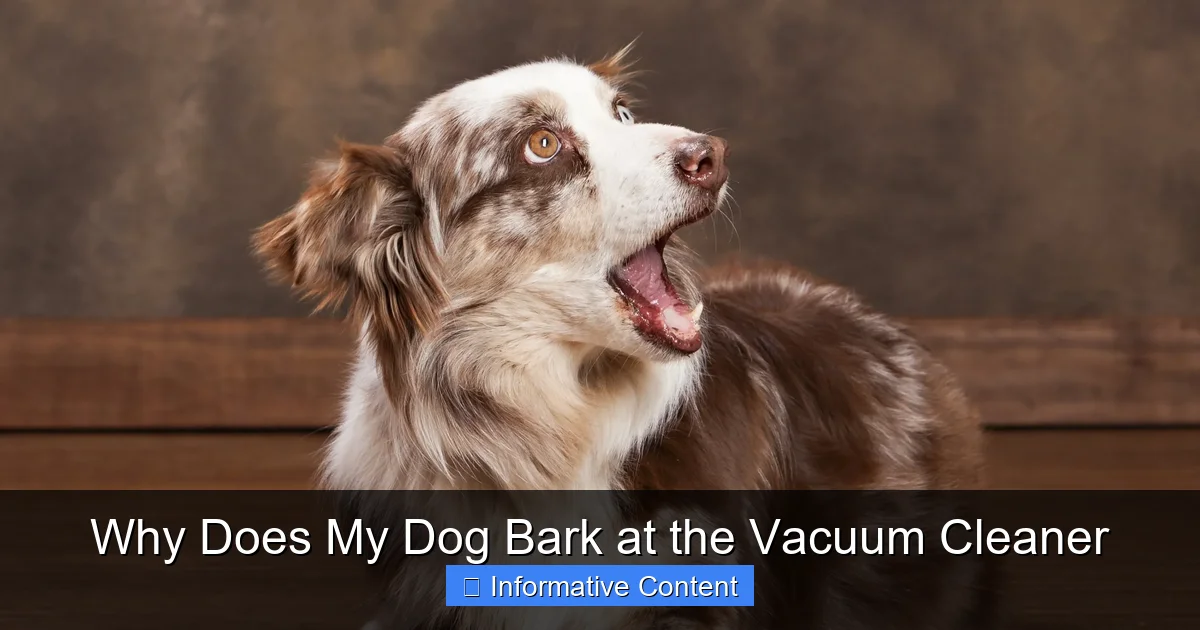
Visual guide about Why Does My Dog Bark at the Vacuum Cleaner
Image source: firstforwomen.com
The Intruder Alert: Protecting Their Territory
Dogs are naturally territorial animals. Their home, their yard, and even your presence are often seen as their domain and their pack. When a loud, moving object like a vacuum cleaner enters this space, it can be perceived as an intruder or a threat to their territory and their family (you!). Barking, growling, and lunging are classic defensive behaviors meant to warn off or scare away the perceived threat. Your dog isn’t just being naughty; they are actively trying to protect you and their home from this strange invader. This strong protective instinct is a primary reason why does my dog bark at the vacuum cleaner.
Prey Drive in Action: Chasing the “Monster”
For some dogs, particularly those with a strong prey drive, the vacuum’s movement and sound can trigger a hunting response. The fast, erratic motion, coupled with a high-pitched whine, might resemble a small animal fleeing. Your dog might instinctively chase, bark at, or try to “catch” the vacuum, just as they might chase a squirrel or a ball. This isn’t fear, but rather an excited, instinctual drive to pursue and incapacitate what they perceive as prey. Breeds originally bred for hunting or herding might be particularly prone to this kind of reaction.
Herding the “Threat”: Keeping Things in Order
Certain breeds, especially herding dogs like Border Collies or Australian Shepherds, have a natural instinct to control movement and gather things. The vacuum’s unpredictable path might trigger their herding instincts, prompting them to try and “manage” or “round up” the unruly machine. They might bark to direct it, nip at its wheels, or try to cut off its path, all in an attempt to bring order to the chaos it creates. This behavior, while seemingly aggressive, is rooted in their desire to maintain control and ensure everything is where it should be.
Fear and Anxiety: When the Bark is a Cry for Help
Sometimes, the barking isn’t about instinct or protection; it’s a genuine expression of fear or anxiety. If you find yourself asking, “why does my dog bark at the vacuum cleaner with such intensity?”, consider if fear is at play.
Negative Past Experiences Matter
A dog’s reaction to the vacuum can often be shaped by past experiences. Perhaps they were startled by it as a puppy, had a bad interaction, or witnessed someone else react negatively to it. A single frightening incident can create a lasting negative association. Once this fear is established, every time the vacuum comes out, it triggers that traumatic memory, leading to an immediate stress response. They might not remember the exact details, but their emotional memory will vividly recall the fear.
Noise Phobia and Generalized Anxiety
Some dogs suffer from noise phobia, an intense, irrational fear of loud sounds. Thunderstorms, fireworks, and yes, vacuum cleaners, can trigger extreme distress. Symptoms might include trembling, hiding, panting excessively, destructive behavior, and frantic barking. For these dogs, the vacuum is not just annoying; it’s a source of genuine terror. Similarly, dogs with generalized anxiety might be easily overwhelmed by any novel or loud stimulus, and the vacuum simply pushes them over their emotional threshold. Their barking is a desperate plea for the scary thing to stop.
Lack of Early Socialization
A lack of early exposure to various sights, sounds, and experiences during a dog’s critical socialization period (roughly 3-16 weeks) can contribute to fear-based reactions later in life. If a puppy wasn’t gradually and positively introduced to household noises like the vacuum, they might perceive it as a threat because it’s unfamiliar and sudden. Proper socialization helps puppies learn that strange sounds and objects are generally safe, fostering resilience and confidence. Without this foundation, the world can seem like a much scarier place, and the vacuum cleaner just one of many terrifying encounters.
Learned Behavior and Attention Seeking
While sensory overload, instinct, and fear are primary drivers, sometimes your dog’s vacuum-barking behavior can be a learned response, consciously or unconsciously reinforced by you.
Accidental Reinforcement: You Might Be Feeding the “Monster”
It’s incredibly common for owners to accidentally reinforce the very behavior they want to stop. When your dog starts barking at the vacuum, what’s your first reaction? Do you talk to them, pick them up, offer comfort, or perhaps even get annoyed and try to shoo them away? To your dog, any of these reactions, even negative ones, can be perceived as attention. They think, “Aha! When I bark at this thing, my human pays attention to me!” If the barking also makes the “monster” go away (because you turn off the vacuum or move it to another room), they learn that their barking is effective. This cycle of accidental reinforcement strengthens the behavior over time, making it harder to break. So, when you wonder, “why does my dog bark at the vacuum cleaner?” remember your own reactions.
The Boredom Factor: A Stimulating “Game”
For some dogs, especially those who are under-exercised or lacking sufficient mental stimulation, barking at the vacuum cleaner can simply be an exciting event in an otherwise dull day. It offers an opportunity for intense activity, a chance to expend pent-up energy, and a break from boredom. They might not be fearful or aggressive; they might just be seeing it as a stimulating “game” to engage with. In these cases, the barking is less about fear and more about an outlet for their energy and a desire for interaction, even if it’s with a cleaning appliance.
Seeking Connection (Even Negative): “Look at Me!”
Dogs are social creatures and crave interaction with their humans. If a dog isn’t getting enough positive attention, or if they’ve learned that negative attention is better than no attention at all, they might engage in disruptive behaviors like barking at the vacuum to get a reaction. Even a frustrated sigh or a firm “no!” from you is a form of interaction. They’ve learned that this particular behavior is a reliable way to get you to notice them, making the vacuum a convenient prop for their attention-seeking antics. This can be a sneaky reason why does my dog bark at the vacuum cleaner.
Effective Strategies to Calm the Canine Chaos
Now that we’ve explored the myriad reasons why your dog barks at the vacuum cleaner, let’s talk about practical steps you can take to help them cope and, ideally, to stop the barking altogether. Patience and consistency are your best tools here.
Desensitization and Counter-Conditioning: A Gradual Approach
This is often the most effective long-term solution. It involves gradually exposing your dog to the vacuum cleaner while changing their emotional response from negative to positive.
- Phase 1 (No Vacuum): Start by simply having the vacuum visible but turned off. Reward your dog with high-value treats and praise for remaining calm in its presence.
- Phase 2 (Vacuum Off, Distant): Place the vacuum far away in another room. Reward calm behavior. Gradually move it closer over several days or weeks, always rewarding calmness.
- Phase 3 (Vacuum On, Distant): Turn the vacuum on for a brief moment in a distant room (e.g., behind a closed door). The sound should be barely audible. Immediately turn it off and reward your dog. Repeat this, slowly increasing volume and duration.
- Phase 4 (Vacuum On, Closer): As your dog tolerates the distant sound, gradually bring the vacuum closer, always keeping sessions short and ending on a positive note. Never push your dog past their comfort level. If they show signs of fear, you’ve gone too fast.
- Pair with Positives: Always pair the vacuum’s presence or sound with something wonderful, like their favorite treats, a special toy, or a game of fetch. This helps them create a positive association.
Creating a Safe Haven and Environmental Management
Sometimes, the easiest solution is to remove your dog from the stressful situation.
- Designated Safe Space: Set up a comfortable, quiet crate or room where your dog can retreat during vacuuming. Provide a long-lasting chew toy or a puzzle toy to distract them.
- Use Gates or Leashes: Confine your dog to a separate room using a baby gate, or keep them on a leash with you during vacuuming if they are calm enough to be managed. This prevents them from “attacking” the vacuum and reinforces that you are in control.
- White Noise: Play calming music or use a white noise machine in their safe space to help muffle the sound of the vacuum.
- Pre-Vacuum Exercise: A tired dog is a good dog! Take your dog for a vigorous walk or a play session before vacuuming. They might be more inclined to rest calmly afterwards.
Positive Reinforcement Training and Redirection
Focus on rewarding desirable behaviors and redirecting undesirable ones.
- Teach a “Go to Mat” Command: Train your dog to go to a specific mat or bed and stay there for a reward. You can then use this command when the vacuum comes out.
- Reward Calmness: If your dog is quiet and calm while the vacuum is on (even if it’s far away), praise them and give them a treat.
- Redirect Their Energy: If your dog starts to get agitated, try to redirect their focus to a favorite toy or a quick training exercise in a different room.
When to Seek Professional Help
If your dog’s fear or aggression towards the vacuum cleaner is severe, or if you’re struggling to make progress on your own, don’t hesitate to consult a professional.
- Certified Professional Dog Trainer (CPDT): A good trainer can assess your dog’s specific behavior and create a tailored training plan.
- Veterinary Behaviorist: For extreme cases of fear, anxiety, or phobia, a veterinary behaviorist (a vet with specialized training in animal behavior) can offer comprehensive strategies, including medication if necessary, to help manage severe anxiety.
Patience and Consistency are Key
Changing ingrained behavior takes time. You might not see immediate results, and there might be setbacks. Always remain calm and patient. Yelling or punishing your dog will only increase their stress and fear, making the problem worse. Celebrate small victories and remember that your goal is to help your dog feel safe and secure, not just to stop the barking.
Understanding why does my dog bark at the vacuum cleaner is the first powerful step. By approaching the situation with empathy, a clear strategy, and unwavering patience, you can transform your dog’s perception of this household appliance. Imagine a day when vacuuming your floors doesn’t involve a frantic dance with your furry friend – it is possible!
Conclusion: Towards a Quieter Cleaning Day
The question, “why does my dog bark at the vacuum cleaner?” has many answers, ranging from overwhelming sensory input and deep-seated instincts to learned behaviors and genuine fear. Each dog is an individual, and their reaction will stem from a unique combination of these factors. What might be a protective instinct for one dog could be an attention-seeking game for another, or profound terror for a third.
The good news is that by understanding these underlying motivations, you are empowered to help your dog. With a thoughtful approach that incorporates desensitization, positive reinforcement, smart environmental management, and, when necessary, professional guidance, you can gradually teach your dog that the vacuum cleaner is nothing to fear or fight. It takes time, patience, and a commitment to your dog’s well-being, but the reward – a calmer household and a happier, less stressed canine companion – is immeasurable. So next time you reach for the vacuum, remember what you’ve learned and embark on a path towards a more peaceful cleaning routine for everyone.
🎥 Related Video: Stop My Dog Barking at the Hoover | Teach Calmness Around the Vacuum Cleaner
📺 Barket Place
Does your dog bark at the vacuum cleaner? Or are your dogs scared of the hoover? In this video, we give our top tips for training …
Frequently Asked Questions
Is it normal for dogs to hate the vacuum cleaner?
Yes, it’s very normal! Many dogs react strongly to vacuum cleaners because of their loud noise, unpredictable movement, and the strange smells they emit, which can be overwhelming or perceived as a threat to their sensitive senses.
How can I make my dog less scared of the vacuum?
You can make your dog less scared by gradually desensitizing them to the vacuum’s presence and sound, pairing exposures with high-value treats and praise. Start with the vacuum off and far away, slowly bringing it closer or turning it on for short durations as your dog remains calm.
Should I punish my dog for barking at the vacuum?
No, you should avoid punishing your dog. Punishment can increase their fear and anxiety, making the problem worse and potentially damaging your bond. Focus instead on positive reinforcement and helping them feel safe and comfortable around the vacuum.
My dog chases the vacuum. What does that mean?
If your dog chases the vacuum, it often indicates a strong prey drive or herding instinct. The vacuum’s movement can mimic fleeing prey, triggering their natural desire to pursue and “catch” it, or to “herd” the unruly object into submission.
Can age affect how a dog reacts to the vacuum?
Yes, age can play a role. Puppies who aren’t properly socialized to the vacuum may develop fear. Older dogs might become more sensitive to loud noises or develop anxiety as their hearing or cognitive abilities change, leading to new or intensified reactions.
What if my dog doesn’t bark but just hides from the vacuum?
Hiding is also a common fear response. It indicates your dog is genuinely scared and trying to escape the perceived threat. While less disruptive than barking, it still means your dog is stressed and would benefit from desensitization and counter-conditioning efforts.