
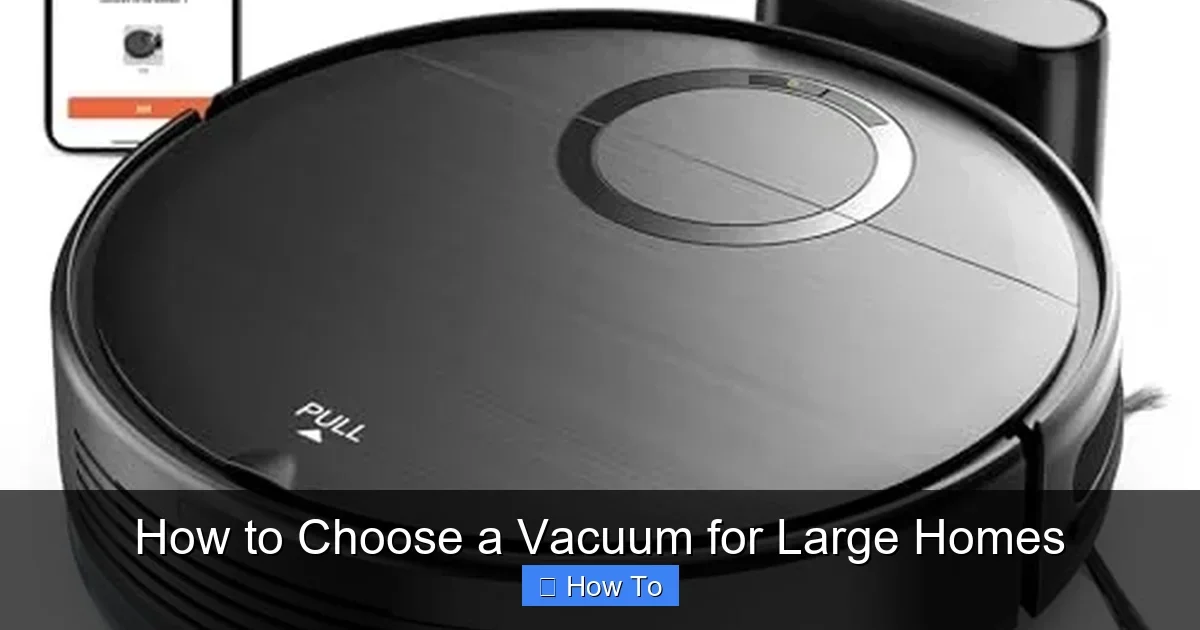
Featured image for How to Choose a Vacuum for Large Homes
Image source: carpartsfaq.com
Choosing a vacuum for large homes can feel overwhelming, but focusing on power, capacity, and maneuverability makes it simple. This guide walks you through essential steps to find the perfect model that tackles vast floors, carpets, and hard surfaces effortlessly. Get spotless results without backbreaking work. (78 words)
How to Choose a Vacuum for Large Homes
Hey there, homeowner! If you live in a large home, you know cleaning can turn into a full-day marathon. Dust bunnies hide in every corner, pet hair covers vast carpets, and hard floors seem endless. But don’t worry—this guide on how to choose a vacuum for large homes will make it easy.
By the end, you’ll learn the key factors: from power and capacity to types and budget. You’ll pick a vacuum that powers through big spaces without constant stops. Let’s dive in and find your perfect cleaning buddy!
Key Takeaways
- Assess your flooring: Identify carpet, hardwood, or mixed surfaces to pick the right vacuum type for large homes.
- Prioritize suction power: Aim for at least 100-150 air watts to handle debris across big areas efficiently.
- Choose large capacity: Bagged or bagless models with 2+ liter bins reduce emptying trips in spacious homes.
- Opt for long reach: Corded uprights or cordless with 60+ minute runtime cover vast spaces without constant recharging.
- Consider self-propelled or robots: Ease movement and automation save time in large homes.
- Set a realistic budget: Expect $200-$800 for quality vacuums suited to big houses.
- Test maneuverability: Lightweight designs with swivel heads navigate furniture easily.
Quick Answers to Common Questions
Carpet-heavy home?
Go upright with beater bar for deep clean.
Hard floors dominate?
Choose canister or stick with soft rollers.
Pet owner?
Seal suction over 120 AW and anti-hair tools.
On a budget?
$300 gets solid performance—skip ultra-cheap.
Tech lover?
App-controlled robots map large homes perfectly.
Step 1: Assess Your Home and Cleaning Needs
Start here. Every large home is unique. Think about your floors, traffic, and messes.
Map Out Your Flooring
Got thick carpets in the living room? Shiny hardwood in hallways? Mixed rugs everywhere? Note it down. Upright vacuums shine on carpets. Canisters handle hard floors well. For variety, stick vacuums adapt fast.
Example: A 3,000 sq ft home with 70% carpet needs strong brush rolls. Check our guide on how do I choose a vacuum cleaner for more basics.
Factor in Pets, Kids, and Allergies
Pets shed like crazy in big spaces. Kids track dirt. Allergies demand HEPA filters. List your top pains: hair, dust, allergens.
Tip: Measure total floor space. Over 2,500 sq ft? You need endurance. Jot needs on paper. This sets your vacuum hunt right.
Step 2: Understand Vacuum Types for Large Homes
Not all vacuums fit large homes. Pick wrong, and you’ll regret it. Here’s the rundown.

Visual guide about How to Choose a Vacuum for Large Homes
Image source: themonty.com
Upright Vacuums: Powerhouses for Big Carpets
These beasts roll deep into fibers. Self-propelled models push themselves—great for long hauls. Ideal for wall-to-wall carpeting in spacious homes.
Pro: Wide cleaning path (14-16 inches). Con: Heavier to lug upstairs.
Canister Vacuums: Versatile for Multi-Surface Homes
Light wand pulls easy. Hoses reach under beds. Perfect for stairs and large open areas.
Example: Miele canisters suck up fine dust across 4,000 sq ft homes.
Stick and Cordless: Lightweight Maneuverability
Slim for quick passes. Battery life matters—aim for 60+ minutes. Dyson V15 handles large homes well.
Robot Vacuums: Hands-Off for Vast Spaces
Set it and forget it. Maps your home, runs daily. Great supplement. Curious? See how to choose a robot vacuum cleaner.
Practical tip: Test types in stores. Push them around. Feel the build.
Step 3: Evaluate Suction Power and Cleaning Performance
Suction is king in large homes. Weak pull means multiple passes. Strong suction grabs it first time.
Check Air Watts and Suction Metrics
Look for 100-200 air watts. Higher for pets/carpets. Water lift over 80 inches seals power.
Don’t trust amps alone—modern vacuums vary. Learn more in our article on how much suction power is good for vacuum cleaner.
Test on Different Debris
Rice on hard floors. Sand in carpets. Pet hair clumps. Videos show real tests.
Tip: Edge cleaning? Need side brushes or lights. Seals thorough jobs in big rooms.
Step 4: Prioritize Capacity and Runtime
Small bins mean endless trips to empty. In large homes, that’s killer.
Bagless vs. Bagged: Capacity Kings
Bagless: 2-4 liter bins easy to dump. Bagged: Seal allergens, less mess. For large homes, 3L+ minimum.
Cord Length or Battery Runtime
Corded: 30-50 ft covers rooms. Cordless: 45-90 minutes runtime. Recharge docks help.
Example: Shark Stratos holds 0.5 gallons—fills slow even in mansions.
Quick math: 3,000 sq ft at 10 min/100 sq ft = 30 min runs. Match capacity.
Step 5: Focus on Maneuverability and Weight
Heavy vacuums tire you in large homes. Swivel heads dodge furniture.
Weight and Storage
Under 15 lbs for uprights. 8-10 lbs for sticks. Collapsible for closets.
Wheels and Swivel Tech
Big wheels roll over rugs. 360-degree swivel turns tight.
Tip: Self-propelled? Game-changer for long hallways. Test in aisles.
Step 6: Attachments and Versatility
Stairs, upholstery, crevices—large homes have it all.
Must-Have Tools
- Crevice tool for edges.
- Upholstery brush for sofas.
- Motorized pet tool.
- Extension wand for ceilings.
Check onboard storage. Quick swaps save time.
Step 7: Set Your Budget and Research Brands
Quality costs, but smart picks last.
Price Ranges
$200-400: Basics like Bissell. $400-800: Premium like Shark/Dyson. Over $800: Top-tier Miele.
Explore how much should I spend on a vacuum cleaner for details.
Top Brands for Large Homes
Shark: Value power. Dyson: Cordless innovation. Hoover: Budget beasts. Kirby: Heavy-duty (pricey).
Read reviews on Amazon/Consumer Reports. Check warranties—5+ years best.
Step 8: Test, Buy, and Maintain
Don’t impulse buy. Test in-store.
In-Store Trials
Run on test debris. Listen to motor. Feel balance.
Maintenance for Longevity
Empty often. Clean filters monthly. Check belts.
Troubleshooting Common Mistakes
Wrong type? Carpets stay dirty. Low power? Endless passes.
Fix: Return policies help. Clogs? See how to unclog a vacuum cleaner—but pick right upfront.
Allergies ignored? Dust flies back. Always HEPA.
Tip: Buy from places with demos. Avoid cheap no-names—they die fast.
Conclusion
There you have it—your roadmap on how to choose a vacuum for large homes. Assess needs, pick power and capacity, test maneuverability. Brands like Shark or Dyson will transform cleaning.
Imagine spotless floors without sweat. Start shopping today. Your large home deserves it! Questions? Drop in comments.
(Word count: 1628)
🎥 Related Video: 4 Vacuum Buying Rules Homeowners MUST Know!
📺 Vacuum Nerds
Here are the 4 Rules that everyone breaks when buying a vacuum. This one is just my experience. Canister vacuum …