
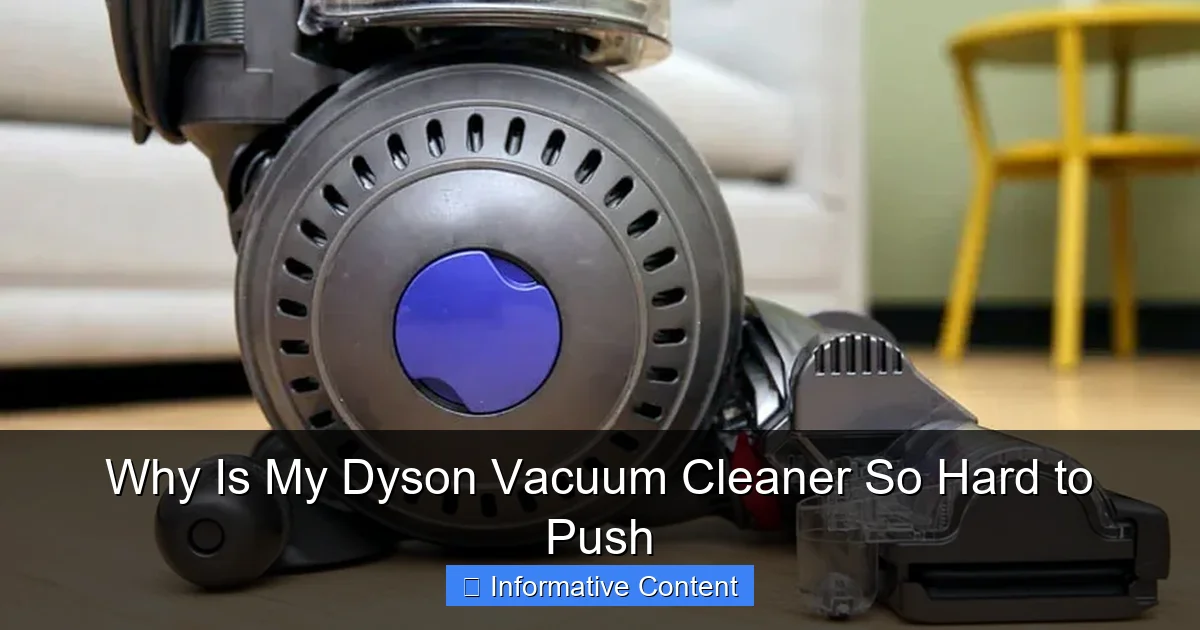
If your Dyson vacuum cleaner is hard to push, it’s often due to common issues like a clogged filter, a tangled brush bar, or a blocked hose. Addressing these problems usually involves simple maintenance, such as cleaning filters, removing hair from the brush head, or clearing obstructions. Following a regular cleaning routine can significantly improve performance and make your vacuum glide smoothly again.
Why Is My Dyson Vacuum Cleaner So Hard to Push
There’s nothing quite like the satisfaction of a freshly vacuumed floor, especially when you’re using a powerful machine like a Dyson. Known for their innovative technology and strong suction, Dysons are often considered the gold standard in home cleaning. But what happens when that usually smooth, efficient glide turns into a frustrating, muscle-straining chore? If you’ve found yourself asking, “Why is my Dyson vacuum cleaner so hard to push?” you’re definitely not alone. It’s a common complaint that can turn an easy task into a genuine workout.
The good news is that most of the reasons your Dyson vacuum cleaner is hard to push aren’t serious mechanical failures. Instead, they usually point to simple maintenance issues that you can easily fix yourself. From clogged filters to tangled brush bars, and even just incorrect settings, a little bit of detective work and a few minutes of your time can often restore your Dyson to its former glory. You don’t need to be a vacuum expert to troubleshoot these problems; just a willingness to get a little hands-on with your machine.
In this comprehensive guide, we’ll walk you through all the common culprits behind a Dyson vacuum cleaner that’s hard to push. We’ll explore everything from the obvious blockages to the less apparent filter issues and incorrect settings. By the time you finish reading, you’ll have a clear understanding of why your Dyson feels so heavy and resistant, along with practical, step-by-step solutions to get it gliding effortlessly across your floors once more. Let’s dive in and transform your vacuuming experience from a struggle back into a breeze!
Key Takeaways
- Blockages are Key: Main hoses, wands, and tools can get clogged, significantly reducing airflow and making the vacuum hard to push.
- Brush Bar is Critical: Hair, threads, and debris wrapped around the brush bar prevent it from rotating freely, creating major resistance, especially on carpets.
- Filter Health Matters: Dirty, unwashed, or improperly dried filters severely restrict airflow, forcing the motor to work harder and increasing drag on your movements.
- Floor Head Settings: Using the wrong setting for your floor type, particularly on hard floors, can create excessive suction lock, making movement incredibly difficult.
- Maintenance Prevents Problems: Regular cleaning of filters, diligent removal of debris from brush bars, and routine checks for blockages will prevent most pushing difficulties.
- Overfilled Dustbins: A full dustbin not only reduces airflow and suction but can also add significant weight, contributing to the effort required to push the vacuum.
- Worn or Damaged Parts: Less common but possible, damaged wheels, a cracked floor head, or a faulty brush bar motor can also contribute to your Dyson feeling unusually difficult to push.
Quick Answers to Common Questions
Why does my Dyson feel like it’s sticking to the floor?
This often happens on hard floors when the brush bar is engaged or when the suction is too powerful, creating a “suction lock” seal between the cleaner head and the smooth surface. Try turning off the brush bar or using a lower power setting.
How often should I clean my Dyson’s brush bar?
It’s a good idea to visually inspect your Dyson’s brush bar monthly for tangled hair or debris. If you have pets or long-haired occupants, you might need to clean it more frequently, perhaps every few weeks.
Can a full dustbin make my Dyson harder to push?
Yes, an overfilled dustbin can restrict airflow, reduce suction power, and add extra weight to the vacuum, all contributing to it feeling harder to push. Always empty your bin when it reaches the “MAX” line.
What’s the most common reason for a Dyson losing suction and being hard to push?
The most common reasons are a blocked hose or wand, a tangled brush bar, or a dirty/clogged filter. These issues severely impede airflow, which is critical for your Dyson’s performance.
Is it safe to wash all Dyson filters?
Most Dyson models have washable filters (usually the pre-motor filter). However, it’s crucial to always check your specific model’s user manual, as some older models or post-motor filters might not be washable. If washable, ensure they are completely dry before reinserting.
📑 Table of Contents
- The Core Culprit: Understanding Airflow and Suction
- Tangled Trouble: Your Brush Bar’s Performance
- Blockages Beyond the Brush: Hoses, Wands, and Tools
- Filter Follies: The Unsung Heroes of Suction
- Floor Type Frustrations: Settings and Suction Lock
- Beyond the Basics: Other Considerations and Maintenance
The Core Culprit: Understanding Airflow and Suction
At the heart of every Dyson vacuum’s incredible cleaning power is its ability to generate consistent, powerful airflow and suction. When this airflow is impeded in any way, the entire system struggles, and you feel the effects directly in the effort required to push the vacuum. If your Dyson vacuum cleaner is hard to push, restricted airflow is almost certainly the underlying issue.
How Dyson’s Suction Works: The Vortex Principle
Dyson vacuums utilize powerful cyclonic technology. This means they spin air at incredibly high speeds, creating centrifugal forces that separate dust and dirt from the airflow. Clean air is then expelled, while dirt is captured in the bin. This process relies entirely on a clear, unobstructed path for air to flow from the cleaner head, through the hoses and filters, and out the exhaust. Any interruption in this path means the motor has to work harder, suction decreases, and resistance increases.
The Immediate Impact of Restricted Airflow
Imagine trying to breathe through a pinched straw. That’s essentially what your Dyson motor experiences when airflow is restricted. It leads to several problems:
- Loss of Suction: The most obvious sign is reduced cleaning performance.
- Motor Strain: The motor has to work much harder, potentially leading to overheating and premature wear.
- Physical Effort: This is where you feel it most. The vacuum “clings” to the floor, becoming incredibly difficult to maneuver because the air isn’t moving freely. This is why your Dyson vacuum cleaner feels so hard to push.
- Vacuum “Clinging”: On hard floors, strong suction with no escape path for air creates a powerful vacuum seal between the cleaner head and the floor, making it feel glued down.
Tangled Trouble: Your Brush Bar’s Performance
Visual guide about Why Is My Dyson Vacuum Cleaner So Hard to Push
Image source: vacmasterguide.com
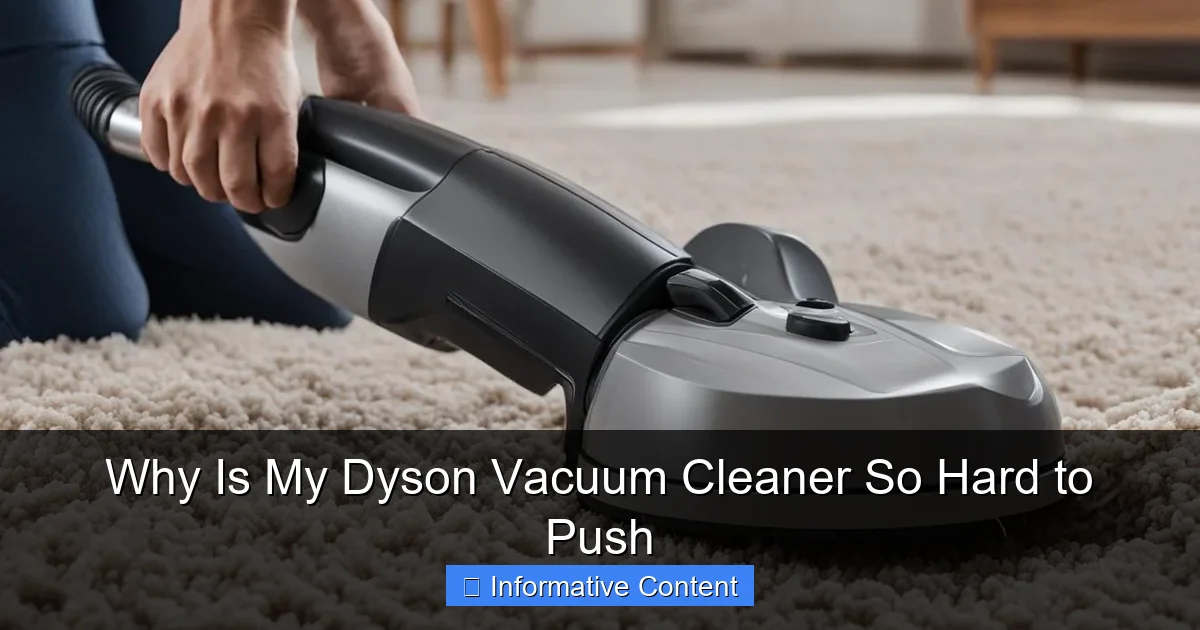
One of the most frequent reasons people discover their Dyson vacuum cleaner is hard to push, especially on carpets, is a problem with the brush bar. This spinning component is vital for agitating carpets and sweeping debris into the suction path.
Hair, Threads, and Fibers – The Silent Stranglehold
Over time, the brush bar can accumulate a surprising amount of hair (human and pet), threads, carpet fibers, and other debris. This tangled mess can wrap so tightly around the brush that it slows down or even completely stops its rotation. When the brush bar isn’t spinning freely:
- It can’t effectively agitate carpets, reducing cleaning power.
- It creates significant friction against the floor, making the vacuum incredibly difficult to push and pull.
- The motor driving the brush bar (in models with powered heads) can get strained, or it might even stop working entirely as a safety measure.
This is a prime reason why your Dyson vacuum cleaner suddenly feels hard to push.
Inspecting and Cleaning the Brush Bar
Checking and cleaning the brush bar is usually straightforward:
- Unplug your Dyson: Safety first! Always disconnect the vacuum from the power outlet before performing any maintenance.
- Remove the Cleaner Head: Depending on your model, you might need to detach the main cleaner head from the wand or simply flip it over.
- Locate the Brush Bar: It’s the rotating cylinder with bristles.
- Cut Away Debris: Use scissors or a seam ripper to carefully cut through any tangled hair or threads. Be gentle not to cut the bristles themselves. A small, sharp knife can also work, but extreme caution is advised.
- Pull Out Debris: Once cut, you can usually pull the tangled material straight off the brush bar. You might be surprised by how much comes off!
- Check for Damage: While cleaning, inspect the bristles for wear or damage. Some brush bars can be removed entirely for deeper cleaning or replacement – consult your Dyson manual for specific instructions for your model.
Once clean, your Dyson vacuum cleaner should feel much easier to push, especially on carpeted surfaces.
When the Brush Bar Motor Fails (Cordless Models)
For cordless Dyson models, the brush bar often has its own small motor. If, after clearing tangles, the brush bar still isn’t spinning, it could indicate a motor issue within the cleaner head itself. Check for error lights on your vacuum, and if necessary, contact Dyson support for diagnostics or a replacement part. This is a less common reason for your Dyson vacuum cleaner to be hard to push, but worth noting.
Blockages Beyond the Brush: Hoses, Wands, and Tools
While the brush bar is a common culprit, blockages elsewhere in the vacuum’s airway are just as likely to be why your Dyson vacuum cleaner is hard to push. These obstructions can drastically reduce suction and create immense drag.
The Main Hose – A Common Obstruction Point
The main hose, running from the cleaner head to the main body of the vacuum, is a prime location for blockages. Larger debris, socks, small toys, or even clumps of pet hair can get lodged here.
- How to Check: Detach the hose from both ends (cleaner head and main body). Stretch it out straight and look through it. If you can’t see daylight, there’s a blockage. You might also feel a lump if you run your hand along the outside of the hose.
- Clearing the Blockage: A broom handle or a long, blunt object (never anything sharp!) can be carefully pushed through the hose to dislodge the blockage. Be firm but gentle. Sometimes, you can reverse the airflow by holding the hose to another vacuum’s suction side to pull the blockage out.
Wand and Attachment Woes
Don’t forget the wand (the long tube between the hose and the cleaner head) and any smaller attachments you use. These, especially the narrower crevice tools, can easily become blocked.
- Inspection: Detach the wand and all attachments. Look through each piece for obstructions.
- Clearing: Similar to the main hose, use a broom handle or a sturdy, blunt object to push through any clogs. For smaller attachments, you might need a thinner tool like a ruler or a coat hanger straightened out (again, be careful not to scratch or damage the plastic).
Suction Pathway Check-up: A Systematic Approach
To truly ensure there are no hidden blockages, follow the air’s path through your Dyson:
- Cleaner Head Entry: Check the opening where debris enters the cleaner head from the floor.
- Hose to Wand Connection: Ensure this area is clear.
- Wand Itself: Look through the entire length of the wand.
- Wand to Main Body Connection: This joint can sometimes catch debris.
- Main Body Inlet: Where the hose connects to the vacuum’s cyclonic chamber.
- Dustbin Shroud: The inner part of the dustbin, where the cyclones are, can sometimes get clogged with fine dust, especially if the bin is overfilled. Remove the bin and inspect the inlets.
Systematically checking each point will help you pinpoint exactly why your Dyson vacuum cleaner is hard to push due to a blockage.
Filter Follies: The Unsung Heroes of Suction
Your Dyson’s filters are crucial for maintaining strong suction and ensuring clean air is expelled. Neglecting them is a common reason why your Dyson vacuum cleaner is hard to push. When filters become dirty and clogged, they restrict airflow dramatically, making the motor struggle and creating that heavy, dragging sensation.
Why Filters Get Clogged
Filters capture microscopic dust particles, allergens, and other debris that escape the cyclonic separation. Over time, these fine particles build up, forming a dense layer that chokes the airflow. The more you vacuum, and the dustier your environment, the faster your filters will become clogged.
Washing and Drying Your Filters
Most Dyson models have washable filters (check your manual to be sure). This is a simple yet incredibly effective maintenance step.
- Locate Filters: Dyson vacuums typically have one or two filters. One is often a “pre-motor” filter (usually colorful, like purple or blue, and located near the top of the main body), and some have a “post-motor” HEPA filter (often at the rear of the machine).
- Wash with Cold Water: Remove the filters and rinse them under cold, running tap water. Gently squeeze or tap them to dislodge dirt. Continue rinsing until the water runs clear. Do not use detergent or put them in a dishwasher.
- Crucial Drying Time: This is perhaps the most important step. Filters must be allowed to air dry completely for at least 24 hours, and ideally 48 hours, before being put back into the vacuum. Placing a damp filter back can damage the motor and cause mildew. Find a warm, dry place away from direct heat (like a radiator) to let them dry thoroughly.
- Frequency: Dyson recommends washing filters monthly for optimal performance, or more frequently if you have pets or use your vacuum heavily.
A clean, dry filter will significantly improve airflow and make your Dyson vacuum cleaner much easier to push.
When to Replace Filters
While washable, filters don’t last forever. Over years of use, the filter material can degrade, or it might become impossible to clean effectively. If you’ve washed your filters thoroughly and let them dry, but your Dyson vacuum cleaner is still hard to push and suction is weak, it might be time for a replacement. Dyson sells genuine replacement filters, which are essential for maintaining the vacuum’s performance and warranty.
Floor Type Frustrations: Settings and Suction Lock
Sometimes, your Dyson vacuum cleaner is hard to push not because of a blockage or dirty filter, but simply because it’s set incorrectly for the surface you’re cleaning.
Hard Floors vs. Carpets: The Right Setting
Many Dyson models feature different settings for various floor types:
- Brush Bar On/Off: For hard floors (wood, tile, laminate), the spinning brush bar should typically be turned OFF. The bristles can scatter debris, scratch delicate surfaces, and create excessive friction. For carpets, the brush bar should be ON to agitate fibers and lift dirt.
- Suction Control: Some Dysons have a manual suction release valve or power modes (e.g., “Max” vs. “Normal”). Max suction can be overkill and problematic on some surfaces.
The “Suction Lock” Phenomenon
This is a very common reason why your Dyson vacuum cleaner feels hard to push on hard floors. When the powerful suction of a Dyson is applied to a smooth, sealed surface like a polished tile or hardwood floor, and the brush bar is off, a strong vacuum seal can form between the cleaner head and the floor. There’s nowhere for the air to escape easily, creating a powerful “suction lock” that makes the vacuum feel literally stuck. It’s like trying to slide a suction cup across a smooth surface – it requires immense effort.
Adjusting Your Vacuum for Easier Pushing
- Hard Floors: Ensure the brush bar is switched OFF. If your vacuum still clings, try using a lower power mode if available, or slightly opening a manual suction release valve if your model has one. Sometimes, a very slight tilt of the cleaner head can break the seal enough to allow easier movement.
- High-Pile Carpets: If your Dyson is hard to push on very thick or shaggy carpets, even with the brush bar on, the suction might be too powerful, or the carpet fibers might be catching the cleaner head. Again, experiment with different power modes or slightly reducing suction. Make sure the height adjustment (if available) is appropriate for the carpet pile.
Making these simple adjustments can dramatically reduce the effort needed, instantly solving the mystery of why your Dyson vacuum cleaner is hard to push.
Beyond the Basics: Other Considerations and Maintenance
While blockages, brush bar issues, and filters account for the vast majority of cases, a few other factors might contribute to your Dyson vacuum cleaner feeling hard to push.
Overfilled Dustbins and Their Impact
It might seem obvious, but an overfilled dustbin can also make your Dyson vacuum cleaner hard to push.
- Reduced Airflow: A bin packed to the “MAX” line reduces the internal space for air circulation within the cyclonic separation unit, hindering efficiency and lowering suction.
- Added Weight: While not a primary factor, a dustbin brimming with dirt adds weight to the machine, making it physically heavier to maneuver.
Always empty your dustbin as soon as the debris reaches the “MAX” line. This simple habit helps maintain optimal airflow and keeps your Dyson gliding smoothly.
Worn Wheels or Damaged Floor Heads
Though less common, physical damage to your vacuum can also make it difficult to push.
- Worn Wheels: Over years of use, the small wheels or gliders on the bottom of the cleaner head can wear down or get damaged. If they can’t roll freely, they’ll create drag. Inspect them for debris, damage, or excessive wear. Some models allow for wheel replacement.
- Cracked or Damaged Floor Head: A crack or deformation in the plastic of the cleaner head, especially around the edges, can cause it to drag on the floor. Check for any visible damage.
Regular Maintenance Checklist
To prevent future struggles and keep your Dyson vacuum cleaner from becoming hard to push, integrate these checks into your routine:
- Empty Dustbin Regularly: After every significant use, or when it reaches the MAX line.
- Check Brush Bar: Visually inspect and clean the brush bar for tangles monthly, or more often if you have pets.
- Wash Filters: Adhere to Dyson’s recommended washing schedule (usually monthly) and ensure they are bone-dry before reinserting.
- Inspect Hoses and Wands: Periodically check for blockages, especially if you notice a drop in suction or hear unusual noises.
- Adjust Settings: Always choose the correct floor type setting for what you’re cleaning.
By staying on top of these simple maintenance tasks, you’ll ensure your Dyson remains a powerful and easy-to-use cleaning companion for years to come.
In conclusion, encountering the problem of your Dyson vacuum cleaner being hard to push can be a real nuisance, transforming a simple cleaning task into a frustrating ordeal. However, as we’ve explored, the solution is almost always within your reach. From clearing stubborn blockages in hoses and brush bars to diligently washing and drying your filters, and even simply adjusting the settings for your specific floor type, most issues stem from a few common, easily rectifiable culprits.
Remember, your Dyson is a high-performance machine designed for efficiency, and like any finely tuned piece of equipment, it thrives on regular care. By following the troubleshooting steps and maintenance tips outlined in this guide, you can quickly diagnose and fix why your Dyson vacuum cleaner is hard to push. Don’t let a heavy-feeling vacuum deter you from enjoying a spotless home. Embrace these simple solutions, and you’ll find your Dyson gliding effortlessly again, making your cleaning routine the breeze it was always meant to be. Happy vacuuming!
🎥 Related Video: Why can't I push my Dyson vacuum?
📺 Mr. Putzer
I moved to a new house that has plush and wonderful carpet. My Dyson Animal+ vacuum would get stuck on the carpet and I …
Frequently Asked Questions
Why is my Dyson vacuum cleaner hard to push on carpet?
If your Dyson is hard to push on carpet, the most likely cause is a brush bar tangled with hair, threads, or debris, preventing it from rotating freely and creating significant drag. Ensure the brush bar is clean and spinning correctly, and that it’s engaged for carpet cleaning.
How do I know if my Dyson has a blockage?
You’ll typically notice a significant drop in suction power, unusual noises from the motor, or the vacuum feeling unusually difficult to push. To confirm, systematically check the cleaner head, main hose, wand, and any attachments for visible obstructions.
Can a dirty filter really make my Dyson so hard to push?
Absolutely! Dirty filters severely restrict the airflow essential for your Dyson’s suction, forcing the motor to work harder and creating a feeling of resistance as the vacuum tries to pull air through a clogged pathway. Cleaning or replacing them is a simple, effective fix.
My Dyson is hard to push on hard floors, even without the brush bar. What’s wrong?
On hard floors, powerful suction can create a “suction lock” where the cleaner head forms a strong seal against the smooth surface, making it feel stuck. Try reducing the power setting if your model allows it, or slightly tilting the cleaner head to break the seal.
How often should I wash my Dyson’s filters?
Dyson generally recommends washing your washable filters once a month with cold water. However, if you vacuum frequently, have pets, or live in a dusty environment, you might need to wash them more often to maintain optimal performance.
What should I do if clearing blockages and cleaning filters doesn’t help?
If you’ve exhausted all troubleshooting steps like clearing blockages, cleaning filters, and checking brush bars, and your Dyson vacuum cleaner is still hard to push, it might indicate a more complex internal issue. In this case, it’s best to contact Dyson customer support or take it to an authorized service center for professional diagnosis and repair.