
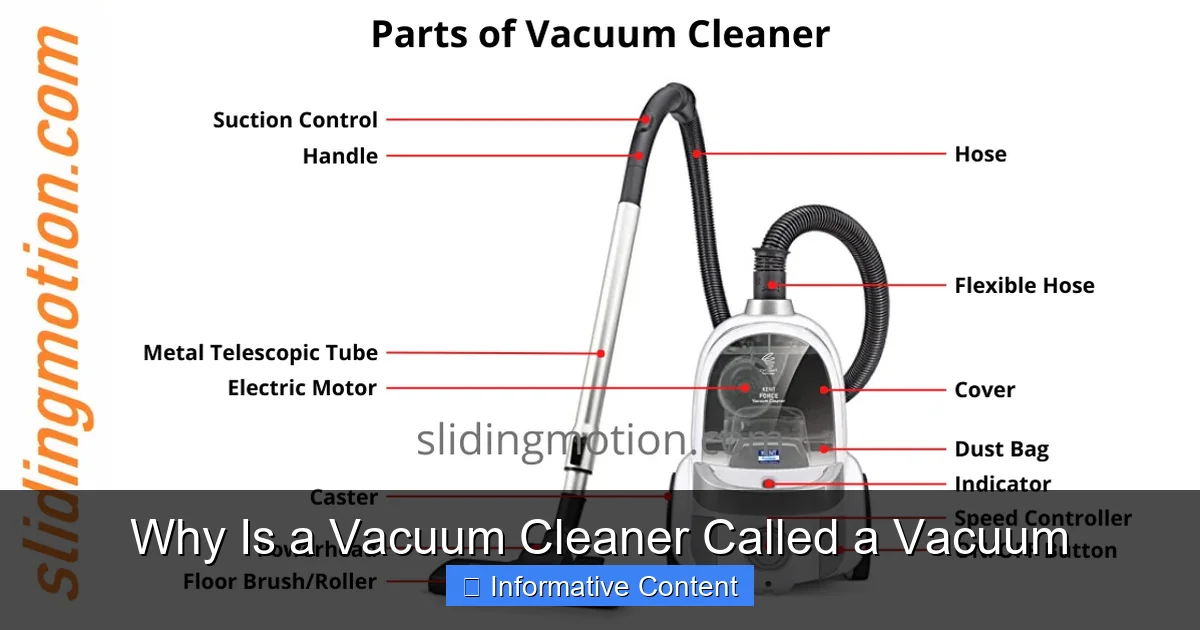
A vacuum cleaner doesn’t create a perfect vacuum, but rather a partial vacuum, which is a significant drop in air pressure within its system. This pressure difference, created by a motor and fan, generates the “suction” that lifts dirt and debris from surfaces. The name “vacuum” stuck for its descriptive simplicity and marketing appeal, effectively communicating the cleaner’s powerful dirt-removing action to the public, despite the technical nuance.
Have you ever paused mid-chore, pushing your trusty cleaning companion across the floor, and wondered: “Why is a vacuum cleaner called a vacuum?” It’s a common, yet surprisingly insightful question. After all, a true vacuum in scientific terms is a space completely devoid of matter – an empty void. Your vacuum cleaner, while incredibly effective, clearly isn’t creating such an environment in your living room. There’s air rushing in, dirt being collected, and filters doing their job. So, what’s the deal?
The answer lies in a fascinating blend of simplified science, clever marketing, and the evolution of language. It’s a story that takes us back to the early days of mechanical cleaning, revealing how a somewhat inaccurate scientific term became the universally understood name for an indispensable household appliance. Let’s pull back the curtain and unravel the mystery behind the name, exploring the clever engineering and historical context that gave the vacuum cleaner its enduring identity.
By the end of this article, you’ll not only understand why your device is called a vacuum cleaner but also appreciate the ingenious principles that allow it to keep your floors spotless. It’s a journey into physics, history, and the power of a name that stuck!
Key Takeaways
- Partial Vacuum: A vacuum cleaner operates by creating a low-pressure area (a partial vacuum), not a complete absence of matter, as a true scientific vacuum would be.
- Air Pressure Differential: The “suction” experienced is actually the higher atmospheric pressure outside the cleaner pushing air and dirt into the lower-pressure zone created inside the machine.
- Motor and Fan are Key: The electric motor powers a fan that rapidly moves air, expelling it from the cleaner and thereby lowering the internal air pressure.
- Historical Naming: The term “vacuum cleaner” was adopted in the early 20th century because “vacuum” was an understandable and impactful way to describe the powerful sucking action to the general public.
- Marketing Simplicity: The name became widely accepted due to its directness and ease of association with effective dirt removal, making it a strong marketing tool.
- Evolution of Technology: While the name has remained consistent, modern vacuum cleaners have evolved significantly in design, efficiency, and features, offering advanced cleaning solutions.
Quick Answers to Common Questions
Does a vacuum cleaner create a perfect vacuum?
No, a vacuum cleaner creates a partial vacuum, which is a significant drop in air pressure, not a complete absence of air or matter.
What is the scientific principle behind a vacuum cleaner’s “suction”?
The “suction” is actually created by a difference in air pressure. The vacuum cleaner expels air, creating a lower pressure zone inside, and the higher atmospheric pressure outside pushes air and dirt into the machine.
Who invented the first motorized vacuum cleaner?
Hubert Cecil Booth, a British engineer, is often credited with inventing the first motorized vacuum cleaner in 1901, though many others contributed to its development.
Why did the name “vacuum” stick despite its scientific inaccuracy?
The name stuck because it was simple, understandable, and effectively conveyed the powerful dirt-removing action to the public, proving to be a brilliant marketing term.
Can you “vacuum” water with a regular vacuum cleaner?
No, most regular household vacuum cleaners are designed only for dry debris. Attempting to vacuum water or other liquids with a dry-only vacuum can severely damage the motor and pose an electrical hazard.
📑 Table of Contents
The Core Concept: It’s About Pressure, Not Emptiness
Let’s get one thing straight from the start: your vacuum cleaner does not create a true, perfect vacuum. If it did, it would be an incredibly dangerous and technologically complex device, completely unsuitable for everyday household use. So, what’s really happening when your vacuum cleaner roars to life?
What “Vacuum” Really Means in Science
In the purest scientific sense, a “vacuum” is a space where there is no matter at all – no air molecules, no dust, nothing. Think of the void of outer space, or the carefully controlled conditions inside a laboratory chamber designed for specific experiments. Achieving such a perfect vacuum is extremely difficult and requires specialized equipment. Your household appliance simply doesn’t operate on this principle.
What a vacuum cleaner does create is a partial vacuum or, more accurately, a region of significantly lower air pressure. Imagine a balloon with less air inside it than outside. The air outside wants to rush in to equalize the pressure. This basic principle is at the heart of how your vacuum cleaner works.
How Your Vacuum Cleaner Creates “Suction”
The magic of “suction” isn’t about pulling; it’s about pushing. What we perceive as suction is actually the result of an air pressure difference. Here’s a simple way to think about it:
- Outside the Vacuum Cleaner: The air pressure is normal atmospheric pressure, pushing down on everything.
- Inside the Vacuum Cleaner: A motor-driven fan works rapidly to expel air from the cleaner’s internal chamber. As air is pushed out, the number of air molecules inside the chamber decreases.
- The Result: This reduction in air molecules creates a lower air pressure zone inside the vacuum cleaner compared to the air pressure outside it.
Nature abhors a vacuum (or even a partial one!). Air, always seeking to move from areas of high pressure to areas of low pressure, rushes into the nozzle of the vacuum cleaner, attempting to equalize the pressure. As this air rushes in, it carries with it any loose dirt, dust, pet hair, and debris that are in its path. This is the “suction” that makes your vacuum cleaner so effective.
Think about drinking from a straw. You’re not “sucking” the drink up; you’re actually reducing the air pressure inside the straw by removing air with your mouth. The higher atmospheric pressure on the surface of your drink then pushes the liquid up the straw and into your mouth. It’s the exact same principle at work with your vacuum cleaner!
The Ingenious Inner Workings of a Vacuum Cleaner
Now that we understand the core scientific principle, let’s look at the components inside a vacuum cleaner that make this pressure difference possible and manage the collected debris. Each part plays a crucial role in creating the cleaning action we rely on.
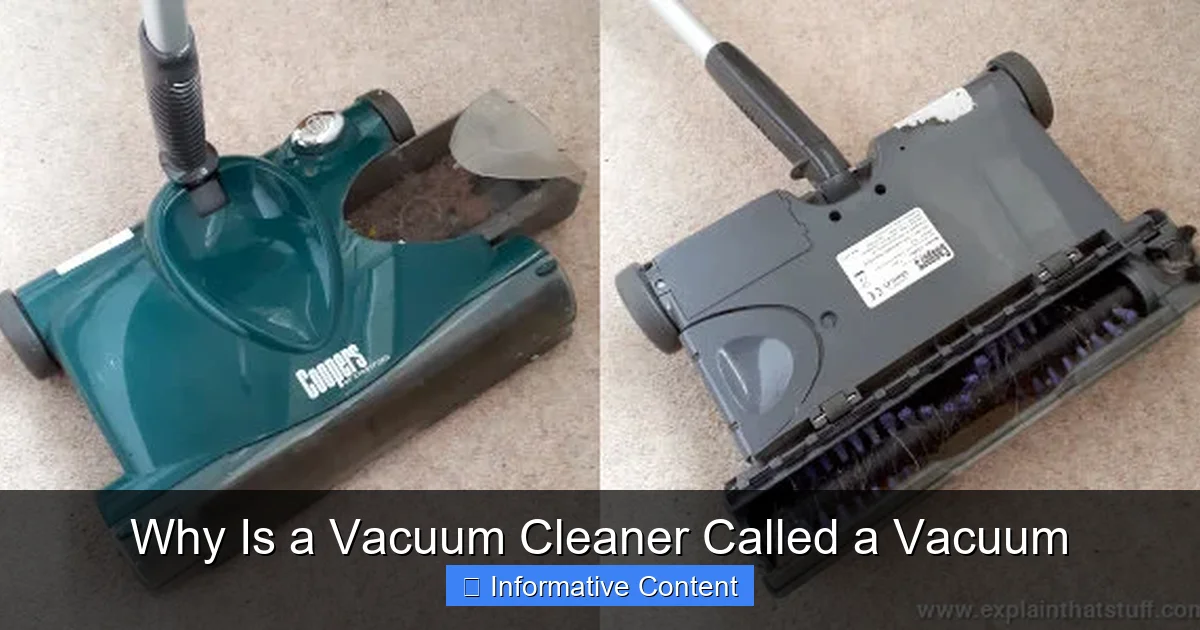
Visual guide about Why Is a Vacuum Cleaner Called a Vacuum
Image source: cdn4.explainthatstuff.com
The Powerhouse: Motor and Fan
At the heart of every electric vacuum cleaner is its motor and a fan (or impeller). The motor is typically an electric motor that spins the fan at extremely high speeds. This fan is designed to create a powerful airflow. As the fan blades spin, they push air out of the exhaust port of the vacuum cleaner. This expulsion of air is what lowers the internal air pressure, setting the stage for the “suction” effect.
The power of the motor directly influences how quickly and forcefully the air is expelled, and thus how strong the pressure differential becomes. A more powerful motor generally means a stronger “suction” from the vacuum cleaner.
The Flow: Air Intake and Filtration System
The air path in a vacuum cleaner is a carefully engineered system. Air and debris enter through the nozzle, which is designed to optimize the airflow and maximize contact with the surface being cleaned. From there, the dirty air travels through a hose or internal channels towards the collection chamber.
Before the air is expelled back into your room, it must pass through a filtration system. This is a critical step to ensure that the dirt and dust collected don’t just get blown back out. Early vacuum cleaners often had rudimentary filters, but modern ones boast sophisticated multi-stage filtration, including HEPA filters, which can capture microscopic particles like allergens and pet dander, improving indoor air quality.
Keeping it Clean: The Dustbin and Filter’s Role
Once the dirty air enters the collection chamber, the heavier dirt particles are often separated by cyclonic action (in bagless models) or collected in a disposable bag. The air, now carrying only the finest particles, then passes through the filters. These filters trap the remaining microscopic dust before the cleaner expels the now-cleaned air back into the room. This entire process is continuous as long as the vacuum cleaner is operating.
Regular maintenance of these components is vital for your vacuum cleaner’s performance. Cleaning or replacing filters and emptying the dustbin or bag frequently ensures that the airflow remains strong, maintaining optimal suction and preventing dust from re-entering your home. A clogged filter or full bag can significantly reduce the efficiency of your vacuum cleaner.
A Blast from the Past: The Origin of the Name
If the device doesn’t create a true vacuum, why did the name stick? The answer lies in the early days of its invention and the need to describe a revolutionary new cleaning method to the public.
Early Attempts at Mechanical Cleaning
Before the advent of the vacuum cleaner, cleaning floors was a laborious task involving brooms, dustpans, and carpet beaters, which often just stirred up dust rather than removing it. The late 19th century saw various inventors experimenting with mechanical solutions. Many early designs focused on blowing air to collect dust, but these often created more problems by dispersing dirt. The key innovation would come from realizing that suction, or more accurately, drawing air in, was a far more effective method.
Hubert Cecil Booth and the “Puffing Billy”
One of the most influential figures in the history of the vacuum cleaner was British inventor Hubert Cecil Booth. In 1901, after witnessing a demonstration of a machine that blew dust off chairs, Booth had a revelation. He realized that it would be far more effective to suck the dust away rather than blow it. He tested his theory by placing a handkerchief over his mouth and trying to suck dust off a restaurant chair. It worked!
Booth’s first motorized “vacuum cleaner” was a massive, horse-drawn, petrol-powered unit called the “Puffing Billy.” It was so large it had to be parked outside a building, with long hoses fed through windows to clean the interiors. His company, the British Vacuum Cleaner Company, offered cleaning services, with operators using these huge machines. Despite their size, these machines were groundbreaking and proved the efficacy of suction cleaning.
From “Suction Cleaner” to “Vacuum Cleaner”
While Booth initially referred to his invention as a “suction cleaner,” the term “vacuum cleaner” quickly gained traction. Other inventors and companies soon followed, developing their own versions. In America, inventors like David T. Kenney developed similar suction-based machines, and eventually, James Murray Spangler created a portable electric model in 1907, which he later sold to his cousin’s husband, William H. Hoover. This led to the creation of the Hoover Company, a name that became almost synonymous with the vacuum cleaner itself.
The term “vacuum” was powerful. It implied a forceful, complete removal of dirt – something revolutionary compared to merely sweeping or beating carpets. It conjured an image of an empty space being created, into which all the dirt would disappear. This evocative imagery, even if not scientifically precise, was incredibly appealing to a public longing for more effective cleaning solutions.
The Name Game: Why “Vacuum” Stuck Around
So, given the scientific inaccuracy, why did “vacuum cleaner” become the universally accepted term instead of “suction cleaner” or “pressure differential cleaner”? It boils down to simplicity, marketing, and the natural evolution of language.
Simplicity for the Masses
Imagine trying to explain “negative pressure differential” or “atmospheric pressure displacement device” to the average household consumer in the early 20th century. It would have been a mouthful and far too technical. “Vacuum,” on the other hand, while not perfectly accurate, was simple, memorable, and conveyed the essential idea: something powerful was being created to remove dirt.
People didn’t need a physics lecture; they needed a clean house. The term “vacuum” resonated with the notion of thoroughness and emptiness, perfectly describing the desired outcome of cleaning – a floor free of dust and debris. This ease of understanding made the name stick.
Marketing Brilliance and Brand Identity
Early manufacturers quickly recognized the marketing potential of the term. Companies like Hoover, Electrolux, and others adopted and popularized the name “vacuum cleaner” in their advertisements. It was a strong, single word that effectively branded the new technology. “Vacuum” became synonymous with powerful, modern cleaning, setting these new machines apart from traditional methods.
The public began to associate “vacuum” with the act of deep cleaning carpets and floors. This powerful association, reinforced by consistent advertising and the demonstrable effectiveness of the machines, cemented the name in common parlance. It became a household word, much like “fridge” for refrigerator or “Kleenex” for tissues.
“To Vacuum”: When a Noun Becomes a Verb
Perhaps the strongest evidence of how deeply ingrained the name “vacuum cleaner” became is the transformation of “vacuum” into a verb. We don’t say “I’m going to suction the floor” or “I’m going to use the atmospheric pressure displacement device on the rugs.” We simply say, “I’m going to vacuum.”
This linguistic shift signifies complete adoption. When a brand name or a descriptive term becomes so pervasive that it turns into a generic verb for an action, its success is undeniable. It illustrates how effectively the term “vacuum” captured the essence of what the machine does, even if it’s a simplification of the underlying science. The act of cleaning with such a device is now universally known as vacuuming.
Modern Vacuum Cleaners: Much More Than Just a “Vacuum”
While the name “vacuum cleaner” has remained constant for over a century, the technology behind these indispensable appliances has continuously evolved. Today’s vacuum cleaners are marvels of engineering, designed to tackle a variety of cleaning challenges with efficiency and intelligence.
From Uprights to Robots: A Range of Choices
The modern market offers a vast array of vacuum cleaner types, each suited for different needs:
- Upright Vacuums: Traditional and powerful, often favored for large carpeted areas.
- Canister Vacuums: Versatile with a separate canister and hose, excellent for hard floors, stairs, and above-floor cleaning.
- Stick Vacuums: Lightweight and cordless, perfect for quick clean-ups and smaller spaces.
- Handheld Vacuums: Compact and portable, ideal for spills, car interiors, and upholstery.
- Robotic Vacuums: Autonomous cleaners that navigate your home, offering hands-free cleaning.
- Wet/Dry Vacuums: Industrial-strength machines capable of picking up both dry debris and liquids.
Each type uses the fundamental principle of creating a partial vacuum to generate suction, but their designs and features are optimized for specific tasks, making the job of cleaning more efficient and less burdensome. Regardless of the model, the core function remains the same: a motor and fan create the crucial air pressure difference.
Advanced Filtration and Smart Features
Modern vacuum cleaners often boast features that go far beyond simple dirt collection. Advanced filtration systems, like multi-stage cyclonic separation and medical-grade HEPA filters, capture even the finest dust and allergens, significantly improving indoor air quality. This is particularly beneficial for households with allergy sufferers or pets.
Smart vacuum cleaners now incorporate sensors, Wi-Fi connectivity, and app control, allowing users to schedule cleaning, define no-go zones, and even integrate with smart home ecosystems. These innovations make cleaning more convenient and tailored to individual lifestyles, transforming a chore into a seamless background task.
Practical Tips for Maximizing Your Vacuum’s Efficiency
To ensure your vacuum cleaner continues to live up to its name and perform optimally, here are a few tips:
- Empty Regularly: Don’t wait until the dustbin is overflowing or the bag is completely full. A full collection chamber reduces airflow and suction power.
- Clean or Replace Filters: Clogged filters restrict airflow, forcing the motor to work harder and diminishing cleaning performance. Follow manufacturer guidelines for cleaning or replacement.
- Check for Clogs: Periodically inspect the hose, nozzle, and brush roll for blockages from hair, strings, or larger debris.
- Adjust for Surface Type: Many modern vacuum cleaners have settings for different floor types (e.g., carpet height adjustment). Using the correct setting optimizes cleaning effectiveness.
- Don’t Rush: Move your vacuum cleaner slowly to give it time to pick up dirt effectively. Overlapping passes ensure no spots are missed.
By following these simple practices, you can ensure that your vacuum cleaner continues to provide that powerful, “vacuum-like” cleaning action for years to come.
Conclusion
So, why is a vacuum cleaner called a vacuum? It’s a testament to effective communication and historical pragmatism rather than scientific precision. While your cleaning appliance doesn’t create an absolute vacuum, it cleverly harnesses the principles of air pressure to create a partial vacuum, which is remarkably effective at lifting dirt and debris.
The name “vacuum cleaner” emerged in the early 20th century as an intuitive, easy-to-understand term for a revolutionary device. It captured the imagination of the public, implying thoroughness and powerful cleaning action. This simple, memorable name, reinforced by successful marketing, quickly became universal, even evolving into a verb that perfectly describes the act of cleaning floors.
Today, the vacuum cleaner continues to evolve, incorporating advanced technology to make our lives easier and our homes cleaner. Its name, though a simplification, accurately conveys its purpose and legacy as an indispensable tool in modern living. So, the next time you “vacuum,” you’ll know the fascinating story behind the name and the clever science that makes it all possible!
🎥 Related Video: How does a Vacuum Cleaner Work? | Mocomi Kids
📺 MocomiKids
https://mocomi.com/ presents : How Does A Vacuum Cleaner Work – Science Videos for Kids Get in depth knowledge about how a …
Frequently Asked Questions
What’s the difference between a “vacuum” in science and a “vacuum” cleaner?
In science, a true vacuum is a space entirely devoid of matter. A vacuum cleaner, however, doesn’t achieve this; it creates a region of significantly reduced air pressure (a partial vacuum) to draw in dirt, not a complete void.
How does a vacuum cleaner generate the low-pressure area?
A vacuum cleaner uses an electric motor to spin a fan at high speeds. This fan rapidly expels air out of the cleaner’s exhaust port, causing the air pressure inside the collection chamber and nozzle to drop significantly.
Were early vacuum cleaners portable?
Not initially. Hubert Cecil Booth’s first motorized vacuum cleaner, the “Puffing Billy,” was a massive, horse-drawn unit that remained outside buildings, with long hoses extending inside. Portable electric models came later, most notably from inventors like James Murray Spangler, leading to the Hoover company.
Why is it important to clean or replace vacuum filters?
Cleaning or replacing filters is crucial because clogged filters restrict airflow, which reduces the vacuum cleaner’s suction power and forces the motor to work harder. This maintains efficiency, extends the machine’s life, and ensures optimal air quality by trapping dust and allergens.
Does a more powerful motor always mean better “suction”?
Generally, a more powerful motor allows the fan to move air more forcefully, creating a stronger pressure differential and thus more “suction.” However, the overall design of the airflow system, nozzle, and filtration also significantly impact a vacuum cleaner’s effective cleaning performance.
What are some common types of vacuum cleaners today?
Today, common types include upright, canister, stick, handheld, and robotic vacuum cleaners. Each is designed for different cleaning tasks and convenience, from large area carpeting to quick spills or hands-free automated cleaning.