
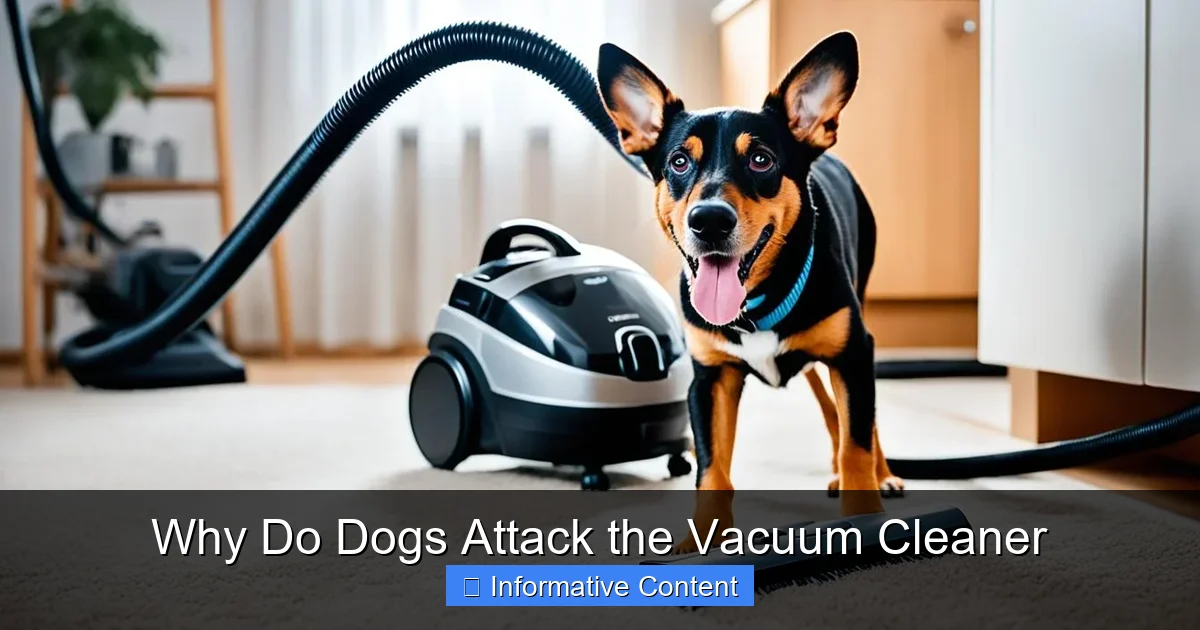
Dogs often attack the vacuum cleaner due to a complex mix of fear, instinct, and sensory overload. Its loud noise, unpredictable movement, and unusual smell can trigger a strong fight-or-flight response or even a prey drive, making them perceive it as a threat or a stimulating target. Understanding these root causes is crucial for helping your dog feel safer and calmer during cleaning time.
Why Do Dogs Attack the Vacuum Cleaner
Ah, the vacuum cleaner. To us, it’s a modern convenience, a heroic device battling dust bunnies and pet hair. To many of our beloved canine companions, however, it’s a roaring, wheeled monster from a nightmare dimension. If you’ve ever witnessed your dog launch into a barking frenzy, growl with fierce determination, or even try to attack and bite the innocent appliance, you’re certainly not alone. It’s a common, often perplexing, and sometimes even comical scene that plays out in homes around the world.
But beyond the immediate chaos, there’s a genuine question that often arises: why do dogs attack the vacuum cleaner with such intensity? Is it pure aggression, fear, or just a really strange game? Understanding the root causes of this behavior isn’t just about curiosity; it’s about empathy for our pets and finding ways to make their lives, and our cleaning routines, a little less stressful. Let’s delve into the fascinating world of canine perception and uncover what makes this everyday household item such a formidable foe.
So, let’s explore the various reasons why your furry friend might see the vacuum cleaner as their archnemesis. From sensory overload to deep-seated instincts, there’s a whole spectrum of explanations behind why dogs attack the vacuum cleaner, and knowing these can help us better manage their reactions and create a more peaceful home environment for everyone involved.
Key Takeaways
- Sensory Overload: The vacuum’s loud noise, unpredictable movement, and strange smells create an overwhelming and often terrifying experience for dogs.
- Instinctual Prey Drive: Many dogs perceive the moving, noisy vacuum as a potential prey item, triggering their natural instinct to chase, bark, and “catch” it.
- Fear, Anxiety, and Phobias: Past negative experiences, lack of early exposure, or generalized anxiety can lead to a genuine phobia of the vacuum cleaner.
- Territoriality: Some dogs view the vacuum as an intruder in their home territory, prompting them to protect their space and family from the perceived threat.
- Attention-Seeking or Play: For a smaller number of dogs, attacking the vacuum can be a way to seek attention or an attempt to engage in a perceived “game.”
- Desensitization and Counter-Conditioning: Gradual, positive exposure (desensitization) paired with rewarding experiences (counter-conditioning) is the most effective way to help dogs overcome their fear.
- Management and Safe Spaces: Providing a safe, quiet retreat for your dog during vacuuming is a vital immediate strategy to reduce stress and prevent escalation of unwanted behaviors.
Quick Answers to Common Questions
Is it normal for dogs to attack the vacuum?
Yes, it’s quite normal for dogs to react strongly to a vacuum cleaner. Many dogs perceive it as a loud, moving threat due to their sensitive hearing, strong instincts, and sometimes past negative experiences.
How can I stop my dog from attacking the vacuum?
The most effective methods involve desensitization (gradually introducing the vacuum) and counter-conditioning (creating positive associations with treats and praise). Providing a safe, quiet space during vacuuming is also crucial.
What causes dogs to be afraid of vacuums?
Fear often stems from the vacuum’s loud noise, unpredictable movements, and strange smells. Past negative encounters or a lack of early socialization to such stimuli can also contribute to a dog’s fear.
Is it prey drive or fear?
It can be both! Some dogs react out of genuine fear, trying to escape or confront the perceived threat. Others, especially those with high prey drive, might see the moving vacuum as an object to chase and “catch,” acting on their natural instincts.
Should I punish my dog for attacking the vacuum?
No, punishing your dog will likely worsen their fear and anxiety, making them even more reactive to the vacuum cleaner. Instead, focus on positive reinforcement, desensitization, and making the experience as positive and stress-free as possible.
📑 Table of Contents
The Sensory Overload: Why Vacuums are Terrifying
Imagine a world where everything is louder, brighter, and smells stronger. That’s often how our dogs experience the world, and the vacuum cleaner takes this sensory experience to an entirely new level. It bombards them with stimuli that can be genuinely overwhelming and frightening.
The Loud Noise Factor
This is often the most obvious culprit. Vacuum cleaners are notoriously loud, emitting a high-pitched whine combined with a powerful roar. Dogs have far more sensitive hearing than humans, capable of detecting a wider range of frequencies and at much lower decibels. What sounds like a manageable hum to us can be a deafening assault to their ears. This sudden, intense noise can trigger their primal “fight or flight” response. Their natural instinct tells them to either confront the loud, unknown entity or flee from it. When they perceive no escape, attacking becomes their only option, making it clear why dogs attack the vacuum cleaner with such ferocity.
Unpredictable Movement
Think about how a vacuum cleaner moves: it rolls across the floor, sometimes changing direction suddenly, bumping into furniture, and darting around corners. For a dog, this movement can be highly erratic and unpredictable. It’s a large, moving object that doesn’t follow any logical pattern they can understand. This erratic behavior, combined with its size, can make it appear threatening, like a predator or an aggressive intruder. The lack of predictability makes it impossible for them to assess the threat, leading to anxiety and a defensive reaction.
Strange Smells and Air Currents
While we might not think of a vacuum cleaner as a source of scent, it absolutely is for a dog. Vacuums can emit a variety of smells: the scent of heated motor, collected dust and debris from countless surfaces, and even ozone generated by the motor. These unfamiliar and strong odors can be unsettling. Additionally, the vacuum creates strong air currents, pushing air out. A dog might feel these currents, or even feel static electricity, which adds another layer of strange and potentially unpleasant sensation to an already overwhelming experience. These subtle sensory inputs contribute significantly to why dogs attack the vacuum cleaner.
Instinct and Predatory Drives
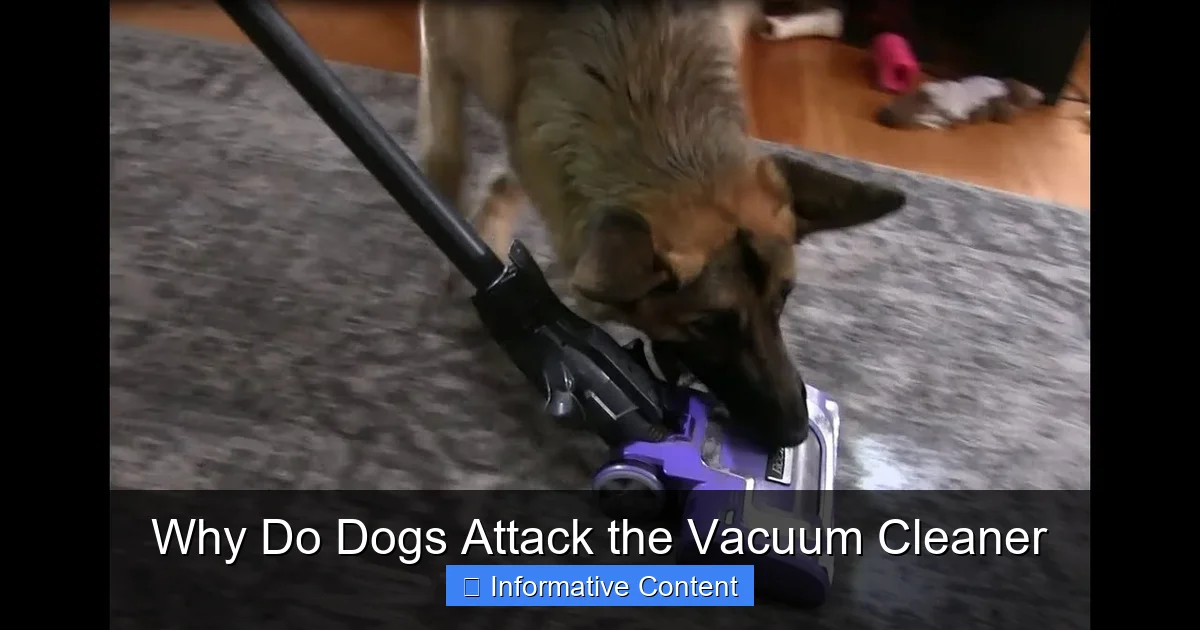
Visual guide about Why Do Dogs Attack the Vacuum Cleaner
Image source: i.ytimg.com
Sometimes, it’s not just about fear; it’s about deeply ingrained instincts that have been part of canine behavior for thousands of years. The vacuum cleaner can inadvertently trigger these primal responses.
Prey Drive: The Moving Target
Many dogs possess a strong prey drive, an instinct to chase, catch, and “kill” small, fast-moving objects. While a vacuum cleaner is neither small nor alive, its erratic movement across the floor can mimic the behavior of prey. For a dog with a high prey drive, the vacuum becomes a large, noisy “animal” that needs to be brought down. They might bark, nip, or pounce, not necessarily out of aggression, but because their natural hunting instincts are kicking in. This is a common reason why dogs attack the vacuum cleaner; they are simply acting on ancient programming.
Territorial Instincts
Dogs are naturally territorial creatures, and they see their home as their den. When a large, noisy, and unfamiliar object invades their space, especially if it’s pushing things around and making a commotion, some dogs will perceive it as a threat to their territory. Their barking and aggressive posturing are attempts to warn off or drive away the “intruder.” They are trying to protect their home and their human family from what they perceive as a danger, demonstrating a strong reason why dogs attack the vacuum cleaner with such determination.
Fear, Anxiety, and Phobias
For many dogs, the reaction to a vacuum cleaner isn’t just an instinct; it’s rooted in genuine fear or anxiety, which can sometimes escalate into a full-blown phobia.
Past Negative Experiences
Dogs learn through association, and a single negative experience with a vacuum cleaner can create a lasting fear. Perhaps as a puppy, they were startled by it, accidentally hit by it, or had a bad association (like being confined when it was running). Even a sudden, loud noise from the vacuum during a peaceful moment can be enough to create a lasting negative impression. These early experiences shape their perception and contribute significantly to why dogs attack the vacuum cleaner later in life.
Lack of Early Socialization
Puppies go through a critical socialization period where they learn about the world and what is safe or dangerous. If a puppy isn’t exposed to common household noises and objects, including the vacuum cleaner, in a positive and controlled way during this time, they may grow up to be fearful of them. What they don’t know or understand can be perceived as a threat.
Generalized Anxiety
Some dogs are simply more prone to anxiety or have specific noise phobias. If your dog is generally anxious about loud noises, storms, or new situations, it’s highly likely they will also be anxious or fearful of the vacuum cleaner. Their predisposition to anxiety makes them more susceptible to developing a phobic response to this loud, moving object. This underlying anxiety is a significant factor in why dogs attack the vacuum cleaner rather than simply tolerate it.
Attention-Seeking and Play Behavior
While fear and instinct are the primary drivers, sometimes a dog’s reaction to the vacuum cleaner can stem from a desire for attention or even a misguided attempt at play.
“Look at Me!”
Dogs are incredibly smart and quickly learn which behaviors get a reaction from their humans. If every time the vacuum comes out, you respond to your dog’s barking or lunging (even if it’s to scold them or physically remove them), they might interpret this as attention. For some dogs, any attention is good attention, and they may continue the behavior because it reliably elicits a response from you. This is less about genuine fear and more about learned behavior.
The “Tug-of-War” Game
For dogs who are not particularly fearful and have a strong play drive, the vacuum cleaner’s cord or brush roll might look like an irresistible invitation to play. They might nip at the cord, bark playfully, or even try to “wrestle” with the moving parts. This isn’t aggressive behavior in the traditional sense, but rather a misinterpretation of the vacuum as a giant, clunky playmate. It’s important to distinguish this from fear-based attacks, as the approach to managing it will differ. If your dog is treating the vacuum like a game, it highlights another interesting reason why dogs attack the vacuum cleaner.
Practical Strategies to Help Your Dog Cope
Understanding why dogs attack the vacuum cleaner is the first step; the next is helping them overcome their fear or redirect their behavior. Patience, consistency, and positive reinforcement are key.
Desensitization and Counter-Conditioning
This is the gold standard for helping dogs overcome fears. The goal is to gradually expose your dog to the vacuum cleaner in a way that doesn’t trigger fear, while simultaneously creating positive associations.
- Start Small: Begin by having the vacuum cleaner in the room but turned off. Reward your dog with high-value treats and praise for simply being calm in its presence.
- Distance Matters: Place the vacuum far away from your dog initially. As your dog shows comfort, slowly decrease the distance over several sessions.
- Sound Introduction: Once your dog is comfortable with the vacuum off, try turning it on for just a second or two in another room, or far away on a low setting. Immediately follow with treats and praise.
- Gradual Progression: Slowly increase the duration and proximity of the vacuum running, always stopping before your dog shows signs of fear. If they react, you’ve gone too fast; go back a step.
- Pair with Positives: Always associate the vacuum with something your dog loves, like their favorite toys, treats, or a special puzzle feeder. Only bring out these high-value rewards when the vacuum is present or running.
Creating a Safe Space
While you’re working on desensitization, it’s crucial to provide a sanctuary for your dog during actual vacuuming sessions.
- Designated Retreat: Set up a comfortable, quiet space in another room or a crate that is truly a safe haven for your dog. Fill it with their favorite bed, toys, and a long-lasting chew.
- Positive Association with Retreat: Encourage your dog to go to this space with treats and praise, even when the vacuum isn’t on. This helps them view it as a positive place.
- Distraction: While in their safe space, offer them a high-value distraction like a Kong filled with peanut butter or a chew bone. This keeps them occupied and creates a positive association with being away from the vacuum.
Management and Prevention
Sometimes, the best solution is simply to manage the situation to prevent the unwanted behavior.
- Vacuum When They’re Away: If possible, vacuum when your dog is out for a walk, at doggy daycare, or in another part of the house entirely.
- Use a Leash: If your dog tries to attack the vacuum, keeping them on a leash can help you gently guide them away or prevent them from getting too close, especially during initial training.
- Teach a “Go to Mat/Place” Command: Train your dog to go to a specific spot and stay there, rewarding them heavily. This gives you a tool to direct them to a safe spot when the vacuum comes out.
Professional Help
If your dog’s fear or aggression towards the vacuum cleaner is severe, causes significant distress, or poses a safety risk, it’s always best to consult with a certified professional.
- Certified Professional Dog Trainer (CPDT-KA): A trainer can assess your dog’s specific situation and create a tailored training plan.
- Veterinary Behaviorist (DACVB): For severe phobias or anxiety, a veterinary behaviorist can offer advanced behavioral modification techniques, and in some cases, discuss medication options to help reduce anxiety during the training process.
Understanding why dogs attack the vacuum cleaner is a complex puzzle, but with the right approach and a lot of patience, you can help your dog feel much more comfortable.
Conclusion
The spectacle of a dog attacking a vacuum cleaner is a testament to the rich, complex inner lives of our canine friends. It’s a behavior rooted in everything from overwhelming sensory input and primal instincts to learned fear and even a bid for attention. Recognizing that these reactions are often genuine expressions of fear or instinct, rather than mere naughtiness, is crucial for fostering a compassionate response.
By understanding the “why,” we can move towards effective “how-tos.” Through patient desensitization, positive counter-conditioning, and providing safe havens, we can gradually transform a household terror into a tolerable background noise. Remember, every dog is an individual, and what works for one might need adjustment for another. But with kindness, consistency, and perhaps a few extra treats, you can help your dog navigate the roaring beast that is the vacuum cleaner, making your home a calmer, happier place for both of you.
🎥 Related Video: This dog ATTACKS the vacuum! | Dog Nation
📺 Cesar Millan
This dog attacks the vacuum!! Remember a dog learns nose, eyes, and ears. It is our job as the pack leaders to understand how …
Frequently Asked Questions
Why does my dog bark so much at the vacuum cleaner?
Dogs often bark at the vacuum cleaner because they perceive it as an intruder or a threat. The loud noise can be startling, triggering a “fight or flight” response, and barking is their way of warning it to go away or alerting you to the perceived danger.
Can my dog get over their fear of the vacuum?
Yes, most dogs can significantly reduce or overcome their fear of the vacuum cleaner with consistent, positive training using desensitization and counter-conditioning techniques. It requires patience and a gradual approach to help them build confidence.
What if my dog bites the vacuum cleaner?
If your dog is biting the vacuum cleaner, it’s important to prevent this behavior for their safety (and the vacuum’s!). This indicates a strong reaction, whether fear or prey drive. Use management strategies like putting your dog in a separate room, and consult a professional trainer for guidance.
Is there a specific type of vacuum that dogs fear less?
Generally, quieter vacuum cleaners, such as robot vacuums (when introduced carefully) or models specifically designed for low noise, might be less alarming to some dogs. However, any new or moving object can still trigger a reaction, so slow introduction is always key regardless of the vacuum type.
How long does desensitization take?
The timeline for desensitization varies greatly depending on the individual dog, the severity of their fear, and the consistency of the training. It can take anywhere from a few weeks to several months. Patience is paramount, and it’s important not to rush the process.
When should I seek professional help for my dog’s vacuum fear?
You should seek professional help from a certified dog trainer or veterinary behaviorist if your dog’s fear is severe, causes extreme distress (e.g., panic attacks, uncontrollable shaking), leads to aggressive behaviors that could cause harm, or if you’re not seeing progress with your own training efforts.