
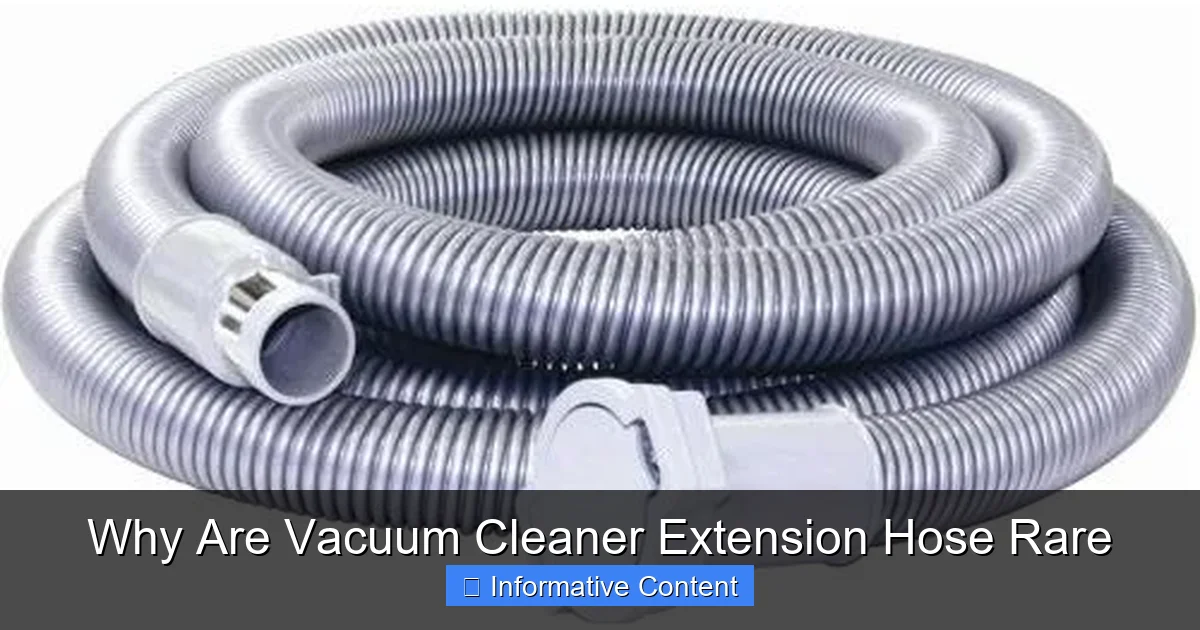
It’s true, vacuum cleaner extension hoses are rare, and for good reason. Their scarcity stems from a complex interplay of engineering challenges like significant suction loss over distance, material durability concerns, and practical design hurdles. Manufacturers also weigh the high production costs against limited market demand, leading them to focus on alternative solutions that offer better cleaning efficacy and user convenience.
Why Are Vacuum Cleaner Extension Hose Rare?
Have you ever found yourself in the middle of a big cleaning project, vacuum in hand, wishing you just had a little more reach? Maybe you’re trying to vacuum the ceiling corners, tackle cobwebs up high, or clean out your car without dragging the entire machine inside. It’s in these moments that many of us wonder, “Why can’t I just buy a longer vacuum cleaner extension hose?” You might search online or walk into a hardware store, only to find that genuine, universal, and truly long vacuum cleaner extension hoses are surprisingly rare.
It feels counterintuitive, right? In a world where you can extend almost anything else, why is extending your vacuum’s reach such a challenge? The truth is, it’s not a simple oversight or a conspiracy by vacuum manufacturers. The scarcity of readily available, super-long vacuum cleaner extension hoses is a complex issue, involving intricate engineering principles, material science, user ergonomics, cost factors, and even safety considerations. It turns out that simply adding more hose isn’t as straightforward as it seems.
Let’s dive deep into the fascinating reasons why your quest for an ultra-long vacuum cleaner extension hose often ends in disappointment. We’ll explore everything from the laws of physics that govern suction to the practicalities of everyday use, shedding light on why this seemingly simple accessory remains a rare find.
Key Takeaways
- Significant Suction Loss: The primary reason vacuum cleaner extension hoses are rare is the drastic reduction in suction power that occurs as hose length increases, making them inefficient for cleaning.
- Material and Durability Challenges: Creating a long, flexible, yet durable hose that resists kinking, crushing, and tearing, while also being lightweight and affordable, presents a major engineering hurdle.
- Ergonomics and Storage Issues: Very long hoses are cumbersome, difficult to maneuver, prone to tangling and becoming tripping hazards, and incredibly challenging to store neatly.
- High Manufacturing Costs: Producing specialized, high-quality, long extension hoses with proprietary connectors would be expensive, translating to higher prices for consumers for a less effective product.
- Limited Market Demand: Most consumers prioritize strong suction and compact design, so the demand for a compromised, bulky extension hose is relatively low, making it unprofitable for manufacturers.
- Availability of Better Alternatives: The market has evolved to offer superior solutions for extended reach, such as powerful cordless vacuums, longer power cords, and integrated central vacuum systems, diminishing the need for cumbersome hose extensions.
Quick Answers to Common Questions
Question 1?
Why does hose length affect vacuum suction so much?
Answer: Hose length significantly increases airflow resistance due to friction against the inner walls. This resistance causes a pressure drop, meaning less vacuum force reaches the cleaning head, resulting in drastically reduced suction power.
Question 2?
Are all vacuum cleaner extension hoses completely useless?
Answer: Not entirely, but their effectiveness diminishes quickly with length. Short, high-quality extension hoses (e.g., 2-3 feet) might offer a slight increase in reach for specific tasks without severe suction loss. However, very long ones are generally inefficient.
Question 3?
What are the main safety concerns with very long vacuum hoses?
Answer: The primary safety concerns are tripping hazards for both the user and others, as long hoses can easily tangle and snake across floors. There’s also the risk of the hose knocking over or damaging objects due to its unwieldiness.
Question 4?
Can I modify my existing vacuum hose to be longer?
Answer: It’s generally not recommended. Modifying your vacuum hose can compromise its integrity, lead to kinking, and will almost certainly result in significant suction loss. It could also void your vacuum’s warranty or put undue strain on the motor.
Question 5?
What’s the best alternative if I need more reach than my current vacuum provides?
Answer: For general household use, consider a cordless stick vacuum for ultimate maneuverability, or a corded vacuum with a very long power cord. For whole-home reach and powerful suction, a central vacuum system is an excellent long-term solution.
📑 Table of Contents
The Engineering Nemesis: Suction Loss and Airflow Dynamics
The most significant hurdle in creating effective vacuum cleaner extension hoses is the direct impact of length on suction power. A vacuum cleaner works by creating a pressure difference, pulling air (and dirt) into a confined space. The longer that confined space, the harder it becomes to maintain the necessary airflow and pressure.
Airflow Resistance and Pressure Drop
Think of it like trying to breathe through a very long straw. The longer the straw, the more effort it takes, and the less air you can draw in efficiently. The same principle applies to your vacuum cleaner. As air travels through a hose, it experiences friction against the hose’s inner walls. This friction is called “airflow resistance.” The longer the hose, the more internal surface area the air has to rub against, leading to significantly increased resistance.
This resistance causes a “pressure drop” along the length of the hose. By the time the air reaches the nozzle, the vacuum cleaner motor has to work much harder to maintain even a fraction of its original suction power. With an extension hose, this effect is compounded. What might be strong suction at the vacuum unit could be barely a whisper by the time it reaches the cleaning head at the end of a long extension, rendering the cleaning process ineffective and frustrating. Dirt simply won’t have enough force to be lifted and pulled through.
The Role of Motor Power
Manufacturers design vacuum motors to operate optimally with a specific hose length and diameter. If you drastically increase the hose length, the motor has to work overtime, drawing more power and generating more heat. This isn’t just about inefficiency; it can actually stress the motor, potentially shortening its lifespan or even causing it to overheat and fail prematurely. To compensate for a very long hose, a vacuum would need a much more powerful (and therefore larger, heavier, and more expensive) motor, which defeats the purpose of a compact, affordable household appliance.
Material Science and Durability Concerns
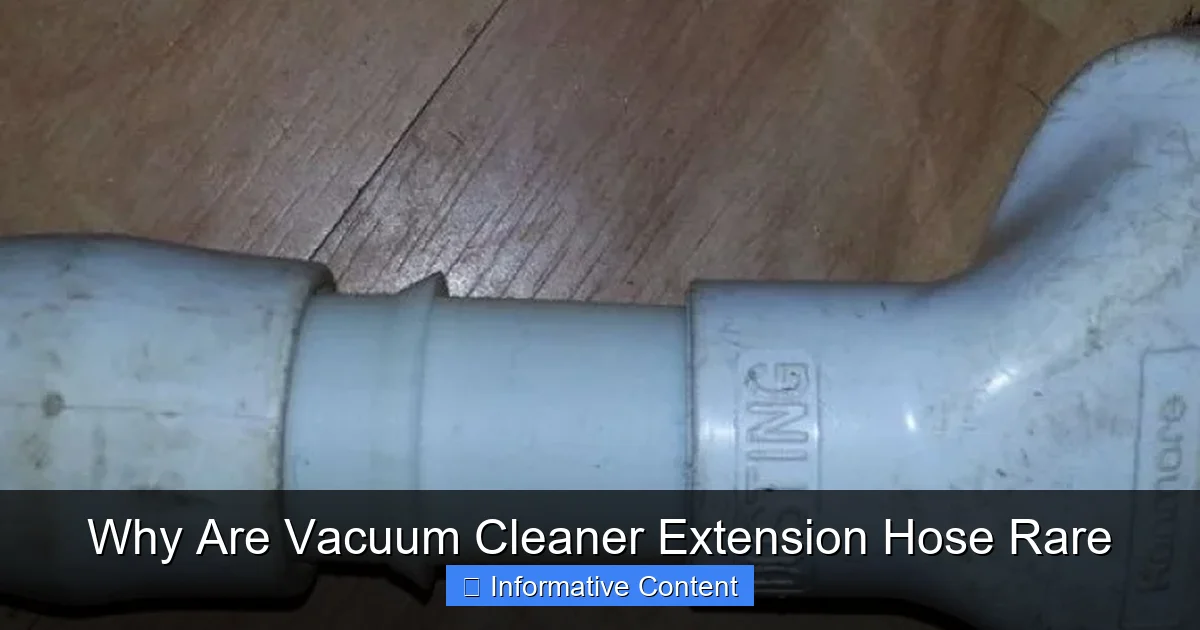
Visual guide about Why Are Vacuum Cleaner Extension Hose Rare
Image source: dl.myminifactory.com
A vacuum hose isn’t just a simple tube; it’s a carefully engineered component designed to be flexible, durable, and relatively lightweight. Extending this length introduces a host of material challenges.
Flexibility vs. Strength
A typical vacuum hose needs to be flexible enough to bend around furniture and corners without kinking, but strong enough to withstand being dragged, stepped on, and generally abused during cleaning. Achieving this balance over a standard 6-8 foot length is already a design challenge. Imagine a hose that’s two or three times that length.
To maintain flexibility over an extended length, the hose material might need to be thinner or softer, making it more prone to tearing, punctures, or collapsing under its own weight or external pressure. Conversely, making it strong enough to resist damage would likely make it stiff and unwieldy, negating the benefit of extended reach. Finding the sweet spot for a long vacuum cleaner extension hose is incredibly difficult and expensive.
Kinking and Crushing Risks
Longer hoses are inherently more susceptible to kinking. A kink effectively blocks the airflow, instantly killing suction and putting immense strain on the vacuum motor. It’s annoying with a standard hose, but with a very long one, kinks would be almost constant, making cleaning a stop-and-go nightmare.
Moreover, a longer hose is more likely to be accidentally stepped on or run over by furniture. If the hose isn’t robust enough, it can easily crush, creating permanent damage that compromises its integrity and suction permanently. The materials and construction required to prevent kinking and crushing over extreme lengths add significant cost and bulk.
Design, Storage, and Ergonomics: A User’s Nightmare
Beyond the technical hurdles, a very long vacuum cleaner extension hose creates a host of practical problems for the user, impacting convenience and safety.
Tangles and Tripping Hazards
Picture trying to navigate a room with a 20-foot or 30-foot hose trailing behind you. It would inevitably get tangled around furniture legs, snag on corners, and coil up in inconvenient places. This isn’t just an annoyance; it’s a significant tripping hazard, both for the person vacuuming and for anyone else in the vicinity. Imagine trying to clean stairs or multiple rooms with such an unwieldy tether. The potential for accidents would be very high.
Bulkiness and Storage Solutions
Where would you put it? A standard vacuum cleaner hose already takes up a fair amount of space. A hose that’s several times longer would be incredibly bulky and difficult to store. It wouldn’t fit neatly onto most vacuum cleaner’s onboard storage solutions, and coiling it up manually would be a cumbersome task after every cleaning session. Homeowners would be left with a large, awkward item to stash in a closet, taking up valuable space. This lack of practical storage contributes significantly to why a vacuum cleaner extension hose is rare.
Cost Implications and Market Demand
Manufacturers operate in a competitive market. They need to produce products that are effective, durable, and affordable, while also meeting consumer demand.
Manufacturing Costs
Developing and manufacturing a high-quality, long vacuum cleaner extension hose that addresses all the engineering and material challenges mentioned above would be significantly more expensive than producing a standard hose. This cost would include research and development, specialized materials, and more complex manufacturing processes. These increased costs would naturally be passed on to the consumer.
Consumer Willingness to Pay
Would consumers be willing to pay a premium price for a vacuum cleaner extension hose that, despite its length, offers significantly reduced suction and is difficult to handle and store? Most likely, no. Consumers primarily want efficient cleaning, and a compromised, expensive extension would fail to deliver on that front. The value proposition simply isn’t there.
Niche Market vs. Mass Appeal
The need for an extremely long vacuum cleaner extension hose is a niche requirement for most households. Most standard homes can be cleaned effectively with a vacuum’s normal hose length combined with a reasonable power cord. Manufacturers focus on mass-market appeal, and investing in a product with limited demand and significant drawbacks simply doesn’t make good business sense.
The Rise of Alternative Solutions
Instead of struggling to make a long extension hose work, the market has naturally gravitated towards alternative solutions that address the need for extended reach in more effective ways.
Cordless Vacuums
The explosion in popularity of cordless stick vacuums has largely diminished the need for extended hoses. These lightweight, highly maneuverable devices offer unparalleled freedom of movement, allowing users to reach high ceilings, under furniture, and into cars without being tethered by a cord or limited by hose length. While they might not always match the raw power of a corded upright, their convenience often outweighs this for many tasks.
Central Vacuum Systems
For those who truly need extended reach throughout an entire home, central vacuum systems are the ultimate solution. These systems feature a powerful vacuum unit typically installed in a garage or basement, with a network of tubing running through the walls to inlet ports in various rooms. Users simply plug a lightweight hose (often 25-30 feet long) into the nearest wall inlet. Because the main unit is so powerful and the tubing is fixed and optimized for airflow, these systems maintain excellent suction even with long hoses, and the hose itself is the only component you carry.
Longer Power Cords and Extension Cords
While not an extension hose, many manufacturers have simply opted to equip their corded vacuums with much longer power cords (some up to 30-35 feet). This allows users to cover a larger area from a single power outlet, reducing the need to constantly unplug and replug the machine. For even more reach, using a properly rated electrical extension cord with your vacuum is a common and safe practice, provided the cord is in good condition and suitable for the vacuum’s wattage. This extends the *machine’s* reach, not just the hose’s.
Safety and Practical Limitations
Beyond performance, there are inherent safety and practical limitations that arise with excessively long vacuum hoses.
Maneuverability and User Fatigue
Imagine the physical effort required to drag, maneuver, and control a very long hose while simultaneously operating the cleaning attachment. The weight of the hose itself, coupled with its unwieldiness, would quickly lead to user fatigue. Cleaning would become a chore in the worst sense, potentially causing strain on wrists, arms, and back. The user experience would be extremely poor.
Potential for Damage to Belongings
A long, snaking hose increases the risk of accidental damage to furniture, walls, and other household items. It could knock over lamps, scratch painted surfaces, or get caught on delicate decorations. The longer the hose, the less control the user has over its trajectory and the greater the likelihood of an unwanted collision.
Conclusion
The rarity of vacuum cleaner extension hoses isn’t a mystery born of oversight, but rather a logical outcome of physics, engineering, practical user experience, and market economics. The desire for extended reach is certainly valid, but simply adding more hose to a standard vacuum creates more problems than it solves: dramatically reduced suction, material failures, inconvenient storage, safety hazards, and an overall poor cleaning experience.
Manufacturers, driven by consumer demand for effective and convenient cleaning solutions, have instead focused their innovation on alternatives. Cordless vacuums offer unparalleled freedom, central vacuum systems provide robust power over long distances, and longer power cords minimize the need for replugging. So, the next time you find yourself wishing for that elusive, extra-long vacuum cleaner extension hose, remember that its absence is a testament to the pursuit of better, more efficient, and ultimately more satisfying ways to keep our homes clean.
🎥 Related Video: Vacuum Cleaner Hoses
📺 yourspares
You may have found your vacuum cleaner has lost suction, this could mean there is a split in your hose causing the air to escape.
Frequently Asked Questions
Is it safe to use a regular garden hose as a vacuum extension?
No, it is generally not safe or effective to use a regular garden hose as a vacuum extension. Garden hoses are not designed for airflow efficiency, are typically too rigid, and can easily kink or damage your vacuum’s connection points, leading to poor performance and potential motor strain.
Do industrial vacuums use long extension hoses effectively?
Industrial vacuums often use longer and wider hoses than household vacuums. They are designed with much more powerful motors and larger hose diameters specifically to combat suction loss over distance, making long extension hoses more effective in heavy-duty commercial or workshop settings.
How do central vacuum systems overcome the long hose problem?
Central vacuum systems overcome the long hose problem by housing a very powerful main motor unit in a remote location (like a garage). This strong motor pulls air through optimized, fixed piping within walls to inlets, allowing users to attach a long but lightweight hose to the nearest inlet while maintaining excellent suction.
What’s the typical length of a standard vacuum cleaner hose?
The typical length of a standard household vacuum cleaner hose usually ranges from about 5 to 8 feet (approximately 1.5 to 2.4 meters). This length is considered a balance between providing adequate reach for common tasks and minimizing suction loss and bulkiness.
Why don’t manufacturers just include a longer hose with the vacuum?
Manufacturers don’t typically include much longer hoses because it would significantly increase manufacturing costs, lead to substantial suction loss, create storage and handling difficulties for the average user, and ultimately compromise the vacuum’s performance and user experience.
Does hose diameter play a role in suction loss for extension hoses?
Yes, hose diameter plays a crucial role. A larger diameter hose generally reduces airflow resistance compared to a smaller diameter hose of the same length, helping to minimize suction loss. This is why industrial vacuums, which often use longer hoses, also tend to have wider hose diameters.