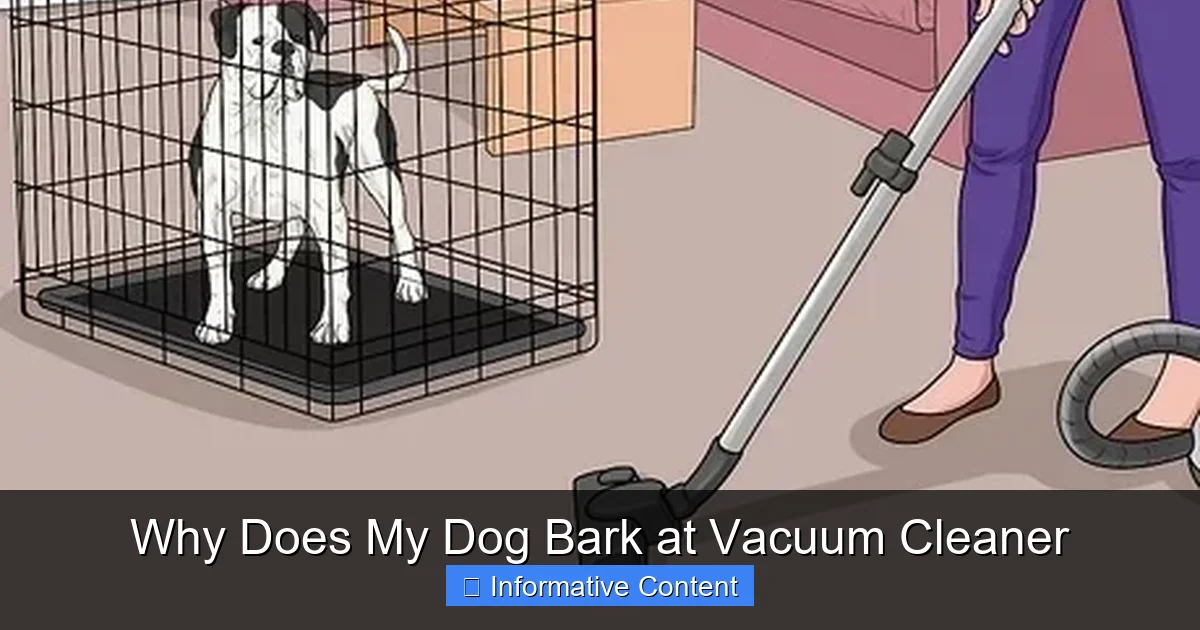
Why Does My Dog Bark at Vacuum Cleaner
Many dogs bark at vacuum cleaners due to a mix of fear, territorial instincts, and sensory overload from the loud noise and strange movement. This common behavior can also stem from learned responses or a desire to protect their family. Understanding these triggers is key to helping your dog feel more comfortable and less reactive during vacuuming sessions.
Why Does My Dog Bark at Vacuum Cleaner?
If you’re a dog owner, chances are you’ve experienced the chaotic symphony that erupts when you pull out the vacuum cleaner. Your usually calm and collected canine companion might transform into a barking, lunging, or quivering mess the moment that noisy machine starts humming. It’s a common scenario that leaves many pet parents scratching their heads, wondering: “Why does my dog bark at vacuum cleaner?”
It can be frustrating, noisy, and even a little concerning. Is your dog just being dramatic? Are they trying to protect you? Or are they genuinely terrified of the vacuum cleaner monster? Understanding the root cause of this behavior is the first step toward creating a more peaceful cleaning routine for everyone in your household, especially your furry friend. Let’s dive deep into the possible reasons behind your dog’s noisy reaction and explore practical ways to help them cope.
Key Takeaways
- Sensory Overload is Common: The vacuum cleaner’s loud noise, strange movement, and unfamiliar smell can overwhelm a dog’s sensitive senses, leading to an alarmed reaction.
- Instinct Plays a Big Role: Dogs often bark at vacuums due to fear, a protective territorial instinct, or a prey drive, interpreting the machine as a threat or something to chase.
- Learned Behaviors Contribute: Some dogs learn that barking gets attention, or they associate the vacuum with their human getting stressed, reinforcing the behavior over time.
- Body Language is Key: Observe your dog’s posture, tail, and ears to understand if their barking is driven by fear, play, or aggression, which guides your training approach.
- Desensitization is Effective: Gradually introducing your dog to the vacuum at low levels, paired with positive reinforcement, can help them build a positive association.
- Management and Training Help: Strategies like putting your dog in another room, using calming aids, or teaching specific commands (“quiet,” “go to mat”) can reduce barking.
- Professional Help Might Be Needed: If barking is extreme, persistent, or accompanied by aggression, consulting a certified professional dog trainer or vet behaviorist is recommended.
Quick Answers to Common Questions
Why do dogs bark at loud noises like vacuum cleaners?
Dogs have highly sensitive hearing, so loud and unpredictable noises like vacuum cleaners can be startling or even painful, triggering a fear or alert response where they bark to express their discomfort or warn their “pack.”
Is it normal for a dog to be scared of a vacuum cleaner?
Yes, it’s very normal for dogs to be scared of vacuum cleaners. The combination of loud noise, strange movement, and unfamiliar smells can be overwhelming and perceived as a threat by many dogs.
Can I train my dog not to bark at the vacuum cleaner?
Absolutely! With consistent positive reinforcement, desensitization, and counter-conditioning techniques, you can significantly reduce or eliminate your dog’s barking at the vacuum cleaner, helping them become more comfortable.
Should I punish my dog for barking at the vacuum?
No, punishing your dog for barking at the vacuum is not recommended. It can increase their fear and anxiety, potentially making the behavior worse or causing them to associate you with the unpleasantness, rather than helping them cope.
What should I do if my dog shows aggression towards the vacuum?
If your dog shows aggression (growling, snapping, lunging) towards the vacuum, prioritize safety by separating them immediately. Then, seek help from a certified professional dog trainer or a veterinary behaviorist to address the aggression safely and effectively.
📑 Table of Contents
The Sensory Overload: A World of Loud Noises and Strange Movements
For us humans, a vacuum cleaner is just a tool to keep our homes tidy. But for a dog, it’s a completely different experience. Dogs perceive the world through their heightened senses, and a vacuum cleaner can be a full-frontal assault on those senses.
Loud and Unpredictable Noises
Think about it: a vacuum cleaner is loud. Really loud. And dogs have much more sensitive hearing than we do. What sounds like a manageable hum to us might be an ear-splitting roar for them. The sudden start-up, the varying pitches as it moves across different surfaces, and the general cacophony can be genuinely startling. This unpredictable noise can trigger a flight-or-fight response in many dogs. They don’t understand where the sound is coming from or why it’s there, leading to confusion and alarm. For a dog, this noise is not natural; it’s an intruder in their quiet world. This is a primary reason why your dog barks at vacuum cleaner.
Strange and Threatening Movements
Beyond the noise, consider the vacuum cleaner’s appearance and movement. It’s a large, often clunky object that moves erratically, sometimes bumping into furniture, and chasing dust bunnies across the floor. To a dog, especially one who hasn’t been properly introduced to such objects, this moving machine can seem like a living, breathing threat. It doesn’t move like a person or another animal, making it even more alien and potentially dangerous in their eyes. The way it follows you, the way it “eats” things off the floor – it can all be very confusing and intimidating.
Unfamiliar Smells
While less obvious than sight and sound, smell also plays a role. Vacuums can emit unique smells from their motors, dust collection, or even cleaning solution residue. Dogs have an incredible sense of smell, and these unfamiliar odors can contribute to their apprehension. Just like an unknown sound or sight, a strange smell can signal danger or an unfamiliar presence in their territory. It’s another layer of sensory input that can overwhelm them and make them wonder why their dog barks at vacuum cleaner.
Instinctual Responses: Why Dogs Bark at Vacuum Cleaner
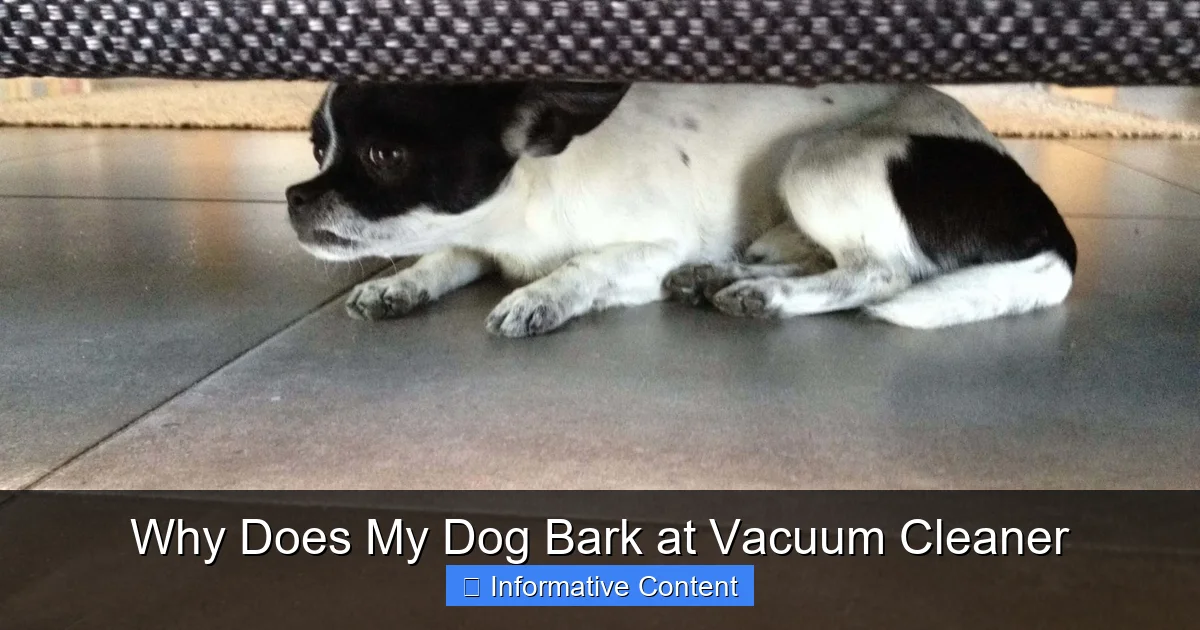
Visual guide about Why Does My Dog Bark at Vacuum Cleaner
Image source: cdn.babelbark.com
Much of a dog’s behavior is rooted in their ancient instincts. When confronted with something as unusual as a vacuum cleaner, these primal responses can kick in, causing them to react in various ways, often through barking.
Fear and Anxiety
For many dogs, barking at the vacuum cleaner is a clear sign of fear or anxiety. The loud noise, the strange appearance, and the unpredictable movements can genuinely scare them. They might not understand that the vacuum is harmless. Instead, they might perceive it as a monster, a predator, or something that could hurt them.
When a dog is scared, barking is a natural defense mechanism. It’s their way of saying, “Go away!” or “I’m scared!” You might also notice other signs of fear, such as trembling, flattened ears, tucking their tail, trying to hide, or even growling. A dog experiencing fear might bark incessantly, trying to make the “threat” disappear. Understanding this fear is crucial when trying to modify why your dog barks at vacuum cleaner.
Territorial Defense: Protecting Their Space
Dogs are naturally territorial creatures. Your home is their den, their safe space, and they feel a strong urge to protect it and their “pack” (you and your family) from perceived intruders. To a dog, the vacuum cleaner might appear to be an unwelcome invader. It roams through *their* territory, making a lot of noise, and seemingly trying to take things (dirt and dust) from *their* floor.
This territorial instinct can prompt a dog to bark aggressively, stand guard, or even try to chase and nip at the vacuum. They’re not being “bad”; they’re simply doing what their instincts tell them: defending their home from what they believe is a threat. They are alerting you to the presence of this “intruder.”
Prey Drive and Playfulness
On the flip side, some dogs might interpret the vacuum cleaner’s movement as a form of prey. The way it moves across the floor, sometimes catching loose strings or dust bunnies, can trigger a dog’s natural prey drive. For these dogs, the barking isn’t necessarily fear-based; it’s more about excitement and the desire to chase or “catch” the moving object.
These dogs might bark, pounce, and even try to “herd” the vacuum. They might see it as a giant, noisy toy that needs to be chased. While this might seem less concerning than fear, it can still be disruptive and potentially dangerous if your dog gets in the way of the vacuum. This interpretation explains why some dogs bark at vacuum cleaner with more playful energy than fear.
Alerting the Pack
Dogs are social animals and part of their natural behavior is to alert their pack members to anything unusual or potentially threatening. When your dog barks at the vacuum cleaner, they might be trying to tell you, “Hey, something weird is happening! Look at this noisy thing! Are you seeing this?” They might perceive your relaxed attitude towards the vacuum as a lack of awareness and feel it’s their job to bring it to your attention. It’s their way of communicating and trying to ensure everyone in the “pack” is safe.
Learned Behaviors: The Reinforcement Loop
Sometimes, a dog’s reaction to the vacuum cleaner isn’t just instinctual; it can also be a learned behavior. Dogs are incredibly smart and quickly pick up on patterns and consequences.
Attention-Seeking Behavior
Imagine this: you turn on the vacuum, and your dog starts barking. What do you do? You might scold them, try to shush them, or pick them up. While your intention is to stop the barking, your dog might interpret any reaction from you as attention. Even negative attention is still attention for some dogs!
If your dog learns that barking at the vacuum cleaner reliably gets a response from you, they might continue the behavior. They’ve effectively trained you to acknowledge them every time the vacuum comes out. This can quickly become a hard-to-break habit if not addressed correctly.
Association with Negative Experiences
Has your dog ever been accidentally bumped by the vacuum? Or perhaps they associate the vacuum being out with you being too busy to play or giving them less attention? These negative associations can build up over time. If every time the vacuum comes out, something unpleasant happens (even if minor), your dog might develop a strong aversion to it.
Conversely, some dogs might associate the vacuum cleaner with *you* being stressed or agitated, which then makes them anxious. They pick up on your body language and mood, and if vacuuming is a chore you dread, your dog might sense that tension and react accordingly.
Lack of Socialization
Early life experiences play a huge role in how a dog reacts to new things. If a puppy isn’t exposed to various sights, sounds, and objects (including household appliances) in a positive and gradual way during their critical socialization period (roughly 3 to 16 weeks), they might grow up to be more fearful or reactive to unfamiliar stimuli. A dog who never encountered a vacuum cleaner as a young pup might be more prone to barking out of fear or confusion when they first encounter it as an adult.
Understanding Your Dog’s Specific Bark and Body Language
Not all barking is created equal. The way your dog barks, combined with their body language, can give you huge clues about why your dog barks at vacuum cleaner.
Fearful Barking
* **Sound:** Often high-pitched, frantic, or accompanied by whimpers.
* **Body Language:** Tail tucked, ears back or flattened, body low to the ground, trembling, wide eyes showing the whites, trying to hide or retreat, might growl before or after barking.
* **Meaning:** “I’m scared! Make it go away!”
Territorial/Alert Barking
* **Sound:** Deep, resonant, repetitive, sometimes accompanied by growling.
* **Body Language:** Stiff body, head held high, ears forward, tail held stiffly or slowly wagging, might stand between you and the vacuum, hackles raised.
* **Meaning:** “Intruder alert! I’m protecting my home/family!”
Playful/Excited Barking
* **Sound:** Higher-pitched, often accompanied by yips or excited woofs, less aggressive.
* **Body Language:** Loose, bouncy movements, play bow, tail wagging excitedly, pupils dilated, might try to pounce or mouth the vacuum.
* **Meaning:** “Let’s play! This is fun!”
Attention-Seeking Barking
* **Sound:** Can vary, but often persistent and directed at you, might stop briefly if you look at them, then resume.
* **Body Language:** Might try to get between you and the vacuum, paw at you, make eye contact, typical “I want something” signals.
* **Meaning:** “Look at me! Acknowledge me!”
Observing these cues carefully will help you tailor your approach to addressing the behavior. If you mistakenly treat a fearful bark with punishment, you could actually worsen your dog’s anxiety.
Strategies to Help Your Dog Stop or Reduce Barking at the Vacuum
Now that you understand *why* your dog barks at vacuum cleaner, let’s talk about what you can do about it. The goal isn’t necessarily to make your dog love the vacuum, but to help them tolerate it calmly.
1. Desensitization and Counter-Conditioning
This is the most effective long-term strategy. It involves gradually exposing your dog to the vacuum cleaner while creating a positive association.
* **Step 1: Introduction (Silent Mode):** Start with the vacuum cleaner off and stationary. Place it in a visible spot in the room. Don’t force your dog to approach it. Instead, reward them with high-value treats and praise whenever they are calm in its presence, even if they just glance at it without barking.
* **Step 2: Proximity Rewards:** Over several sessions, move the vacuum closer while it’s still off. Reward your dog for calm behavior. If your dog shows fear, move the vacuum further away again. This is about working at your dog’s pace.
* **Step 3: Introduce the Sound (Low Level):** Once your dog is comfortable with the silent vacuum, turn it on for just a second or two in another room, far enough away that your dog barely reacts. Immediately give them a treat. Repeat this many times, gradually increasing the duration and bringing the vacuum closer (still in another room).
* **Step 4: Gradual Exposure (In Room):** When your dog is calm with the sound from a distance, bring the vacuum into the same room, still off. Then, turn it on for short bursts, always pairing it with treats. You can even try using it for a few seconds, moving it a tiny bit, and then turning it off, rewarding your dog.
* **Step 5: Move and Treat:** Gradually start moving the vacuum while it’s on, still in short bursts and always rewarding calm behavior. Keep sessions short and positive. The key is to associate the vacuum with good things (treats, praise, playtime) rather than fear or anxiety.
2. Management Strategies
Sometimes, the easiest solution is to remove your dog from the situation entirely.
* **Physical Separation:** When you need to vacuum, put your dog in a different room with a long-lasting treat (like a Kong stuffed with peanut butter or a chew toy). Close the door or use a baby gate. This keeps them safe and reduces their stress.
* **Distraction:** Engage your dog in a high-value activity elsewhere. Play a game of fetch in the yard, or give them a puzzle toy in another area of the house while you vacuum quickly.
* **Exercise Beforehand:** A tired dog is often a calm dog. Take your dog for a long walk or a vigorous play session before you plan to vacuum. They’ll be more likely to rest quietly instead of reacting.
3. Training Specific Commands
Certain commands can be very helpful in managing your dog’s reaction.
* **”Go to Your Mat/Place”:** Train your dog to go to a designated spot (a bed, mat, or crate) and stay there calmly. Practice this in a calm environment first. Once they’ve mastered it, you can direct them to their “place” before you start vacuuming, rewarding them for staying put.
* **”Quiet”:** This command can be useful for any unwanted barking. Teach it by waiting for a pause in barking, saying “Quiet,” and immediately rewarding them. Gradually increase the time they need to be quiet before getting a treat.
4. Environmental Enrichment and Calming Aids
A well-exercised and mentally stimulated dog is less likely to develop anxiety or behavioral issues.
* **Regular Exercise:** Ensure your dog gets enough physical exercise appropriate for their breed and age.
* **Mental Stimulation:** Puzzle toys, training sessions, and interactive games can help keep your dog’s mind engaged and reduce boredom, which can sometimes contribute to reactivity.
* **Calming Aids:** Consider using calming pheromone diffusers (like Adaptil), thunder shirts, or vet-approved calming supplements if your dog’s anxiety is severe. Always consult your vet before introducing any supplements.
* **White Noise/Music:** Playing calming music or a white noise machine can help mask the sound of the vacuum, making it less jarring for your dog.
5. When to Seek Professional Help
If your dog’s reaction to the vacuum cleaner is extreme – involving aggression, uncontrollable panic, or if you’re struggling to make progress on your own – it’s time to call in the experts.
* **Certified Professional Dog Trainer (CPDT-KA):** A good trainer can assess your dog’s behavior, identify the underlying causes, and provide a customized training plan.
* **Veterinary Behaviorist (DACVB):** For severe cases of fear, anxiety, or aggression, a veterinary behaviorist (a vet with specialized training in animal behavior) can offer medical insight and may prescribe medication to help manage anxiety alongside behavioral modification.
Conclusion
The symphony of barks, growls, and whines that accompanies your vacuum cleaner is a common experience for dog owners. While it might seem like a quirky habit, your dog’s reaction stems from a complex mix of sensory overload, deep-seated instincts, and learned behaviors. Whether it’s fear, territorial defense, prey drive, or just a bid for attention, understanding the specific reasons why your dog barks at vacuum cleaner is the first step toward a quieter, less stressful cleaning routine.
By patiently implementing strategies like desensitization, positive reinforcement, effective management, and perhaps a little professional guidance, you can help your dog learn to tolerate the vacuum cleaner with greater calm and confidence. Remember, consistency and empathy are your best tools. With time and effort, you and your furry friend can navigate cleaning day without the drama, creating a more harmonious home for everyone.
🎥 Related Video: Stop My Dog Barking at the Hoover | Teach Calmness Around the Vacuum Cleaner
📺 Barket Place
Does your dog bark at the vacuum cleaner? Or are your dogs scared of the hoover? In this video, we give our top tips for training …
Frequently Asked Questions
What is the most common reason a dog barks at a vacuum?
The most common reason a dog barks at a vacuum cleaner is fear or anxiety triggered by the loud, sudden noise and the machine’s unpredictable movements. Dogs often perceive the vacuum as a strange, threatening intruder in their territory.
How can I make my dog less afraid of the vacuum?
To make your dog less afraid, use desensitization and counter-conditioning. Gradually introduce the vacuum cleaner (starting with it off and at a distance), pairing its presence with high-value treats and praise, slowly increasing exposure as your dog remains calm.
Is it possible my dog thinks the vacuum is a plaything?
Yes, some dogs, especially those with a strong prey drive or playful personalities, might interpret the vacuum’s movement as a game. They might bark and pounce out of excitement, wanting to chase or “play” with the moving object.
What if my dog’s barking is getting worse over time?
If your dog’s barking is worsening, it often indicates increased fear or anxiety that hasn’t been addressed. Re-evaluate your training approach, ensure you’re not inadvertently reinforcing the behavior, and consider consulting a professional trainer or veterinary behaviorist.
Should I put my dog in another room when I vacuum?
Yes, temporarily putting your dog in another room with a distracting toy or treat is an excellent management strategy. It reduces their stress, keeps them safe, and prevents the barking behavior from being reinforced while you clean.
How long does it take to train a dog not to bark at the vacuum?
The time it takes varies greatly depending on the dog’s individual personality, the severity of their fear, and the consistency of your training. It can range from a few weeks to several months, requiring patience and a gentle approach.