Cyclonic Vacuum Cleaner How It Works
Ever wondered how a cyclonic vacuum cleaner works its magic? Unlike traditional models, these innovative cleaners use rapid, spinning air to separate dirt and dust from the airflow, preventing filter clogging. This ingenious system ensures consistent, powerful suction and improved air quality, making your cleaning routine much more effective and hygienic without the need for bags.
Cyclonic Vacuum Cleaner How It Works
Have you ever found yourself mid-vacuum, only to notice that your trusty machine isn’t quite as mighty as it used to be? That once-powerful roar seems a little weaker, and that stubborn crumb on the carpet just keeps resisting. If you’ve owned a traditional vacuum cleaner, you’ve likely experienced the frustrating reality of diminishing suction power as the dust bag fills up or the filter gets clogged. It’s a common problem that has plagued households for decades, making cleaning a chore that often feels less effective over time.
This loss of suction isn’t just annoying; it means your vacuum isn’t truly cleaning as well as it should. The air pathway gets restricted, and the motor has to work harder, leading to inefficiency and potential wear and tear. For years, consumers simply accepted this as an unavoidable part of vacuum ownership, dutifully replacing bags and cleaning filters in an attempt to restore that initial powerful performance. But what if there was a better way? What if a vacuum could maintain its suction, bag after bag (or rather, bin after bin)?
Enter the cyclonic vacuum cleaner, a revolutionary piece of technology that transformed home cleaning. Instead of relying solely on filters to trap dirt, these ingenious machines harness the power of rapidly spinning air to separate dust and debris from the airflow. If you’ve ever wondered about the magic behind their consistent power, you’re in the right place. Let’s delve deep into understanding the cyclonic vacuum cleaner how it works, from its fundamental principles to the advanced engineering that keeps your home spotless.
Key Takeaways
- No Loss of Suction: Cyclonic vacuums maintain consistent suction power because dirt and dust are spun out of the airflow before reaching the main filter.
- Multi-Stage Separation: The core principle involves creating high-speed air vortexes (cyclones) that use centrifugal force to separate larger debris first, then progressively finer dust particles.
- Bagless Convenience: These cleaners eliminate the need for disposable bags, collecting dirt in an easy-to-empty bin, which is more economical and environmentally friendly.
- Improved Air Quality: By capturing a significant portion of dust before the filters, the system minimizes filter clogging and, especially with HEPA filters, releases cleaner air back into your home.
- Dyson’s Innovation: The modern cyclonic vacuum cleaner concept was popularized and refined by James Dyson, adapting industrial cyclone technology for household use.
- Reduced Maintenance: While filters still exist, they last longer and require less frequent cleaning or replacement compared to traditional bagless systems that rely heavily on primary filters.
Quick Answers to Common Questions
What is the main advantage of a cyclonic vacuum cleaner?
The main advantage is its consistent, powerful suction that does not diminish as the dust bin fills, unlike traditional vacuums that lose suction as their bags or filters get clogged.
Does a cyclonic vacuum cleaner use bags?
No, cyclonic vacuum cleaners are bagless. They collect dirt and debris in a transparent, easy-to-empty dust bin.
What is centrifugal force and how does it relate to cyclonic vacuums?
Centrifugal force is the outward force experienced by an object moving in a circular path. In cyclonic vacuums, it’s used to spin air at high speeds, flinging dirt and dust particles to the outer walls of the chamber where they drop into the bin.
Do cyclonic vacuums have filters?
Yes, cyclonic vacuums still have filters (usually pre-motor and post-motor, often HEPA). However, because the cyclonic action removes most of the dirt, these filters experience much less load and clog slower, serving as a final safeguard.
Is a cyclonic vacuum cleaner good for allergies?
Yes, cyclonic vacuums are often excellent for allergy sufferers. Their multi-stage separation combined with effective HEPA filters can capture a high percentage of microscopic allergens, releasing cleaner air back into your home.
📑 Table of Contents
The Core Problem with Traditional Vacuums: Why Suction Fades
Before we explore the brilliance of cyclonic technology, it’s helpful to understand the limitations of conventional vacuum cleaners. For a long time, the standard design relied on a simple principle: suck air and debris into a bag or a single filter chamber, where particles would be trapped, and cleaner air would exit. This method, while functional, came with significant drawbacks.
The Clogging Filter Dilemma
In traditional vacuums, whether bagged or bagless, the primary mechanism for separating dirt from air is a filter. As air carrying dust and debris rushes towards this filter, the particles get caught, while the air passes through. Sounds straightforward, right? The problem arises as more and more particles accumulate on the filter’s surface. This build-up acts like a barrier, reducing the porosity of the filter and restricting the airflow. Imagine trying to breathe through a cloth that’s getting progressively thicker and dirtier – it becomes harder and harder. The same happens with your vacuum; reduced airflow means reduced suction power. The motor might still be working hard, but its ability to pull dirt effectively diminishes rapidly. This often leads to frustrating repeat passes over the same spot, wasting time and energy.
The Messy Bag Experience
For bagged vacuum cleaners, the issue is compounded by the bag itself. As the bag fills with dirt and dust, it not only adds weight but also becomes a giant filter. The layers of trapped dirt further impede airflow, causing suction to drop significantly long before the bag is even completely full. Replacing these bags can be a dusty, unhygienic affair, often releasing trapped allergens back into the air. And let’s not forget the recurring cost of buying replacement bags, which can add up over time. Traditional bagless vacuums sought to solve the bag problem, but they often still suffered from rapid filter clogging, requiring frequent cleaning or replacement of their primary filter, which was also a messy task.
Enter the Cyclone: A Brief History and Inspiration
Visual guide about Cyclonic Vacuum Cleaner How It Works
Image source: mir-s3-cdn-cf.behance.net
The solution to these age-old vacuum problems didn’t come from a new type of filter, but from a completely different approach to separation. The concept of using centrifugal force to separate particles isn’t new; it has been employed in industrial settings for over a century. However, adapting this powerful principle for household vacuum cleaners was a stroke of genius.
James Dyson’s Vision
The most famous pioneer of cyclonic vacuum technology for the home is undoubtedly British inventor James Dyson. Frustrated by the constant loss of suction in his own traditional vacuum cleaner, Dyson observed industrial sawmills that used large cyclonic separators to efficiently remove sawdust from the air without clogging filters. He realized this technology held the key to creating a vacuum that would never lose suction. Over five years and more than 5,000 prototypes, Dyson painstakingly refined the cyclonic separation process to work efficiently on a smaller scale, specifically for the diverse range of dust and debris found in a home environment.
Industrial Roots
Before Dyson brought it to our living rooms, cyclonic separation was a well-established industrial technique used in various fields. Factories used large cyclones to separate everything from wood dust and metal shavings to chemical particles from air streams. These industrial cyclones are massive conical structures where particle-laden air is spun at high speeds. The heavier particles are flung outwards and fall to the bottom, while the cleaner air exits through the top. Dyson’s challenge was to miniaturize this powerful, efficient system to fit into a portable household appliance, capable of handling microscopic dust as effectively as larger crumbs. This adaptation laid the groundwork for how a cyclonic vacuum cleaner works today.
Cyclonic Vacuum Cleaner How It Works: The Science Explained
At its heart, the cyclonic vacuum cleaner operates on a beautifully simple yet incredibly effective scientific principle: centrifugal force. Instead of relying primarily on a filter to trap dirt, it uses a rapid spinning motion to throw dirt and dust out of the airflow. Let’s break down the journey of dirt through a cyclonic system.
Airflow and Suction: The Initial Pull
It all begins like any other vacuum cleaner: a powerful motor creates a vacuum, drawing in air, dust, and debris through the nozzle and into the main body of the machine. This initial suction is crucial for lifting particles from your floors and surfaces. However, what happens next is where the cyclonic vacuum cleaner how it works truly differentiates itself.
The First Stage Cyclone: Larger Debris Separation
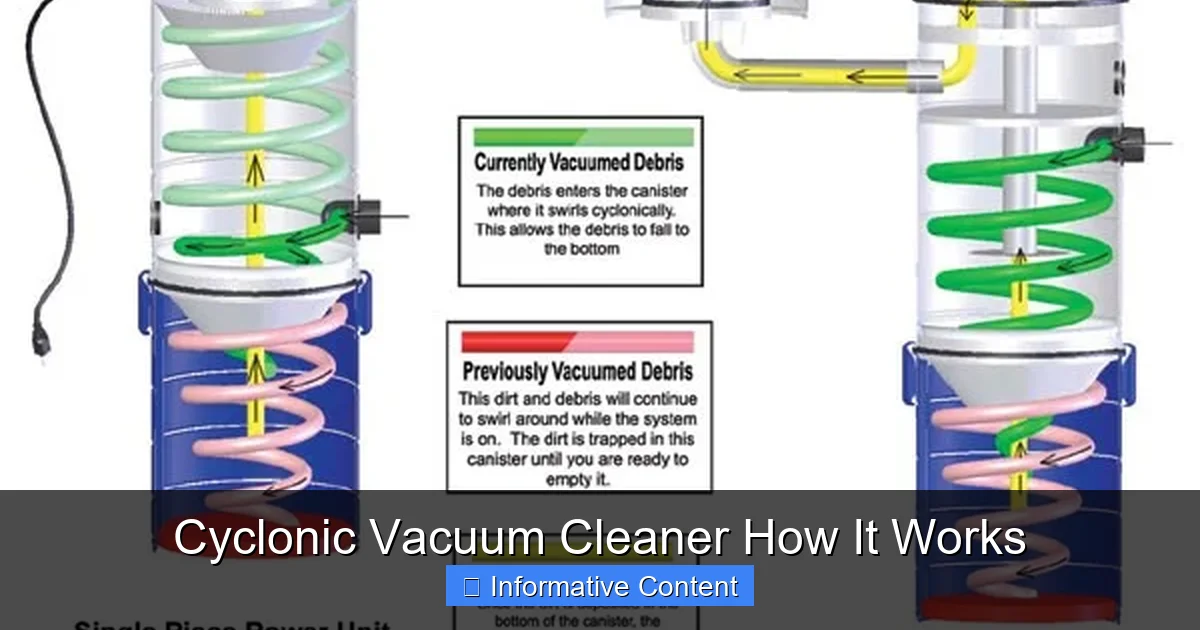
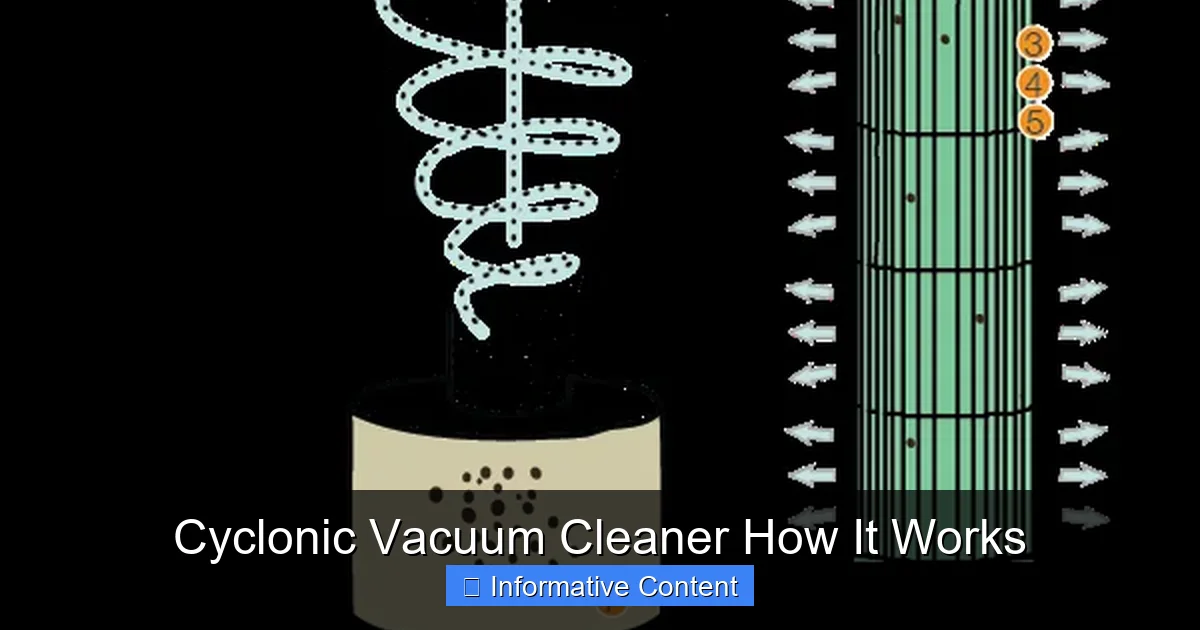
Once the dirty air enters the main collection chamber, it’s not immediately directed towards a filter. Instead, it’s forced into a conical (or cylindrical) chamber designed to make the air spin at an incredibly high velocity. This rapid, swirling motion creates a powerful vortex, much like a mini-tornado inside your vacuum.
As the air spins, centrifugal force comes into play. You’ve experienced centrifugal force if you’ve ever been on a spinning carnival ride; you get pushed outwards. In the cyclonic vacuum, the heavier dust particles, crumbs, pet hair, and larger debris are flung outwards towards the walls of the chamber. As they hit the walls, they lose momentum and gravity takes over, causing them to fall downwards into the collection bin at the bottom. This first stage effectively removes the majority of the larger, heavier debris, protecting the finer filters that come later. This is a critical step in understanding how a cyclonic vacuum cleaner works.
The Second Stage (and Beyond) Cyclones: Fine Dust Capture
After the larger debris has been separated, the air, now significantly cleaner but still containing finer dust and microscopic allergens, continues its journey. In many modern cyclonic vacuum cleaners, especially those with advanced multi-cyclone technology, this air is then directed into an array of smaller, often narrower, conical cyclones.
Why smaller cyclones? Because the narrower the cone, the faster the air has to spin to maintain the vortex. This increased speed generates even greater centrifugal forces, which are necessary to separate the much lighter, microscopic dust particles and allergens that the first, larger cyclone couldn’t catch. These tiny particles are also flung to the outer walls of their respective small cones and fall into a separate part of the collection bin, or sometimes join the larger debris. This multi-stage process ensures that an astonishingly high percentage of airborne particles are removed from the air stream before it ever reaches the machine’s filters.
The Filtration System: The Final Cleanse
Despite the remarkable efficiency of the cyclonic separation process, a cyclonic vacuum cleaner still incorporates filters. However, these filters are no longer the primary means of separation. Instead, they act as a final safeguard, capturing any minuscule particles that might have escaped the cyclonic action. Because the vast majority of dirt has already been removed, these filters experience significantly less load and therefore clog much slower than in traditional vacuums.
Many cyclonic vacuums feature advanced HEPA (High-Efficiency Particulate Air) filters. These filters are designed to capture 99.97% of airborne particles as small as 0.3 microns, including pollen, pet dander, dust mites, and mold spores. This means the air exhausted back into your home is exceptionally clean, a huge benefit for allergy sufferers. The reduced burden on these filters also means they require less frequent cleaning or replacement, contributing to the consistent performance that defines the cyclonic vacuum cleaner how it works.
The Dust Bin: Collection and Disposal
All the separated dirt and dust, whether large debris from the first stage or fine particles from subsequent stages, collect in a transparent, easy-to-empty bin. This bagless design is one of the most beloved features of cyclonic vacuums. Once you’re done cleaning, a simple press of a button usually releases the bottom of the bin, allowing you to hygienically empty the contents directly into a trash can without touching the dirt or being exposed to clouds of dust.
Key Benefits of Cyclonic Technology
Understanding the intricacies of the cyclonic vacuum cleaner how it works reveals a host of compelling advantages that set it apart from traditional models.
Consistent Suction Power
This is the headline benefit. Because dirt and dust are constantly being spun out of the airflow and into the collection bin, they don’t block the air pathway to the same extent as in bagged or primary-filter-dependent vacuums. This means the motor can maintain optimal airflow and suction strength from the moment you start cleaning until the bin is full, ensuring a truly effective clean every time.
Bagless Convenience and Cost Savings
Say goodbye to expensive, disposable vacuum bags. With a cyclonic vacuum, all the dirt is collected in a reusable bin. This not only saves you money on recurring bag purchases but also eliminates the environmental waste associated with single-use bags. Emptying the bin is usually quick, clean, and straightforward.
Improved Air Quality
The multi-stage separation process, followed by robust filtration (often HEPA-grade), ensures that the air expelled by a cyclonic vacuum is significantly cleaner than with many traditional models. By capturing more microscopic particles and allergens, these vacuums are a boon for allergy sufferers and anyone concerned about indoor air quality. They effectively trap particles that can trigger respiratory issues, making your home a healthier environment.
Reduced Maintenance
While cyclonic vacuums still have filters, their workload is drastically reduced. This means filters last longer, require less frequent washing or replacement, and are less likely to become a bottleneck for suction. Overall, the system demands less hands-on maintenance to keep it performing at its best.
Visibility of Dirt Collected
The transparent dust bin is not just for convenience; it provides immediate visual feedback on how much dirt and debris your vacuum has collected. There’s a certain satisfaction in seeing the swirling dirt and knowing just how effective your cyclonic vacuum cleaner how it works really is!
Maintaining Your Cyclonic Vacuum for Optimal Performance
Even with their advanced design, cyclonic vacuum cleaners benefit from a little care and attention to ensure they continue to perform at their peak. Here are some practical tips:
Emptying the Dust Bin Regularly
While cyclonic vacuums don’t lose suction due to a full bin in the same way traditional vacuums do, it’s still best to empty the dust bin after each significant use, or when it reaches its “max fill” line. An overly full bin can eventually start to impact airflow, and it prevents the cyclonic action from working as effectively. Plus, a fresh start for each cleaning session is always a good idea.
Cleaning Filters
Your cyclonic vacuum will have filters, usually a pre-motor filter (often washable) and a post-motor or HEPA filter. Check your user manual for specific instructions on how often to clean or replace them. Washable filters should be rinsed with cold water until the water runs clear, then allowed to air dry completely for at least 24 hours before being put back in the machine. Never use a damp filter, as this can damage the motor. Replace non-washable HEPA filters as recommended by the manufacturer, typically once a year. This is a key part of maintaining the efficiency of how your cyclonic vacuum cleaner works.
Checking for Blockages
Periodically inspect the hose, wand, and brush bar for any blockages. Large debris like socks, paper, or clumps of pet hair can sometimes get stuck, restricting airflow. Removing these blockages promptly will restore full suction. Most cyclonic vacuum designs make it relatively easy to access and clear such obstructions.
Brush Bar Maintenance
If your cyclonic vacuum has a motorized brush bar, hair and fibers can become tangled around it, reducing its effectiveness. Regularly check and clean the brush bar, using scissors to carefully cut away tangled hair. This ensures the brush can agitate carpets properly and helps prevent strain on the motor.
Proper Storage
Store your vacuum in a dry, safe place where it won’t be exposed to extreme temperatures. Keeping it tidy and accessible encourages more frequent use and better maintenance.
Conclusion
The journey from a traditional, suction-fading vacuum cleaner to the consistently powerful cyclonic vacuum cleaner how it works is a testament to ingenious engineering and a relentless pursuit of a better solution. By harnessing the simple yet profound principle of centrifugal force, these machines have revolutionized the way we clean our homes. They offer unparalleled advantages: consistent suction, bagless convenience, superior air quality, and reduced maintenance, all wrapped up in a package that makes cleaning more efficient and less frustrating.
So, the next time you power up your cyclonic vacuum and watch the dirt swirl mesmerizingly into the transparent bin, take a moment to appreciate the science at play. It’s not just a vacuum cleaner; it’s a meticulously designed system that ensures your home stays cleaner, your air fresher, and your cleaning efforts truly count. If you haven’t experienced the difference, perhaps it’s time to discover how this innovative technology can transform your cleaning routine for good.
Frequently Asked Questions
How often should I empty the dust bin of my cyclonic vacuum?
It’s generally recommended to empty the dust bin after each significant use or when the dirt reaches the maximum fill line. This ensures optimal cyclonic action and consistent airflow for the best cleaning performance.
Can I wash the filters in my cyclonic vacuum cleaner?
Many cyclonic vacuums have washable pre-motor filters. Always check your user manual for specific instructions, but typically you rinse them with cold water until clean and let them air dry completely for at least 24 hours before reinserting. Post-motor or HEPA filters are often not washable and need to be replaced periodically.
Why is my cyclonic vacuum losing suction if it’s supposed to be consistent?
While cyclonic vacuums minimize suction loss from a full bin, blockages in the hose, wand, or brush bar, or extremely dirty filters can still reduce suction. Regularly check for physical obstructions and clean your filters as recommended to maintain peak performance.
Are cyclonic vacuums louder than traditional vacuums?
The noise level of cyclonic vacuums can vary widely by model and manufacturer, just like traditional vacuums. Some high-end cyclonic models are designed to be quite quiet, while others may produce a noticeable hum from the high-speed air movement, but it’s not inherently louder due to the cyclonic technology itself.
How does multi-cyclone technology differ from a single cyclone?
Multi-cyclone technology uses several smaller cyclones in addition to a main large one. The smaller cyclones spin air at even higher speeds, creating greater centrifugal force to capture much finer, microscopic dust particles that might escape a single, larger cyclone, leading to more thorough separation and cleaner exhaust air.
Is it worth upgrading to a cyclonic vacuum cleaner?
Many users find upgrading to a cyclonic vacuum cleaner to be highly beneficial due to their consistent suction, bagless convenience, improved air filtration, and reduced ongoing costs for bags. If you’re frustrated by diminishing suction or recurring bag expenses with your current vacuum, a cyclonic model could be a worthwhile investment for a more effective and hassle-free cleaning experience.