

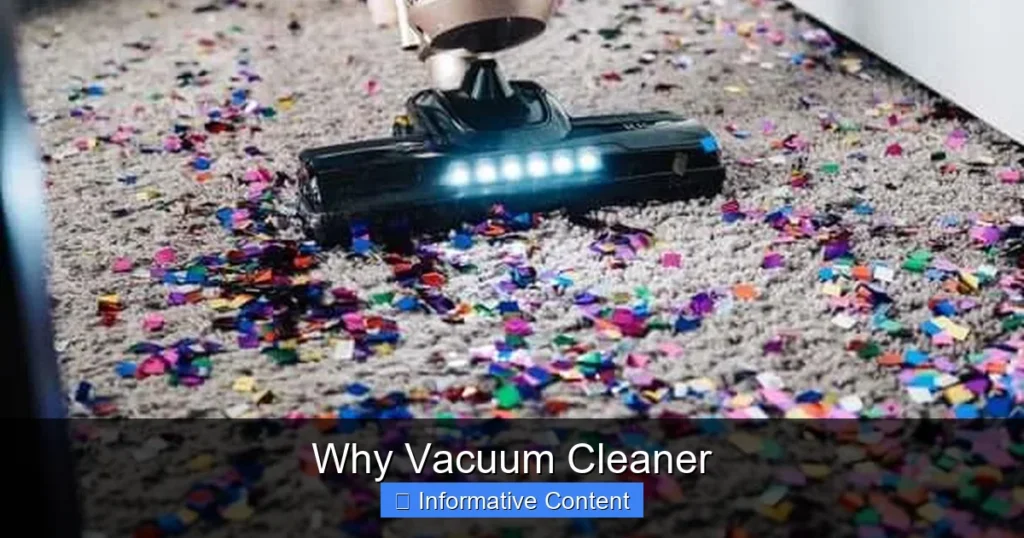
Dust mites, pet dander, and fine particles settle into your carpets and fabric every single day. These hidden invaders trigger allergies. Make your living space feel dirty no matter how much you wipe surfaces.
That is exactly where a Why Vacuum Cleaner becomes your most steady home tool. It pulls deep-seated debris out of fibers that mops and brooms simply cannot reach.
Choosing the right machine and using it correctly saves you hours of manual scrubbing. This guide breaks down every reason a Why Vacuum Cleaner belongs in your routine.
You will learn how different types work, what features actually matter. How to maintain your unit for peak power. By the end, you will know exactly how to keep your floors. Air fresh all year long.
📌 AT A GLANCE
- ✓Core Concept: A vacuum removes deep-seated dust, dust, and debris from carpets and hard floors.
- ✓Essential Step: Match your vacuum type to your floor surface and home layout for best results.
- ✓Safety Rule: Always check the dustbin and filters before every cleaning session to prevent motor strain.
- ✓Efficiency Tip: Vacuum high-traffic areas twice weekly and low-traffic zones once weekly to maintain baseline cleanliness.
In this article
Why Why Vacuum Cleaner Matters for Modern Homes
Modern homes trap dust in ways older houses never did. Tight-sealed windows and insulation keep energy bills low but also lock in airborne particles that settle on every surface.
A Why Vacuum Cleaner tackles this problem at the source by pulling dirt out before they recirculate into the air you breathe. Studies from the EPA on indoor air quality confirm that regular vacuuming greatly reduces pollutant levels inside homes.
Gather required tools and clear your work area before starting.
Confirm baseline specs and maker guidelines first.
Complete each stage in order without skipping safety checks.
Run a quick test pass and wipe down key parts after use.
Carpets act as giant filters that catch dust, pollen, and skin cells. Without regular suction, these particles build up. Eventually turn your carpet into a reservoir of irritants. For our complete category overview. Core buyer criteria, explore our cornerstone guide to How Much is a Shark Vacuum Cleaner: Understanding the Factors of Design and Technology.
Using a Why Vacuum Cleaner with a HEPA filter traps particles as small as 0.3 microns so they do not escape back into the room. This matters even more if you have children who play on the floor or pets that shed year-round.
- Allergen Removal: A quality vacuum extracts dust mites. Pet dander embedded deep in carpet fibers.
- Extended Floor Life: Regular suction prevents abrasive grit from wearing down hardwood and carpet surfaces.
- Odor Control: Strong suction pulls food crumbs. Organic debris that cause lingering smells in rugs.
- Time Savings: A strong machine cleans large rooms in a fraction of the time manual sweeping takes.
- Health Protection: Removing fine dust reduces asthma triggers. Keeps indoor air breathable for sensitive groups.
How Why Vacuum Cleaner Types Match Your Home Needs
Not every vacuum works the same way. Picking the wrong type wastes money and effort. Upright models shine on wall-to-wall carpet because their rotating brushes agitate deep fibers.
Always check the spare filter price before you buy a vacuum. Some models sell for a low upfront cost but use proprietary filters that cost as much as the machine itself to replace over time.
Canister vacuums offer flexibility across hard floors and stairs. This happens because their flexible hose reaches under furniture easily. Handheld units handle quick spills and car interiors. Robot vacuums maintain daily cleanliness with scheduled runs.
Understanding these differences helps you match a Why Vacuum Cleaner to your actual lifestyle instead of chasing marketing hype. For example, a large home with thick carpet benefits most from a bagged upright with strong suction.
A small flat with mostly hardwood fits a light canister or a stick vacuum perfectly. Here is a quick breakdown of the most common types:
- Upright Powerhouse: Best for deep carpet cleaning with motorized brush rolls that agitate stubborn dirt.
- Canister Flexibility: Great for mixed floors. Tight spaces thanks to a long hose and light head.
- Stick Vacuum: Ideal for quick cleanups on hard floors and low-pile rugs in small homes.
- Handheld Unit: Perfect for spot-cleaning stairs, car seats, and upholstered furniture on demand.
- Robot Cleaner: Maintains daily floor freshness by running scheduled routes when you are away.
Essential Features That Make Why Vacuum Cleaner Work Well
Marketing lists dozens of specs, but only a few features truly affect daily power. Suction power ranks first because it determines whether debris lifts out of carpet or just glides over it.
However, airflow and brush roll design matter just as much since they control how the machine agitates and captures dirt. A Why Vacuum Cleaner with strong suction but poor airflow still leaves particles behind.
Filter quality decides what happens to the dust after it enters the machine. HEPA filters capture 99.97% of particles down to 0.3 microns. This protects allergy sufferers from re-exposure.
Dustbin size affects how often you stop to empty the machine. Cord length or battery runtime dictates how much floor you cover per session. Here are the features you should always check before buying:
- HEPA Filtration: Traps tiny dust and prevents them from blowing back into your living space.
- Adjustable Suction: Lets you dial power up for carpets and down for delicate hard floors.
- Wide Cleaning Path: Covers more floor per pass so you finish large rooms faster.
- Easy Dustbin: A one-button release lets you empty the bin without touching dust with bare hands.
- Long Cord or Battery: Ensures you reach every corner without interrupting your workflow to swap plugs.
Step-By-Step Guide to Why Vacuum Cleaner Like a Pro
Preparation makes the difference between a frustrating cleanup and a satisfying one. Before you pull the machine out, clear the floor of small objects, cords. Rugs that can tangle the brush roll. For broader testing and full category picks, explore our in-depth guide to Nuyupo Cordless Vacuum Cleaner vs Eureka Upright Vacuum.
Check that the dustbin is empty. The filter is clean so the motor can breathe freely. A Why Vacuum Cleaner only performs well when you set it up for success.
Next, pick the right tool for each surface. The main head works on open carpet. A crevice tool reaches along baseboards and a soft brush cleans delicate wood. Move slowly over high-traffic zones. Overlap each pass slightly so no strip of dirt escapes suction. Here is your step-by-step checklist for a thorough session:
- Clear The Floor: Remove toys, shoes. Loose cables so the vacuum head glides without obstruction.
- Check The Dustbin: Empty the bin if it is more than two-thirds full to keep suction strong.
- Pick The Right Head: Switch to the motorized brush for carpet. A hard-floor tool for tile or wood.
- Slow And Overlap: Move at a steady pace and overlap each pass by half the cleaning width.
- Hit Edges Last: Use the crevice tool along walls. Furniture gaps after the open floor is clean.
- Empty And Store: Dump the bin, wipe the nozzle. Coil the cord neatly to prevent kinks.
Maintenance Routines That Keep Why Vacuum Cleaner Running Strong
A vacuum loses suction over time when you skip basic upkeep. Dust builds up inside the machine, filters clog. Brush rolls tangle with hair and string.
Regular upkeep keeps a Why Vacuum Cleaner performing like new for years instead of forcing you to replace it after one season of heavy use. Most tasks take under five minutes and require no special tools.
Think of upkeep as a habit, not an emergency fix. After every session, empty the dustbin. Tap out any debris caught in the brush roll. Monthly, wash or replace the filter and check the hose for blockages. A few simple routines prevent motor burnout and keep suction steady. Here is what to do and how often:
- Empty After Use: Dump the dustbin every session so the motor does not strain against a full bin.
- Brush Roll Cleaning: Cut away hair. String tangled around the roller every two weeks for steady rotation.
- Filter Care: Wash foam filters monthly and replace HEPA filters every six to twelve months.
- Hose Check: Detach the hose and clear blockages with a broom handle once a month.
- Belt Inspection: Look for a worn or slipping belt annually. Replace it if the brush roll spins weakly.
Best Practices for Why Vacuum Cleaner on Different Surfaces
Every floor type reacts differently to suction and brush action. Hardwood needs gentle settings so the brush does not scratch or dull the finish. Thick carpet demands full power. Slow passes to pull dust from deep within the pile.
Tile and laminate fall somewhere in between and work well with medium suction and a soft-bristle head. Adjusting your approach is the real secret behind a Why Vacuum Cleaner that leaves every surface spotless. For broader testing and full category picks, explore our in-depth guide to Nuyupo Cordless Vacuum Cleaner vs Zulyxio Cordless.
Rugs require special attention because fringe and backing can snag under aggressive suction. Always check the maker tag before machine-washing a rug or running a heavy beater bar over delicate weaves. High-pile rugs benefit from a handheld tool that lifts dirt without flipping fibers. Keep these surface-specific tips in mind:
- Hardwood Setting: Use a soft brush or hard-floor mode that lifts dust without scratching the surface.
- Carpet Power: Engage the motorized brush. Increase suction for deep pile that traps hidden dirt.
- Rug Care: Vacuum fringe gently. Avoid high suction that pulls fibers loose from the backing.
- Tile And Laminate: A medium suction setting with a microfiber pad picks up fine dust safely.
- Stair Cleaning: Use a handheld or canister unit with a hose for steps that an upright cannot handle easily.
Troubleshooting Common Why Vacuum Cleaner Problems
When suction drops or noise increases, the machine is telling you something specific. Most issues trace back to clogged filters, full dustbins, or tangled brush rolls.
A Why Vacuum Cleaner that suddenly sounds weaker usually has a restriction somewhere in the airflow path. Checking the simplest causes first saves you from unnecessary repairs or spares.
Burning smells usually mean the belt is slipping or the brush roll is jammed with debris. A vacuum that leaves streaks on hard floors may have a dirty floor head or an incorrect tool. Always isolate the problem by checking suction at each connection point from the nozzle to the dustbin. Common issues and their direct fixes include:
- Weak Suction: Check for a full dustbin, clogged filter, or blocked hose before assuming motor failure.
- Loud Noise: Inspect the brush roll for trapped debris. Confirm the belt is not worn or loose.
- Burning Smell: Stop right away, cut away any tangled string. Let the motor cool before restarting.
- Streaks On Floor: Clean the floor head nozzle. Switch to a dry mop tool for hard floors.
- Brush Roll Not Spinning: Test the belt for breakage. Check if the brush release lever is stuck.
Summary Table: Vacuum Features and Maintenance Compared
Never vacuum large pieces of gravel, broken glass, or sharp metal. These items damage the brush roll and can crack the dustbin or puncture internal seals. Pick up heavy debris by hand first.
Summary Table: Cleaning Methods and Maintenance Compared
| Feature | Upright | Canister | Stick | Robot |
|---|---|---|---|---|
| Best Floor Type | Deep Carpet | Mixed Floors | Hard Floors | All Surfaces |
| Suction Strength | Very High | High | Medium | Low To Medium |
| Maintenance Frequency | Weekly | Biweekly | Biweekly | Monthly |
| Filter Replacement | Every 6 Months | Every 6 Months | Every 6 Months | Every 12 Months |
| Best For Home Size | Large | Medium | Small | Any |
| Daily Hands-Free Option | No | No | No | Yes |
Frequently Asked Questions About Why Vacuum Cleaner
How Often Should I Vacuum My Home?
High-traffic areas and homes with pets need vacuuming twice a week. Low-traffic rooms and single-person homes do fine with one session weekly. Vacuuming less often lets dust and dust build up beyond easy levels.
Is a Robot Vacuum Worth the Investment?
A robot vacuum excels at daily upkeep and keeps floors always clear between deep sessions. It does not replace a full-power vacuum for carpet cleaning. But it saves significant daily effort. Many owners find they run it every day and deep-clean twice a week instead.
Can I Vacuum Water or Spills?
Standard vacuums cannot handle water and will short-circuit if you attempt it. Only wet-dry shop vacs or dedicated carpet extractors are safe for liquid spills. Always check your machine rating before suctioning anything wet.
What Is the Difference Between Bagged and Bagless Models?
Bagged models seal dust inside a disposable bag. This benefits allergy sufferers because you never release particles during emptying. Bagless machines use a washable bin that saves money on spares but requires more frequent manual emptying. Both types work well when you match the model to your cleaning volume and sensitivity needs.
Why Does My Vacuum Leave Fine Dust Behind?
This usually signals a clogged filter or a cracked hose that lets air escape before it reaches the nozzle. Check every seal and clean or replace the filter first. A Why Vacuum Cleaner that leaves dust often needs a simple airflow fix rather than a motor problem.
How Long Should a Good Vacuum Last?
Well-maintained vacuums last between seven and twelve years depending on usage. Bagged models often run longer because the bag protects the motor from fine dust. Cheap units with poor build quality may fail within three to five years regardless of care.
Final Thoughts and Next Steps
A clean home starts with understanding why a Why Vacuum Cleaner matters. Treating it as a long-term investment rather than a disposable gadget. Match the machine to your floors, commit to a weekly schedule. Perform simple upkeep every few weeks. These habits protect your air quality, extend the life of your floors. Save money on spares.
Take time now to test your current vacuum and identify what is holding it back. Check the filter, inspect the brush roll, and test suction on a carpet corner. If power falls short, upgrade to a model with HEPA filtering. Flex power that fits your space. Your floors and lungs will thank you for the effort.