
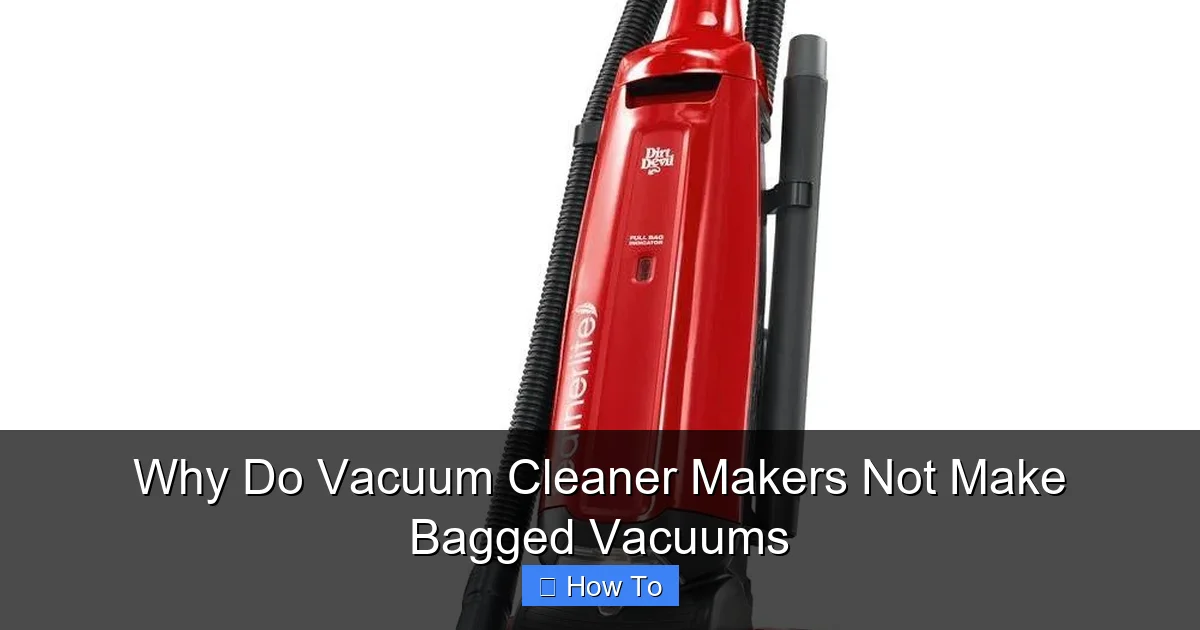
Many vacuum cleaner manufacturers are moving away from bagged designs in favor of bagless models. This shift is driven by consumer demand for convenience, lower long-term costs, and easier maintenance. Understanding the reasons behind this trend helps you make smarter cleaning choices.
Introduction: Why the Shift Away from Bagged Vacuums?
If you’ve shopped for a vacuum cleaner recently, you may have noticed something: most new models are bagless. Gone are the days when nearly every upright or canister vacuum came with a paper or cloth bag that needed regular replacing. Today, manufacturers like Dyson, Shark, and Hoover dominate the market with sleek, transparent dust bins instead. But why do vacuum cleaner makers not make bagged vacuums anymore—or at least, not as many?
In this guide, we’ll explore the real reasons behind this industry-wide shift. You’ll learn how consumer preferences, manufacturing costs, environmental concerns, and technological innovation all play a role. By the end, you’ll understand not just what changed—but why it matters for your cleaning routine.
Step 1: Understand the Rise of Bagless Technology
The bagless revolution began in the late 1990s, largely thanks to James Dyson’s dual-cyclone design. Before that, bagged vacuums were the standard. They used porous bags to trap dirt while allowing air to pass through. While effective, they had drawbacks: reduced suction as bags filled, recurring costs, and messy disposal.
Visual guide about Why Do Vacuum Cleaner Makers Not Make Bagged Vacuums
Image source: bestvacuumexpert.com
How Bagless Vacuums Work
Bagless models use cyclonic separation or multi-stage filtration to spin dust and debris out of the airflow. Instead of a bag, dirt collects in a clear plastic bin. This allows users to see when it’s full and empty it directly into the trash—no touching dusty bags.
This innovation aligned perfectly with modern lifestyles: fast, visible, and low-maintenance. As a result, brands quickly adopted similar systems. For example, how bagless vacuum cleaners work became a key marketing point, emphasizing stronger, consistent suction.
Step 2: Consider Consumer Demand and Convenience
Today’s shoppers prioritize ease of use. A 2023 home appliance survey found that 78% of buyers rank “easy emptying” as a top-three feature when choosing a vacuum. Bagless models win here because:
- No need to hunt for replacement bags
- No extra cost per use
- Quick visual check for fullness
- Less contact with allergens during disposal
Real-World Example
Imagine cleaning your living room and realizing the bag is full—but you’re out of replacements. With a bagless model, you simply detach the bin, empty it, and keep going. That convenience drives repeat purchases and brand loyalty.
Brands also leverage this in advertising. Phrases like “no bags to buy” or “see when it’s full” appear on nearly every product page. It’s not just about function—it’s about peace of mind.
Step 3: Evaluate Cost and Profit Margins for Manufacturers
From a business standpoint, bagless vacuums are more profitable. Bagged models require ongoing sales of replacement bags—a revenue stream manufacturers can’t control once the vacuum is sold. In contrast, bagless units encourage customers to buy the entire system upfront, with minimal aftermarket dependency.
Lower Production Costs
Bagless designs often have fewer components. No bag housing, no sealing gaskets, no complex bag-detection sensors. This simplifies assembly, reduces material costs, and speeds up manufacturing.
Additionally, companies avoid the logistics of producing, storing, and shipping replacement bags globally. That’s a significant saving—especially for brands selling millions of units annually.
For consumers, this means lower initial prices. Many high-performing bagless vacuums now cost under $200, making premium cleaning accessible without recurring expenses.
Step 4: Examine Environmental and Health Trends
Sustainability is a growing concern. Disposable vacuum bags contribute to landfill waste—estimates suggest over 100 million bags are discarded yearly in the U.S. alone. Reusable bins align with eco-conscious values.
Allergies and Air Quality
While early bagless models raised concerns about dust leakage during emptying, modern versions include sealed systems and HEPA filters. These trap 99.97% of particles, including pollen and pet dander. In fact, some users with allergies prefer bagless vacuums because they can clean the bin and filter regularly—something hard to do with sealed bags.
However, it’s worth noting that high-end bagged vacuums still excel in containment. If you have severe allergies, a well-sealed bagged model might be better. But for most households, today’s bagless tech offers comparable—or superior—filtration.
Step 5: Recognize Market Positioning and Brand Strategy
Major brands position themselves as innovators. Dyson, for instance, built its identity around “bagless cyclone technology.” Continuing to sell bagged models would dilute that message.
Niche Markets Remain
Bagged vacuums aren’t extinct. They’re still popular in Europe, among allergy sufferers, and in commercial cleaning. Miele and Sebo continue to offer premium bagged options. But these represent a small fraction of global sales.
Retailers like Amazon or Walmart stock dozens of bagless models for every one bagged option. This reflects both supply and demand: manufacturers produce what sells, and consumers buy what’s convenient.
Troubleshooting Common Misconceptions
Some people assume bagless vacuums are less hygienic or lose suction faster. Let’s clear that up:
- “Bagless vacuums spew dust everywhere.” Modern models have sealed chambers and washable filters. Emptying is cleaner than ever—especially if you do it outdoors.
- “They don’t last as long.” With proper care—like cleaning filters monthly and checking for clogs—bagless vacuums can last 5–10 years.
- “Bags are better for allergies.” Only true for poorly designed bagless units. Look for HEPA certification and fully sealed systems.
If your bagless vacuum isn’t performing well, check the filter. A clogged filter reduces suction significantly. For help, see our guide on how to clean a vacuum cleaner filter.
Conclusion: The Future Is (Mostly) Bagless
So, why do vacuum cleaner makers not make bagged vacuums? The answer lies in a perfect storm of consumer preference, cost efficiency, environmental awareness, and smart branding. Bagless models offer convenience, lower lifetime costs, and modern performance—qualities today’s buyers value most.
That doesn’t mean bagged vacuums are obsolete. For specific needs—like extreme allergy control or heavy-duty commercial use—they still have a place. But for the average homeowner, bagless is the clear winner.
As technology improves, we’ll likely see even smarter designs: self-emptying bases, app-controlled suction, and biodegradable filters. But one thing’s certain—the era of mandatory bag replacements is fading fast.