Learning how to say “vacuum cleaner” in Spanish is straightforward once you know the core terms and regional variations. This 2025 guide provides clear steps, pronunciation tips, and practical examples to help you confidently use words like aspiradora, aspirador, and even country-specific phrases. You’ll master not just the noun, but also how to talk about “vacuuming” in everyday conversations.
Your 2025 Guide How to Say Vacuum Cleaner in Spanish
Welcome, language learner! In an increasingly interconnected world, being able to communicate clearly, even about household items, is a superpower. Whether you’re planning a trip, moving to a Spanish-speaking country, or just want to expand your vocabulary, knowing how to say “vacuum cleaner” in Spanish is surprisingly useful. It’s a common household appliance, after all!
By the end of this comprehensive 2025 guide, you won’t just know *a* word for vacuum cleaner; you’ll understand the nuances, regional variations, and practical phrases that will make you sound like a pro. We’ll break down the most common terms, teach you how to pronounce them correctly, and give you plenty of examples to confidently add this essential vocabulary to your Spanish toolkit. Let’s get started and demystify how to say “vacuum cleaner” in Spanish!
Key Takeaways
- The Universal Term: Aspiradora (feminine noun) is the most widely understood and commonly used word for “vacuum cleaner” across the Spanish-speaking world.
- Regional Diversity: While aspiradora is prominent, be aware of regional variations like aspirador (masculine, common in Spain), limpiadora, and more localized slang such as chupapolvo in certain areas.
- “To Vacuum” is a Phrase: The verb “to vacuum” is often expressed as a phrase: pasar la aspiradora (“to pass the vacuum cleaner”) or simply aspirar (to aspire/suck).
- Pronunciation Matters: Practice the clear pronunciation of words like aspiradora (ah-spee-rah-DOH-rah) to ensure you are easily understood. Pay attention to the rolling ‘r’ and stressed syllables.
- Context is King: If unsure which term to use in a specific region, starting with aspiradora is always a safe bet. Most Spanish speakers will understand it, even if they use a different local term.
- Beyond the Noun: Learn related vocabulary like polvo (dust), suciedad (dirt), and limpiar (to clean) to build full sentences around your “vacuum cleaner” needs.
- Modern Additions: As technology advances into 2025, terms like robot aspirador or aspiradora robot are becoming increasingly common for robotic vacuum cleaners.
Quick Answers to Common Questions
What’s the absolute safest word for vacuum cleaner in Spanish?
The safest and most widely understood word for “vacuum cleaner” in Spanish is la aspiradora. It’s recognized across nearly all Spanish-speaking regions.
How do I say “to vacuum” in Spanish?
The most common way to say “to vacuum” is the phrase pasar la aspiradora, which literally means “to pass the vacuum cleaner.” You can also use the verb aspirar, especially when the context is clear.
Is “aspirador” or “aspiradora” correct?
Both are correct! La aspiradora (feminine) is more common globally, while el aspirador (masculine) is frequently used in Spain. Both refer to a vacuum cleaner.
What about robot vacuum cleaners in Spanish for 2025?
For robot vacuum cleaners, you’ll commonly hear el robot aspirador or la aspiradora robot. Both terms are widely understood and used in 2025.
What if I forget the word for vacuum cleaner in Spanish?
Don’t panic! You can describe it: “la máquina para limpiar el suelo” (the machine for cleaning the floor) or gesture the action of vacuuming. Most people will understand from context.
Step 1: Discovering the Most Common Term for Vacuum Cleaner in Spanish
When you’re looking for how to say “vacuum cleaner” in Spanish, there’s one term that stands head and shoulders above the rest in terms of universal understanding and usage:
Introducing: La Aspiradora
The word aspiradora is a feminine noun, and it’s the most widely accepted and understood term for “vacuum cleaner” across the vast majority of Spanish-speaking countries. If you learn only one term from this guide, make it aspiradora.
- Why Aspiradora? This word comes from the verb aspirar, which means “to aspire” or “to suck in.” A vacuum cleaner’s primary function is to suck in dirt and dust, so the name fits perfectly!
- Grammar Note: Since it’s a feminine noun, you’ll use “la” (the) before it: la aspiradora. If you’re talking about “a vacuum cleaner,” you’d say una aspiradora.
Example in a sentence:
- Necesito comprar una aspiradora nueva. (I need to buy a new vacuum cleaner.)
- ¿Dónde está la aspiradora? (Where is the vacuum cleaner?)
Step 2: Exploring Regional Variations and Other Terms
While aspiradora is your best friend for how to say “vacuum cleaner” in Spanish, the Spanish language is rich with regional variations. Just like English speakers might say “hoover” or “sweeper” instead of “vacuum cleaner,” different Spanish-speaking countries and regions have their own preferred terms. Knowing these can help you better understand locals and adapt your language.
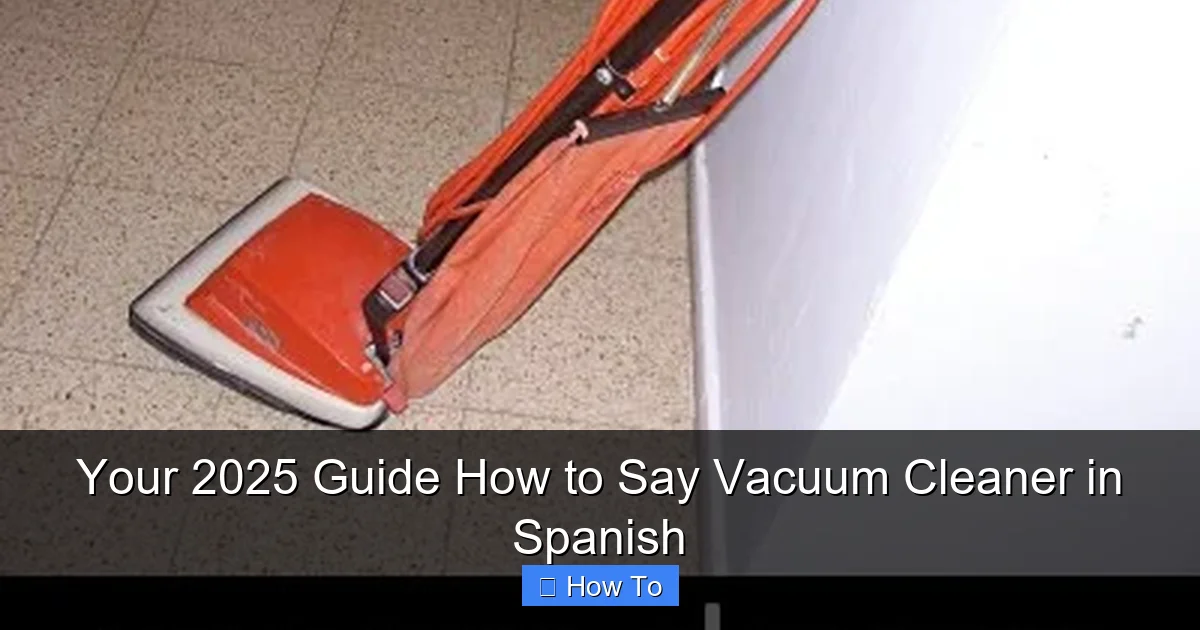
Visual guide about Your 2025 Guide How to Say Vacuum Cleaner in Spanish
Image source: my-english-dictionary.com
Common Alternatives to Aspiradora
- El Aspirador (masculine): In Spain, particularly, you might hear el aspirador more often than la aspiradora. It serves the same purpose and is also derived from aspirar. Note that it’s a masculine noun, hence el instead of la. Both aspiradora and aspirador are widely understood in Spain.
- Example: Por favor, pasa el aspirador por el suelo. (Please, run the vacuum cleaner over the floor.)
- La Limpiadora (feminine): While less common specifically for a vacuum cleaner, limpiadora can be used, especially in a more general sense of “cleaning machine.” It comes from limpiar (to clean). However, it’s generally safer to stick with aspiradora to avoid confusion with other types of cleaners or even a female cleaner (person).
- El Chupapolvo (masculine): This is a more informal or colloquial term you might encounter in some parts of Latin America, literally translating to “dust-sucker.” While descriptive, it’s not as formal or universally accepted as aspiradora and can sound a bit informal. Use with caution, mostly for passive understanding rather than active use initially.
- La Barredora (feminine): This term literally means “sweeper.” While it can refer to a large street sweeper, in some contexts, particularly for robotic vacuums or more industrial-style floor cleaners, it might be used. For a standard household vacuum cleaner, aspiradora is much more appropriate.
Country-Specific Nuances for “Vacuum Cleaner” in Spanish
As we navigate 2025, knowing regional preferences is key to truly mastering how to say “vacuum cleaner” in Spanish. Here’s a quick overview:
- Spain: You’ll hear both la aspiradora and el aspirador frequently.
- Mexico: La aspiradora is the dominant and most common term.
- Argentina, Chile, Uruguay: La aspiradora is standard.
- Caribbean (e.g., Cuba, Dominican Republic, Puerto Rico): La aspiradora is generally used. In some very specific informal contexts, chupapolvo might be understood but is not the primary term.
- Central America: La aspiradora is prevalent.
The good news? If you use la aspiradora, you’re almost always going to be understood, no matter where you are!
Step 3: Mastering the Pronunciation of “Vacuum Cleaner” in Spanish
Knowing the word is one thing; saying it so that a native speaker understands is another. Let’s break down the pronunciation of aspiradora, the most important word for “vacuum cleaner” in Spanish.
Pronouncing Aspiradora (ah-spee-rah-DOH-rah)
- A (ah): Like the ‘a’ in “father.”
- S (s): Like the ‘s’ in “snake.”
- PI (pee): Like the ‘pee’ in “deep.”
- RA (rah): This is where the Spanish ‘r’ comes in. It’s a single, soft ‘r’ sound, similar to the ‘tt’ in American English “butter” or “ladder,” but with your tongue touching the roof of your mouth behind your front teeth.
- DO (doh): Like the ‘doe’ in “dough.” The stress is on this syllable!
- RA (rah): Another soft ‘r’ sound, similar to the first ‘ra’.
Put it all together: ah-spee-rah-DOH-rah.
Tips for Practicing Pronunciation
- Listen to Native Speakers: Utilize online dictionaries with audio, language learning apps, or YouTube videos to hear how native speakers pronounce aspiradora.
- Repeat Aloud: Practice saying the word slowly at first, then gradually increase your speed. Pay attention to the stressed syllable (DOH).
- Focus on the ‘R’ Sound: The single ‘r’ in Spanish is different from English ‘r’. It’s a quick tap of the tongue. Don’t roll it like a double ‘rr’.
Step 4: Using “Vacuum Cleaner” in Practical Sentences and Phrases
Now that you know the key terms and how to say “vacuum cleaner” in Spanish, let’s put it into action with some useful phrases. You’ll not only learn the noun but also how to talk about the act of vacuuming.
Common Phrases Involving “Vacuum Cleaner”
- To vacuum (the floor/carpet): This is often expressed using a phrase, as there isn’t a single direct verb like “to vacuum” in English that is as universally common.
- Pasar la aspiradora (por el suelo/la alfombra): Literally “to pass the vacuum cleaner (over the floor/carpet).” This is the most common and natural way to say “to vacuum.”
- Aspirar (el suelo/la alfombra): “To aspire” or “to suck.” This verb can also mean “to vacuum,” especially if the context is clear. It’s more direct but pasar la aspiradora is often preferred for the action itself.
Example Sentences:
- Necesito pasar la aspiradora antes de que lleguen los invitados. (I need to vacuum before the guests arrive.)
- ¿Puedes aspirar la sala, por favor? (Can you vacuum the living room, please?)
- La aspiradora está en el armario. (The vacuum cleaner is in the closet.)
- Mi aspiradora se ha roto. (My vacuum cleaner has broken.)
- ¿Me prestas tu aspiradora? (Can I lend your vacuum cleaner?)
- Busco una buena aspiradora para mascotas. (I’m looking for a good vacuum cleaner for pets.)
Step 5: Related Vocabulary and Modern Vacuum Cleaner Terms for 2025
To really round out your knowledge of how to say “vacuum cleaner” in Spanish, it’s helpful to know related terms and keep up with modern additions to the lexicon, especially as we advance into 2025.
Essential Related Words
- El polvo: dust
- La suciedad: dirt, grime
- Limpiar: to clean
- La limpieza: the cleaning (noun)
- La alfombra: carpet, rug
- El suelo / El piso: floor (suelo is more common in Spain; piso in Latin America)
- La escoba: broom
- El recogedor: dustpan
Vacuum Cleaner Technology in 2025
As technology evolves, so does language. In 2025, robotic vacuum cleaners are more common than ever. Here’s how to refer to them:
- El robot aspirador (masculine): This is a very common and descriptive term.
- La aspiradora robot (feminine): Also widely used, often interchangeable with el robot aspirador.
- El robot de limpieza: A more general term for a cleaning robot, which could include floor scrubbers.
Example:
- Mi robot aspirador limpia la casa todos los días. (My robot vacuum cleaner cleans the house every day.)
- ¿Has visto las nuevas funciones de la aspiradora robot? (Have you seen the new features of the robot vacuum cleaner?)
Step 6: Practical Tips and Troubleshooting for Your Spanish Vacuum Cleaner Vocabulary
You’re now well-equipped with the vocabulary for how to say “vacuum cleaner” in Spanish. Here are some final tips and a small “troubleshooting” section to help you in real-world situations.
General Tips for Confidence
- Start with Aspiradora: If you’re unsure which term to use, stick with la aspiradora. It’s the safest bet and almost universally understood.
- Listen Actively: When you’re in a Spanish-speaking environment, pay attention to the words locals use. This will help you naturally pick up regional preferences.
- Don’t Fear Mistakes: Language learning is a journey. Native speakers appreciate your effort. Even if you stumble, they’ll likely help you.
- Context is Your Friend: If you’re pointing at a vacuum cleaner, or if the conversation is clearly about cleaning, people will almost certainly understand what you mean, even if your pronunciation isn’t perfect or you use a less common term.
Troubleshooting: What If They Don’t Understand You?
Occasionally, you might find that despite your best efforts, your listener still looks confused. Don’t worry! Here’s what to do:
- Rephrase or Describe: Instead of just repeating “aspiradora,” try to describe what it does.
- Es una máquina para limpiar el suelo y las alfombras. (It’s a machine for cleaning the floor and carpets.)
- Usa aire para recoger el polvo y la suciedad. (It uses air to pick up dust and dirt.)
- Use Gestures: Mimicking the action of vacuuming can be incredibly effective across language barriers.
- Show a Picture: In this age of smartphones, you can quickly pull up an image of a vacuum cleaner to clarify.
Remember, the goal is communication. Be patient with yourself and your listener.
Conclusion: Master Your “Vacuum Cleaner” in Spanish by 2025!
Congratulations! You’ve navigated the ins and outs of how to say “vacuum cleaner” in Spanish. From the widely accepted la aspiradora to regional variations like el aspirador, and even the modern robot aspirador, you now have a solid foundation.
By understanding the different terms, practicing your pronunciation, and learning practical phrases like pasar la aspiradora, you’re well on your way to confidently discussing household chores in Spanish. As we move through 2025, clear and effective communication remains paramount, and knowing everyday words like this truly opens doors.
Keep practicing, keep exploring, and don’t hesitate to use your new vocabulary. The more you use it, the more natural it will become. ¡Buena suerte con tu español!
🎥 Related Video: I literally vacuumed yesterday?! 😳 #pethairremoval #cleantok #cleaninghacks #pets
📺 Petibo Pet