
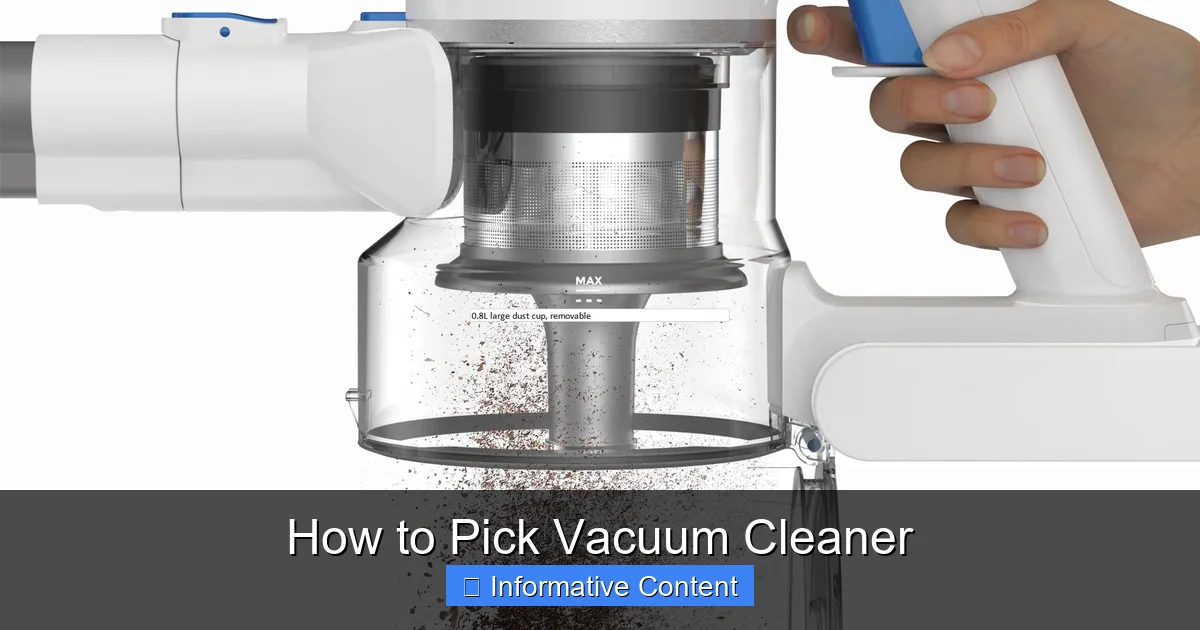
Picking a vacuum cleaner doesn’t have to be overwhelming! This comprehensive guide walks you through the essential considerations, from understanding your home’s unique needs (flooring, pets, allergies) to exploring different vacuum types (upright, canister, robot, stick) and key features like filtration and suction. Learn to make an informed decision to keep your home effortlessly clean.
Ah, the quest for the perfect clean! It often starts with one crucial question: how to pick a vacuum cleaner? Walk into any electronics store or browse online, and you’re immediately hit with a dizzying array of options. Uprights, canisters, sticks, robots, corded, cordless, bagged, bagless – it’s enough to make your head spin!
But don’t worry, you’re not alone. Many people feel overwhelmed when faced with such a significant purchase. A vacuum cleaner isn’t just another gadget; it’s an essential tool for maintaining a healthy, comfortable living space. Making the right choice can save you time, effort, and even improve the air quality in your home. The goal of this article is to demystify the process and help you confidently answer the question of how to pick a vacuum cleaner that truly suits your needs.
Think of me as your friendly guide, here to walk you through all the important considerations. By the end, you’ll have a clear understanding of what to look for, what questions to ask yourself, and how to pick a vacuum cleaner that makes cleaning less of a chore and more of a breeze. Let’s dive in!
Key Takeaways
- Assess Your Home’s Needs First: Before looking at models, consider your flooring types (carpets, hard floors), if you have pets or allergies, the size of your home, and how many stairs you have. This initial assessment is crucial for how to pick a vacuum cleaner that truly fits.
- Understand Vacuum Types: Familiarize yourself with uprights (powerful for carpets), canisters (versatile for mixed surfaces and stairs), stick vacuums (lightweight, good for quick clean-ups), robotic vacuums (convenience for daily maintenance), and handhelds (spot cleaning). Each type excels in different scenarios.
- Prioritize Key Features: Look for strong suction power, a good filtration system (HEPA is excellent for allergies), appropriate brush rollers (with on/off switches for hard floors), and convenient accessories. Consider whether corded power or cordless freedom is more important for your cleaning routine.
- Bagged vs. Bagless Debate: Decide between bagged vacuums (better for allergy sufferers due to contained disposal) and bagless models (eco-friendly, no ongoing bag costs). Both have pros and cons that impact convenience and hygiene.
- Consider Weight and Maneuverability: If you have multiple levels or physical limitations, a lighter, more agile vacuum (like a stick or canister) might be preferable to a heavy upright. Ease of use greatly affects how often you’ll clean.
- Set a Realistic Budget and Research Brands: Vacuum cleaners range widely in price. Determine what you can afford and look for brands with good reputations for durability, customer service, and warranty coverage. Sometimes, investing a bit more upfront saves money in the long run.
Quick Answers to Common Questions
What type of vacuum is best for homes with lots of pet hair?
For pet hair, look for upright or canister vacuums with strong suction, a powerful motorized brush roll, and specialized pet hair attachments. A good HEPA filtration system is also essential to capture dander.
Are cordless stick vacuums powerful enough for deep cleaning?
Cordless stick vacuums are excellent for quick clean-ups and maintaining cleanliness, especially on hard floors. However, for very deep cleaning of thick carpets, a corded upright or canister vacuum typically offers more consistent and robust suction power.
What is a HEPA filter and why is it important?
A HEPA (High-Efficiency Particulate Air) filter captures 99.97% of airborne particles as small as 0.3 microns, including allergens like pollen, dust mites, pet dander, and mold spores. It’s crucial for improving air quality, especially for allergy and asthma sufferers.
Should I choose a bagged or bagless vacuum?
Bagged vacuums are generally better for allergy sufferers because dust and allergens are sealed and contained for disposal. Bagless vacuums are more eco-friendly and save on bag costs, but emptying the bin can expose you to dust.
Is a robotic vacuum cleaner worth it?
A robotic vacuum is worth it for daily maintenance cleaning, keeping pet hair and dust under control, and convenience. However, it usually cannot replace a traditional vacuum for deep cleaning or tackling stairs and tight corners.
📑 Table of Contents
Understanding Your Home’s Needs: The First Step
Before you even start looking at specific models, the very first step in how to pick a vacuum cleaner is to understand your own home. Every home is unique, and what works wonderfully for one might be a poor fit for another. Take a moment to think about your living space and your lifestyle.
What Type of Flooring Do You Have?
This is perhaps the biggest factor. Your flooring dictates much of a vacuum cleaner’s effectiveness.
- Mostly Carpets/Rugs: If your home is predominantly carpeted, especially with thick pile, you’ll likely want a powerful upright vacuum. These often feature strong brush rolls or beater bars that agitate carpet fibers to lift embedded dirt and pet hair. Look for models with adjustable brush height to handle different carpet depths.
- Mostly Hardwood/Tile/Laminate: For hard floors, you need a vacuum that cleans thoroughly without scratching. Canister vacuums with specialized hard floor attachments (like a parquet brush) or stick vacuums with soft brush rolls are excellent choices. Many uprights now offer a “brush roll off” setting, which is essential to prevent scattering debris or damaging delicate surfaces.
- Mixed Flooring: Most homes have a mix! If you have both carpets and hard floors, versatility is key. Look for models that can easily transition, often with an on/off brush roll switch or multiple interchangeable attachments. Canister vacuums and some modern uprights are well-suited for mixed environments.
Do You Have Pets?
Ah, our furry friends! While they bring joy, they also bring hair and dander. Pet owners need specific features when figuring out how to pick a vacuum cleaner.
- Powerful Suction: Pet hair can be surprisingly stubborn. You’ll need a vacuum with strong, consistent suction to pick it all up.
- Specialized Pet Tools: Many vacuums come with mini-motorized brush tools or upholstery tools designed to tackle pet hair on furniture, stairs, and pet beds.
- Excellent Filtration: Pet dander can be a major allergen. A vacuum with a sealed system and a HEPA filter is highly recommended to trap these microscopic particles and prevent them from recirculating into the air.
Are Allergies a Concern?
If anyone in your household suffers from allergies or asthma, filtration becomes paramount when thinking about how to pick a vacuum cleaner.
- HEPA Filter: A true HEPA filter captures 99.97% of airborne particles as small as 0.3 microns, including pollen, dust mites, pet dander, and mold spores.
- Sealed System: Just having a HEPA filter isn’t enough if dust can escape through cracks in the vacuum’s body. A fully sealed system ensures all air passes through the filter before exiting the machine.
- Bagged Vacuums: For severe allergies, bagged vacuums are often preferred because they contain the dust within a sealed bag, minimizing exposure when emptying.
What About Home Size and Layout?
The physical characteristics of your home also play a role.
- Small Apartment/Dorm: A lightweight stick vacuum, compact canister, or even a robust handheld might be sufficient.
- Medium-Sized Home: An upright or canister vacuum offers a good balance of power and versatility.
- Large House: You might consider a more powerful, durable upright or canister. If you have many stairs, a lighter canister with good attachments or a cordless stick vacuum would be invaluable. Robotic vacuums can handle daily maintenance across large areas, complementing a traditional vacuum.
Exploring Vacuum Cleaner Types
Now that you know your needs, let’s explore the different types of vacuum cleaners available. Knowing their strengths and weaknesses is key to how to pick a vacuum cleaner effectively.

Visual guide about How to Pick Vacuum Cleaner
Image source: redkeyofficial.com
Upright Vacuums
These are the classic “push” vacuums. They stand tall and are often a go-to for many households.
- Pros: Excellent deep cleaning for carpets due to powerful brush rolls; often have wider cleaning paths; easy to store standing up.
- Cons: Can be heavy and difficult to maneuver, especially on stairs or around furniture; less versatile for above-floor cleaning without extra attachments.
- Best For: Homes with mostly carpets, larger open areas.
Canister Vacuums
Canister vacuums consist of a separate canister unit (containing the motor and dustbin/bag) that trails behind a long hose and cleaning wand.
- Pros: Extremely versatile, excellent for hard floors and delicate surfaces with specialized attachments; great for stairs, upholstery, and reaching under furniture; often quieter than uprights.
- Cons: Can be cumbersome to store; canister needs to be pulled along, which some find annoying.
- Best For: Homes with mixed flooring, lots of hard floors, stairs, and those who need versatility for above-floor cleaning.
Stick Vacuums
Often cordless, stick vacuums are lightweight and slender, resembling a stick with a cleaning head at the bottom and a motor/dustbin near the handle.
- Pros: Very lightweight and maneuverable; great for quick clean-ups and smaller spaces; many are cordless for ultimate freedom; easy to store.
- Cons: Generally less powerful than uprights or canisters; limited run time on cordless models; smaller dustbins require frequent emptying.
- Best For: Apartments, quick daily clean-ups, homes with mostly hard floors, as a secondary vacuum.
Robotic Vacuums
These autonomous devices clean on their own, navigating your home and returning to a charging dock.
- Pros: Ultimate convenience and hands-free cleaning; great for maintaining cleanliness daily; many can be controlled via app.
- Cons: Not as powerful as traditional vacuums for deep cleaning; can get stuck; smaller dustbins; may struggle with thick carpets or complex layouts; high initial cost.
- Best For: Daily maintenance, supplementing a traditional vacuum, tech-savvy users, keeping pet hair under control between deep cleans.
Handheld Vacuums
Small, portable, and usually cordless, handhelds are designed for small messes.
- Pros: Extremely portable; great for spot cleaning spills, crumbs, car interiors, and pet hair on furniture.
- Cons: Limited suction power; short battery life; very small dustbin.
- Best For: Quick clean-ups, car detailing, upholstery, complementing a larger vacuum.
Wet/Dry Vacuums (Shop Vacs)
These powerful, heavy-duty vacuums can handle both dry debris and liquid spills.
- Pros: Extremely powerful suction; designed for tough jobs like workshops, garages, and large liquid spills; can be used for unclogging drains.
- Cons: Bulky and noisy; not suitable for everyday indoor household cleaning.
- Best For: Garages, workshops, DIY projects, emergency liquid clean-ups.
Key Features to Look For
Beyond the basic type, several features can significantly impact your vacuum cleaner’s performance and your overall satisfaction. Knowing these will help you refine how to pick a vacuum cleaner.
Suction Power
It’s not just about the motor’s wattage! While higher wattage often means more power, effective suction depends on the entire system – motor, airflow, filtration, and brush roll design. Look for reviews that mention consistent suction and effective cleaning rather than just focusing on numbers. Some vacuums offer variable suction settings, which can be useful for delicate rugs or curtains.
Filtration System
As mentioned, this is crucial for air quality. A multi-stage filtration system, culminating in a true HEPA filter within a sealed unit, is the gold standard for allergy sufferers. Even if allergies aren’t a major concern, good filtration helps keep dust out of your home’s air.
Brush Rollers/Beater Bars
These spinning brushes agitate carpet fibers to lift dirt. For carpets, you want a strong brush roll. However, for hard floors, a brush roll can scatter debris or even scratch delicate surfaces. The best vacuums for mixed flooring offer an “on/off” switch for the brush roll, allowing you to easily transition from carpet to hard floor without worry.
Corded vs. Cordless
This is a major convenience factor.
- Corded: Offers unlimited run time and generally stronger, more consistent suction power. You’ll need to plug and unplug as you move around, and manage the cord.
- Cordless: Provides unparalleled freedom and maneuverability, allowing you to clean without searching for outlets. However, battery life is limited (typically 20-60 minutes, depending on power mode), and suction can sometimes be less powerful than corded counterparts. Charging time can also be a factor.
Weight and Maneuverability
A heavy vacuum might offer great power, but it could also be a pain to lug up stairs or push for extended periods. Consider the weight and how easily the vacuum glides and turns. Swivel steering and a low-profile head can make a big difference in navigating around furniture and into tight spaces. If you have a multi-story home, a lighter option or a second, smaller vacuum might be a wise choice.
Attachments and Accessories
The right tools make all the difference. Common attachments include:
- Crevice Tool: For tight corners, edges, and between couch cushions.
- Dusting Brush: For delicate surfaces, blinds, and shelves.
- Upholstery Tool: For furniture and stairs, often with fabric strips to help lift hair.
- Mini Motorized Tool: Essential for pet owners, great for deep cleaning pet beds and upholstery.
Consider what you’ll need to clean beyond your floors and ensure the vacuum you pick comes with the appropriate attachments or has them available for purchase.
Noise Level
Some vacuums can be incredibly loud, which can be irritating, especially if you have sensitive ears, small children, or live in an apartment. While powerful vacuums often generate more noise, some manufacturers have developed quieter models. Check reviews for mentions of noise levels if this is a concern for you.
Bagged vs. Bagless: The Great Debate
This choice often comes down to personal preference, convenience, and allergy considerations when thinking about how to pick a vacuum cleaner.
Bagged Vacuums
These vacuums collect dirt and debris into a disposable bag.
- Pros: More hygienic, as dust and allergens are sealed within the bag and disposed of with minimal exposure; often better for allergy sufferers.
- Cons: Requires ongoing purchase of replacement bags, which adds to the operating cost; can be less eco-friendly due to waste.
Bagless Vacuums
These vacuums collect dirt in a reusable canister or cup that you empty directly into the trash.
- Pros: No ongoing cost for bags; more environmentally friendly; easy to see when the bin needs emptying.
- Cons: Emptying can release dust and allergens back into the air, which can be problematic for allergy sufferers; canisters and filters often need regular cleaning.
If you have severe allergies, a bagged vacuum with a sealed system and HEPA filtration is generally recommended for how to pick a vacuum cleaner that minimizes allergen exposure.
Setting Your Budget and Considering Brands
Vacuum cleaners range from under $100 to well over $1,000. It’s important to set a realistic budget, but also understand that investing a bit more upfront can lead to better performance and durability.
Budget Ranges
- Entry-Level ($50-$150): These often include basic uprights, stick vacuums, and handhelds. They’re good for small spaces or light-duty cleaning but may lack advanced features, power, or durability.
- Mid-Range ($150-$400): This is where you’ll find a good balance of features, power, and quality. Many reliable uprights, canisters, and higher-end stick vacuums fall into this category, offering good filtration and useful attachments.
- Premium ($400+): These are top-tier vacuums from renowned brands, often featuring advanced technology, superior suction, excellent filtration, durable construction, and comprehensive warranties. Robotic vacuums with advanced mapping also sit in this range.
Reputation and Warranty
When considering how to pick a vacuum cleaner, look into the brand’s reputation for reliability and customer service. A good warranty (e.g., 2-5 years) indicates the manufacturer stands behind their product. Check online reviews, but also look for professional reviews from reputable testing organizations. Consider the availability of replacement parts and filters, as well as service centers.
Some well-known brands include Dyson, Shark, Miele, Bissell, Hoover, and Roomba (for robots). Each brand often specializes or is known for certain types of vacuums or features. Do a little research into the specific models you’re considering.
Conclusion: Your Path to a Cleaner Home
Phew! We’ve covered a lot, haven’t we? From understanding your home’s unique needs to exploring the different types and features, you now have a solid foundation for how to pick a vacuum cleaner. Remember, there’s no single “best” vacuum cleaner for everyone; the best one for you is the one that perfectly aligns with your home, your lifestyle, and your cleaning habits.
Start by identifying your flooring types, whether you have pets or allergies, and the size of your space. Then, consider which vacuum type (upright, canister, stick, robot) makes the most sense. Finally, narrow down your choices by looking at critical features like suction, filtration, brush rolls, and the corded vs. cordless debate, all while keeping your budget in mind.
By taking a thoughtful, step-by-step approach, you can confidently answer the question of how to pick a vacuum cleaner and bring home a cleaning companion that will make your life easier and your home sparkling clean for years to come. Happy vacuuming!
Frequently Asked Questions
How often should I replace my vacuum’s filter?
The frequency depends on your vacuum model and usage. Disposable HEPA filters typically need to be replaced every 6-12 months. Washable filters should be cleaned regularly (e.g., monthly) and replaced when they show signs of wear or degradation, usually every 1-2 years.
Can I use an upright vacuum on hardwood floors?
Many modern upright vacuums have a “brush roll off” setting, which allows them to be safely used on hardwood floors. Without this feature, the spinning bristles can scratch delicate surfaces or scatter debris. Canister or stick vacuums with soft brush rolls are often preferred for hardwoods.
What does “sealed system” mean for a vacuum cleaner?
A sealed system means that all the air entering the vacuum is forced to pass through the filtration system before being exhausted. This prevents dust and allergens from leaking out through cracks or seams in the vacuum’s body, ensuring cleaner air, especially important for allergy sufferers.
How can I make my vacuum cleaner last longer?
Regular maintenance is key! This includes emptying the dustbin or changing the bag frequently, cleaning or replacing filters as recommended, checking and cleaning the brush roll for tangled hair or debris, and inspecting the hose for clogs. Proper care prevents strain on the motor and maintains suction.
Are expensive vacuums always better than cheaper ones?
Not always, but higher-priced vacuums often offer superior construction, more powerful motors, advanced filtration, specialized attachments, and longer warranties. A mid-range vacuum can be an excellent choice if it meets your specific needs and offers a good balance of features and durability without breaking the bank.
My vacuum has lost suction. What should I check first?
The most common reasons for lost suction are a full dustbin/bag, clogged filters, a clogged hose or brush roll, or a worn-out belt (for brush rolls). Start by checking and emptying the dustbin/bag, then clean or replace the filters. Next, visually inspect the hose and brush roll for any blockages or tangled hair.