
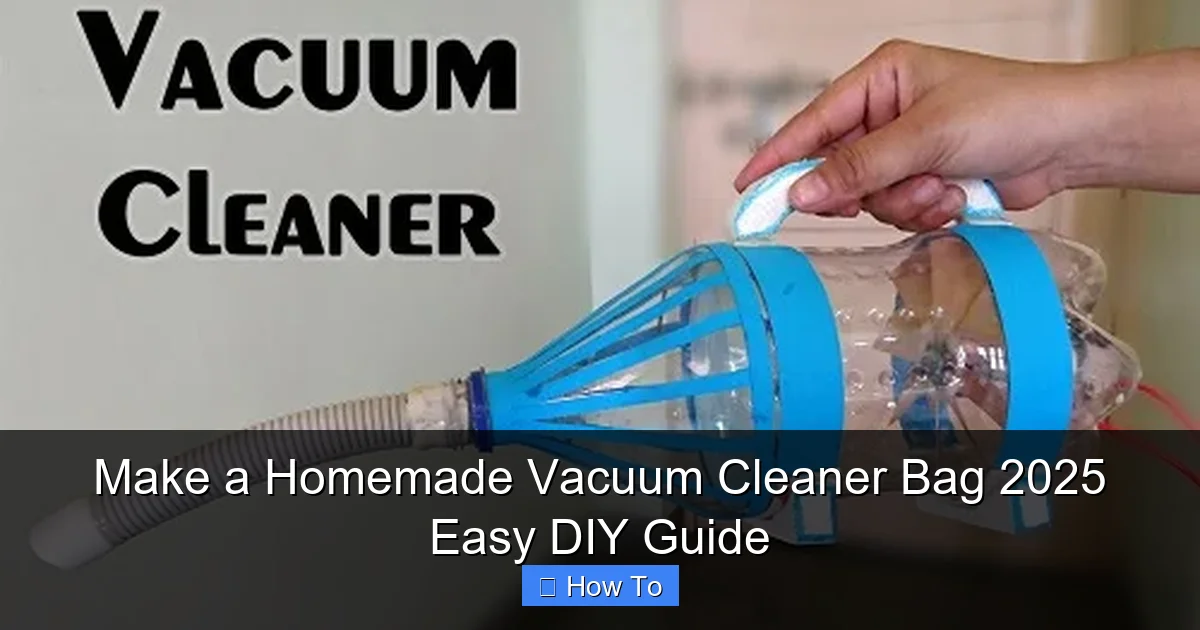
Looking to save money and reduce waste in 2025? Our easy DIY guide shows you exactly how to make a homemade vacuum cleaner bag. You’ll learn step-by-step instructions, material choices, and practical tips to create a reusable and effective bag for your vacuum, empowering you to embrace sustainable cleaning solutions.
Make a Homemade Vacuum Cleaner Bag 2025 Easy DIY Guide
Have you ever found yourself in the middle of a cleaning spree, only to realize you’re out of vacuum cleaner bags? Or perhaps you’re looking for ways to save money and reduce your household waste in 2025? If so, you’ve come to the right place! Making a homemade vacuum cleaner bag might sound daunting, but it’s a surprisingly straightforward and rewarding DIY project.
In this comprehensive guide, we’ll walk you through every step of creating your very own homemade vacuum cleaner bag. Not only will this save you money on expensive replacements, but it’s also a fantastic eco-friendly alternative to disposable bags. We’ll cover everything from choosing the best materials to detailed sewing instructions, practical tips, and even troubleshooting common issues. By the end of this guide, you’ll have the knowledge and confidence to craft a durable, effective, and reusable vacuum cleaner bag tailored specifically for your machine. Let’s get started on making your vacuum cleaner bag for a cleaner, greener home!
Key Takeaways
- Cost Savings: Making your own homemade vacuum cleaner bag can significantly cut down on recurring expenses compared to purchasing disposable store-bought bags.
- Eco-Friendly Solution: Opting for a reusable homemade vacuum cleaner bag drastically reduces household waste, contributing to a more sustainable lifestyle in 2025 and beyond.
- Optimal Material Selection: The effectiveness of your homemade vacuum cleaner bag hinges on choosing the right fabric – one that balances breathability, durability, and fine particle filtration.
- Custom Fit for Your Vacuum: This DIY guide allows you to tailor a bag specifically to your vacuum cleaner’s make and model, ensuring a perfect fit and optimal performance.
- Basic Sewing Skills Required: While a sewing machine is recommended for stronger seams, the techniques involved are straightforward, making this project accessible even for those with basic sewing knowledge.
- Potential for Enhanced Filtration: With careful material selection, your homemade vacuum cleaner bag can offer filtration comparable to, or even exceeding, some standard disposable bags, improving indoor air quality.
- Regular Maintenance is Key: For reusable homemade bags, consistent cleaning and inspection are essential to maintain suction power, filtration efficiency, and the overall longevity of the bag.
Quick Answers to Common Questions
What’s the best fabric for a homemade vacuum cleaner bag?
Microfleece or non-woven polypropylene fabric are generally recommended. They offer a good balance of breathability (for suction), durability, and fine particle filtration, making them ideal for an effective homemade vacuum cleaner bag.
Can I make my homemade vacuum cleaner bag reusable?
Absolutely! To make your homemade vacuum cleaner bag reusable, simply sew a sturdy zipper, Velcro strips, or a drawstring into the bottom seam. This allows you to easily empty the collected debris, wash the bag, and use it again.
How do I test my homemade vacuum cleaner bag for leaks?
After installing your new homemade vacuum cleaner bag, turn on your vacuum and hold a tissue near the seams and the attachment collar. If the tissue flutters or gets sucked in, it indicates a leak that needs to be reinforced with additional stitching or better sealing.
Is hand sewing a homemade vacuum cleaner bag a good idea?
While possible with a strong needle and thread, a sewing machine is highly recommended for making a homemade vacuum cleaner bag. Machine stitching provides stronger, more consistent seams that are essential for handling the air pressure and weight of dust, ensuring durability and preventing leaks.
Why is using an old vacuum cleaner bag as a template so important?
Using an old vacuum cleaner bag as a template is crucial because it provides the exact shape, size, and attachment points needed for your specific vacuum model. This ensures a perfect custom fit for your homemade vacuum cleaner bag, which is essential for proper function and effective suction.
Gathering Your Materials and Tools
Before you dive into sewing, preparing your workspace and gathering all the necessary items is crucial. Having everything at hand will make the process much smoother and more enjoyable.
Choosing the Right Fabric for Your Homemade Vacuum Cleaner Bag
The material you select is arguably the most important decision for your homemade vacuum cleaner bag. It needs to be durable, breathable enough for airflow, and finely woven to capture dust particles effectively.
- Microfleece: This is often a top recommendation. Microfleece is soft, durable, allows air to pass through easily, and its dense fibers are excellent at trapping fine dust. It’s also relatively easy to sew. Look for medium to heavy-weight fleece.
- Non-woven Polypropylene Fabric: Often used in reusable shopping bags, this material is strong, fairly breathable, and can withstand repeated washing. Ensure it’s a fabric that allows air through but not dust.
- Thick Cotton Twill or Canvas: While breathable and sturdy, these might need an additional fine-mesh layer inside to enhance particle filtration, as their weave can sometimes be too open for very fine dust.
- Denim: Similar to cotton twill, denim is very durable but might require a finer internal filter layer.
Avoid materials like bed sheets or very thin cotton as they typically don’t offer sufficient filtration, and avoid anything too heavy or tightly woven (like waterproof fabric) as it will restrict airflow and reduce suction.
Essential Sewing Supplies
Once you have your fabric, gather these tools:
- Sewing Machine: Highly recommended for strong, consistent seams. However, hand sewing with a strong needle and thread is also an option if you’re patient and skilled.
- Strong Polyester Thread: Polyester is more durable and resistant to breakage than cotton thread, which is essential for a vacuum cleaner bag.
- Fabric Scissors: Sharp scissors will ensure clean cuts.
- Measuring Tape or Ruler: For accurate measurements.
- Fabric Marker or Chalk: To trace your pattern onto the fabric.
- Pins or Fabric Clips: To hold fabric pieces together before sewing.
- Old Vacuum Cleaner Bag: This is your template! Carefully open up an old, empty bag to use as a pattern. If you don’t have one, you’ll need to measure your vacuum’s bag compartment and intake port very precisely.
- Elastic, Drawstring, or Zipper/Velcro: For sealing the opening of the bag (either for attachment or for emptying, if making a reusable version).
- Seam Ripper: Always handy for correcting mistakes.
Step-by-Step Guide to Making Your Homemade Vacuum Cleaner Bag
Now that you have all your materials ready, let’s get into the nitty-gritty of making your homemade vacuum cleaner bag. Precision here will ensure your bag fits well and functions efficiently.
Step 1: Prepare Your Workspace and Template
Clear a large, flat surface. This will be your cutting and sewing area.
Carefully take your old vacuum cleaner bag and, using a seam ripper, gently open it up along its seams. Flatten it out as much as possible. This dissected bag will serve as your perfect template for the new homemade vacuum cleaner bag.

Visual guide about Make a Homemade Vacuum Cleaner Bag 2025 Easy DIY Guide
Image source: i.pinimg.com
If you don’t have an old bag, you’ll need to measure the dimensions of your vacuum’s bag compartment and the circumference of the intake port. Create a paper pattern based on these measurements, ensuring you account for how the bag will inflate when in use.
Step 2: Cut Your Fabric Pieces
Lay your chosen fabric flat on your prepared surface. Place your opened-up old vacuum cleaner bag template on top of the fabric. Ensure the fabric grain is aligned, especially if your template has a specific shape that influences how the bag will hang.
Using your fabric marker or chalk, carefully trace around the template. As you trace, remember to add a seam allowance of approximately ½ to 1 inch (1.25 cm to 2.5 cm) around all edges that will be sewn. This extra fabric is crucial for strong seams.
Cut out two identical main body pieces. If your template has any additional smaller pieces (like a reinforced collar area or specific attachment flaps), trace and cut those out too. If you are making a rectangular bag that will be folded, you might only need one large piece to fold in half.
Step 3: Sew the Main Body of Your Homemade Vacuum Cleaner Bag
Place your two fabric pieces together with their “right sides” (the side you want to face outwards when finished) facing each other. Pin them securely along the edges where you plan to sew, leaving one end open. This open end will either be for attaching to the vacuum’s intake or for an emptying mechanism if you’re making a reusable homemade vacuum cleaner bag.
Using your sewing machine (or needle and thread), sew the pinned edges. A straight stitch is your primary stitch, but for added durability and to prevent fraying, always go over it with a zigzag stitch or a serger stitch if you have one. Double-stitching all seams provides extra reinforcement, which is vital for a hardworking vacuum cleaner bag.
Trim any excess fabric close to your seams, being careful not to cut the stitches. Turn the bag right side out. You should now have the basic shape of your homemade vacuum cleaner bag.
Step 4: Create the Vacuum Attachment Collar
This step is critical for ensuring your homemade vacuum cleaner bag functions correctly and doesn’t leak dust back into your home. The collar is the part that connects directly to your vacuum cleaner’s intake port.
Option A: Reusing the Old Collar (Easiest)
Carefully cut out the plastic or cardboard collar piece from your old vacuum cleaner bag. You’ll need to create an opening in your newly sewn fabric bag that perfectly matches the shape and size of this old collar. Once the hole is cut, insert the collar into the fabric opening. Fold the fabric edges around the collar and sew them securely in place. You might need to make small snips in the fabric around the curve to get it to lay flat. Use plenty of strong stitches to ensure a tight, dust-proof seal.
Option B: Creating a New Fabric Collar (More Advanced)
If you can’t reuse the old collar, you’ll need to fashion a new one. Measure the circumference of your vacuum’s intake port. Cut a sturdy piece of fabric (perhaps a double layer of your bag material or even something stiffer like heavy canvas) to create a circular or oval opening that matches this size. Hem the edges of this opening neatly.
You then need a way to secure this opening tightly to your vacuum. You could sew a casing around the opening and thread a strong elastic or drawstring through it, allowing you to cinch it tightly around the intake port. Alternatively, create a fabric flange that can be clamped or secured to the vacuum’s bag housing.
Regardless of the option, the goal is a perfectly sealed connection to prevent dust from escaping into your vacuum’s motor or back into the room.
Step 5: Design for Easy Emptying (Optional but Recommended for Reusable Bags)
If you intend for your homemade vacuum cleaner bag to be reusable, you’ll need an emptying mechanism. This is generally placed at the bottom of the bag.
- Zipper: This is a popular and effective choice. With your bag still inside out, sew a sturdy zipper into the bottom seam. Make sure it’s long enough to provide a wide opening for easy emptying. Turn the bag right side out after sewing the zipper.
- Velcro: Sew strips of heavy-duty Velcro along the opening at the bottom of the bag. Ensure the strips overlap generously for a secure seal when closed.
- Drawstring: Create a casing (a tunnel of fabric) along the bottom edge of the bag. Thread a strong drawstring through this casing. When it’s time to empty, simply untie, empty, and then cinch it tightly shut again.
Always reinforce these emptying mechanisms with extra stitching, as they will endure repeated use and stress.
Step 6: Test and Refine Your Homemade Vacuum Cleaner Bag
Once your homemade vacuum cleaner bag is complete, it’s time for the moment of truth!
Install the new bag into your vacuum cleaner. Make sure the collar is securely attached and that the bag sits correctly within the compartment. Turn on your vacuum. Listen for any unusual noises and check for proper suction.
The “Tissue Test”: A simple way to check for leaks is to hold a tissue near the seams and the attachment collar while the vacuum is running. If the tissue flutters or gets sucked in, you have a leak that needs addressing. Mark the leak area and reinforce the stitching or re-secure the collar.
If the suction seems weak, double-check that your fabric isn’t too thick and that the bag isn’t already too full (if you’ve tested with some debris). Adjust as necessary. Making a homemade vacuum cleaner bag is a learning process, and small adjustments might be needed for perfect performance.
Practical Tips for Your Homemade Vacuum Cleaner Bag
To get the most out of your homemade vacuum cleaner bag, consider these practical tips:
- Double-Stitch Everything: We can’t stress this enough. The seams of a vacuum cleaner bag are under constant stress from air pressure and the weight of collected debris. Double-stitching or even triple-stitching with strong thread ensures longevity.
- Consider an Internal Filter Layer: For enhanced filtration and cleaner air, you might add an inner layer of a very fine mesh fabric or even a thin piece of activated charcoal fabric. This is especially useful if your primary fabric is cotton twill.
- Make Multiple Bags: If you’re going through the effort of making one homemade vacuum cleaner bag, consider making two or three. This way, you always have a clean spare ready to go when one is full or needs washing.
- Regular Maintenance: For reusable bags, remember to empty them regularly. Overfilling can strain the seams and reduce suction. Wash your reusable homemade vacuum cleaner bag according to your fabric’s care instructions, but generally, cold water and air drying are best. Ensure it’s completely dry before reuse to prevent mildew.
- Don’t Overfill: Just like disposable bags, a homemade vacuum cleaner bag will lose effectiveness if overfilled. Empty it when it’s about two-thirds full to maintain optimal suction and prolong its life.
- Label Your Bag: If you have multiple vacuums or different bag types, label your homemade vacuum cleaner bag with the vacuum model it fits.
Troubleshooting Common Issues
Even with the best instructions, DIY projects can sometimes encounter hiccups. Here are some common problems you might face with your homemade vacuum cleaner bag and how to solve them:
Poor Suction
Cause: This is often due to either a leak or the fabric being too restrictive for airflow.
Solution:
- Check for Leaks: Re-perform the “tissue test” around all seams and especially the attachment collar. A small leak can dramatically reduce suction. Reinforce any areas where air is escaping.
- Fabric too Thick/Tight: If your fabric is too tightly woven, air cannot pass through easily, leading to poor suction. If this is the case, you may need to use a more breathable fabric for your next homemade vacuum cleaner bag.
- Bag Overfilled: Even a newly made bag can simulate poor suction if it’s already too full of test dust or if the fabric itself quickly clogs. Empty the bag and try again.
Dust Escaping Back into the Room
Cause: This indicates a failure in filtration or sealing.
Solution:
- Leaky Seals: The most common culprit is the attachment collar not being sealed tightly to the vacuum’s intake port, or a seam that wasn’t properly sewn. Inspect these areas closely.
- Fabric Filtration Issue: Your fabric might not be fine enough to trap microscopic dust particles. If you used a material like regular cotton, consider adding an internal fine-mesh filter layer inside your homemade vacuum cleaner bag.
Homemade Vacuum Cleaner Bag Doesn’t Fit Properly
Cause: Incorrect measurements or template use.
Solution:
- Re-measure: If the bag is too large, it might crumple and block airflow. If too small, it won’t hold enough or might pull away from the attachment. Go back to your template or original measurements.
- Collar Sizing: The attachment collar is crucial. If it’s too loose, it won’t seal; if too tight, it won’t fit over the intake. Carefully adjust the size of the opening and reinforcement. Sometimes, the old collar is simply the best option for a perfect fit.
Conclusion
Congratulations! You’ve now learned how to make a homemade vacuum cleaner bag. This DIY project is a fantastic way to combine practicality with sustainability. By crafting your own vacuum cleaner bags, you’re not only saving money but also making a conscious effort to reduce waste and contribute to a healthier planet – a goal that resonates strongly in 2025.
Embracing the DIY spirit means taking control of your household needs, and a homemade vacuum cleaner bag is a perfect example of how small changes can lead to significant benefits. With the right materials, a bit of patience, and these step-by-step instructions, you can ensure your home stays clean and your wallet stays happy. So go ahead, plug in your sewing machine, and enjoy the satisfaction of a job well done, knowing you’ve created an effective and eco-friendly solution for your cleaning needs. Happy vacuuming!
🎥 Related Video: How To Make Vacuum Cleaner At Home 💡 #shorts
📺 AKM Hacks
How To Make Vacuum Cleaner At Home #shorts.