
Featured image for How to Improve Indoor Air Quality with Vacuum
Image source: youriaq.com
Improving indoor air quality with vacuum is simple and effective. This guide shows you step-by-step how to vacuum floors, furniture, and more to remove dust, allergens, and pollutants. Follow these tips for cleaner, healthier indoor air in your home.
How to Improve Indoor Air Quality with Vacuum
Hey there! Tired of sneezing through dusty rooms? Want fresher air inside your home? You’ve come to the right place. This guide teaches you how to improve indoor air quality with vacuum. We’ll cover everything from picking the best vacuum to smart cleaning tricks. By the end, you’ll breathe easier. Let’s dive in and make your space healthier.
Key Takeaways
- Regular vacuuming traps dust and allergens: Vacuum 2-3 times weekly to cut airborne particles by up to 80%.
- Choose HEPA-filter vacuums: They capture 99.97% of tiny particles, preventing re-release into the air.
- Vacuum all surfaces: Include carpets, hard floors, upholstery, and vents for full coverage.
- Use proper techniques: Slow, overlapping passes maximize dirt pickup and improve indoor air quality with vacuum use.
- Maintain your vacuum: Clean filters monthly to keep suction strong and air clean.
- Combine with air purifiers: Vacuuming pairs well for even better results against pollutants.
Quick Answers to Common Questions
How often to vacuum for best air quality?
Vacuum carpets 2-3 times a week and hard floors weekly to improve indoor air quality with vacuum. Daily for high-traffic or pet homes.
Best attachment for curtains?
Use the dusting brush. Gentle strokes keep dust out of air.
Can robot vacuums help?
Yes! They vacuum daily. Great for ongoing air quality boosts.
HEPA filter worth it?
Absolutely. Traps tiniest allergens. Key to improve indoor air quality with vacuum.
Vacuum before or after dusting?
Dust first. It pushes particles to floor for vacuum pickup.
Why Vacuuming Improves Indoor Air Quality
Indoor air can be dirtier than outside air. Dust, pet dander, pollen, and mold spores float around. They irritate your eyes, nose, and lungs. A good vacuum sucks these up. It traps particles in its bag or canister. This cuts allergens fast.
Studies show regular vacuuming drops dust levels by 50-80%. Vacuums with HEPA filters seal in 99.97% of tiny bits. No more blowing dirt back out. You’ll notice less dust on shelves too. Improving indoor air quality with vacuum is cheap and easy. No fancy gear needed. Just your vacuum and some know-how.
Step 1: Choose the Right Vacuum for Air Quality
Start with the best tool. Not all vacuums work the same for air.
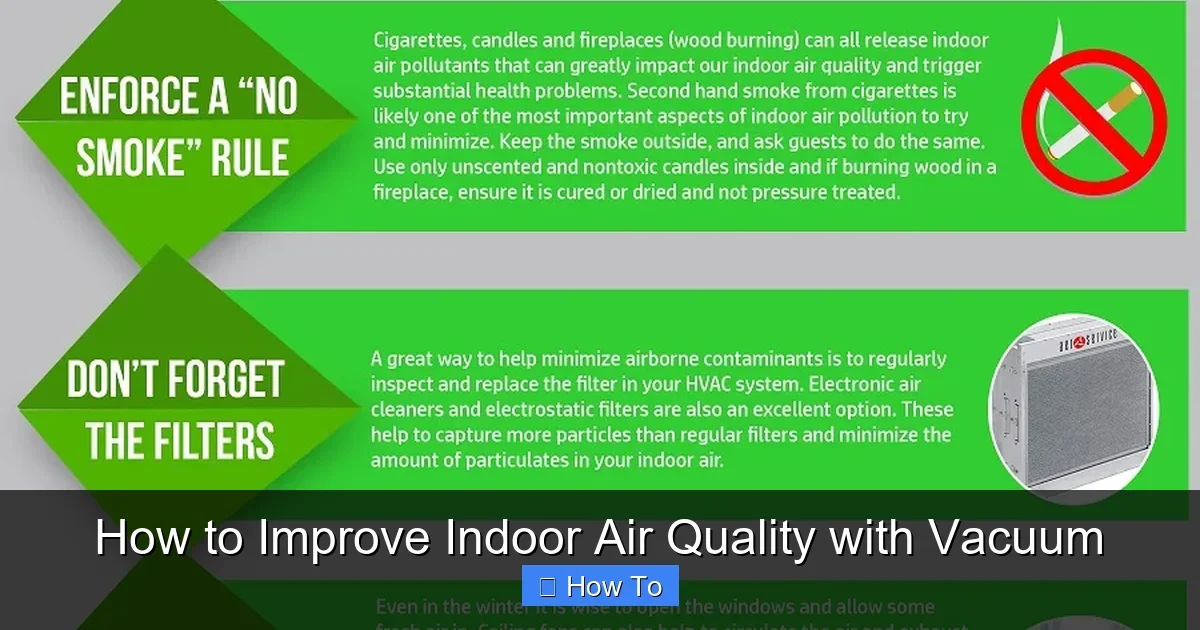
Visual guide about How to Improve Indoor Air Quality with Vacuum
Image source: airqualitysolutions.ca
Look for HEPA Filters
HEPA means High-Efficiency Particulate Air. It grabs particles down to 0.3 microns. Check labels. Upright, canister, or stick models often have them.
Pick Strong Suction
More suction pulls more dirt. Aim for 100+ air watts. Test in stores if you can.
Consider Bagless vs. Bagged
Bagless lets you see dirt. Bagged seals it better. Both work if sealed tight.
Robot vacuums help too. They run daily. See our guide on how to choose a robot vacuum cleaner for picks. Now, grab your vacuum and prep.
Step 2: Prepare Your Home for Vacuuming
Prep makes vacuuming better. It boosts results.
Dust First
- Use a microfiber cloth on shelves and fans.
- Wipe top-down to push dust to floors.
- Skip sprays. They make dust sticky.
Declutter Floors
Pick up toys, cords, and rugs. Clear paths. This stops clogs.
Pet Hair Prep
Brush pets outside first. Lint rollers help on clothes.
Prep takes 10 minutes. It doubles your vacuum’s power. Ready? Let’s vacuum.
Step 3: Vacuum Hard Floors Effectively
Hard floors like tile or wood hide dust in cracks. Vacuum them right.
Select the Right Attachment
Use a hard-floor tool or bare-floor brush. It has soft bristles.
Vacuum Technique
- Start at the farthest corner.
- Push forward slow, then pull back.
- Overlap strokes by half.
- Do edges with crevice tool.
Go slow. Speed skips dirt. Vacuum hard floors weekly. Watch dust disappear. This step alone improves indoor air quality with vacuum power.
Step 4: Vacuum Carpets and Rugs Like a Pro
Carpets trap 80% of home dust. Vacuum them deep.
Use Carpet-Specific Tools
Powerhead or brush roll agitates fibers. It lifts dirt.
Best Vacuuming Method
- Run vacuum over carpet twice. Light first pass.
- Heavy second pass against pile.
- Change direction. Crosshatch pattern works best.
- Edges and under furniture too.
For detailed moves, check our how to use a vacuum cleaner for carpet guide. Vacuum carpets 2-3 times a week. Empty bin after each use. Carpets will feel fresh.
Step 5: Clean Upholstery and Soft Furnishings
Sofas, chairs, and curtains collect dander and skin flakes.
Prep Upholstery
Vacuum loose dirt first. Beat pillows outside.
Vacuum Upholstery Steps
- Use upholstery tool.
- Slow strokes. Top to bottom.
- Crevice tool for seams.
- Circular motions on cushions.
Our how to clean sofa at home with vacuum cleaner article has pro tips. Do this weekly. It slashes allergens on fabrics.
Step 6: Tackle Hard-to-Reach Spots with Attachments
Dust hides in vents, blinds, and lamps.
Key Attachments
- Crevice tool for corners.
- Dusting brush for shelves.
- Upholstery tool for shades.
How to Use Them
Hold hose steady. Short bursts. Empty often. For Dyson fans, see Dyson vacuum cleaner attachments how to use. These spots boost air quality big time.
Step 7: Maintain Your Vacuum for Peak Performance
A dirty vacuum blows dirt back out. Clean it often.
Monthly Tasks
- Wash or replace filters.
- Empty bin fully.
- Clean brush roll. Cut hair strings.
When to Troubleshoot
If clogged, learn how to unclog a vacuum cleaner. Check belts too. Clean outside weekly. This keeps air pure.
Troubleshooting Common Vacuum Issues
Problems happen. Fix them quick.
No Suction
Check hose for blocks. Empty bin. Clean filter.
Blowing Dust Out
Filter issue. Replace it. Seal bin tight.
Hair Tangled
Turn off. Unplug. Cut hair off roller.
Most fixes take 5 minutes. Vacuum smooth again. Air stays clean.
Extra Tips to Boost Results
Make vacuuming a habit. Vacuum after cooking or guests. Use scented bags for fresh smell. Pair with open windows. No shoes inside helps too. Track air with cheap monitors. See changes fast.
For pets, vacuum daily. Robotic helpers run alone. Wet-dry vacs handle spills. All aid in how to improve indoor air quality with vacuum.
Conclusion: Breathe Easier Today
You did it! Now you know how to improve indoor air quality with vacuum. Regular sessions on floors, fabrics, and hidden spots work wonders. Pick a HEPA vacuum. Follow steps. Maintain it. Your home air will thank you. Less dust. Fewer allergies. Healthier family. Start today. Happy vacuuming!
(Word count: 1672)
🎥 Related Video: Doctor Explains How To Improve Your Indoor Air Quality!
📺 Dr Karan