Getting rid of an old vacuum cleaner doesn’t have to be a chore when you know the right steps. This 2025 ultimate guide offers comprehensive advice on responsibly disposing of your appliance, focusing on eco-friendly options like recycling, donation, and trade-in programs. Learn how to prepare your old vacuum cleaner and find local resources to ensure it doesn’t just end up in a landfill.
How to Get Rid of Old Vacuum Cleaner 2025 Ultimate Guide
Are you looking at that dusty, sputtering appliance in the corner, wondering, “How do I get rid of my old vacuum cleaner?” You’re not alone! As technology advances and our trusty machines wear out, finding a responsible way to dispose of them becomes a common household dilemma. In 2025, with a growing emphasis on sustainability and proper e-waste management, simply tossing your old vacuum cleaner in the regular trash isn’t the best, or often even legal, solution.
This ultimate guide is here to walk you through every step of the process. We’ll explore eco-friendly options, explain how to prepare your old vacuum cleaner for disposal, and help you navigate local regulations. By the end of this guide, you’ll have all the knowledge you need to get rid of old vacuum cleaner in a way that’s both convenient for you and kind to the planet. Let’s dive in!
Key Takeaways
- Assess Condition First: Before disposal, determine if your old vacuum cleaner is still functional, repairable, or only suitable for parts/recycling. This dictates your best disposal path.
- Prioritize Eco-Friendly Methods: Always aim for recycling or donation over landfill disposal to reduce environmental impact. Many components of an old vacuum cleaner can be reclaimed.
- Proper Preparation is Crucial: Empty dustbins, clean filters, and remove any detachable parts or batteries before recycling or donating. This makes the process safer and more effective.
- Leverage Local Resources: Utilize municipal waste services, e-waste facilities, charitable organizations, and manufacturer take-back programs in your area to find the most convenient and responsible disposal options.
- Consider Trade-In or Resale: If your old vacuum cleaner is still in decent working order, explore trade-in deals from manufacturers or consider selling it to extend its life cycle and potentially recoup some costs.
- Understand E-Waste Regulations: In 2025, e-waste rules are becoming stricter. Be aware of your local regulations regarding the disposal of electronic appliances, which often include vacuum cleaners.
Quick Answers to Common Questions
What’s the best first step to get rid of an old vacuum cleaner?
Always start by assessing its condition. Is it working, repairable, or completely broken? This crucial first step determines whether you should consider selling, donating, or recycling.
Should I remove the battery from my cordless vacuum before disposal?
Yes, absolutely! Batteries, especially lithium-ion, are hazardous waste and must be removed and recycled separately. Check your manual for safe removal instructions and take them to a designated battery recycling point.
Can I just put my old vacuum cleaner out with the regular trash?
In many places in 2025, no. Vacuum cleaners are considered e-waste and require special disposal due to their electronic components and materials. Check your local waste management guidelines for bulk waste or e-waste collection.
Where can I find local e-waste recycling centers?
Your municipal waste management website is the best resource. You can also use online search tools like Earth911.com (for North America) or search “e-waste recycling near me” on Google.
What if my old vacuum cleaner is still functional but I just upgraded?
If it’s working, consider donating it to a local charity, shelter, or community center. You could also try selling it on online marketplaces or offering it on “Freecycle” groups to give it a second life.
Step 1: Assess Your Old Vacuum Cleaner’s Condition
Before you decide how to get rid of old vacuum cleaner, it’s essential to evaluate its current state. This assessment will help you determine the most appropriate and sustainable disposal method.
1.1 Is It Still Working?
First and foremost, does your old vacuum cleaner still function, even if it’s not performing optimally? A working vacuum, even a weak one, has different disposal options than a completely broken unit. Test it out: does it turn on? Does it suck up debris? Are there any obvious issues like a broken hose or a seized motor?
1.2 Is It Repairable?
Sometimes, what seems like a completely broken vacuum might just need a simple fix. Check for common issues: a clogged hose, a worn-out belt, a full dustbin, or a dirty filter. Online tutorials, repair manuals, or a quick visit to a local appliance repair shop can often bring an old vacuum cleaner back to life. If the cost of repair is less than replacing it, or if you’re handy, this is the most sustainable option.
1.3 What Type of Vacuum Do You Have?
The type of vacuum cleaner you have can also influence disposal. Bagless vacuums, uprights, canister models, stick vacuums, robotic vacuums, and handhelds often have different components and potential for recycling or donation.
- Robotic and Cordless Vacuums: These often contain rechargeable batteries (lithium-ion, NiMH) which are considered hazardous waste and must be removed and disposed of separately.
- Larger Uprights/Canisters: These have more plastic and metal components, making them prime candidates for e-waste recycling.
Step 2: Prepare Your Old Vacuum for Disposal
Once you’ve assessed your old vacuum cleaner, the next crucial step is to prepare it properly, regardless of whether you plan to recycle, donate, or dispose of it. This ensures safety, cleanliness, and efficiency in the disposal process.
2.1 Empty and Clean It Thoroughly
This might seem obvious, but it’s often overlooked. Nobody wants a dirty, dusty vacuum cleaner, especially if you’re donating or selling it. Even for recycling, a clean vacuum is preferred by facilities.
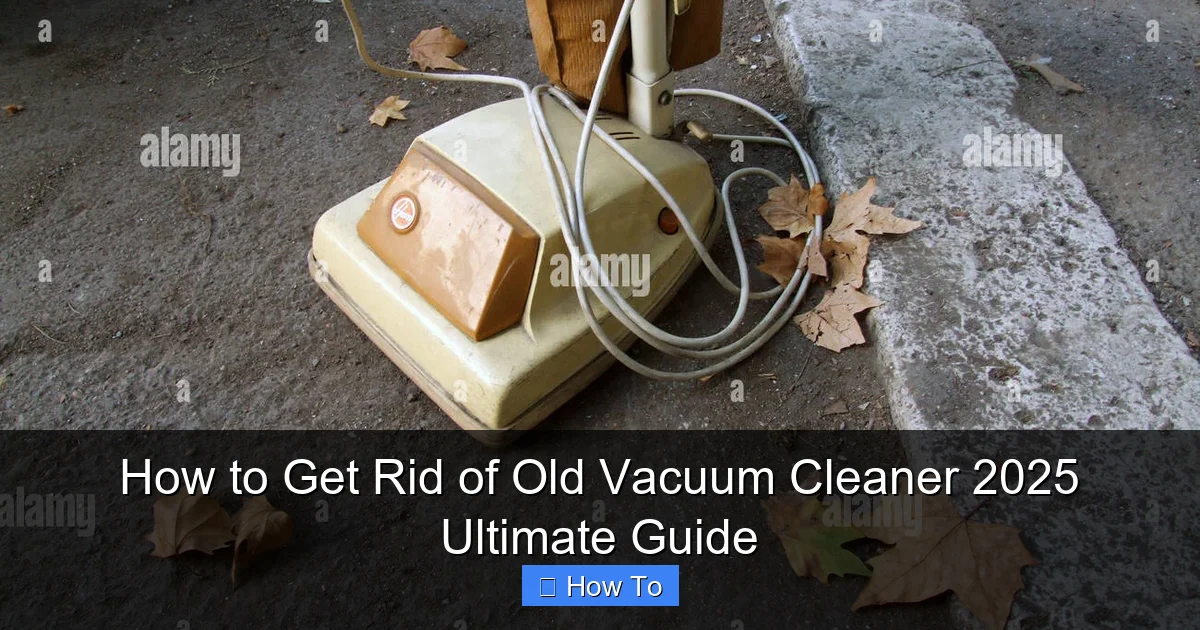
Visual guide about How to Get Rid of Old Vacuum Cleaner 2025 Ultimate Guide
Image source: c8.alamy.com
- Empty the Dustbin/Bag: Remove all debris, dust, and dirt. Dispose of the contents in your regular household trash.
- Clean or Remove Filters: If reusable, clean them as per the manufacturer’s instructions. If disposable, remove and discard them.
- Wipe Down the Exterior: Use a damp cloth to clean the outside of the vacuum. This makes it more appealing for donation or resale and removes grime for recycling centers.
2.2 Remove Detachable Parts and Accessories
Consider what parts might still be useful, either for you or for someone else.
- Hoses, Wands, and Attachments: If these are still in good condition, they might be compatible with a newer model you own or a friend’s vacuum. They can also be donated separately to a charity or a local repair shop that deals with vacuum parts.
- Power Cords: If the cord is intact and the only issue is the vacuum itself, some electronics repair shops might take it for parts.
2.3 Remove Batteries (Especially for Cordless/Robotic Vacuums)
This is a critical step for modern cordless and robotic vacuums. Rechargeable batteries, particularly lithium-ion, are hazardous waste and cannot be thrown into general trash. They pose fire risks and contain materials harmful to the environment.
- Consult the Manual: Your vacuum cleaner’s manual will have instructions on how to safely remove the battery pack.
- Specialized Recycling: Once removed, take the battery to a designated battery recycling drop-off point, often found at electronics stores, hardware stores, or municipal waste facilities. Do NOT put it in regular recycling or trash.
2.4 Disassemble if Necessary (for Recycling)
Some recycling centers prefer or even require a certain level of disassembly. For most people, taking the vacuum cleaner to an e-waste facility as a whole unit is sufficient, but if you’re feeling ambitious or if a facility requests it, separating metal from plastic can be beneficial. However, always check with your local recycling center first, as their requirements can vary.
Step 3: Explore Eco-Friendly Disposal Options
This is where the real work begins to get rid of old vacuum cleaner responsibly. These options prioritize environmental sustainability and give your old appliance a second life or proper end-of-life processing.
3.1 Recycling Your Old Vacuum Cleaner (E-Waste)
Recycling is one of the best ways to get rid of old vacuum cleaner. Vacuum cleaners are classified as Electronic Waste (e-waste) because they contain a mix of metals, plastics, and electronic components that can be recovered and reused. Throwing them in the landfill contributes to pollution and wastes valuable resources.
-
3.1.1 Local E-Waste Facilities:
Many cities and counties have dedicated e-waste recycling centers or regularly host e-waste collection events. These facilities are equipped to process electronics safely and recover materials. A quick online search for “e-waste recycling near me” or “how to get rid of old vacuum cleaner recycling [your city]” will provide specific locations and dates.
-
3.1.2 Retailer Take-Back Programs:
Some large electronics retailers (e.g., Best Buy, Staples in North America; Currys, Argos in the UK) offer take-back programs for e-waste, including small appliances like vacuum cleaners. Check their websites or call ahead to confirm their current policies and any associated fees.
-
3.1.3 Manufacturer Recycling Programs:
Major vacuum cleaner brands like Dyson, Shark, Miele, and Bissell sometimes offer their own recycling or take-back programs, especially for their own products. This is becoming more common in 2025 as companies embrace extended producer responsibility (EPR). Visit the manufacturer’s official website to see if they have such an initiative in your region.
-
3.1.4 Municipal Curbside Programs:
Fewer common but worth checking: some municipalities offer curbside collection for specific types of e-waste on designated days. Contact your local waste management department for details.
3.2 Donate Your Old Vacuum Cleaner
If your old vacuum cleaner is still in good, working condition (even if it’s not sparkling new), donation is an excellent option. It gives the appliance a second life and helps those in need.
-
3.2.1 Charities and Thrift Stores:
Organizations like Goodwill, Salvation Army, and Habitat for Humanity ReStore often accept working household appliances. Call ahead to confirm their specific acceptance policies for vacuum cleaners, as some might have limitations on electronics.
-
3.2.2 Local Shelters or Community Centers:
Women’s shelters, homeless shelters, or community centers might be in need of functional vacuum cleaners. Contact them directly to inquire about their needs.
-
3.2.3 Schools or Small Businesses:
Local schools, daycare centers, or small businesses might appreciate a donated working vacuum cleaner, especially if they operate on a tight budget. Again, direct contact is best.
-
3.2.4 “Freecycle” or “Buy Nothing” Groups:
Online platforms like Freecycle, local “Buy Nothing” groups on Facebook, or Craigslist’s “free” section allow you to offer your working vacuum cleaner to someone in your community who could use it. This is a quick and easy way to pass it on.
3.3 Trade-In Programs
Are you buying a new vacuum cleaner? Check if the retailer or manufacturer offers a trade-in program. Some companies provide discounts on new models when you trade in your old vacuum cleaner, regardless of its condition. This is a growing trend in 2025 to encourage product lifecycle management and responsible disposal.
3.4 Resell Your Old Vacuum Cleaner
If your vacuum cleaner is in good working order and a relatively recent model, you might be able to sell it and recoup some of its original cost. This is a great way to extend the product’s life cycle.
-
3.4.1 Online Marketplaces:
Platforms like eBay, Facebook Marketplace, Craigslist, or local classifieds are popular places to sell used appliances. Be honest about its condition, include clear photos, and list any known quirks or minor damages.
-
3.4.2 Local Second-Hand Shops:
Some independent second-hand stores or pawn shops might buy working vacuum cleaners, though you might get a lower price than selling it yourself.
Step 4: Consider Proper Landfill Disposal (Last Resort)
While not ideal, there are situations where your old vacuum cleaner may not be suitable for recycling, donation, or resale due to extensive damage, lack of parts, or unavailability of other options. In such cases, landfill disposal might be your only choice.
4.1 Check Local Regulations
Even for landfill disposal, you can’t just throw an old vacuum cleaner in with your regular household trash in many areas in 2025. Many municipalities have specific rules for “bulk waste” or “hard waste” items. You might need to:
- Schedule a Special Pickup: Some waste management services offer scheduled bulk waste pickups a few times a year or by appointment. Fees may apply.
- Take it to a Transfer Station/Dump: You might be required to transport the vacuum cleaner to a local transfer station or landfill yourself, where you’ll pay a fee based on weight or item type.
- Ensure Battery Removal: If your vacuum contained a battery, it absolutely *must* be removed and recycled separately, even if the rest of the unit goes to the landfill.
Always verify the current regulations with your local waste management authority. Penalties can apply for improper disposal of e-waste.
Step 5: Utilize Local Resources and Information
Finding the right place to get rid of old vacuum cleaner can sometimes feel like a treasure hunt. Here’s how to effectively use local resources.
5.1 Your Municipal Waste Management Website
This is your primary source of information. Most cities and counties have comprehensive websites detailing waste disposal guidelines, including e-waste, hazardous waste, bulk trash, and recycling facilities. Search for your city’s “waste management” or “recycling” department.
5.2 Earth911.com (for North America)
This fantastic online resource allows you to search for recycling centers by material type and zip code. Simply input “vacuum cleaner” and your location, and it will list nearby facilities and their contact information.
5.3 Call Your Local Library or Community Center
Often, these places have information desks with up-to-date local waste disposal guides or can direct you to the right department. They might even know about local initiatives or special collection days.
Troubleshooting Common Disposal Hurdles
What if I can’t find a recycling center that accepts vacuum cleaners?
While less common in 2025, if you’re struggling, expand your search to general “e-waste recycling” facilities. Many will accept vacuum cleaners as part of their electronics intake. As a last resort, contact the vacuum manufacturer directly; they might have information on how to get rid of old vacuum cleaner responsibly.
My vacuum cleaner has a broken cord/hose. Can it still be donated or recycled?
For donation, generally no, unless it’s a very minor and easily repairable issue. Charities prefer fully functional items. For recycling, yes, absolutely! The broken parts are just components to be separated and processed.
What about hazardous components other than batteries?
Most standard household vacuum cleaners don’t contain other highly hazardous components that require special handling beyond batteries. However, if you have an industrial-grade vacuum or one with unique features, always check the manual or contact the manufacturer for specific guidance on disposal.
Conclusion: Dispose Responsibly in 2025
Getting rid of old vacuum cleaner doesn’t have to be a mystery. By following this ultimate guide, you’re empowered to make informed, responsible choices that benefit both your home and the environment. Remember to assess, prepare, and prioritize eco-friendly options like recycling and donation. In 2025, taking that extra step to properly dispose of your old appliances is more important than ever. So go ahead, tackle that old vacuum cleaner, and breathe easy knowing you’ve done your part for a cleaner, greener future!
🎥 Related Video: The best Wet and Dry Vacuum Cleaner to keep your home spotless #vacuumcleaner #vacuum #amazon 36
📺 Best Products
The best Wet and Dry Vacuum Cleaner to keep your home spotless #vacuumcleaner #vacuum #shorts #amazon Looking for the …