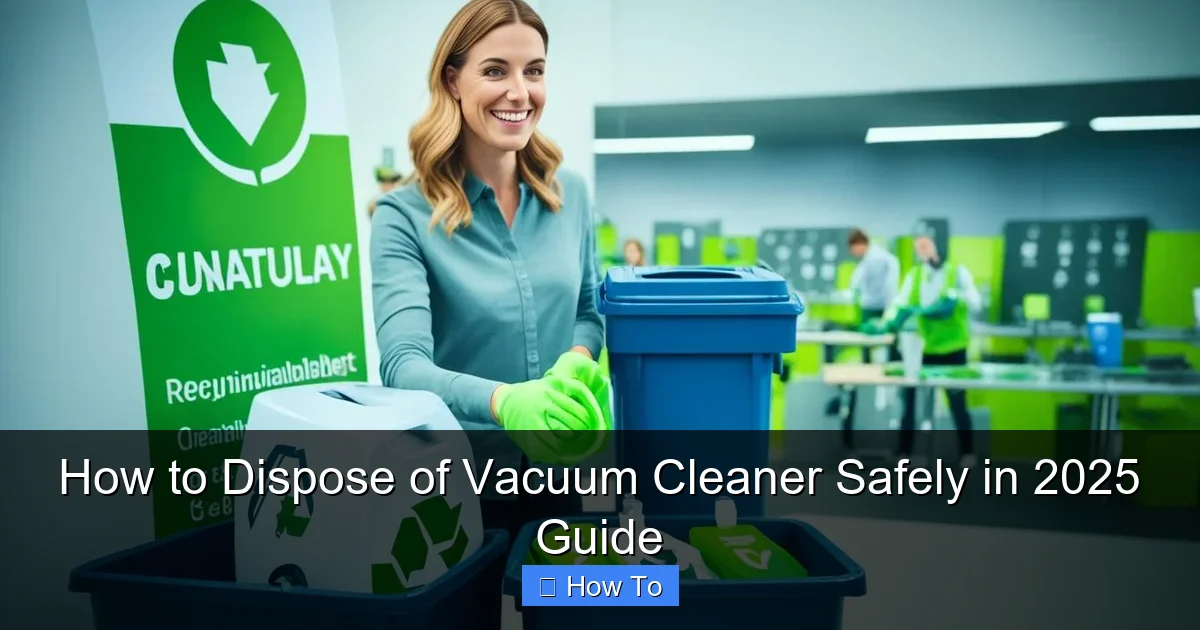
Don’t just toss your old vacuum cleaner! This 2025 guide provides clear steps for safe and eco-friendly disposal. Learn how to prepare your vacuum, identify recyclable components, and choose the best options, from donation to specialized e-waste recycling, ensuring you contribute positively to environmental protection and resource recovery.
How to Dispose of Vacuum Cleaner Safely in 2025 Guide
Are you looking to upgrade your old vacuum cleaner? Or perhaps your trusty cleaning companion has finally given up the ghost? Whatever the reason, you’re faced with a common question: “How do I dispose of my vacuum cleaner responsibly?” In 2025, throwing an old appliance into the regular trash is not only outdated but often environmentally harmful and even illegal due to evolving regulations.
This comprehensive guide will walk you through everything you need to know about how to dispose of your vacuum cleaner safely and effectively in the modern era. We’ll cover preparing your vacuum, understanding its components, exploring various disposal options, and even troubleshooting common challenges. Our goal is to make sure your old vacuum cleaner finds a new life, either through recycling or donation, minimizing its environmental footprint. Let’s get started on the path to responsible disposal!
Key Takeaways
- Prepare Your Vacuum Safely: Always unplug, empty, and clean your vacuum thoroughly before starting the disposal process.
- Prioritize Battery Removal: For cordless and robotic vacuums, carefully remove lithium-ion batteries and dispose of them separately at designated hazardous waste or battery recycling points.
- E-Waste Recycling is Key: Electronic waste (e-waste) centers are the primary and most responsible method for disposing of vacuum cleaner components, ensuring proper material recovery and preventing harmful substances from entering landfills.
- Explore Multiple Disposal Avenues: Consider donation or resale for working vacuums, manufacturer take-back programs, and specialized retailer recycling initiatives as viable alternatives to direct recycling.
- Check Local Regulations: Disposal rules vary by municipality. Always consult your local waste management website for specific guidelines on how to dispose of a vacuum cleaner in your area.
- Separate Components for Better Recycling: If possible, separate plastics, metals, and electronics to aid in more efficient recycling, though many e-waste centers handle mixed items.
Quick Answers to Common Questions
Should I remove the battery from my cordless vacuum before recycling?
Absolutely, yes! Always remove the lithium-ion battery from cordless or robotic vacuums. These batteries are considered hazardous waste and must be recycled separately at designated battery collection points or hazardous waste facilities to prevent fire risks.
Where’s the best place to find local recycling options for my vacuum cleaner?
Your city or county’s official waste management website is the top resource. You can also use national search engines like Earth911.com or Call2Recycle.org (for batteries) by entering your zip code.
Can I just put my broken vacuum in the regular household trash?
No, you should not. Vacuum cleaners contain a mix of plastics, metals, and electronics, often including hazardous components like batteries, that are not suitable for landfill. They are classified as e-waste and require specialized recycling.
What if my vacuum still works but I just want to upgrade?
If your vacuum cleaner is still functional, consider donating it to a local charity (like Goodwill or Salvation Army) or selling it online through platforms like Facebook Marketplace. Giving it a second life is the most eco-friendly option!
Is it worth disassembling my vacuum cleaner before disposal?
While not strictly necessary for most e-waste centers, disassembling components like the motor, metal rods, and larger plastic pieces can sometimes help local recyclers process materials more efficiently. However, if you’re unsure, it’s safer to let the e-waste facility handle it.
Why Proper Vacuum Cleaner Disposal Matters More Than Ever
In an age of increased environmental awareness and stricter regulations, simply trashing your old vacuum cleaner is no longer acceptable. Here’s why responsible disposal is so important:
Environmental Impact: Vacuum cleaners, like many other household electronics, contain a mix of materials. These include plastics, metals (steel, aluminum), electronic circuit boards, and sometimes even hazardous materials like lead, cadmium, and mercury in older models or lithium-ion batteries in newer cordless units. If these end up in landfills, they can leach harmful chemicals into the soil and groundwater. Furthermore, valuable resources are lost forever.
Resource Recovery: Many components of a vacuum cleaner are recyclable. Plastics can be reprocessed into new products, and metals can be melted down and reused. Proper disposal allows these materials to be recovered and reintroduced into the manufacturing cycle, reducing the need for virgin resources and saving energy.
E-Waste Regulations (WEEE): The world, especially regions like the EU and many states in the US, has robust Waste Electrical and Electronic Equipment (WEEE) regulations. These laws mandate that electronic items, including vacuum cleaners, must be recycled properly. These regulations are only getting stricter by 2025. Improper disposal can lead to fines for individuals and businesses.
Understanding these points highlights why learning how to dispose of a vacuum cleaner correctly is a vital skill for every environmentally conscious household.
Step 1: Prepare Your Vacuum Cleaner for Disposal
Before you even think about where to take your old vacuum, you need to prepare it. This ensures safety for you and the environment, and makes the disposal process smoother.
Unplug and Power Down
This might seem obvious, but it’s crucial. Always make sure your corded vacuum cleaner is unplugged from the wall socket. For cordless or robotic vacuum cleaners, power them down completely. If it has a removable battery, proceed to the next step.
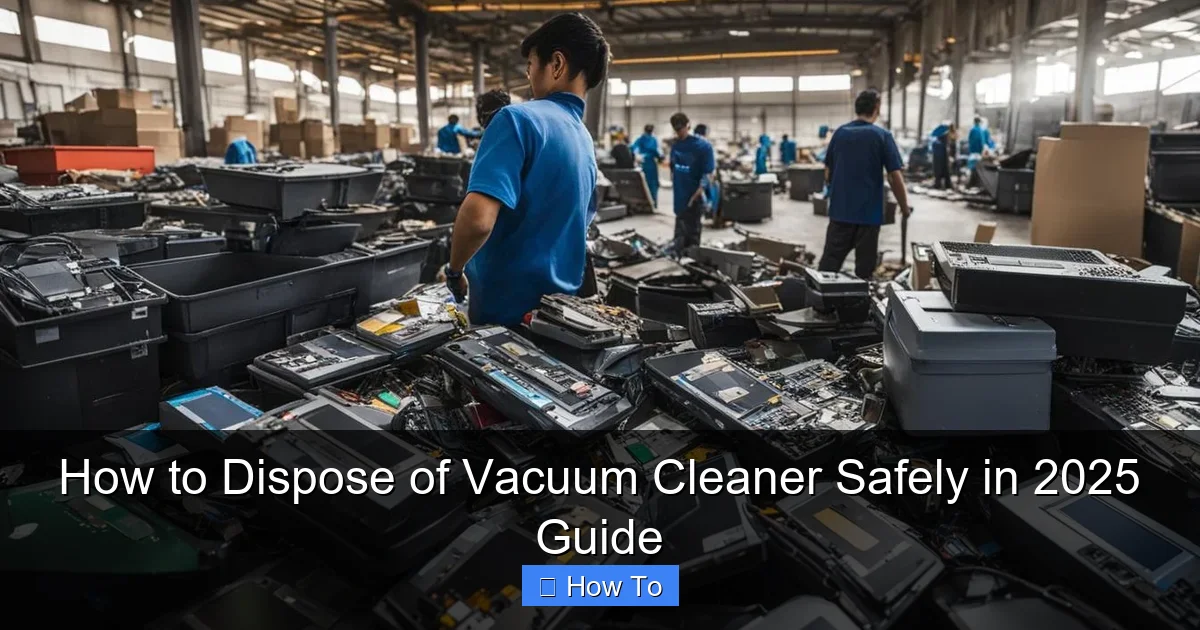
Visual guide about How to Dispose of Vacuum Cleaner Safely in 2025 Guide
Image source: vacmasterguide.com
Empty and Clean Thoroughly
No one wants to deal with a dirty vacuum, especially recycling centers or donation charities. Give your vacuum cleaner a good clean:
- Empty the Dustbin/Bag: Remove all dirt, dust, and debris. For bagged vacuums, take out the full bag and dispose of its contents in your regular trash. For bagless models, empty the dustbin.
- Clean Filters: If your vacuum has washable filters, clean them. If they are disposable, remove them and put them in your regular trash.
- Wipe Down the Exterior: A quick wipe-down helps make the unit more appealing for donation or easier to handle for recyclers.
Remove and Handle Batteries Safely (Especially for Cordless/Robotic Vacuums)
This is arguably the most critical step for modern vacuum cleaners. Lithium-ion batteries found in cordless and robotic vacuums are a fire hazard if damaged or improperly disposed of. They should NEVER go into the regular trash.
- Consult Your Manual: Refer to your vacuum cleaner’s user manual for specific instructions on how to safely remove the battery. Many modern vacuums have easily removable battery packs.
- Isolate the Battery: Once removed, place the battery in a non-conductive bag (like a plastic sandwich bag) or tape over the terminals with electrical tape to prevent short circuits.
- Separate Disposal: Batteries must be recycled separately. We’ll discuss battery recycling options later in this guide. Do not proceed with vacuum disposal until the battery is safely removed and earmarked for proper recycling.
Separate Attachments and Accessories
Many vacuum cleaners come with various hoses, brushes, and specialized nozzles. Decide if you want to keep any of these for a new vacuum, or if they should be disposed of with the main unit. Often, these are made of different plastics or materials and might be recyclable, but it helps to separate them if your local recycling facility allows. If they are mostly plastic, they can usually go with the vacuum body to an e-waste center.
Step 2: Identify Your Vacuum Cleaner Type and Components
Knowing what kind of vacuum you have and its main components helps determine the best disposal route.
Corded Vacuums
These are typically simpler in terms of internal electronics and generally do not contain significant batteries (other than perhaps a small coin cell for a digital display in some models, which is usually not a concern for disposal). Their main components are plastic casings, metal motors, and electrical wiring.
Cordless/Robot Vacuums (Battery Focus)
These units are more complex due to their integrated rechargeable batteries (usually lithium-ion), advanced circuit boards, and often sophisticated sensors. The battery is the primary focus for separate disposal due to its hazardous nature.
Bagged vs. Bagless Systems
This primarily affects the cleaning process in Step 1. Bagged systems require removing a disposable bag, while bagless systems have a removable, washable dustbin. Neither significantly impacts the overall disposal method for the main unit itself.
Material Breakdown (Plastics, Metals, Electronics)
Generally, vacuum cleaners are made up of:
- Plastics: The outer casing, hoses, and many internal parts. These are often various types of plastic, not all universally recyclable in standard curbside bins.
- Metals: The motor, internal framework, and sometimes external telescopic wands. These are valuable for scrap metal recycling.
- Electronics: Circuit boards, wiring, switches, and potentially screens or sensors. These are classified as e-waste.
This mix of materials is precisely why proper e-waste recycling is the best way to dispose of a vacuum cleaner.
Step 3: Explore Your Disposal Options for 2025
Now that your vacuum is prepped and you understand its composition, let’s look at the best ways to dispose of a vacuum cleaner in 2025.
Option 1: Donation or Resale (If Functioning)
If your vacuum cleaner is still in good working condition, or perhaps only needs a minor, inexpensive repair, consider giving it a second life!
- Assess Condition: Does it still have strong suction? Are all parts intact? Is it relatively clean? Be honest about its condition. Nobody wants a broken vacuum.
- Donation Centers: Charities like Goodwill, Salvation Army, or local thrift stores often accept working small appliances. Call ahead to confirm their current acceptance policies.
- Online Marketplaces: Websites like Craigslist, Facebook Marketplace, or local buy-nothing groups are great places to sell or even give away a functioning vacuum cleaner. This helps someone else and keeps it out of the waste stream.
- Repair Shops: Sometimes, local repair shops might be interested in taking older models for parts, even if they don’t buy them outright.
Option 2: E-Waste Recycling Centers (WEEE Compliance)
For most non-functioning vacuum cleaners, this is the gold standard for responsible disposal. E-waste centers are specifically equipped to handle the complex mix of materials in electronics.
- Locating Centers:
- Local Municipal Websites: Your city or county’s waste management website is the best place to find information on local e-waste drop-off points. Search for “e-waste recycling [your city]” or “how to dispose of vacuum cleaner [your city]”.
- Earth911.com: A fantastic resource for finding recycling centers for almost anything, including electronics and batteries, by zip code.
- Call2Recycle.org: Specifically for batteries, but their site might also point to broader e-waste facilities.
- What They Accept: E-waste centers accept a wide range of electronics, from computers to small appliances like vacuum cleaners. They will dismantle the units, separate materials, and ensure proper recycling of plastics, metals, and circuit boards, and safe handling of any residual hazardous materials.
- Preparing for Drop-off: Ensure your vacuum is clean and batteries are removed (if applicable) as per Step 1. Some centers might charge a small fee for certain items, but many offer free drop-off for small appliances.
Option 3: Manufacturer Take-Back Programs
Many major appliance manufacturers are increasingly offering take-back programs for their end-of-life products. This is often driven by producer responsibility laws.
- How to Check: Visit the manufacturer’s official website (e.g., Dyson, Shark, Miele, Samsung). Look for sections like “Recycling,” “Sustainability,” “Product End-of-Life,” or “Support.” They will provide instructions on how to send your old vacuum back for recycling.
- Benefits: These programs ensure the product is recycled according to the manufacturer’s specific guidelines, often recovering more specialized components efficiently.
Option 4: Curbside Bulky Waste or Special Collections
Some municipalities offer specific collection services for bulky waste or small appliances. However, this is becoming less common for electronics due to specialized e-waste requirements.
- Local Variations: Check your local waste management schedule and guidelines. Some areas might have specific “appliance pick-up” days.
- Important Note: If your area does offer this, confirm if they specifically accept electronics or items with batteries. It’s often safer to use a dedicated e-waste facility even if curbside is an option, as the processing quality might differ. You might still need to remove the battery beforehand.
Option 5: Hazardous Waste Facilities (for Specific Parts)
While the entire vacuum cleaner doesn’t usually go here, specific components absolutely should, primarily batteries.
- Battery Recycling: As mentioned, lithium-ion batteries should go to a designated battery recycling point or a household hazardous waste (HHW) facility. These facilities are equipped to handle and neutralize hazardous materials safely.
- Older Vacuums: If you have a very old vacuum (pre-2000s), it might contain components with heavy metals that warrant HHW facility disposal, but this is rare for modern vacuum cleaners. When in doubt, an e-waste center will know how to handle it.
Option 6: Retailer Recycling Programs
By 2025, many electronics retailers are expanding their in-store recycling programs. When you purchase a new vacuum cleaner, ask the retailer if they offer a take-back program for your old one.
- Major Retailers: Stores like Best Buy, Staples, and sometimes even larger supermarkets with electronics sections, often have drop-off points for small electronics and batteries. Policies can vary, so always confirm with your specific store.
- Convenience: This can be a very convenient option, especially if you’re already buying a replacement.
Troubleshooting Common Disposal Challenges
Sometimes, getting rid of that old vacuum cleaner isn’t straightforward. Here are solutions to common hurdles.
“I Can’t Find an E-Waste Center Nearby!”
If direct e-waste centers seem scarce in your rural area, don’t despair:
- County or Regional Facilities: Look beyond your immediate town. Larger county or regional waste facilities often have dedicated e-waste sections.
- Event Collections: Many communities host annual or semi-annual “Household Hazardous Waste” or “Electronics Recycling” events. Check your local council’s website for event calendars.
- Mail-Back Programs: For smaller items or batteries, some companies offer mail-back recycling services (often for a fee). Check reputable battery recyclers like Call2Recycle.
“What About Damaged Batteries?”
If a lithium-ion battery from your vacuum is swollen, leaking, or physically damaged, it poses a significant fire risk. Do NOT put it in the mail or a regular collection bin. Contact your local fire department or hazardous waste facility immediately for guidance on safe disposal. They can advise you on the safest way to transport or handle it.
“My Vacuum is Too Big for Curbside!”
If your municipality offers bulky waste pick-up but your vacuum exceeds size limits, or if it’s too heavy to transport yourself:
- Special Pick-up Services: Some waste management companies or private junk removal services offer special pick-ups for larger items. There will usually be a fee involved.
- Borrow or Rent a Vehicle: Ask a friend with a truck, or consider renting a small utility vehicle for a few hours to transport it to a proper e-waste facility.
Conclusion: Be a Responsible Disposer!
Disposing of a vacuum cleaner responsibly in 2025 is more than just getting it out of your home; it’s about making a conscious choice to protect our planet. By following the steps in this guide – from careful preparation and battery removal to choosing the correct recycling or donation channel – you contribute to reducing landfill waste, recovering valuable resources, and preventing harmful chemicals from polluting our environment.
Remember, every small appliance, including your old vacuum cleaner, has a story, and its end-of-life chapter should be one of responsible recycling and sustainability. So, take the extra moment to dispose of your vacuum cleaner correctly. It’s a simple act with a big positive impact!
🎥 Related Video: How to Safely Dispose of Robotic Vacuum Cleaners – Keep Your Home & Planet Clean
📺 ECER, Inc.
Robotic vacuums make cleaning effortless, but when they stop working or you upgrade, these smart devices can quickly become …