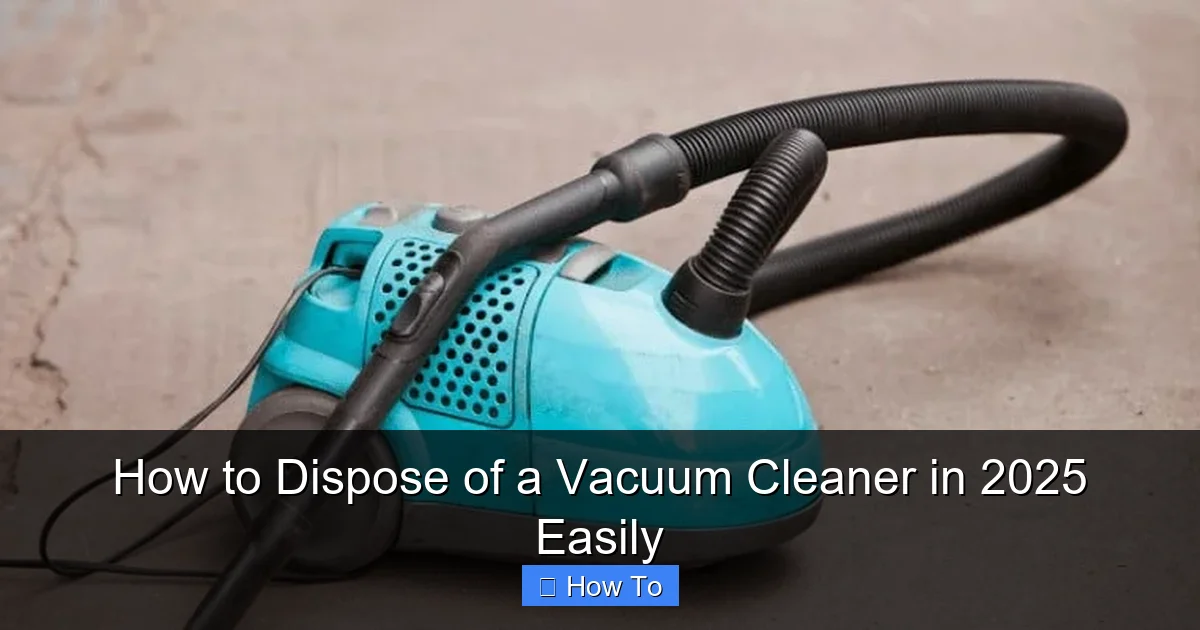
Getting rid of an old vacuum cleaner in 2025 is easier and more eco-friendly than ever. This comprehensive guide provides step-by-step instructions on how to properly dispose of a vacuum cleaner, from preparing it for disposal to finding the best recycling or donation options. Discover how to make responsible choices for your old appliance and the planet, ensuring harmful components are handled safely and materials are recovered.
How to Dispose of a Vacuum Cleaner in 2025 Easily
Has your trusty vacuum cleaner finally given up the ghost? Or perhaps you’re upgrading to the latest robotic marvel, leaving your old model gathering dust (pun intended) in the corner. Whatever the reason, you’re now faced with the task of getting rid of it. But wait – you can’t just toss it in the regular trash, especially not in 2025! With growing awareness about electronic waste (e-waste) and stricter environmental regulations, knowing how to dispose of a vacuum cleaner properly is more important than ever.
This comprehensive guide will walk you through everything you need to know about vacuum cleaner disposal in 2025, making the process simple, safe, and environmentally friendly. We’ll cover preparing your old vacuum, exploring all your disposal options, and even touch on what to do with specialized models. By the end, you’ll be a pro at responsible vacuum cleaner disposal.
Key Takeaways
- Assess Condition First: Before considering disposal, check if your vacuum can be repaired, donated, or sold to extend its life and reduce waste.
- Prepare for Disposal Properly: Always empty the dustbin, clean filters, and most critically, remove any batteries, as they require separate, specialized recycling.
- Prioritize Recycling Options: Opt for certified e-waste recycling centers, manufacturer take-back programs, or retailer collection services over landfill disposal.
- Avoid Landfills: By 2025, regulations on e-waste are stricter; vacuum cleaners contain materials harmful to the environment if landfilled.
- Utilize Local Resources: Your municipal waste management website is the best source for finding local e-waste drop-off points or special collection events.
- Special Care for Batteries: Cordless and robotic vacuums heavily rely on batteries, which are a major e-waste concern and must be recycled independently.
- Embrace Environmental Responsibility: Choosing the correct way to dispose of a vacuum cleaner contributes significantly to reducing landfill burden and promoting a circular economy.
Quick Answers to Common Questions
Can I just throw my old vacuum cleaner in the regular trash?
No, you should not throw your vacuum cleaner in the regular trash. Vacuum cleaners are considered electronic waste (e-waste) and contain components like plastics, metals, and potentially hazardous materials (especially batteries) that need specialized recycling to prevent environmental harm.
What should I do with the battery from my cordless vacuum?
Always remove the battery from your cordless vacuum if possible. These batteries, typically lithium-ion, must be recycled separately at a dedicated battery recycling drop-off point, which can often be found at electronics stores, hardware stores, or municipal waste facilities. Never put them in general waste.
Are there free options to dispose of a vacuum cleaner?
Yes, many municipalities offer free e-waste drop-off points or periodic collection events. Some retailers or manufacturers also provide free take-back programs, especially if you’re purchasing a new appliance. Always check local government websites or specific company policies for details.
How do I find a local e-waste recycling center for my vacuum?
The easiest way is to visit your local municipal waste management website. You can also use online search engines with terms like “e-waste recycling near me” or “vacuum cleaner recycling [your city],” or check specialized sites like Earth911.com.
Do I need to clean my vacuum cleaner before recycling it?
Yes, it’s a good practice to empty the dustbin or remove the bag and give the exterior a quick wipe down. While not always strictly required by recycling centers, it’s more hygienic and makes the unit easier for staff to handle.
Step 1: Determine Your Vacuum Cleaner’s Condition (Is it Really Trash?)
Before you even think about how to dispose of a vacuum cleaner, take a moment to assess its true condition. Sometimes, what seems like the end of the road is just a minor hiccup. Giving your vacuum a second life, whether through repair, donation, or sale, is always the most eco-friendly option.
Can it be Repaired?
Many common vacuum issues, like clogs, worn-out belts, or broken hoses, can be easily fixed. A quick search online for your vacuum’s model and the specific problem might reveal a simple DIY solution. If not, local vacuum repair shops often offer affordable services that can extend your appliance’s lifespan significantly. This prevents unnecessary waste and saves you money on a new unit.
Can it be Donated?
If your vacuum cleaner is still in good working order but you simply don’t need it anymore, consider donating it. Many charitable organizations, such as Goodwill, Habitat for Humanity ReStore, or local thrift stores, accept working appliances. This is a fantastic way to give your vacuum a new home where it can continue to be useful for someone else, and it’s a very simple way to dispose of a vacuum cleaner without sending it to a landfill. Always call ahead to confirm their acceptance policies for small appliances.
Can it be Sold?
Even old or slightly used vacuum cleaners can find a new owner, especially if they’re from a popular brand or have unique features. Online marketplaces like Facebook Marketplace, Craigslist, or eBay are great platforms to sell your used vacuum. Be honest about its condition and provide clear photos. This not only puts a little cash back in your pocket but also keeps a functional item out of the waste stream.
Step 2: Prepare Your Vacuum Cleaner for Disposal
Once you’ve decided that disposal is the best course of action, proper preparation is key. This step is crucial for ensuring that your old vacuum cleaner is handled safely and efficiently, especially when it comes to recycling its various components.
Empty the Dust Bin/Bag
This might seem obvious, but it’s often overlooked. Completely empty the dust bin or remove and dispose of the vacuum bag in your regular household trash. You don’t want to send a full bag of dirt and debris to an e-waste facility. This step is hygienic and makes the vacuum lighter and easier to handle for recyclers.
Clean Filters and Attachments
While not strictly necessary for disposal, giving the filters a good clean or removing them can make the recycling process smoother. Ensure all attachments are removed. If they are in good condition and universal, you might even be able to donate or sell them separately. Otherwise, they can be recycled along with the main unit if made of compatible materials (often plastics).
Remove Batteries (Crucial for 2025 E-waste Regulations)
This is perhaps the most important step, especially for cordless, handheld, and robotic vacuum cleaners. By 2025, regulations around battery disposal are increasingly stringent due to environmental and safety concerns (fire hazards).
Most modern vacuums, particularly cordless and robotic models, contain lithium-ion batteries. These batteries must be removed and recycled separately. Look for a battery compartment, usually secured with screws. Refer to your vacuum’s user manual if you’re unsure how to safely remove the battery pack. Once removed, take the battery to a dedicated battery recycling drop-off point, often found at electronics stores, hardware stores, or local municipal recycling centers. Never throw batteries in the regular trash or with other e-waste without removing them first.

Visual guide about How to Dispose of a Vacuum Cleaner in 2025 Easily
Image source: howtodispose.info
Disassemble if Necessary (for Specific Recycling Programs)
Some specialized recycling programs or scrap metal yards might prefer that you disassemble certain parts, such as separating large plastic components from metal ones. However, for most general e-waste recycling centers, leaving the vacuum largely intact after battery removal is acceptable. If you’re unsure, check with your chosen recycling facility before you begin taking things apart. This will ensure you properly dispose of a vacuum cleaner according to their guidelines.
Step 3: Explore Disposal Options for Your Vacuum Cleaner
Now that your vacuum is prepped, it’s time to choose the best disposal method. In 2025, you have several eco-friendly and responsible options, far beyond just tossing it in the bin.
Recycling Centers (E-waste Facilities)
This is generally the best and most recommended way to dispose of a vacuum cleaner. Certified e-waste recycling centers are equipped to safely dismantle electronics, separate materials like plastics, metals, and circuit boards, and ensure hazardous components are processed responsibly.
To find a facility:
- Online Search: Use search terms like “e-waste recycling near me,” “vacuum cleaner recycling,” or “electronics recycling [your city/state].”
- Local Government Websites: Your municipal waste management or public works department website will often have a dedicated section on e-waste disposal, listing local drop-off points, special collection events, and accepted items.
- Earth911.com: This website offers a comprehensive search tool for recycling various materials, including electronics, based on your zip code.
When you take your vacuum to an e-waste center, there might be a small fee involved, which helps cover the specialized processing costs. Consider this a small investment in environmental protection.
Manufacturer Take-Back Programs
Many leading vacuum cleaner brands are increasingly offering take-back or recycling programs for their old products, aligning with their corporate social responsibility and product stewardship. By 2025, these programs are becoming more common.
Check your vacuum cleaner manufacturer’s website. Companies like Dyson, Shark, Bissell, or Miele might have information on how to send your old unit back to them for recycling. This ensures that the components are handled by those most familiar with the product’s makeup, often leading to more efficient material recovery.
Retailer Take-Back Programs
Similar to manufacturers, some large electronics retailers or appliance stores offer take-back services, especially when you’re purchasing a new vacuum from them. Stores like Best Buy, Lowe’s, or Home Depot might have electronics recycling programs. It’s always worth asking when you buy your new appliance if they can take your old one off your hands. This is a convenient way to dispose of a vacuum cleaner without extra trips.
Curbside E-waste Collection (Where Available)
Some municipalities offer periodic curbside e-waste collection days or scheduled pick-up services. These are usually advertised well in advance. Check your local waste management calendar or website for information on when and how to prepare your old vacuum cleaner for collection. This is a convenient option if available in your area.
Scrap Metal Yards
If your vacuum cleaner is an older, heavier model with a significant amount of metal components (e.g., canister vacuums with metal bodies), a local scrap metal yard might accept it. They will often pay you a small amount for the metal by weight. However, scrap yards typically only want the metal and might not process plastic or electronic parts responsibly. Ensure non-metal components and especially batteries are removed before taking it to a scrap yard. This option is less ideal for modern, plastic-heavy vacuums.
Landfill (Last Resort Only, and Why Not)
In 2025, disposing of a vacuum cleaner in a general landfill should be your absolute last resort, and in many places, it’s explicitly prohibited for e-waste.
Vacuum cleaners contain a mix of plastics, metals, rubber, and complex electronics, including circuit boards and potentially hazardous materials like lead, cadmium, and mercury (especially in older models), plus the chemicals in batteries. When these end up in landfills, they can leach harmful toxins into the soil and groundwater. Furthermore, valuable recyclable materials are lost forever. Be a responsible citizen and choose an environmentally sound method to dispose of a vacuum cleaner.
Step 4: Special Considerations for Different Vacuum Types
While the general steps apply to most vacuums, certain types have unique considerations, primarily due to their power sources.
Cordless Vacuums
As mentioned, cordless vacuums run on rechargeable batteries. These batteries are a critical e-waste component. Always prioritize removing the battery pack and recycling it separately at a battery drop-off point. The remaining plastic and electronic components of the vacuum can then go to a general e-waste facility.
Robotic Vacuums
Robotic vacuums are highly sophisticated pieces of electronics, featuring complex circuit boards, sensors, and, of course, rechargeable batteries. Treat them as high-priority e-waste. Remove the battery if possible, and ensure the entire unit goes to a certified e-waste recycling center. Do not attempt to dismantle complex internal electronics yourself beyond battery removal, unless specifically instructed by a recycling facility.
Commercial/Heavy-Duty Vacuums
Larger, more robust commercial or industrial vacuums might have different disposal requirements. They often contain larger motors and more durable materials. Check with your local commercial waste disposal services or a specialized industrial recycling facility. Some manufacturers of commercial-grade equipment also offer specific take-back programs.
Troubleshooting Common Disposal Challenges
Sometimes, finding the perfect disposal solution isn’t straightforward. Here are answers to a few common dilemmas you might face when trying to dispose of a vacuum cleaner:
What if I don’t have an e-waste facility nearby?
If a dedicated e-waste center isn’t easily accessible, look for electronics retailers that offer take-back programs, even if you’re not buying a new appliance. Check if your municipality has special “hazardous waste” or “electronics recycling” events a few times a year. As a last resort, contact the vacuum manufacturer directly for guidance, especially for battery-powered models. Shipping options might be available for smaller items.
What if the battery is non-removable?
Some vacuum models, especially older ones or very compact units, might have sealed, non-removable batteries. In such cases, it is crucial not to attempt to force the battery out, as this can be dangerous. Instead, take the entire vacuum cleaner to a certified e-waste recycling facility and inform them that it contains an integrated battery. They have the specialized equipment to safely dismantle the unit and process the battery.
What if a recycling center charges a fee?
It’s common for e-waste recycling centers to charge a small fee for certain items. This fee helps cover the costs of environmentally sound processing, specialized equipment, and responsible material recovery, which can be more expensive than general waste disposal. Consider it an investment in responsible waste management and a small price to pay to ensure your old vacuum doesn’t harm the environment. The cost is usually minimal compared to the environmental benefit.
Conclusion: Dispose of Your Vacuum Cleaner Responsibly
Disposing of a vacuum cleaner in 2025 doesn’t have to be a chore. By following these steps, you can ensure your old appliance is handled in a way that benefits both your community and the planet. Remember to always prioritize repair, donation, or sale first. If disposal is necessary, remove batteries, empty dustbins, and utilize certified e-waste recycling centers, manufacturer programs, or retailer take-backs. Avoid landfills at all costs to protect our environment from harmful electronic waste. By making a conscious effort, you contribute to a cleaner, more sustainable future, one old vacuum cleaner at a time. It’s a simple act that makes a big difference when you need to dispose of a vacuum cleaner responsibly.
🎥 Related Video: How to Safely Dispose of Robotic Vacuum Cleaners – Keep Your Home & Planet Clean
📺 ECER, Inc.
Robotic vacuums make cleaning effortless, but when they stop working or you upgrade, these smart devices can quickly become …