
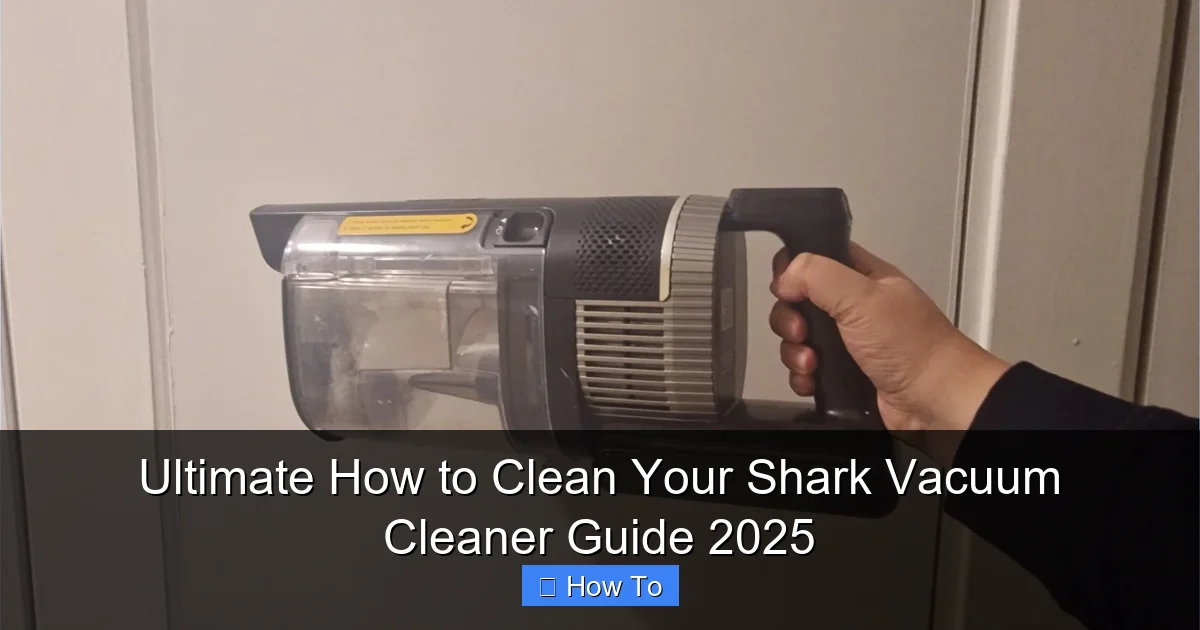
Keeping your Shark vacuum cleaner spotless is crucial for its optimal performance and longevity. This ultimate guide for 2025 will walk you through every step, from emptying the dust cup to cleaning filters and brush-rolls, ensuring your machine always provides powerful suction. Maintain a pristine home with ease by following these essential cleaning tips and keep your Shark running like new.
Ultimate How to Clean Your Shark Vacuum Cleaner Guide 2025
Hello there, fellow clean home enthusiast! Are you ready to give your trusty Shark vacuum cleaner the spa treatment it deserves? In 2025, keeping our homes sparkling clean is more important than ever, and a well-maintained Shark vacuum is your best friend in that mission. If you’ve noticed your Shark isn’t quite picking up dirt like it used to, or if it just feels like it needs a refresh, you’ve come to the right place.
Many people only think about cleaning their vacuum when there’s a problem, but regular, thorough cleaning is the secret to extending its life, maintaining powerful suction, and ensuring your home stays truly clean. A dirty vacuum can harbor allergens, emit odors, and even work less efficiently, costing you more time and effort. This comprehensive guide will walk you through every step of how to clean your Shark vacuum cleaner, transforming it from a tired workhorse into a powerful cleaning machine once again. We’ll cover everything from emptying the dust cup to tackling stubborn brush-roll tangles and deep cleaning those crucial filters. Let’s dive in and get your Shark vacuum cleaner shining!
Key Takeaways
- Regular Maintenance is Key: Consistently cleaning your Shark vacuum cleaner ensures it maintains peak suction power and extends its overall lifespan. Don’t wait for performance to drop!
- Safety First, Always: Before attempting any cleaning, always unplug your Shark vacuum from the power outlet to prevent accidental startups or electric shocks.
- Filters Are Crucial: Your Shark vacuum has foam, felt, and sometimes HEPA filters. Knowing how to clean each type correctly and allowing them to air dry completely is vital for filtration and suction.
- Tangle-Free Brush-rolls: Hair, strings, and debris frequently wrap around brush-rolls, hindering their effectiveness. Regular removal and cleaning of these brush-rolls are essential for deep cleaning.
- Check Hoses and Attachments: Often overlooked, hoses and attachments can harbor hidden clogs. Periodically inspecting and clearing these parts prevents blockages and maintains consistent airflow.
- Thorough Drying Prevents Damage: Any washable components, especially filters, must be 100% dry before reassembly to prevent mold growth, damage to the motor, and suction issues.
- Follow a Schedule: Establish a regular cleaning schedule (e.g., monthly for deep cleaning, after every few uses for dust cup and brush-roll checks) to keep your Shark vacuum in top condition.
Quick Answers to Common Questions
How often should I clean my Shark vacuum filters?
You should deep clean your foam and felt filters at least once a month, or more often if you use your vacuum frequently or have pets. Washable HEPA filters can be cleaned every 3-6 months. Always check your specific Shark model’s manual for recommended cleaning frequencies.
Can I use a washing machine to clean Shark vacuum filters?
No, absolutely not! Filters should always be hand-washed with warm water only, and sometimes a mild dish soap for foam and felt filters. A washing machine can damage the delicate filter material, rendering them ineffective and potentially harming your vacuum’s motor.
What if my Shark vacuum still has weak suction after cleaning?
The most common reason for persistent weak suction after cleaning is filters that haven’t fully dried. Re-check all washable filters to ensure they are bone dry. Also, re-inspect hoses and brush-roll areas for any missed blockages or ensure all parts are correctly reassembled and securely latched.
Is it okay to use air compressors to dry filters faster?
While an air compressor can speed up drying, it’s generally not recommended. The high pressure can damage the delicate fibers of the filters, reducing their effectiveness and potentially creating microscopic holes that allow dust to pass through. Stick to natural air drying in a well-ventilated area.
How do I know when to replace my Shark vacuum filters instead of just cleaning them?
Even with regular cleaning, filters wear out. You should consider replacing your foam and felt filters every 3 months, and your HEPA filter every 6-12 months, depending on usage. If filters appear torn, degraded, or are heavily stained and continue to smell even after thorough cleaning, it’s definitely time for new ones.
Safety First: Before You Begin
Before you lay a finger on any part of your Shark vacuum, there’s one golden rule you absolutely must follow: UNPLUG IT. Seriously, this isn’t just a suggestion – it’s crucial for your safety. An unplugged vacuum means no accidental startups, no risk of electric shock, and a worry-free cleaning experience. Once it’s unplugged, you’re ready to gather your tools and get started.
Gather Your Cleaning Arsenal

Visual guide about Ultimate How to Clean Your Shark Vacuum Cleaner Guide 2025
Image source: cdn.thewirecutter.com
To effectively clean your Shark vacuum cleaner, you’ll need a few simple items. Chances are, you already have most of these lying around your house. Having everything ready before you start will make the process smooth and efficient.
- Scissors or a Seam Ripper: Essential for cutting away tangled hair and fibers from the brush-rolls.
- Microfiber Cloths or Paper Towels: For wiping down surfaces and drying components.
- Small Brush (e.g., old toothbrush, stiff paint brush): Perfect for dislodging stubborn dirt from crevices and filters.
- Mild Dish Soap (optional, for washable parts): A small amount can help with heavily soiled dust cups or filters.
- Warm Water: For rinsing washable components.
- Waste Bin or Bag: To dispose of all the dirt and debris you’ll be removing.
- Rubber Gloves (optional): If you prefer not to touch the grime directly.
- A Well-Ventilated Area: Especially important for drying filters.
Step 1: Disassemble Your Shark Vacuum Cleaner
To give your Shark vacuum cleaner a proper clean, you’ll need to take it apart into its main components. Don’t worry, Shark vacuums are designed for easy disassembly, making the cleaning process straightforward.
Detaching the Dust Cup
Most Shark models have a release button or latch to remove the dust cup. Press this button, and the dust cup should lift right off. It’s usually located near the handle or base of the dust cup.
Removing Filters
Your Shark vacuum cleaner typically has several filters. Locate the foam and felt filters, usually found above the dust cup. Pull them out gently. If your model has a post-motor HEPA filter, it’s often located at the base or front of the vacuum. Consult your Shark manual if you’re unsure of its exact location or removal method.
Accessing Brush-rolls and Nozzle
For upright models, you’ll usually tilt the vacuum back or lay it down to access the floor nozzle. There might be latches or screws holding a cover in place to expose the main brush-roll. For stick or cordless models, the brush-roll is typically more accessible in the cleaner head.
Separating Hoses and Attachments
Disconnect any flexible hoses and removable attachments from the main unit. This allows you to inspect them for blockages and clean them individually.
Step 2: Emptying and Cleaning the Dust Cup
This is often the first thing people think of when they clean their Shark vacuum cleaner, but there’s more to it than just dumping the contents.
Emptying the Dust Cup Thoroughly
Take your dust cup to a waste bin. Press the release latch – usually at the bottom – to open the flap and empty all the debris. Give it a good tap to ensure everything falls out. Some Shark models also have a top release, which is useful for removing hair and larger clumps.
Washing the Dust Cup (If Applicable)
Many Shark dust cups are washable. If yours is, rinse it under warm water. You can use a small amount of mild dish soap if it’s particularly grimy or has residue stuck to the inside. Use your small brush to scrub away any caked-on dust or dirt from the sides and crevices.
Drying the Dust Cup Completely
This step is critical! After washing, allow the dust cup to air dry completely. Place it upside down in a well-ventilated area for at least 24 hours. Any moisture left inside can lead to mold, mildew, or even damage your vacuum’s motor when it’s reassembled. A completely dry dust cup is key to a clean Shark vacuum cleaner.
Step 3: Cleaning the Filters
Filters are the lungs of your Shark vacuum cleaner. Clogged filters dramatically reduce suction and can put a strain on the motor. Cleaning them regularly is one of the most effective ways to boost your vacuum’s performance.
Cleaning Foam and Felt Filters
Your Shark vacuum likely has a set of foam and felt filters. These are usually washable.
- Rinse: Hold the filters under warm running water until the water runs clear. Gently squeeze the foam filter to remove dirt and excess water. Do not twist or wring the felt filter; just rinse.
- Squeeze and Tap: Continue rinsing and squeezing the foam filter until no more dirt comes out. For the felt filter, gently tap it against the side of the sink to dislodge embedded dust.
- Air Dry: This is the most important part. Lay the foam and felt filters flat in a well-ventilated area for at least 24 hours, or until they are 100% dry. They must be completely dry before putting them back into your Shark vacuum cleaner. Placing them near a fan can speed up the drying process slightly, but avoid direct heat sources like radiators.
Cleaning the HEPA Filter (If Applicable)
Not all Shark models have a washable HEPA filter, so it’s essential to check your specific model’s manual.
- Tapping Only (for non-washable HEPA): If your HEPA filter is not washable, you should *never* rinse it with water. Instead, take it outside and gently tap it against a hard surface (like a wall or garbage can) to dislodge accumulated dust and fine particles. You’ll be surprised how much comes out!
- Rinsing (for washable HEPA): If your manual states your HEPA filter is washable, carefully rinse it under warm water. Do not use soap. Continue rinsing until the water runs clear.
- Extreme Drying (for washable HEPA): A washable HEPA filter takes significantly longer to dry than foam and felt filters, often 48 hours or more. Ensure it is bone dry before reinserting it into your Shark vacuum cleaner. A partially damp HEPA filter can grow mold and damage your motor.
Remember, completely dry filters are paramount for optimal performance and to prevent damage to your Shark vacuum cleaner.
Step 4: Clearing the Brush-rolls and Nozzle
The brush-rolls are where most of the action happens, picking up dirt and debris. However, they’re also notorious for accumulating hair, threads, and other tangles, which can severely hinder their effectiveness.
Cleaning the Main Brush-roll
Lay your Shark vacuum cleaner down or tilt it back so you can easily access the floor nozzle.
- Remove Obstructions: Carefully use your scissors or seam ripper to cut through any hair, string, or fibers wrapped around the brush-roll. Be gentle to avoid damaging the bristles.
- Pull Away Debris: Once cut, you can usually pull the tangled material right off. A small brush can help dislodge stubborn bits.
- Check for Damage: While you’re there, inspect the bristles for wear and tear. If they are severely matted or worn down, it might be time to consider a replacement brush-roll.
Cleaning the Soft Roller (DuoClean Models)
If your Shark has DuoClean technology, you’ll have a soft front roller in addition to the main brush.
- Remove and Inspect: The soft roller is usually easy to pop out. Check it for any wrapped hair or debris.
- Wash (If Applicable): Some soft rollers are washable. If yours is, rinse it under warm water until clean.
- Air Dry: Just like with filters, allow the soft roller to air dry completely for at least 24 hours before putting it back into your Shark vacuum cleaner.
Clearing the Nozzle Pathway
Once the brush-rolls are clean, inspect the internal pathways of the floor nozzle. Look for any blockages from larger debris like socks, paper, or pet toys that might have gotten sucked up. Clear these by hand.
Step 5: Inspecting and Cleaning Hoses and Attachments
Hidden clogs in the hose or dirty attachments can also contribute to reduced suction and spread grime.
Checking for Hose Blockages
Disconnect all hoses from the main unit. Hold one end up to a light source and look through the other end. Can you see light clearly? If not, there’s a blockage.
- Dislodge Blockages: Use a broom handle, a stiff wire (like a coat hanger straightened out), or a long, flexible cleaning brush to push the blockage through. Be careful not to puncture the hose.
- Rinse (If Applicable): Some flexible hoses can be rinsed with warm water if they are particularly dirty, but ensure they are completely dry before reattaching, which can take a long time due to their internal ridges. Only do this if your manual explicitly allows it.
Cleaning Attachments
Your Shark vacuum comes with various attachments like crevice tools, upholstery tools, and pet power brushes.
- Wipe Down: Use a damp cloth to wipe down all plastic attachments. For stubborn dirt, a little mild dish soap can help.
- Clear Bristles: For motorized pet tools, clear any hair or debris from their brush-rolls similar to how you cleaned the main brush-roll.
- Air Dry: Ensure all attachments are dry before storing them.
Step 6: Wiping Down the Exterior
Now that the internal components are sparkling, let’s make the outside of your Shark vacuum cleaner look just as good.
Cleaning the Body
Use a damp microfiber cloth (lightly dampened with water, perhaps with a tiny drop of mild soap) to wipe down the exterior of your vacuum. Pay attention to the handle, wheels, and any other surfaces that get touched frequently. This not only makes your vacuum look better but also removes dust and grime that can get redistributed into your home.
Shining Up
Finish with a dry cloth to buff the surfaces and remove any streaks, making your Shark vacuum cleaner truly gleam.
Step 7: Reassembling Your Shark Vacuum Cleaner
Once every component is completely clean and dry, it’s time to put your Shark vacuum cleaner back together. This is usually the reverse of the disassembly process.
Reinserting Filters
Start by placing the completely dry foam and felt filters back into their designated spots. Ensure they are seated correctly. If you have a HEPA filter, reinsert that as well, making sure it clicks into place. Incorrectly seated filters can lead to reduced suction.
Attaching the Dust Cup
Align the dust cup with its housing and click it back into place. Make sure it’s secure.
Replacing Brush-rolls and Nozzle Cover
Reinsert the main brush-roll and any soft rollers, ensuring they are properly aligned and spinning freely. Fasten any covers or latches that hold them in place.
Connecting Hoses and Attachments
Reattach all flexible hoses and store your cleaned attachments back on the vacuum or in their designated storage area.
Final Check
Once fully reassembled, do a quick visual check. Are all parts secure? Are the filters in place? Is the dust cup firmly attached? Now, you can plug your Shark vacuum cleaner back in and enjoy its renewed power!
Troubleshooting Common Issues After Cleaning
Even after a thorough clean, sometimes things don’t go perfectly. Here are a couple of common issues and what to do:
Reduced Suction After Cleaning
If your Shark vacuum still has weak suction, the most common culprit is damp filters. Re-check all washable filters (foam, felt, and washable HEPA) and ensure they are 100% dry. Even a slight bit of moisture can block airflow. If they are dry, double-check all hose connections and brush-roll areas for any missed blockages or incorrect reassembly. Sometimes, a part isn’t clicked into place correctly, creating a leak in the air path.
Strange Noises
A new noise after cleaning could indicate something isn’t properly seated or something was missed. Check the brush-roll area again for any hair or debris that might still be snagged. Ensure the dust cup and filters are correctly installed and latched. If a small item (like a coin) was missed in the dust cup, it might be rattling around.
Establishing a Regular Maintenance Schedule
To keep your Shark vacuum cleaner performing at its best year after year, especially in 2025, regular maintenance is key.
- After Every Use/Few Uses: Empty the dust cup. Check the brush-rolls for large tangles.
- Monthly: Deep clean foam and felt filters. Inspect brush-rolls thoroughly for hair and debris. Check hoses and attachments for clogs. Wipe down the exterior.
- Every 3-6 Months (or as needed): Deep clean HEPA filter (if washable) or tap out (if non-washable). Consider replacing filters if they are heavily stained, torn, or no longer clean effectively, even after washing. Shark recommends replacing foam and felt filters every 3 months and HEPA filters every 6-12 months, depending on usage.
Conclusion: Enjoy Your Like-New Shark Vacuum!
Congratulations! You’ve just completed a comprehensive deep clean of your Shark vacuum cleaner. By following these steps, you’ve not only improved its immediate performance but also invested in its long-term health. A clean Shark vacuum cleaner means a more efficient cleaning experience for you, a healthier home environment for your family, and a machine that will serve you well for many years to come.
Regular cleaning is simple, requires minimal tools, and makes a huge difference. So, plug in your sparkling, reenergized Shark, and get ready to tackle those dust bunnies with renewed power. Your home (and your vacuum) will thank you! Happy cleaning in 2025!
🎥 Related Video: Cordless Vacuum | How to Maintain + Clean (Shark® Detect Pro™ Vacuum)
📺 Shark Home
Don’t forget to subscribe!