
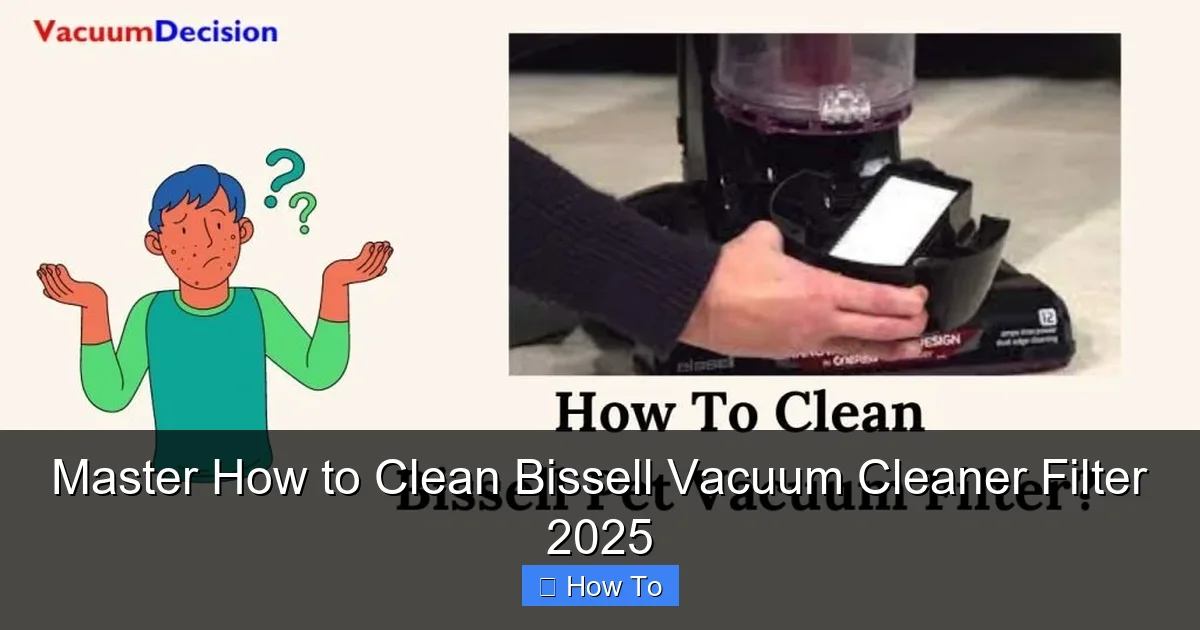
To maintain peak suction and air quality, regularly cleaning your Bissell vacuum cleaner filter is essential. This comprehensive 2025 guide provides step-by-step instructions for all filter types, from washable foam to non-washable HEPA, ensuring your vacuum runs efficiently and extends its lifespan. Learn exactly how to clean Bissell filter for optimal results and keep your home fresher.
Master How to Clean Bissell Vacuum Cleaner Filter 2025
Keeping your home spotless often means relying on a trusty vacuum cleaner. And if you’re like millions, a Bissell vacuum is your go-to companion for tackling dirt, dust, and pet hair. But even the best vacuums need a little TLC to perform their best. The unsung hero of your Bissell’s cleaning prowess? Its filter!
Over time, your Bissell vacuum cleaner filter can become clogged with microscopic particles. This build-up directly impacts your vacuum’s suction power, causes it to work harder, and can even recirculate dust back into your meticulously cleaned air. That’s right, a dirty filter can make your home dirtier!
In this comprehensive 2025 guide, we’ll walk you through everything you need to know about how to clean Bissell vacuum cleaner filter types, ensuring your machine runs at peak efficiency. We’ll cover identifying different filter types, step-by-step cleaning instructions for both washable and non-washable filters, practical tips, and common troubleshooting. By the end, you’ll be a pro at maintaining your Bissell filter, guaranteeing a cleaner home and a longer life for your appliance.
Let’s dive in and transform your vacuum’s performance!
Key Takeaways
- Regular Cleaning is Crucial: Routinely cleaning your Bissell vacuum cleaner filter significantly improves suction power, extends vacuum life, and ensures better air quality in your home.
- Identify Your Filter Type: Before starting, always determine if your Bissell filter is washable (foam, some pleated) or non-washable (HEPA, pleated paper) to choose the correct cleaning method.
- Drying is Key for Washable Filters: For washable filters, ensure they are 100% completely dry before reinstalling. Reinserting a damp filter can lead to mold growth and severe vacuum damage.
- Gentle Care for Non-Washable Filters: Use gentle methods like tapping, soft brushing, or compressed air for non-washable filters. Never rinse them with water, as this can destroy their filtration capabilities.
- Safety First: Always unplug your Bissell vacuum cleaner before accessing or removing any filters to prevent accidental startup and ensure your safety.
- Monitor for Replacement: Even with regular cleaning, filters have a lifespan. Watch for signs like persistent odors, reduced suction despite cleaning, or visible damage, indicating it’s time to replace your Bissell vacuum cleaner filter.
- Boost Air Quality and Efficiency: A clean Bissell filter not only keeps your vacuum performing its best but also traps allergens and dust more effectively, contributing to a cleaner, healthier home environment.
Quick Answers to Common Questions
What’s the best way to dry a washable Bissell filter?
After rinsing, squeeze out excess water, then air dry in a well-ventilated area away from direct heat. Depending on humidity, this can take 24-48 hours. Ensure it’s 100% dry before reinstallation to prevent mold.
Can I use a dishwasher to clean my Bissell filter?
No, never put any Bissell vacuum cleaner filter in a dishwasher. The high heat, harsh detergents, and intense water jets can permanently damage the filter material, rendering it ineffective.
How often should I replace my Bissell vacuum cleaner filter?
Even with regular cleaning, most Bissell filters need replacement every 6-12 months, or sooner if you notice persistent odors, visible damage, or a significant drop in suction despite cleaning. Always check your specific model’s manual.
My non-washable Bissell filter is really dirty. What should I do?
For non-washable filters, gently tap out loose debris, use a soft brush to dislodge dirt, or carefully use compressed air. If it’s still heavily soiled or causing reduced suction, it’s likely time for a replacement.
Will cleaning my filter really improve my vacuum’s suction?
Absolutely! A clogged Bissell vacuum cleaner filter restricts airflow, forcing your vacuum’s motor to work harder with less effective results. A clean filter allows air to flow freely, instantly restoring and maximizing your vacuum’s suction power.
Understanding Your Bissell Filter System
Before we grab our cleaning tools, it’s crucial to understand that not all Bissell vacuum cleaner filters are created equal. Bissell manufactures a wide range of vacuums, and each model might use slightly different filter systems. Generally, Bissell vacuums have two main types of filters:
* Pre-Motor Filter: This is the first line of defense, usually located near the dust bin or motor housing. It catches larger debris and protects the motor from damage. Most pre-motor filters in Bissell vacuums are washable. They can be made of foam or a pleated, fabric-like material.
* Post-Motor Filter (Exhaust Filter): Found near the exhaust vent, this filter cleans the air before it’s released back into your home. These are often HEPA filters, which capture tiny allergens and pollutants. Some post-motor filters are washable, while others, particularly true HEPA filters, are designed to be non-washable and require gentle cleaning or replacement.
Knowing your specific model and its filter types is the first step to properly clean Bissell filter. Refer to your vacuum’s user manual if you’re unsure.
Gathering Your Cleaning Arsenal
You won’t need a professional cleaning crew to clean Bissell vacuum cleaner filter. Most of what you need is likely already in your home:
* Soft-bristle brush: An old toothbrush or a small utility brush works great for dislodging stubborn dirt.
* Mild dish soap (optional for washable filters): Just a drop can help with greasy residue.
* Clean water: For rinsing washable filters.
* Dry towels or paper towels: For initial drying.
* Compressed air (optional for non-washable filters): Can help blow out fine dust.
* A trash can or outdoor area: For shaking out loose debris.
* A well-ventilated area: Crucial for drying filters and managing dust.
Safety First! Pre-Cleaning Precautions
Before you even think about touching your Bissell vacuum cleaner filter, prioritize safety. This step is non-negotiable!
Unplug Your Vacuum Cleaner
Always, always, always unplug your Bissell vacuum cleaner from the electrical outlet before performing any maintenance, including filter cleaning. This prevents accidental startup and potential injury. Seriously, don’t skip this step!

Visual guide about Master How to Clean Bissell Vacuum Cleaner Filter 2025
Image source: storables.com
Work in a Ventilated Area
Cleaning filters can release a cloud of dust and allergens. To avoid inhaling these particles, choose an outdoor space, a garage, or a well-ventilated room. Wearing a dust mask can also be a good idea, especially if you have allergies.
Step-by-Step Guide to Cleaning Your Bissell Filter
Now that we’re safe and prepared, let’s get down to the actual cleaning process. We’ll start with locating and removing the filters, then move on to specific cleaning techniques based on filter type.
Locating and Removing the Filter
The first hurdle is finding your Bissell vacuum cleaner filter! Their location can vary by model.
Identifying Filter Locations on Different Bissell Models
- Upright Vacuums: For many upright Bissell models, the pre-motor filter is often found under the dirt cup or on the top side of the motor base once the dirt cup is removed. The post-motor filter might be on the front, side, or rear of the vacuum, often behind a small grate or door.
- Canister Vacuums: Canister models typically have filters located within or adjacent to the dust collection bin. Some may also have an additional filter near the motor or exhaust vent.
- Handheld/Stick Vacuums: These compact units usually have filters integrated directly into the dirt tank assembly, often accessible by twisting or popping open the tank.
Safe Removal Techniques
Once you’ve located the filter, remove it gently. For dirt cups, you’ll usually press a release button to detach the cup, then twist or pull the filter out. For post-motor filters, there might be a latch or cover to open. Always avoid forcing components. If you’re unsure, consult your Bissell user manual for exact instructions pertinent to your specific model to clean Bissell filter effectively.
Cleaning Washable Filters (Foam, Some Pleated)
Many Bissell pre-motor filters are washable, meaning they can be rinsed with water. This method is incredibly effective for restoring suction.
Tapping Out Loose Debris
Take the filter to your trash can or an outdoor area. Gently but firmly tap the filter against the side of the can or a hard surface. You’ll be amazed at how much dust and debris comes out! Keep tapping until no more loose particles are visible. This initial step makes the washing process much easier and cleaner.
Rinsing with Water
Once the bulk of the dust is gone, it’s time for the water. Hold the filter under cool, running water. For foam filters, squeeze the foam gently under the water until the water runs clear. For pleated washable filters, rinse from the clean side (usually the side facing the motor) outwards to flush debris away. Avoid using hot water, as it can sometimes warp or damage the filter material. You can add a single drop of mild dish soap if the filter feels greasy or has a strong odor, but make sure to rinse it out thoroughly.
The Drying Process (Crucial!)
This is arguably the most critical step for washable filters. Your Bissell vacuum cleaner filter must be completely, 100% dry before you reinstall it. Reinserting a damp filter can lead to:
- Mold and mildew growth within your vacuum, causing terrible odors and potential health issues.
- Damage to your vacuum’s motor, as moisture can corrode electrical components.
- Reduced air flow and suction power.
After rinsing, gently squeeze out as much excess water as possible. Then, place the filter in a well-ventilated area to air dry. Direct sunlight can speed up the process, but avoid using direct heat sources like hair dryers or ovens, as these can melt or warp the filter material. Depending on humidity and filter thickness, drying can take anywhere from 24 to 48 hours. Patience is key here!
Re-checking for Moisture
Before you even think about putting that filter back, run your fingers over it. Press it. If it feels even slightly cool or damp, it’s not ready. Give it more time. A completely dry Bissell filter will feel light and completely dry to the touch, with no trace of moisture.
Cleaning Non-Washable Filters (HEPA, Pleated Paper)
Some Bissell filters, particularly true HEPA filters and certain pleated paper filters, are designed to be non-washable. Introducing water to these filters will destroy their delicate filtration media, rendering them useless and potentially damaging your vacuum.
Gently Tapping and Brushing
Just like with washable filters, take your non-washable filter outdoors or over a trash can. Gently tap it to release loose dirt and dust. For stubborn debris embedded in the pleats, use a soft-bristle brush (like an old toothbrush) to gently brush away the dust. Always brush with the pleats, not against them, to avoid damaging the filter material.
Using Compressed Air (with caution)
Canned compressed air can be a very effective tool for blasting fine dust out of non-washable filters. Hold the filter away from your face and in a well-ventilated area (preferably outdoors). Spray short bursts of air across the filter surface, working from the clean side towards the dirty side. Be cautious not to hold the nozzle too close, as the powerful stream can damage the filter material. This is an excellent way to clean Bissell filter when water is not an option.
Vacuuming the Filter Surface
If you have a separate utility vacuum or a handheld vacuum with a brush attachment, you can gently vacuum the surface of the non-washable filter. Use low suction and a soft brush to avoid tearing or damaging the filter. This helps remove surface dust and debris without compromising the filter’s integrity.
Cleaning Pre-Motor and Post-Motor Filters
While we’ve covered the general methods, here’s a quick recap and emphasis on their specific roles:
Specifics for Pre-Motor Filters
These are almost always washable in Bissell models. Follow the tapping, rinsing, and thorough drying steps. Regular cleaning of your pre-motor Bissell vacuum cleaner filter is vital, as it’s the main barrier protecting your motor from larger particles and ensures consistent suction.
Specifics for Post-Motor Filters
Often HEPA filters, these are typically non-washable. Stick to tapping, brushing, or compressed air methods. If your post-motor filter is listed as washable in your manual, follow the washable filter instructions carefully. Remember, these filters are crucial for releasing clean air back into your home, especially important for allergy sufferers. To clean Bissell filter that is post-motor means you’re directly impacting air quality.
Reinstalling the Clean, Dry Filter
Once your Bissell vacuum cleaner filter is sparkling clean and, for washable types, bone-dry, it’s time to put it back into your vacuum.
Correct Orientation
Pay attention to how the filter was oriented when you removed it. Most filters have a specific way they fit into their housing to ensure proper air flow and sealing. Look for arrows, notches, or grooves that indicate the correct positioning.
Securing the Filter
Gently slide or twist the filter back into its designated spot. Ensure it sits snugly and forms a good seal. Any gaps can allow dust to bypass the filter, reducing effectiveness. Reattach the dust cup or filter cover securely until you hear it click into place. Plug your vacuum back in, and you’re ready to enjoy enhanced suction and cleaner air!
When to Clean Your Bissell Filter
So, how often should you clean Bissell vacuum cleaner filter? There’s no one-size-fits-all answer, as it depends on your usage habits and environment:
- General Use: For average household cleaning (2-3 times a week), aim to clean your pre-motor filter every 1-3 months. Post-motor filters might need attention every 3-6 months.
- High Use/Pets/Allergies: If you vacuum frequently, have pets, live in a dusty area, or suffer from allergies, you’ll need to clean your filters more often. Consider cleaning pre-motor filters monthly, and checking post-motor filters every 2-3 months.
- Signs to Watch For:
- Reduced Suction: This is the clearest sign. If your vacuum isn’t picking up dirt like it used to, a clogged filter is often the culprit.
- Unusual Odors: A musty or dirty smell coming from your vacuum indicates trapped dirt, mold, or mildew in the filter.
- Visible Dirt: If you can see a thick layer of dust and debris on the filter, it’s definitely time to clean it.
- Increased Motor Noise: A clogged filter makes the motor work harder, leading to a louder operation.
Remember, while cleaning extends a filter’s life, they aren’t immortal. Most Bissell filters should be replaced every 6-12 months, or sooner if visibly damaged, even with regular cleaning. Always consult your Bissell manual for specific replacement recommendations for your model.
Troubleshooting Common Filter Cleaning Issues
Even with the best intentions, you might encounter a few hiccups when you clean Bissell filter. Here are some common problems and their solutions:
Filter Still Smells Musty After Cleaning
If your washable filter still has an odor, it likely wasn’t completely dry, leading to mold or mildew, or the original grime was too deeply set.
- Solution: For washable filters, re-wash thoroughly with a tiny amount of mild dish soap, rinse meticulously, and ensure extra-long drying time in a very well-ventilated area. If the smell persists, it’s time to replace the Bissell vacuum cleaner filter. For non-washable filters, a persistent smell usually means replacement is the only option, as you cannot wash out the odor.
Loss of Suction After Cleaning
If your vacuum’s suction hasn’t improved or has even worsened, double-check these points:
- Is the Filter Completely Dry? A damp filter can restrict airflow.
- Is the Filter Installed Correctly? Make sure it’s seated properly and all seals are tight.
- Are Other Parts Clogged? Check the hose, brush roll, and dirt bin for blockages. The filter might not be the only issue.
- Is it Time for Replacement? Sometimes a filter is simply at the end of its life and needs to be replaced, regardless of cleaning.
Filter Damaged During Cleaning
If you’ve accidentally torn a washable foam filter or punctured a pleated filter:
- Solution: Unfortunately, a damaged filter cannot be repaired effectively. Any tear or hole will allow dirt to bypass the filtration system, harming your motor and diminishing air quality. You will need to purchase a replacement Bissell vacuum cleaner filter immediately.
Advanced Tips for Filter Longevity
Want to get the absolute most out of your Bissell vacuum cleaner filter?
- Shake Out Dirt Bin Regularly: Don’t wait for your dirt bin to be completely full. Emptying it frequently prevents excessive buildup on the pre-motor filter.
- Vacuuming Frequency Adjustment: If you’re vacuuming very dusty areas or after home renovations, increase your filter cleaning schedule accordingly.
- Consider Filter Rotation: If you have two sets of washable filters, you can rotate them. This allows one to fully dry while the other is in use, preventing downtime.
- Store Filters Properly: If you’re storing a clean, dry filter, keep it in a sealed bag or container to prevent it from gathering dust before use.
- Genuine Bissell Replacements: When it’s time to replace your filter, always opt for genuine Bissell filters. Aftermarket filters may not offer the same level of filtration or fit correctly, potentially damaging your vacuum and voiding warranties.
Conclusion
Congratulations! You now have all the knowledge and practical steps to master cleaning your Bissell vacuum cleaner filter in 2025. Regular filter maintenance isn’t just about prolonging your vacuum’s life; it’s about ensuring your home stays truly clean, with optimal suction power and purer air for you and your family.
Remember the key takeaways: identify your filter type, ensure washable filters are bone-dry, be gentle with non-washable ones, and prioritize safety. By making filter cleaning a regular part of your home maintenance routine, your Bissell vacuum will continue to be a powerful ally against dirt and dust for years to come. So go ahead, give your Bissell filter the clean it deserves, and breathe easier in your sparkling home!
🎥 Related Video: How to Clean & Maintain | PowerClean® FurFinder™ Stick Vacuum
📺 BISSELL
How to clean & maintain your PowerClean® FurFinder™ Stick Vacuum. Pet parents can finally conquer embedded pet fur from …