Wondering how to check power of your vacuum cleaner to ensure it’s performing optimally? Our guide delves into various methods, from understanding key metrics like Air Watts and CFM to performing simple DIY tests like the hand or debris test. You’ll learn what impacts suction and discover practical tips to maintain peak performance, helping you achieve a truly clean home every time.
How to Check Power of Vacuum Cleaner
Ever found yourself vacuuming, and it just doesn’t feel like it’s picking up as much as it used to? Or maybe you’re shopping for a new vacuum and feeling overwhelmed by all the numbers and specifications? Understanding how to check power of your vacuum cleaner is more than just a technical exercise; it’s about ensuring your home stays truly clean and getting the most out out of your investment.
A vacuum cleaner that isn’t performing at its peak can make cleaning a frustrating, time-consuming chore, leaving behind dirt, dust, and allergens. But how do you really know if your vacuum’s power is up to par? Is it just about the wattage, or is there more to it? Don’t worry, friend! In this comprehensive guide, we’ll demystify the world of vacuum cleaner power, showing you how to check power of vacuum cleaner using both simple DIY methods and understanding the key metrics that really matter. Let’s get that cleaning power back!
Key Takeaways
- Understand Key Metrics: Vacuum cleaner power isn’t just about watts; learn about Air Watts (effective suction), CFM (airflow), and Water Lift (deep cleaning ability) to truly assess performance.
- DIY Visual & Experiential Tests: You can easily check your vacuum’s power by performing simple tests like the hand test, the debris test (using rice or flour), and listening for changes in motor sound.
- Identify Common Power Reducers: Clogged filters, blocked hoses, a full dust bin, and motor age are primary culprits for decreased vacuum power. Regularly check these components.
- Maintain for Optimal Performance: Regular maintenance, including cleaning/replacing filters, emptying the dust bin, and clearing blockages, is crucial for sustaining your vacuum cleaner’s suction power.
- Advanced Measurement Methods: For a more precise assessment, consider DIY water lift tests or using specialized tools like an anemometer, though these are often unnecessary for most home users.
- Electrical Watts Aren’t Suction: Remember that the electrical watts (or amps) listed on your vacuum indicate electricity consumption, not its actual cleaning or suction power. Focus on Air Watts for true performance.
Quick Answers to Common Questions
What is the best way to measure a vacuum cleaner’s actual cleaning power?
The best way to measure a vacuum cleaner’s actual cleaning power is by looking at its Air Watts (AW). This metric combines both airflow and suction, giving you a comprehensive understanding of its real-world effectiveness.
Do higher electrical watts mean stronger suction?
No, higher electrical watts (or amps) primarily indicate the amount of electricity the vacuum motor consumes, not its actual suction power. An efficient motor can achieve great suction with fewer watts.
How often should I clean or replace my vacuum’s filters?
The frequency depends on usage and filter type, but generally, washable filters should be cleaned monthly, and non-washable ones replaced every 6-12 months. Always check your vacuum’s user manual for specific recommendations.
What is the “hand test” for a vacuum cleaner?
The hand test involves placing your palm over the vacuum’s hose or nozzle opening. You should feel a strong, consistent suction pulling your hand. Weak suction indicates a potential issue.
Can a full dust bin really affect suction power?
Yes, absolutely! A full dust bag or canister significantly restricts airflow within the vacuum system, leading to a noticeable decrease in suction power and overall cleaning effectiveness.
📑 Table of Contents
Understanding Vacuum Cleaner Power Metrics
When you hear “vacuum cleaner power,” what comes to mind? Many people immediately think of watts or amps. While these numbers tell you about electrical consumption, they don’t directly tell you how well your vacuum will pick up dirt. To truly understand how to check power of vacuum cleaner, we need to look at more specific metrics related to suction and airflow.
Air Watts: The Gold Standard for Suction
If there’s one metric you should pay attention to, it’s Air Watts. This is the most accurate measure of a vacuum cleaner’s effective cleaning power. Air Watts combine airflow (how much air moves through the vacuum) and suction (the force with which air is pulled in). It essentially tells you how much power is actually being converted into cleaning work.
- What it means: A higher Air Watt number indicates stronger suction and better cleaning performance.
- Typical range: For upright and canister vacuums, you might see anywhere from 100 to 300+ Air Watts. Handhelds will have lower numbers.
- Why it matters: This metric gives you a real-world understanding of how well the vacuum can lift debris off surfaces.
CFM (Cubic Feet per Minute): Airflow
CFM measures the volume of air moving through the vacuum’s hose per minute. Think of it as the vacuum’s “lung capacity.” High CFM is particularly important for picking up lightweight debris like pet hair, dust, and cereal, as it ensures these particles are efficiently carried into the dust bin.
- What it means: A higher CFM indicates a greater volume of air is being moved.
- Why it matters: Good airflow is essential for preventing clogs and effectively transporting debris through the system.
- Tip: Vacuums designed for large debris or pet hair often boast higher CFM ratings.
Water Lift (Static Pressure): Deep Clean Capability
Also known as “sealed suction,” water lift measures the maximum suction power a vacuum can generate when its hose is completely blocked. It’s expressed in inches of water, indicating how high the vacuum can lift a column of water. This metric is crucial for deep cleaning, pulling embedded dirt from carpets, or tackling heavier debris.
- What it means: A higher water lift means stronger, more concentrated suction, ideal for heavier dirt and deep carpets.
- Why it matters: While CFM handles light debris, water lift ensures the vacuum has the muscle to pull out grime.
- Example: Industrial shop vacs often have very high water lift ratings because they deal with heavy, wet debris.
Amps/Watts: Electrical Consumption, Not Suction
These numbers indicate how much electricity the vacuum motor consumes, not how much cleaning power it actually delivers. A vacuum with high electrical watts isn’t necessarily more powerful in terms of suction than one with lower watts; it just uses more electricity. Efficient motors can achieve great suction with fewer watts.
- What it means: Higher amps/watts = more electricity used.
- Why it matters: Primarily for energy consumption and circuit breaker considerations, not cleaning performance.
- Caution: Don’t rely on amps/watts alone when trying to understand how to check power of vacuum cleaner.
Visual and Experiential Checks: The DIY Approach
You don’t always need fancy equipment to figure out how to check power of vacuum cleaner. Sometimes, your senses and a few household items are all you need to get a good idea of your vacuum’s performance.

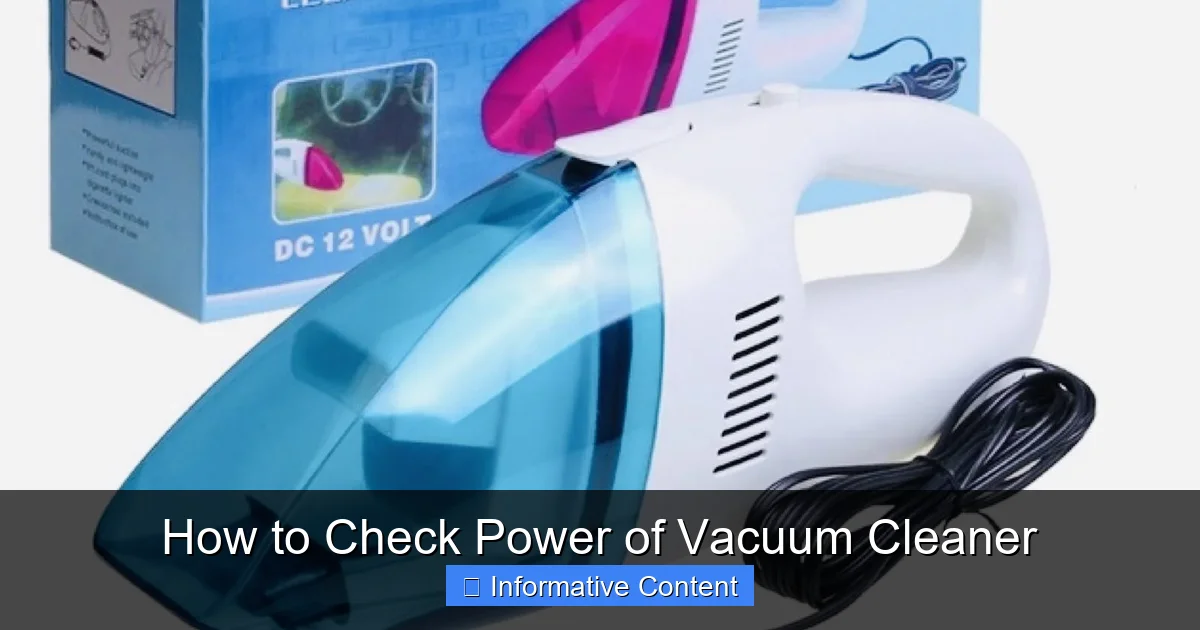
Visual guide about How to Check Power of Vacuum Cleaner
Image source: img.lazcdn.com
The Hand Test
This is perhaps the simplest and most common way to get a quick gauge of your vacuum’s suction.
- How to do it: Turn on your vacuum cleaner. Remove any attachments from the end of the hose or the wand. Place the palm of your hand firmly over the opening.
- What to look for: You should feel a strong pull, almost as if your hand is being “sucked” into the opening. If the suction feels weak or easily overcome, it’s a sign that your vacuum’s power might be compromised.
- Tip: Repeat this test at different points (e.g., directly at the motor head, at the end of the hose) to check for consistent suction.
The Debris Test (Rice, Flour, Pet Hair)
This practical test simulates real-world cleaning scenarios and is an excellent way to check power of vacuum cleaner in action.
- How to do it:
- For light debris: Sprinkle a small amount of flour, baking soda, or fine sand on a hard floor.
- For medium debris: Spread a handful of uncooked rice or oat flakes on a hard floor or low-pile carpet.
- For pet hair: If you have pets, observe how well it picks up their hair from carpets or upholstery.
- What to look for: Observe how quickly and completely your vacuum picks up the debris. Does it get it all in one pass? Does it struggle or leave behind a trail? A powerful vacuum should pick up most, if not all, of the debris efficiently.
- Benchmark: If your vacuum struggles with these everyday items, its cleaning power is likely diminished.
Listening to Your Vacuum
Your vacuum cleaner’s sound can tell you a lot about its health and power. While modern vacuums are often quieter, a change in sound can indicate an issue.
- What to listen for:
- Consistent motor hum: A healthy vacuum usually has a steady, consistent motor hum.
- Changes in pitch: If the pitch of the motor suddenly becomes higher or strained, it could indicate a blockage, a dying motor, or filters struggling to pass air.
- Whining or rattling: These sounds can point to issues with the motor, brush roll, or internal components.
- Reduced suction sound: The characteristic “whoosh” of strong suction will be noticeably weaker if power is compromised.
Inspecting Filters and Hoses
Before you blame the motor, perform a quick visual inspection of the most common culprits for reduced power.
- Filters: Are they visibly dirty, clogged with dust and debris? Hold them up to a light source; if you can’t see through them, they’re likely restricting airflow.
- Hoses and attachments: Detach the hose and look through it for any visible blockages. Check attachments for obstructions, especially the brush roll area.
- Dust bin/bag: Is it full? A full dust bin or bag severely restricts airflow and reduces suction power.
Using Tools to Measure Suction Power More Accurately
For those who want a more precise answer on how to check power of vacuum cleaner, there are a few tools and methods you can employ, ranging from DIY solutions to specialized gauges.
The DIY Water Lift Test
You can approximate the water lift (static pressure) of your vacuum with some basic items.
- What you’ll need: A clear plastic ruler or tape measure, a bucket of water, a sturdy, clear hose (like a garden hose or transparent tubing) that fits snugly over your vacuum’s nozzle, and a marker.
- How to do it:
- Attach one end of the clear hose securely to your vacuum’s nozzle, ensuring an airtight seal.
- Dip the other end of the hose into the bucket of water.
- Turn on the vacuum. The suction will pull water up into the hose.
- Immediately turn off the vacuum when the water column stabilizes.
- Measure the height of the water column in inches from the water level in the bucket. This is your approximate water lift.
- Important: Be careful not to let water get into your vacuum! Keep the vacuum hose angled upwards and turn off the vacuum as soon as the water level stabilizes.
Anemometer for CFM Measurement (Advanced)
An anemometer is a device used to measure wind speed, and it can also be used to measure airflow (CFM) from your vacuum cleaner, though this is a more advanced technique and not typically necessary for casual users.
- How to do it: You would typically need an adapter to focus the airflow from the vacuum’s exhaust or intake hose to get an accurate reading with the anemometer. This can be tricky to do precisely at home.
- What it tells you: It gives you a numerical value for airflow, which, when combined with your subjective experience, can help confirm if your vacuum is performing below expectations.
Specialized Vacuum Gauges
For professional settings or very serious enthusiasts, there are specialized gauges designed to measure vacuum suction and airflow. These are often used in commercial cleaning or industrial applications.
- What they do: These devices can give precise readings of both static pressure (water lift equivalent) and airflow, providing a comprehensive understanding of the vacuum’s performance.
- Availability: Not typically found in general retail, but can be purchased from specialty industrial or scientific suppliers.
Factors That Affect Vacuum Cleaner Power
Understanding how to check power of vacuum cleaner also means knowing *why* that power might be diminishing. Several common culprits can silently chip away at your vacuum’s effectiveness.
Clogged Filters
This is by far the most common reason for reduced suction. Filters (HEPA, foam, felt, etc.) are designed to trap dust and allergens, but over time, they become laden with debris, restricting airflow.
- Impact: Severely reduces both airflow (CFM) and suction (Air Watts/Water Lift).
- Solution: Regular cleaning (if washable) or replacement.
Blocked Hoses or Attachments
Anything from a stray sock to a clump of pet hair or a forgotten toy can get lodged in the hose or brush roll, creating an obstruction.
- Impact: Causes an immediate and often drastic drop in suction, sometimes completely blocking it.
- Solution: Visually inspect and manually clear any blockages.
Full Dust Bag/Canister
Similar to clogged filters, a full dust bag or canister leaves no room for air to flow or for new debris to enter, significantly hampering performance.
- Impact: Reduces suction power as the vacuum struggles to draw air into an already full chamber.
- Solution: Empty the dust bin or replace the bag regularly, ideally after every major cleaning session.
Motor Health and Age
Like any mechanical device, vacuum motors wear down over time. Carbon brushes can wear out, bearings can seize, or the motor itself can lose efficiency.
- Impact: Gradual, irreversible loss of power over the vacuum’s lifespan. Can also lead to overheating or complete motor failure.
- Solution: Regular servicing might extend life, but eventually, replacement is the only option for a truly worn-out motor.
Type of Surface
While not a flaw of the vacuum, the surface you’re cleaning significantly impacts perceived power. A vacuum might glide effortlessly on hard floors but struggle on high-pile carpets.
- Impact: What seems like low power might just be the vacuum being unsuited for the task.
- Solution: Use appropriate settings (e.g., brush roll on/off, height adjustment) for different surfaces. Consider a vacuum specifically designed for your predominant flooring.
Maintaining Optimal Power: Tips for Peak Performance
Now that you know how to check power of vacuum cleaner and what can diminish it, let’s talk about keeping your vacuum running like new. Regular maintenance is key to preserving its suction strength and extending its lifespan.
Regular Filter Cleaning/Replacement
This is the single most effective thing you can do to maintain suction power.
- Washable filters: Rinse them under cool water until the water runs clear. Let them air dry completely (usually 24-48 hours) before putting them back.
- Non-washable filters: Tap them against a hard surface to dislodge dust or use a soft brush. Replace them according to the manufacturer’s recommendations, usually every 6-12 months.
- HEPA filters: Many HEPA filters are not washable and need to be replaced periodically. Check your manual.
Clearing Blockages Promptly
Don’t let blockages fester! They strain the motor and reduce effectiveness.
- Hose: Disconnect it and use a broom handle or a long, blunt object to gently push through any obstructions. Never use sharp objects that could puncture the hose.
- Brush roll: Turn the vacuum off and unplug it! Cut away tangled hair or string with scissors. Remove the brush roll if possible for easier cleaning.
- Attachments: Check the nozzles and tubes of all attachments for any lodged debris.
Emptying Dust Bin Regularly
For bagless vacuums, empty the canister after every use or when it reaches the “max fill” line. For bagged vacuums, replace the bag when it’s about two-thirds full to maintain optimal airflow.
Checking Brushes and Belts
For upright and some canister vacuums with motorized brush rolls, inspect the brush bristles for wear and ensure the drive belt is intact and properly tensioned. Worn bristles or a broken belt significantly reduce carpet cleaning power.
- Bristles: If they’re matted or worn down, they won’t agitate carpets effectively.
- Belt: A loose or broken belt means the brush roll isn’t spinning, turning your carpet cleaner into just a suction device.
Proper Storage and Care
Store your vacuum in a clean, dry place. Avoid yanking it by the cord or bumping it aggressively against furniture. Treat it with care, and it will serve you well for years.
Conclusion
Knowing how to check power of vacuum cleaner is an empowering skill that can save you frustration, time, and even money. By understanding the key metrics like Air Watts, performing simple DIY tests, and being proactive about maintenance, you can ensure your vacuum cleaner always performs at its best. No more pushing dirt around – with a powerful, well-maintained vacuum, you’ll tackle dust and debris with confidence, enjoying a cleaner, healthier home environment. So go ahead, give your trusty cleaning companion a check-up, and get ready for some serious cleaning action!
Frequently Asked Questions
What’s the difference between CFM and Water Lift?
CFM (Cubic Feet per Minute) measures the volume of air moving through the vacuum, which is great for picking up light, bulky debris like pet hair. Water Lift (static pressure) measures the intensity of the suction, ideal for pulling embedded dirt from carpets or handling heavier particles.
My vacuum sounds normal but isn’t picking up well. What could be wrong?
If the sound is normal but suction is weak, check for common blockages first. A partially clogged hose or a full-but-not-visibly-packed dust bin can restrict airflow without necessarily straining the motor. Also, inspect filters for hidden buildup.
Is it safe to use water to clean vacuum filters?
Only if your vacuum’s manual specifies that the filters are washable. Many filters, especially HEPA filters, are not designed to be washed and can be damaged or lose their effectiveness if exposed to water. Always let washable filters dry completely before reinserting.
How can I prevent blockages in my vacuum cleaner?
To prevent blockages, try to avoid vacuuming large items like coins, socks, or excessively large clumps of pet hair. Regularly check and clean the brush roll for tangled hair, and empty the dust bin before it gets too full. Periodic visual checks of the hose can also help catch issues early.
Does the type of flooring affect a vacuum’s perceived power?
Yes, absolutely. A vacuum that feels powerful on a hard floor might struggle on a high-pile carpet because it requires more effort to pull dirt from deep fibers. Ensure your vacuum has appropriate settings (e.g., brush roll height adjustment, suction control) for different floor types.
Can a broken belt impact my vacuum’s cleaning power?
Yes, if your vacuum has a motorized brush roll, a broken or loose belt will prevent the brush from spinning. This means the vacuum will rely solely on suction for cleaning, significantly reducing its ability to agitate and lift dirt and debris from carpets.