
The vacuum cleaner profoundly impacted society by dramatically improving household hygiene, reducing labor for domestic workers, and elevating public health standards. It transformed daily chores, empowered women by saving time and effort, and spurred innovation in appliance manufacturing, making cleaner environments accessible to millions.
The invention of the vacuum cleaner wasn’t just about a new gadget; it was a revolution for homes, health, and societal roles. This article explores the deep and lasting ways this seemingly simple appliance transformed everything from household management and women’s empowerment to public health and the very idea of cleanliness in the modern world.
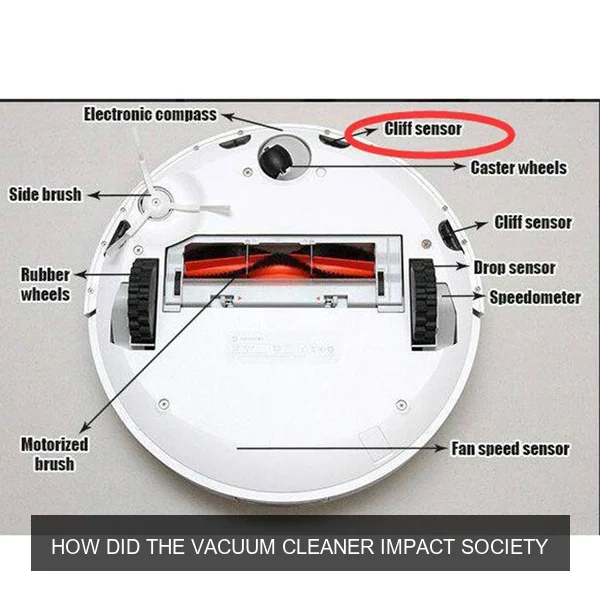
Image source: Wish
📋 Table of Contents
- 🔹 Introduction: Beyond Just Cleaning
- 🔹 How the Vacuum Cleaner Impacted Society: A Deeper Look
- 🔹 Elevating Health and Hygiene Standards
- 🔹 Reshaping Domestic Labor and Women’s Roles
- 🔹 Driving Economic Growth and Innovation
- 🔹 Transforming Public and Commercial Spaces
- 🔹 How the Vacuum Cleaner Sparked This Change
- 🔹 Common Misconceptions About Early Vacuum Cleaners
- 🔹 Real-Life Examples of Vacuum Cleaner Impact
- 🔹 Frequently Asked Questions (FAQ)
- 🔹 Conclusion: A Legacy of Cleanliness and Progress
Introduction: Beyond Just Cleaning
Imagine a time when cleaning your home meant hours of strenuous, dusty work. Before the vacuum cleaner, keeping floors and carpets spotless was an exhausting, labor-intensive chore. You’d probably sweep with a broom, beat rugs outdoors to remove dirt, or hire help for deep cleaning. This wasn’t just inconvenient; it had real consequences for health and home life.
Then came the vacuum cleaner. It wasn’t just another invention; it was a game-changer. This article will explore how did the vacuum cleaner impact society in ways that go far beyond simply sucking up dirt. We’ll look at its revolutionary effects on hygiene, public health, domestic labor, and even the economy. Understanding its legacy helps us appreciate the conveniences we often take for granted today.
How the Vacuum Cleaner Impacted Society: A Deeper Look
The vacuum cleaner, evolving from rudimentary manual devices to powerful electric machines, fundamentally reshaped society in several significant ways. Its arrival marked a pivotal moment in domestic life, public health, and even social structures. It didn’t just clean; it redefined what “clean” meant and how we achieved it.
Elevating Health and Hygiene Standards
One of the most profound impacts of the vacuum cleaner was its contribution to public health and personal hygiene. Before vacuums, removing dust and dirt often meant stirring it up into the air, where it could be inhaled. This was particularly problematic in an era when many common diseases were linked to poor sanitation and airborne particles.
- Reduced Dust and Allergens: Vacuum cleaners, especially those with effective filtration, captured dust, dirt, and allergens much more efficiently than brooms or carpet beaters. This led to cleaner indoor air quality, a crucial step in reducing respiratory illnesses and allergy symptoms.
- Better Sanitation: Homes, schools, and workplaces could achieve a level of cleanliness previously unimaginable for the average person. This wasn’t just about aesthetics; it was about creating healthier living and working environments, contributing to a general decline in dust-related infections and illnesses.
- Fighting Germs: While early vacuums weren’t germ-killing machines, their ability to thoroughly remove organic matter and dust contributed indirectly to a reduction in germ proliferation, as these particles often harbor bacteria and viruses.
Reshaping Domestic Labor and Women’s Roles
The vacuum cleaner had an immense impact on household management, particularly for women, who were primarily responsible for domestic chores. It dramatically reduced the physical strain and time commitment associated with cleaning.
- Time and Effort Savings: Imagine the hours saved by not having to sweep, dust, and beat rugs daily or weekly. The vacuum cleaner transformed a multi-hour, physically demanding task into a much quicker and easier one. This freed up significant time and energy.
- Empowerment of Women: For many women, this newfound efficiency meant more time for other pursuits – whether it was leisure, education, family time, or even entering the workforce. It played a part in the broader movement towards women’s independence by reducing the drudgery of traditional homemaking roles.
- Decline of Domestic Servants: As household chores became less labor-intensive and easier for a single person to manage, the demand for live-in domestic servants began to decline. This shift had social and economic ramifications, changing the structure of many households and labor markets.
Driving Economic Growth and Innovation
The rise of the vacuum cleaner also had a ripple effect on industry and the economy.
- Manufacturing Boom: The demand for vacuum cleaners spurred significant growth in the manufacturing sector. Companies emerged, competed, and innovated, leading to economies of scale and more affordable appliances.
- Job Creation: From factory workers to sales representatives, repair technicians, and even advertising professionals, the vacuum cleaner industry created numerous jobs.
- Technological Advancements: Competition drove continuous innovation, leading to improvements in motor technology, filtration systems, design, and materials. These advancements often had spillover effects into other industries.
- Power Grid Expansion: The widespread adoption of electric appliances like vacuum cleaners contributed to the expansion and modernization of electrical infrastructure, making electricity more accessible and commonplace.
Transforming Public and Commercial Spaces
The impact wasn’t limited to private homes. Public buildings, offices, hospitals, and hotels also benefited immensely.
- Enhanced Professional Cleaning: Commercial-grade vacuum cleaners allowed for more efficient and thorough cleaning of large public areas, contributing to a more pleasant and hygienic environment for everyone.
- Improved Patient Care: In hospitals, better dust and allergen removal directly supported infection control efforts and improved air quality for patients.
- Professional Appearance: Cleaner public spaces projected an image of care and professionalism, which was important for businesses and institutions alike.
How the Vacuum Cleaner Sparked This Change
The revolutionary aspect of the vacuum cleaner wasn’t just its existence, but its fundamental mechanism of action. Before vacuums, cleaning involved either sweeping (which pushed dirt around and kicked up dust) or beating (which required moving items outdoors and still released a lot of particulate matter into the air).
A vacuum cleaner, by contrast, operates on the principle of suction. Here’s a simple breakdown of how this mechanical advantage led to societal impact:
- Creating a Pressure Differential: An electric motor spins a fan rapidly. This fan pushes air out of the vacuum cleaner’s main body, creating an area of lower pressure inside the machine.
- Suction Power: Because nature tries to equalize pressure, outside air (and anything light enough, like dust, dirt, crumbs, and pet hair) rushes into the vacuum cleaner’s intake nozzle to fill the low-pressure void.
- Collection and Filtration: This dirty air then travels through a hose or direct path to a collection bag or canister. Filters trap the solid particles, while cleaner air is expelled back into the room.
This method was incredibly effective because it removed dirt rather than just displacing it. This direct removal of airborne particulates and ground-in debris was the core innovation that led to all the cascading societal benefits we’ve discussed.
Common Misconceptions About Early Vacuum Cleaners
When we think about early inventions, it’s easy to assume they were just smaller, less powerful versions of what we have today. But with vacuum cleaners, there are a few interesting misconceptions:
- They weren’t always small: The very first vacuum cleaners, like Hubert Cecil Booth’s “Puffing Billy” from the early 1900s, were massive, horse-drawn machines that sat outside a building with long hoses fed through windows. Cleaning was a service, not a DIY chore.
- Early electric models were still heavy: While smaller than Booth’s invention, the first electric upright vacuums were often cumbersome and heavy. It took decades of innovation to make them truly lightweight and easily maneuverable for the average person.
- Not everyone had one immediately: Like many new technologies, vacuum cleaners were initially expensive and a luxury item. It took mass production and decreasing costs for them to become a common household appliance, widely impacting society.
- They weren’t always “vacuums”: Some early cleaning devices were actually blowers, designed to blow dust into a container rather than suck it up. Booth himself developed his vacuum concept after seeing a demonstration of a blowing machine that simply moved dust around.
Real-Life Examples of Vacuum Cleaner Impact
Let’s look at some simple scenarios to truly understand the tangible impact of this invention:
Scenario 1: The 19th-Century Homemaker vs. The 20th-Century Homemaker
Imagine a woman in 1880. Her weekly cleaning routine for carpets would involve dragging them outside, hanging them on a line, and beating them with a carpet beater until clouds of dust rose. This was physically taxing, dirty, and weather-dependent. Compare this to a woman in 1950, who could simply plug in her electric vacuum cleaner and quickly clean her carpets and rugs inside her home, without the strenuous physical labor or weather concerns. This time savings wasn’t just a small convenience; it was a fundamental shift in daily life.
Scenario 2: Public Health in the Industrial Age
In crowded, industrial cities, dust and soot were pervasive. Schools, hospitals, and public buildings were difficult to keep truly clean. With brooms, much of the fine dust would simply become airborne again. The introduction of large, powerful vacuum systems, even if initially expensive, meant these public spaces could be cleaned much more effectively. This contributed to a noticeable improvement in overall urban hygiene, potentially reducing the spread of airborne pathogens and improving general respiratory health for the populace.
Scenario 3: The Rise of the “Weekend”
While many factors contributed to the concept of leisure time, labor-saving devices played a role. By significantly cutting down the time required for arduous household chores, the vacuum cleaner helped to free up hours previously dedicated to cleaning. This allowed for more opportunities for recreation, family activities, and personal development, contributing to the modern concept of a “weekend” where domestic duties didn’t consume all free time.
Frequently Asked Questions (FAQ)
What was the initial impact of the vacuum cleaner on daily life?
The initial impact was profound, transforming cleaning from a strenuous, dusty, and time-consuming manual process into a more efficient, less physically demanding task. It allowed for deeper cleanliness within the home, especially for carpets and upholstered furniture, and significantly reduced the amount of airborne dust generated during cleaning.
Why is understanding the vacuum cleaner’s societal impact important?
Understanding this impact helps us appreciate how technological innovations, even seemingly simple ones, can dramatically alter daily routines, improve health standards, reshape gender roles, and drive economic progress. It illustrates the interconnectedness of invention and societal change.
How did vacuum cleaners change household chores and public health?
Vacuum cleaners revolutionized household chores by making them faster, easier, and more effective at removing dirt and dust. For public health, they drastically improved indoor air quality by trapping allergens and airborne particles, contributing to a reduction in respiratory illnesses and a general uplift in sanitation standards across homes and public spaces.
Was the invention of the vacuum cleaner truly revolutionary?
Yes, the invention of the vacuum cleaner was truly revolutionary. It introduced a fundamentally new method of cleaning that superseded older, less effective manual techniques. Its widespread adoption led to significant, irreversible changes in hygiene, domestic life, labor, and industry, solidifying its place as a transformative invention of the modern era.
When did the vacuum cleaner become widely adopted?
While early versions existed in the late 19th and early 20th centuries, the vacuum cleaner began to see widespread adoption in the mid-20th century, particularly after World War II. Advancements in electric motors, manufacturing techniques, and a growing consumer market made them more affordable and accessible to the average household.
Conclusion: A Legacy of Cleanliness and Progress
The story of how did the vacuum cleaner impact society is far more complex than just a tale of technology. It’s a story of liberation from arduous labor, a leap forward in public health, and a catalyst for industrial innovation. This appliance, which we often take for granted today, played a crucial role in shaping the modern home, changing expectations for cleanliness, and even subtly influencing the progression of women’s roles in society.
From the horse-drawn behemoths to the sleek, smart devices of today, the vacuum cleaner’s evolution mirrors society’s own journey towards greater efficiency, better health, and more leisure time. Its impact reminds us that even the most humble inventions can have profound and lasting effects on the fabric of our daily lives.