Choosing the right vacuum cleaner involves understanding its suction power, which is crucial for effective cleaning across different surfaces. This guide breaks down key metrics like Air Watts, CFM, and water lift, helping you determine how much suction power you truly need based on your flooring types, pet ownership, and typical debris. Learn to optimize and maintain your vacuum’s performance for a consistently clean home.
How Much Suction Power for Vacuum Cleaner
Ever wondered why some vacuum cleaners pick up everything with ease, while others seem to just push dust around? The secret often lies in something called suction power. It’s not just about how loud the vacuum is or how big its motor looks. True cleaning efficiency comes down to how well your vacuum can lift dirt and debris from your floors.
Choosing a vacuum cleaner can feel overwhelming. There are so many models, features, and technical terms. But understanding suction power is one of the most important steps to finding the perfect match for your home. You’ll learn what suction power really means, how it’s measured, and exactly how much you need for different cleaning tasks. We’ll also cover crucial tips for maintaining and even boosting your vacuum’s performance. By the end of this guide, you’ll be a suction power expert, ready to make informed choices and keep your home spotlessly clean!
Key Takeaways
- Understand Key Metrics: Suction power is measured by Air Watts (AW) for cleaning capability, Cubic Feet per Minute (CFM) for airflow, and Water Lift (mmH2O/kPa) for intense suction.
- Match Suction to Surface: Hard floors need less intense suction but good airflow, while thick carpets and pet hair demand high suction power combined with a strong brush roll.
- Beyond Raw Numbers: Real-world suction power is affected by factors like filter cleanliness, hose integrity, brush roll design, and proper attachment usage, not just the motor’s theoretical output.
- Pets and Allergies Require More: Homes with pets or allergy sufferers benefit significantly from vacuums with higher suction power and advanced filtration systems to capture dander and allergens effectively.
- Maintenance is Crucial: Regularly cleaning or replacing filters, emptying dustbins, and checking for clogs are essential steps to maintain optimal suction power and prolong your vacuum’s lifespan.
- Troubleshoot Low Suction: If your vacuum loses suction, always check for full bins/bags, clogged hoses or brush rolls, and dirty filters before assuming a major malfunction.
Quick Answers to Common Questions
Is more Air Watts always better?
Not necessarily. While higher Air Watts indicate stronger cleaning power, the optimal amount depends on your specific cleaning needs (e.g., floor type, pet hair). Sometimes, lower Air Watts are sufficient, and other features like brush rolls or filtration might be more important than just raw suction power.
Can a full dustbin reduce suction power?
Absolutely! A full dustbin or bag significantly restricts airflow, which directly diminishes your vacuum’s effective suction power. Always empty or change them regularly for optimal performance and to maintain strong suction power.
How often should I clean my vacuum filters?
It depends on your usage and the type of filter. Generally, washable filters should be rinsed monthly, and disposable HEPA filters replaced every 6-12 months. Regularly checking your filters is key to maintaining strong suction power and airflow.
Do vacuum attachments affect suction?
Yes, different attachments can concentrate or distribute suction. A crevice tool, for instance, focuses suction power into a small area, making it very strong. Wide floor nozzles spread it out. Using the right attachment optimizes cleaning for specific tasks.
What’s the ideal suction power for pet hair on carpets?
For pet hair on carpets, look for a vacuum with high Air Watts (200+ AW) and a powerful, motorized brush roll. The combination of strong suction power and agitation is essential to lift embedded pet hair effectively from deep within carpet fibers.
Understanding Suction Power Metrics
When you’re shopping for a vacuum, you’ll see a few different terms related to its power. These aren’t just confusing numbers; they tell you important things about how effectively the vacuum will clean. Let’s break down the main ways suction power is measured.
Air Watts (AW)
Air Watts are perhaps the most useful measurement for understanding a vacuum’s actual cleaning ability. This metric combines both airflow and suction lift, giving you a real-world picture of how much effective power the vacuum has at the nozzle. It tells you how well the vacuum can actually pick up dirt.
- What it means: A higher Air Watt number generally means stronger overall cleaning power.
- Good for: Indicating the overall efficiency of a vacuum in picking up various types of debris from different surfaces. It’s a great all-around indicator of suction power.
- Typical range: For upright and canister vacuums, you might see anywhere from 100 AW to over 300 AW. Handhelds will be much lower.
Cubic Feet per Minute (CFM) or Liters per Second (LPS)
CFM measures the volume of air moving through the vacuum’s hose and nozzle per minute. This is all about airflow. High airflow is fantastic for picking up light, fluffy debris like pet hair, dust bunnies, or cereal. It helps move a lot of air quickly.
- What it means: A higher CFM means more air is being moved.
- Good for: Surface cleaning on hard floors and low-pile carpets where debris isn’t deeply embedded. It’s key for quickly gathering light particles.
- Limitations: High CFM alone doesn’t guarantee deep cleaning. If the vacuum can move a lot of air but lacks strong suction lift, it might struggle with heavier dirt.
Water Lift (mmH2O or kPa)
Also known as “sealed suction” or “static pressure,” water lift measures how high a column of water the vacuum can lift. This metric tells you how strong the vacuum’s pulling force is. It’s about intense, concentrated suction power.
- What it means: A higher water lift number indicates stronger “pulling” power.
- Good for: Deep cleaning carpets, extracting embedded dirt, or picking up heavy debris like sand or small pebbles. It’s also crucial for tasks like unclogging a drain with a wet/dry vacuum.
- Limitations: A vacuum with high water lift but low CFM might struggle to move large volumes of light debris quickly.
In summary, for most household cleaning, a good balance of Air Watts is key, as it considers both airflow and lift. However, understanding CFM and water lift helps you pinpoint specific strengths.
How Much Suction Power Do You Really Need?
The “right” amount of suction power isn’t a one-size-fits-all answer. It depends heavily on your specific home, lifestyle, and cleaning challenges. Let’s break it down by common scenarios.
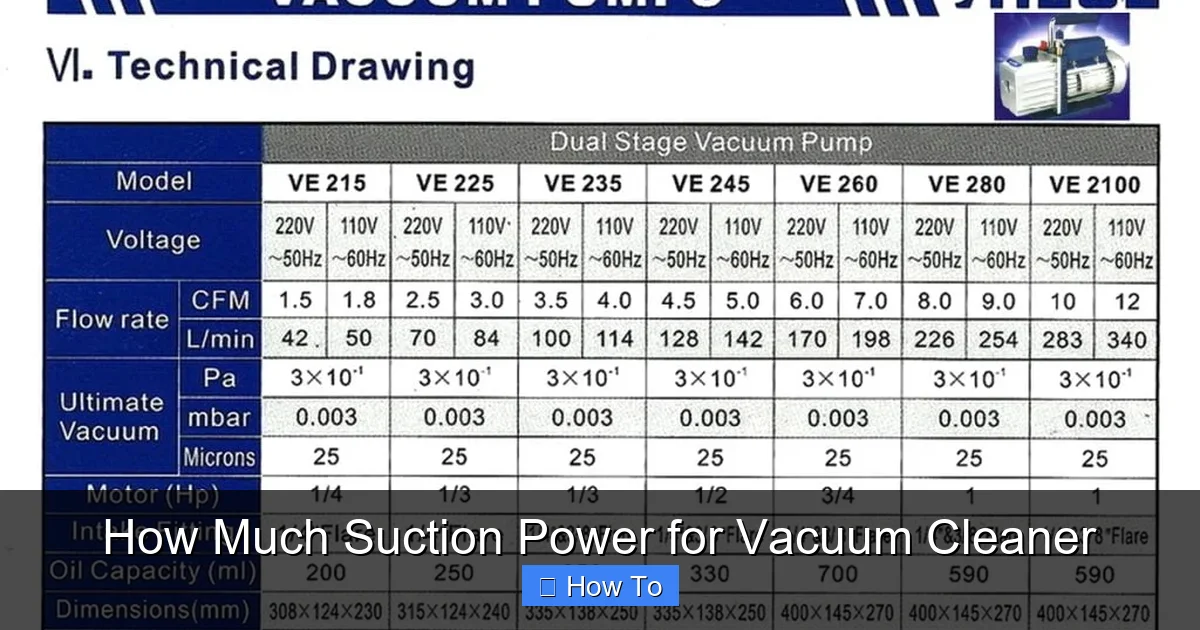
Visual guide about How Much Suction Power for Vacuum Cleaner
Image source: berkatpompa.com
Consider Your Flooring Types
The surfaces you clean most often are the biggest factor in determining your ideal suction power.
Hardwood, Tile, and Laminate Floors
- Need: For hard surfaces, intense suction power isn’t as critical as good airflow and a gentle brush. You need to pick up dust, crumbs, and light debris without scratching the floor.
- Recommended: Vacuums with high CFM (airflow) are excellent. Moderate Air Watts (around 100-150 AW) are usually sufficient. Look for vacuums with a soft brush roll or a “hard floor mode” that stops the brush roll from spinning. Adjustable suction power is a big plus here.
Low-Pile Carpets and Area Rugs
- Need: These surfaces require a bit more oomph to lift dirt and dust from the fibers.
- Recommended: A vacuum with moderate to high Air Watts (150-200 AW) and a decent brush roll will do well. Good airflow is still important for surface debris, but some strong pulling suction power helps too.
Medium to High-Pile Carpets and Shag Rugs
- Need: This is where strong suction power truly shines. Dirt and allergens get deeply embedded in long carpet fibers.
- Recommended: Look for vacuums with high Air Watts (200+ AW) and excellent water lift. A powerful, motorized brush roll is absolutely essential here. It agitates the carpet, loosening dirt so the strong suction power can pull it out. Adjustable height settings are also beneficial to prevent the vacuum from “sealing” to the carpet.
Consider the Type of Debris
- Light Debris (Dust, Hair, Crumbs): Good airflow (CFM) is often more important than sheer pulling power. Moderate suction power is typically enough.
- Heavy Debris (Sand, Gravel, Pet Litter): This requires strong pulling power (high water lift) and sufficient Air Watts.
- Embedded Dirt: High Air Watts combined with a powerful brush roll is crucial for deep-seated grime in carpets.
Are You a Pet Owner?
If you have furry friends, pet hair will be a constant companion. Pet hair can be tricky to pick up, especially from carpets and upholstery.
- Need: Pet owners benefit greatly from vacuums with high Air Watts (200+ AW) and a robust, tangle-resistant brush roll. Strong suction power is needed to lift hair, and the brush roll helps agitate it free.
- Features to look for: Specialized pet tools (like mini motorized brushes), good filtration, and vacuums designed specifically for pet hair will offer the best results for consistent suction power.
Do You Suffer from Allergies?
For allergy sufferers, a vacuum’s ability to trap allergens is as important as its suction power.
- Need: While good filtration (HEPA filter is a must) is paramount, sufficient suction power helps ensure that allergens like dust mites, pollen, and pet dander are effectively lifted from surfaces and captured.
- Recommended: Aim for vacuums with at least moderate Air Watts (180+ AW) combined with excellent sealed filtration systems to prevent allergens from escaping back into the air.
Factors Affecting Perceived Suction Power
Even if a vacuum boasts impressive specs, its real-world suction power can be impacted by several design and maintenance factors. Raw numbers don’t always tell the whole story!
Brush Roll Design and Agitation
For carpets, a powerful brush roll is just as vital as suction power. It agitates carpet fibers, loosening embedded dirt, pet hair, and debris so the vacuum’s suction can easily pull it up. A vacuum with amazing suction power but a weak or non-existent brush roll will struggle on carpets.
Filter Condition
A dirty or clogged filter is one of the most common culprits for reduced suction power. Filters are designed to trap dust and particles. When they get overloaded, airflow is restricted, and your vacuum effectively suffocates, drastically reducing its pulling force.
Hose and Seal Integrity
Any cracks, holes, or loose connections in the hose or around the dustbin can cause air leaks. These leaks allow air to escape before it reaches the nozzle, significantly diminishing effective suction power at the cleaning head.
Dustbin or Bag Fullness
A full dustbin or a nearly full vacuum bag restricts airflow. As the bin/bag fills, there’s less space for air to move, which in turn reduces the vacuum’s ability to generate strong suction power. Always empty or change them regularly.
Nozzle and Attachment Design
The design of the vacuum’s main cleaning head and its attachments plays a huge role. A well-designed nozzle creates a better seal with the floor, concentrating the suction power. Specific attachments (like crevice tools) are designed to focus suction into a small, powerful stream.
Optimizing and Maintaining Suction Power
Once you have a vacuum, you want it to perform at its best. Regular maintenance is key to preserving its original suction power.
Step 1: Regularly Clean or Replace Filters
This is arguably the most important step for maintaining strong suction power. Consult your vacuum’s manual for specific instructions.
- Washable Filters: Rinse under cold water until the water runs clear. Allow them to air dry completely (usually 24-48 hours) before putting them back.
- Disposable Filters (e.g., HEPA): Replace them according to the manufacturer’s recommendations, typically every 6-12 months, or more often with heavy use or pets.
Step 2: Empty the Dustbin or Change the Bag Promptly
Don’t wait until it’s overflowing. A good rule of thumb is to empty the dustbin after every few uses or when it reaches the “max fill” line. Change bags when they are about two-thirds full to ensure consistent suction power.
Step 3: Check for and Clear Clogs
Clogs are notorious for blocking airflow and severely reducing suction power.
- Hose: Detach the hose and look through it. Use a broom handle or a long, blunt object to carefully push out any blockages.
- Brush Roll Area: Turn off and unplug the vacuum. Inspect the brush roll for tangled hair, strings, or debris. Use scissors to cut away anything wrapped around it.
- Nozzle/Attachments: Check the openings of your main cleaning head and any attachments for blockages.
Step 4: Inspect Hoses and Seals for Damage
Periodically examine your vacuum’s hose for any cracks or holes. Also, ensure that all connections (hose to vacuum body, dustbin to body) are sealed tightly. Even a small leak can significantly decrease effective suction power.
Step 5: Use the Correct Settings and Attachments
Many modern vacuums have adjustable suction power settings or different height adjustments for the brush head.
- Height Adjustment: For carpets, ensure the brush head is set at the correct height – not too high (won’t agitate) and not too low (creates too tight a seal, making it hard to push and reducing airflow).
- Suction Control: If your vacuum has adjustable suction power, use a lower setting for delicate rugs or curtains and a higher setting for deep-pile carpets or heavy-duty cleaning.
- Right Attachment: Use the appropriate attachment for the task. A crevice tool focuses suction power for tight spots, while an upholstery tool is designed to be gentle yet effective.
Troubleshooting Low Suction Power
If your vacuum suddenly loses its oomph, don’t panic! Most low suction issues can be resolved with a few simple checks.
- Is the Dustbin Full or Bag Reached Capacity? This is the most common reason. Empty the bin or change the bag.
- Is the Filter Dirty? A clogged filter is a prime suspect. Clean or replace it as per the manufacturer’s instructions.
- Is There a Clog? Systematically check the nozzle, brush roll area, hose, and any attachments for blockages.
- Are There Any Leaks? Check the hose for cracks and ensure all connections are secure. Even a tiny crack can reduce suction power.
- Is the Brush Roll Spinning Correctly? If your vacuum has a brush roll, ensure it’s free of tangled hair and spinning properly. A stalled brush roll can make it seem like suction power is low because dirt isn’t being agitated.
- Is the Vacuum Height Adjustment Correct? If the head is too high, it won’t pick up effectively. If it’s too low on carpets, it can create too tight a seal and reduce airflow.
Conclusion
Understanding “how much suction power for vacuum cleaner” is about more than just numbers on a box. It’s about matching the vacuum’s capabilities to your home’s unique cleaning needs. By knowing the difference between Air Watts, CFM, and water lift, you can confidently choose a vacuum that excels on your specific flooring types, handles pet hair, and helps manage allergies.
Remember that the actual performance of a vacuum’s suction power depends heavily on ongoing maintenance. Regular filter cleaning, prompt dustbin emptying, and quick clog removal will ensure your vacuum consistently delivers maximum cleaning efficiency. With the right vacuum and a little care, you can enjoy a cleaner, healthier home with minimal effort.
🎥 Related Video: Vacuum Cleaner Suction Power Test Part 2 From Cool Lab
📺 Cool Gadget
Our Cool Lab picked up 2 of the best-selling vacuum cleaners on Amazon, including ThisWorx, BLACK+DECKER to compare with …