Understanding how much suction a vacuum cleaner has isn’t just about motor wattage; it involves key metrics like Air Watts, CFM (airflow), and kPa (sealed suction). This guide breaks down these measurements, explains the many factors that truly influence a vacuum’s cleaning ability, and provides practical tips to assess, compare, and maximize your vacuum’s performance for a cleaner home.
How Much Suction Does a Vacuum Cleaner Have
Welcome to the ultimate guide on understanding the true cleaning power of your vacuum cleaner! We’ve all been there: you look at a vacuum cleaner, see its wattage, and assume that’s how much suction it has. But guess what? It’s a bit more complicated, and honestly, far more interesting than just a single number!
In this comprehensive guide, we’re going to dive deep into what suction really means for a vacuum cleaner. You’ll learn the key metrics manufacturers use (and sometimes don’t use), discover the numerous factors that influence a vacuum’s actual cleaning performance, and get practical tips on how to assess, compare, and even maximize the suction power of your own machine. By the end of this, you’ll be a vacuum suction expert, ready to make informed decisions for a cleaner, healthier home. Let’s get started!
Key Takeaways
- Suction Power is Complex: A vacuum cleaner’s effective suction isn’t just about its motor’s electrical watts. It’s a combination of airflow, sealed suction, and air watts.
- Air Watts (AW) are Best for Comparison: Air Watts provide the most comprehensive measurement, combining both airflow (CFM) and suction pressure (kPa/water lift), giving a better indication of actual cleaning ability.
- Airflow (CFM) Matters for Light Debris: High CFM is excellent for picking up larger, lighter debris like pet hair and dust quickly from open surfaces.
- Sealed Suction (kPa/Water Lift) is Key for Deep Cleaning: High kPa or water lift indicates strong suction against a sealed surface, crucial for extracting dirt from carpets or deep crevices.
- Many Factors Affect Suction: Beyond the motor, design, filtration, nozzle choice, bag/canister fullness, and blockages significantly impact how much suction a vacuum cleaner has in practice.
- Regular Maintenance is Crucial: To maintain optimal suction, regularly empty the dirt bin, clean/replace filters, and check hoses and attachments for clogs.
- Match Vacuum to Your Needs: The “best” suction depends on your primary cleaning tasks. Hard floors, deep carpets, and pet hair all benefit from different emphasis on airflow versus sealed suction.
Quick Answers to Common Questions
What is the most important metric for vacuum suction?
Air Watts (AW) is generally considered the most important metric because it combines both airflow (CFM) and sealed suction (kPa/water lift), giving a comprehensive measure of a vacuum cleaner’s effective cleaning power.
Why does my vacuum cleaner suddenly have less suction?
Most commonly, reduced suction is due to a full dirt bin/bag, clogged filters, or a blockage in the hose, brush roll, or attachments. Always check these first!
Can a vacuum cleaner have too much suction?
While generally desirable, excessively high suction can sometimes make it difficult to push the vacuum on thick carpets or can damage delicate rugs. Most quality vacuums offer suction control for this reason.
Does a HEPA filter reduce suction?
Yes, a HEPA filter can slightly reduce airflow compared to a less restrictive filter because it’s designed to trap very fine particles. However, a well-designed vacuum with a powerful motor will compensate for this, and regular cleaning/replacement mitigates the effect.
How often should I clean my vacuum filters to maintain suction?
It depends on usage and the type of filter. For washable filters, cleaning every 1-3 months is a good guideline, or more often if you vacuum frequently or have pets. Disposable filters should be replaced according to the manufacturer’s recommendation, usually every 6-12 months.
Understanding Vacuum Suction: It’s More Than Just “Power”
When we talk about how much suction a vacuum cleaner has, we’re not just talking about the electrical power it consumes. We’re talking about its ability to generate airflow and create a pressure difference that lifts dirt and debris. Think of it like a mini-tornado in your home – it needs both the force to pull and the volume to carry.
Electrical Watts and Amps: What They Really Mean
Many people mistakenly believe that a higher wattage or amperage rating on a vacuum cleaner directly translates to more suction. While there’s a correlation (a more powerful motor *can* generate more suction), these numbers primarily tell you how much electricity the motor consumes, not how efficiently it converts that electricity into cleaning power. A 12-amp vacuum might have less actual suction than a well-designed 8-amp one if the latter is more efficient at airflow and sealing. So, while these numbers are on the label, they’re not the best indicators of effective suction.
Key Metrics for Measuring a Vacuum Cleaner’s Suction Power
To truly understand how much suction a vacuum cleaner has, we need to look at specific metrics designed to measure its cleaning performance. These are the numbers that matter most!
Air Watts (AW): The Gold Standard
If you see one metric listed, hope it’s Air Watts. This is arguably the most comprehensive and useful measurement because it quantifies the actual cleaning power produced by the vacuum cleaner. Air Watts combine both airflow (how much air the vacuum moves) and sealed suction (the intensity of the vacuum force).
* What it means: A higher Air Watt number indicates a more powerful cleaning machine. It directly tells you how much work the vacuum can do.
* Typical range: Can range from under 100 AW for small handhelds to over 200 AW for powerful uprights and canister vacuums.
* Why it’s important: It balances the ability to lift heavy debris with the ability to move large volumes of light debris. For all-around cleaning, this is your best bet.
CFM (Cubic Feet per Minute): Measuring Airflow
CFM measures the volume of air that a vacuum cleaner moves in one minute. Think of it as the vacuum’s “lung capacity.”
* What it means: High CFM is crucial for picking up large volumes of lighter debris like pet hair, dust bunnies, and cereal. It indicates how quickly the vacuum can move air and carry particles.
* Typical range: Good uprights might have 50-100 CFM, while shop vacs can exceed 200 CFM.
* Why it’s important: If you’re primarily dealing with light, voluminous messes, a high CFM is very beneficial. It helps prevent clogging with fluffier items.
kPa (Kilopascals) or Inches of Water Lift: Measuring Sealed Suction
This metric measures the maximum static pressure the vacuum can create when the nozzle is completely sealed against a surface. It’s often expressed as “water lift” (how many inches of water the vacuum can lift in a tube) or Kilopascals (kPa).
* What it means: High kPa or water lift signifies strong “pulling” power. This is essential for deep cleaning carpets, extracting dirt from upholstery, and picking up heavy debris like sand or gravel.
* Typical range: A standard household vacuum might have 15-25 kPa (60-100 inches of water lift), while powerful wet/dry vacs can go much higher.
* Why it’s important: If you have thick carpets or need to lift stubborn, embedded dirt, a high sealed suction rating is paramount.
Factors That Influence a Vacuum Cleaner’s Suction in Real-World Use
Even if a vacuum has impressive Air Watt numbers on paper, its actual performance in your home can be affected by many other elements. Understanding these factors is key to knowing how much suction does a vacuum cleaner have *for you*.
Motor Power and Efficiency
While not the sole indicator, the motor is the heart of the vacuum. A well-designed, powerful motor is fundamental for generating the initial suction. Its efficiency in converting electrical energy into airflow and pressure is what truly matters.
Vacuum Design and Airflow Pathways
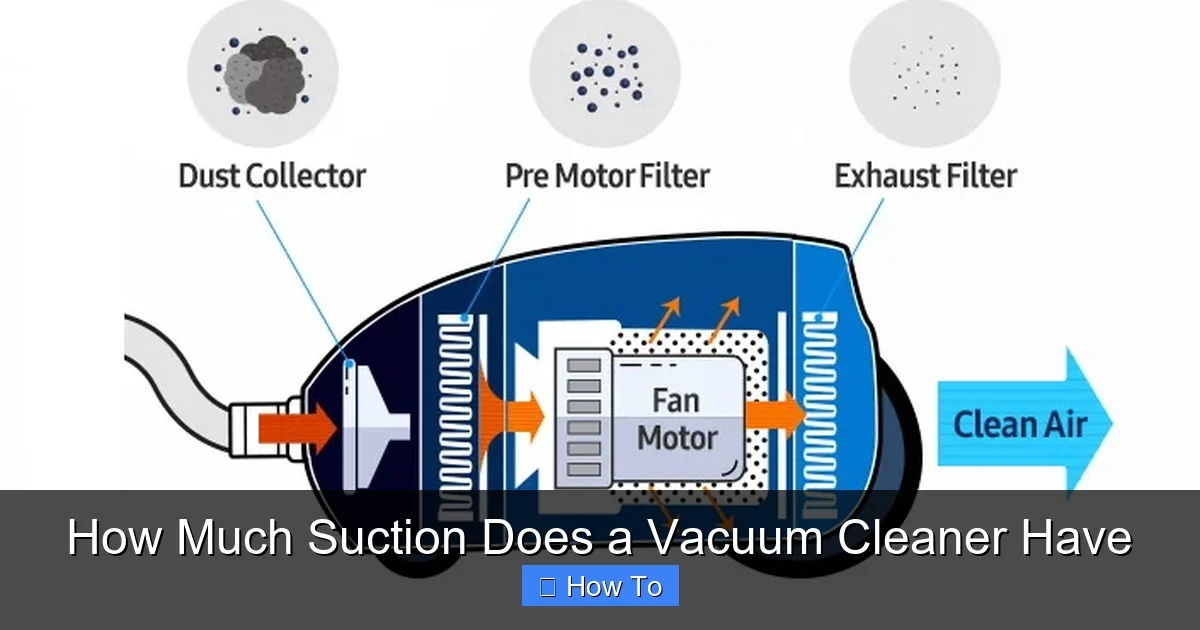
The internal design of the vacuum plays a huge role. Are the air pathways wide and smooth, or narrow and convoluted? A direct, streamlined path from the nozzle to the collection bin minimizes resistance and maximizes suction delivery to the cleaning head.
Filtration System
A multi-stage or HEPA filtration system is excellent for trapping fine dust and allergens, but it can also restrict airflow if not properly designed or maintained. Dirty filters are a major culprit for reduced suction.
Nozzle and Attachments
The type of nozzle you use dramatically affects effective suction. A narrow crevice tool concentrates suction for tight spots, while a wide floor head spreads it out. Brush rolls also play a part, agitating dirt to make it easier for suction to pick up.
Bag or Canister Fullness
As a vacuum bag fills up with dirt and debris, or as the canister accumulates contents, airflow can become restricted. This directly reduces how much suction your vacuum cleaner has at the nozzle.
Blockages and Clogs
This is a common and frustrating issue! Hair, string, small toys, or even clumps of dust can block hoses, wands, or brush rolls, severely reducing or eliminating suction.
Sealing and Gaskets
Effective sealing throughout the vacuum’s system – from the motor housing to the dust bin and hose connections – prevents air leaks. Any air leak means lost suction power that isn’t reaching the cleaning surface.
Floor Type and Surface Contact
A vacuum designed for hard floors might struggle on deep pile carpet, and vice-versa. The interaction between the nozzle and the surface affects how much suction can be effectively applied and how well dirt is agitated.
How to Assess and Compare Suction (Practical Tips)
Navigating the world of vacuum specs can be tricky. Here’s how to make sense of it when you’re trying to figure out how much suction a vacuum cleaner has.
Look Beyond Amps and Electrical Watts
Seriously, if a manufacturer only lists amps or electrical watts, be skeptical. They’re likely hiding less impressive suction performance metrics. Always prioritize Air Watts, CFM, and kPa if available.
Prioritize Air Watts for Overall Performance
If you can only get one number, aim for Air Watts. It’s the most balanced indicator of a vacuum’s cleaning power for a variety of tasks.
Consider CFM for Light Debris, kPa for Deep Cleaning
* For pet hair, large dust bunnies, or quick cleanups on hard floors: Focus on CFM.
* For deep pile carpets, embedded dirt, or heavy particles: Focus on kPa or water lift.
* For a balance: Again, Air Watts combine both effectively.
Read Independent Reviews and Watch Demonstrations
Real-world performance can vary. Check out reviews from reputable sources and consumer reports. Often, these will give you a better sense of how much suction a vacuum cleaner has in practical use, rather than just relying on numbers. User reviews can also highlight common issues like clogging or loss of suction over time.
Consider Your Specific Cleaning Needs
Do you have mostly hard floors or thick carpets? Pets? Allergies? Your specific requirements will dictate what kind of suction profile is most important for you.
Test in Store (If Possible)
If you have the opportunity, a quick test at the store can tell you a lot. Does it feel powerful? Does it lift dirt effectively from different surfaces? (Though store conditions are rarely like home).
Maximizing Your Vacuum’s Suction Power
So, you’ve got your vacuum. How do you ensure it always performs at its best, delivering all the suction it can?
Regular Maintenance is Key!
This is the single most important step. Don’t underestimate it.
Empty the Dirt Bin or Replace the Bag Promptly
A full dust bag or canister significantly restricts airflow, directly reducing suction. Empty or replace it before it’s completely full, especially if you notice a drop in performance.

Visual guide about How Much Suction Does a Vacuum Cleaner Have
Image source: vacuuminfo.com
Clean or Replace Filters Regularly
Filters get clogged with fine dust, which chokes the motor and reduces airflow. Follow your manufacturer’s recommendations for cleaning or replacing filters. Some are washable, others need replacing.
Inspect for Clogs in Hoses, Wands, and Attachments
Hair, string, or debris can easily get lodged in the hose or brush roll. Disassemble parts and visually inspect them. A broom handle or a long, sturdy wire can help dislodge stubborn clogs.
Keep the Brush Roll Clean
Hair and fibers wrapped around the brush roll can prevent it from spinning effectively and also create drag, making the vacuum work harder and potentially reducing effective suction at the floor.
Use the Right Attachment for the Job
Different attachments are designed to optimize suction for specific tasks. A wide floor nozzle disperses suction, while a crevice tool concentrates it.
* Crevice Tool: For tight corners, edges, and upholstery. Concentrates maximum suction.
* Upholstery Tool: Often has a velvet strip to grab pet hair while allowing good airflow.
* Brush Tool: For dusting surfaces without scratching, gently lifting dirt.
Adjust Settings for Floor Type
Many vacuums have height adjustments for different carpet piles or a switch to turn off the brush roll for hard floors. Using the correct setting ensures optimal contact with the surface and maximizes effective suction.
Troubleshooting Low Suction
Notice a sudden drop in performance? Don’t panic! Here’s a troubleshooting guide.
1. Check the Bag/Canister
Is it full? This is the most common reason for reduced suction. Empty or replace it.
2. Inspect and Clean/Replace Filters
Are they dirty or clogged? Remove and clean washable filters according to instructions, or replace disposable ones.
3. Look for Clogs
Systematically check all pathways:
- Nozzle/Brush Roll: Turn off and unplug the vacuum. Look for tangled hair or debris.
- Wand and Hose: Disconnect the hose from both ends and look through it. Use a broom handle or a long stick (carefully!) to push out blockages.
- Connections: Ensure all hoses and attachments are securely connected, with no gaps where air can escape.
4. Check for Leaks
Are any seals or gaskets compromised? Listen for hissing sounds while the vacuum is running, indicating air leaks from cracks in the housing or poorly fitted components.
5. Is the Brush Roll Working?
Is it spinning freely? If it’s jammed or not spinning, it won’t agitate dirt, making the vacuum seem less powerful even if the raw suction is okay.
Conclusion
Understanding how much suction a vacuum cleaner has is truly about looking beyond simple wattage and delving into the specifics of airflow, sealed suction, and the all-important Air Watts. It’s a blend of raw power and clever engineering. By knowing what these metrics mean and recognizing the many factors that influence performance, you can choose the right vacuum for your home and ensure it consistently delivers its best cleaning power.
Remember, a well-maintained vacuum with the right attachments will always outperform a neglected, high-spec machine. So, keep those filters clean, empty that bin, and enjoy a truly powerful cleaning experience every time!
🎥 Related Video: Vacuum Cleaner Suction Power Test Part 3 From Cool Lab
📺 Cool Gadget
CoolGadget VS ThisWork. Who is the king of Vacuum Cleaner?