
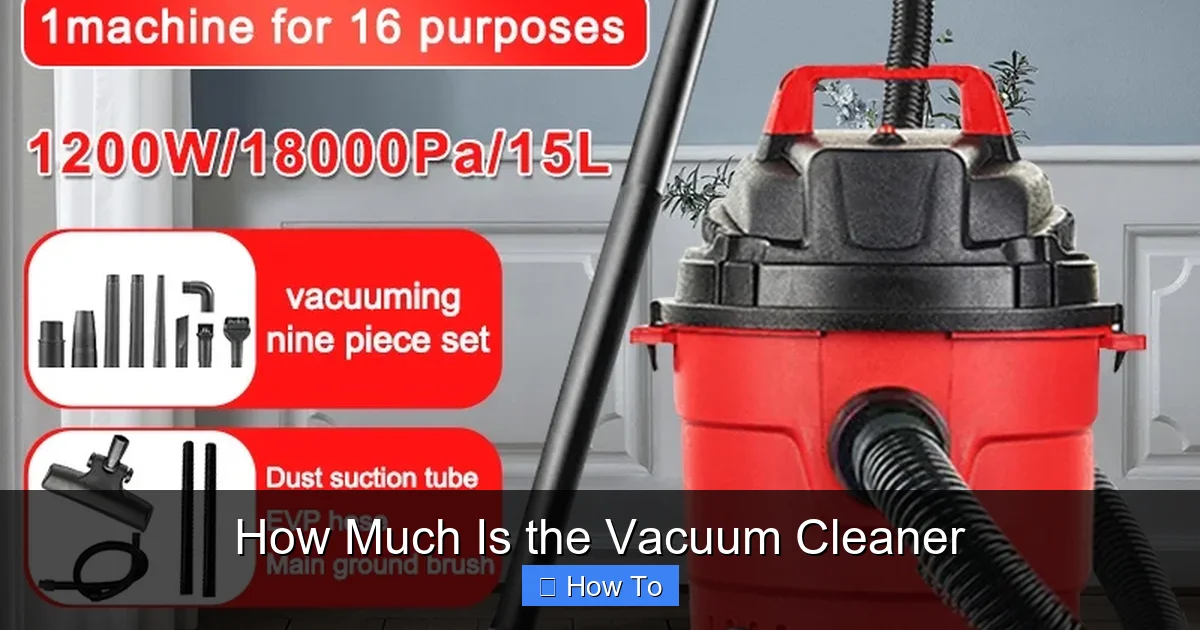
The question of how much is the vacuum cleaner doesn’t have a single answer, as prices vary widely from under $100 to over $1000 based on type, brand, features, and technology. Understanding your cleaning needs and budget is crucial for selecting a model that offers the best value and performance. This guide will help you navigate the diverse market to find the ideal vacuum for your home and wallet.
How Much Is the Vacuum Cleaner
Ever found yourself staring at a wall of vacuum cleaners, all with wildly different price tags, and wondered, “How much is the vacuum cleaner, really?” You’re not alone! It’s a question many ask, and the simple answer is: it varies a lot. Just like cars or televisions, vacuum cleaners come in a vast range of styles, with different features, brands, and levels of technology, all of which impact their cost.
This comprehensive guide is designed to demystify the pricing of vacuum cleaners. We’ll explore the various price points, break down the factors that influence how much a vacuum cleaner costs, and provide practical tips to help you find the perfect model that fits both your cleaning needs and your budget. By the end, you’ll feel confident making an informed decision about your next vacuum cleaner purchase.
Key Takeaways
- Wide Price Range: Vacuum cleaner prices vary significantly, from budget-friendly models under $100 to premium options exceeding $1000, catering to diverse needs and budgets.
- Factors Influence Cost: The type of vacuum (upright, stick, robot), brand reputation, suction power, filtration system (e.g., HEPA), and included accessories are primary determinants of its price.
- Assess Your Needs: Before buying, evaluate your cleaning requirements, home size, flooring types, and specific concerns like pet hair or allergies to determine which features are essential.
- Budget Smartly: Set a realistic budget by considering long-term value, potential running costs (bags, filters), and whether an initial higher investment might save you money on repairs or replacements later.
- Shop Strategically: Look for sales events, compare prices across different retailers, read customer reviews, and consider certified refurbished models to get the best deal.
- Understand Hidden Costs: Be aware of ongoing expenses like replacement bags, filters, and potential maintenance or repairs, which can add to the total cost of ownership.
- Value Over Price Tag: Sometimes, a slightly more expensive vacuum cleaner offers superior durability, performance, and features that make it a better long-term investment for your specific cleaning challenges.
Quick Answers to Common Questions
Should I always buy the most expensive vacuum cleaner?
Not necessarily. The best vacuum is the one that meets your specific needs and budget, not always the priciest. A high-end model might have features you’ll never use, making a mid-range option a better value for your situation.
How can I save money on vacuum cleaner filters and bags?
Look for third-party compatible filters and bags, but ensure they are reputable and won’t void your vacuum’s warranty. Buying in bulk during sales can also reduce costs significantly over time.
Is it worth buying a refurbished vacuum cleaner?
Yes, if it’s from a certified seller and comes with a warranty. Refurbished models can offer significant savings on premium vacuums, providing great value. Always check the return policy.
How important is suction power in determining the cost?
Suction power is a major factor. Vacuums with stronger, more consistent suction often cost more due to more powerful motors and advanced airflow designs, which are crucial for deep cleaning carpets and tackling stubborn debris.
When is the best time of year to buy a vacuum cleaner?
Major holiday sales events like Black Friday, Cyber Monday, Amazon Prime Day, and even post-Christmas sales are typically when you’ll find the best deals and steepest discounts on a wide range of vacuum cleaners.
Understanding the Price Spectrum of Vacuum Cleaners
The first step to understanding how much a vacuum cleaner costs is to realize there isn’t a single price. The market is segmented into several tiers, each offering different levels of performance, features, and durability.
Entry-Level Vacuum Cleaners (Under $150)
These are your budget-friendly options. Typically, you’ll find basic upright vacuums, some stick vacuums, and handheld models in this price range. They are generally suitable for smaller homes, apartments, or as a secondary vacuum for quick clean-ups. Don’t expect a lot of fancy features or super powerful suction, but they can certainly get the job done for everyday dust and dirt. When considering how much is the vacuum cleaner at this level, remember you’re prioritizing affordability over advanced capabilities.
- Examples: Basic uprights from brands like Bissell, Dirt Devil, or low-end stick vacuums.
- Best for: Light cleaning tasks, small spaces, hard floors, occasional use.
- Pros: Affordable, lightweight (often), easy to store.
- Cons: Less powerful suction, basic filtration, shorter lifespan, fewer attachments.
Mid-Range Vacuum Cleaners ($150 – $400)
This is where most people find their sweet spot. In this price bracket, you start to see a significant improvement in suction power, build quality, and feature sets. You’ll find a wider variety of vacuum types, including more robust uprights, versatile canister vacuums, and mid-tier stick and robot vacuums. Many models in this range offer better filtration (sometimes HEPA-ready), specialized tools for pet hair, and improved durability. If you’re asking how much is the vacuum cleaner that offers a good balance of features and value, this segment is often the answer.
- Examples: Popular models from Shark, Hoover, Eureka, and some entry-level Dyson or Roomba models.
- Best for: Medium to large homes, mixed flooring types, pet owners, allergy sufferers (with better filtration).
- Pros: Good balance of performance and features, durable, better filtration, more attachments.
- Cons: Can still lack some premium features, might not have the longest warranty.
Premium and High-End Vacuum Cleaners ($400 – $1000+)
At the top end of the market, you’ll find vacuums designed for superior performance, advanced technology, and exceptional durability. This category includes high-end uprights and canister vacuums from brands like Miele, Sebo, and premium Dyson models, as well as advanced robot vacuums (e.g., iRobot Roomba s9+, Roborock S7 MaxV Ultra). These vacuums often boast powerful motors, multi-stage HEPA filtration, specialized attachments, smart features (for robots), and extended warranties. They are built to last and handle the toughest cleaning challenges. For those wondering how much is the vacuum cleaner that offers the absolute best, this is where you’ll be looking.
- Examples: Miele Complete C3, Dyson V15 Detect, high-end Roomba models.
- Best for: Large homes, deep cleaning, severe allergy sufferers, pet owners with multiple shedding pets, those seeking longevity and advanced features.
- Pros: Powerful suction, superior filtration, excellent build quality, long lifespan, advanced features, smart technology.
- Cons: Significant upfront investment, can be heavier, more expensive replacement parts.
Key Factors Influencing Vacuum Cleaner Cost
Understanding these factors is crucial for anyone trying to figure out how much is the vacuum cleaner they need. Each element plays a role in the final price tag.
Visual guide about How Much Is the Vacuum Cleaner
Image source: static.vecteezy.com
Type of Vacuum Cleaner
- Upright Vacuums: Generally affordable, good for carpets, prices range from $50-$500.
- Canister Vacuums: More versatile for hard floors and stairs, often quieter, range from $150-$1000+.
- Stick Vacuums: Lightweight, cordless convenience, range from $100-$700+.
- Robot Vacuums: Autonomous cleaning, vary widely based on features, $150-$1200+.
- Handheld Vacuums: Small, portable for quick spills, typically $30-$150.
Brand Reputation and Technology
Established brands like Dyson, Miele, and Sebo often command higher prices due to their reputation for innovation, quality, and powerful technology. They invest heavily in research and development, leading to patented technologies (like Dyson’s cyclone technology) that improve performance but also increase manufacturing costs. You’re paying for advanced engineering and often a superior user experience. Therefore, how much is the vacuum cleaner often relates directly to its brand’s legacy and technological advancements.
Features and Suction Power
More features and higher suction power generally mean a higher price. Features like multi-surface cleaning capabilities, adjustable suction, specialized brush rolls for different floor types, LED headlights, and bagless designs add to the cost. Powerful motors and efficient airflow systems, which contribute to strong suction, also increase the manufacturing expense.
Filtration System (HEPA, Bagged vs. Bagless)
A superior filtration system, especially one with a true HEPA filter, will increase the vacuum cleaner’s cost. HEPA filters trap 99.97% of airborne particles 0.3 microns in size, making them essential for allergy and asthma sufferers. Bagged vacuums might have a slightly lower initial cost but require ongoing bag purchases, while bagless models save on bags but might cost more upfront.
Included Attachments and Accessories
The number and quality of included accessories (crevice tools, upholstery brushes, pet hair tools, extension wands) can affect the overall price. Premium models often come with a comprehensive suite of tools designed for specific cleaning tasks, adding value and convenience.
Warranty and Customer Support
A longer warranty period and a reputation for excellent customer service can add to the price. This is because manufacturers stand behind their products, which implies higher quality and durability. A good warranty offers peace of mind and can save you money on repairs down the line.
How to Determine Your Vacuum Cleaner Budget
Before you even begin to wonder how much is the vacuum cleaner you want, it’s wise to set a budget. This involves more than just picking a random number; it requires a thoughtful assessment of your specific needs.
Assess Your Cleaning Needs
Consider how often you vacuum, the size of your home, and the types of messes you typically encounter. A small apartment with minimal foot traffic won’t need the same powerhouse vacuum as a large family home with pets and children. Your lifestyle truly dictates what kind of vacuum you need and, consequently, how much you should expect to pay.
Consider Your Living Space and Flooring Types
Do you have mostly carpets, hard floors, or a mix of both? Some vacuums excel on one surface but struggle on another. Uprights are great for carpets, while canisters and stick vacuums often perform better on hard floors and stairs. Robot vacuums are ideal for maintaining cleanliness on all surfaces but might need a helping hand for deep cleaning. Tailoring your choice to your flooring will help you decide how much is the vacuum cleaner that’s right for your home.
Factor in Allergen Concerns and Pet Hair
If you or a family member suffer from allergies or if you have shedding pets, investing in a vacuum with strong suction and excellent filtration (like a HEPA filter) is paramount. These features often come at a higher price point, but the health benefits can be invaluable. Don’t skimp here if airborne particles are a concern.
Long-Term Value vs. Initial Cost
Sometimes, paying a little more upfront for a durable, high-performance vacuum can save you money in the long run. Cheaper models might break down faster, require more frequent filter replacements, or simply not clean as effectively, leading to dissatisfaction and the need for early replacement. Consider the total cost of ownership over several years, not just the initial purchase price.
Smart Strategies to Save Money on a Vacuum Cleaner
Even with varied prices, there are always ways to get a great deal. Knowing how much is the vacuum cleaner you want is one thing, but knowing how to pay less for it is another!
Shop During Sales Events
Major holidays (Black Friday, Cyber Monday, Amazon Prime Day, Memorial Day, Labor Day, etc.) are excellent times to find significant discounts on vacuum cleaners. Retailers frequently offer promotions to clear out inventory or attract shoppers.
Compare Prices from Multiple Retailers
Don’t just buy the first one you see. Check prices online (Amazon, Best Buy, Target, Walmart, manufacturer websites) and in brick-and-mortar stores. Price comparison websites can be a huge help here. Remember that shipping costs and return policies also factor into the overall deal.
Read Reviews and Watch Demos
Before making a purchase, read unbiased reviews from consumers and watch video demonstrations. This helps you understand real-world performance, durability, and common issues, ensuring you’re getting a good return on your investment. It helps answer the “how much is the vacuum cleaner worth it” question.
Consider Refurbished Models
Many reputable brands and retailers sell certified refurbished vacuums at a substantial discount. These units are typically returned, inspected, repaired if necessary, and sold with a warranty. It’s an excellent way to get a premium model for less, helping you answer how much is the vacuum cleaner for a budget-conscious shopper.
Look for Bundles or Promotions
Sometimes, retailers offer bundles that include extra accessories or cleaning supplies at a reduced total price. Keep an eye out for these promotions, especially if you know you’ll need additional tools.
What to Watch Out For: Hidden Costs and Common Pitfalls
When thinking about how much is the vacuum cleaner, it’s easy to overlook ongoing expenses that can add up over time.
Consumables (Bags, Filters)
Bagged vacuums require regular purchases of replacement bags. While bagless models eliminate this cost, they still need filter replacements (or cleaning) periodically. HEPA filters, in particular, can be expensive to replace. Always factor these recurring costs into your budget.
Maintenance and Repairs
All vacuums eventually need some maintenance. Belts can break, brush rolls can get tangled, and motors can wear out. Consider the availability and cost of replacement parts. Some premium brands have more expensive parts but are designed for easier self-service or have widespread service centers. A cheaper vacuum might not be worth repairing if parts are hard to find or costly.
Extended Warranties (Are They Worth It?)
Retailers often offer extended warranties for an additional fee. While they provide peace of mind, many quality vacuums come with a decent manufacturer’s warranty (1-5 years). Research the specific vacuum’s reliability and the terms of the extended warranty before deciding if it’s a worthwhile investment. Often, the additional cost isn’t justified.
Conclusion
So, how much is the vacuum cleaner? As we’ve seen, there’s no single answer, but rather a spectrum of prices influenced by a multitude of factors. From basic models under $100 to high-tech marvels exceeding $1000, the market offers something for everyone. The key is to understand your specific cleaning needs, evaluate your home environment, and set a realistic budget.
By considering the type of vacuum, brand reputation, features, filtration, and ongoing costs, you can make an informed decision that brings lasting satisfaction. Don’t just look at the initial price tag; think about the long-term value, performance, and durability. With the right approach, you’ll find a vacuum cleaner that not only fits your budget but also keeps your home sparkling clean for years to come.
🎥 Related Video: Amr TVC Car Vacuum Cleaner Unboxing 🔥
📺 The Box Opening
Amr TVC Car Vacuum Cleaner Unboxing Hello Everyone ! Here, we bring you the coolest and most exciting remote control …