
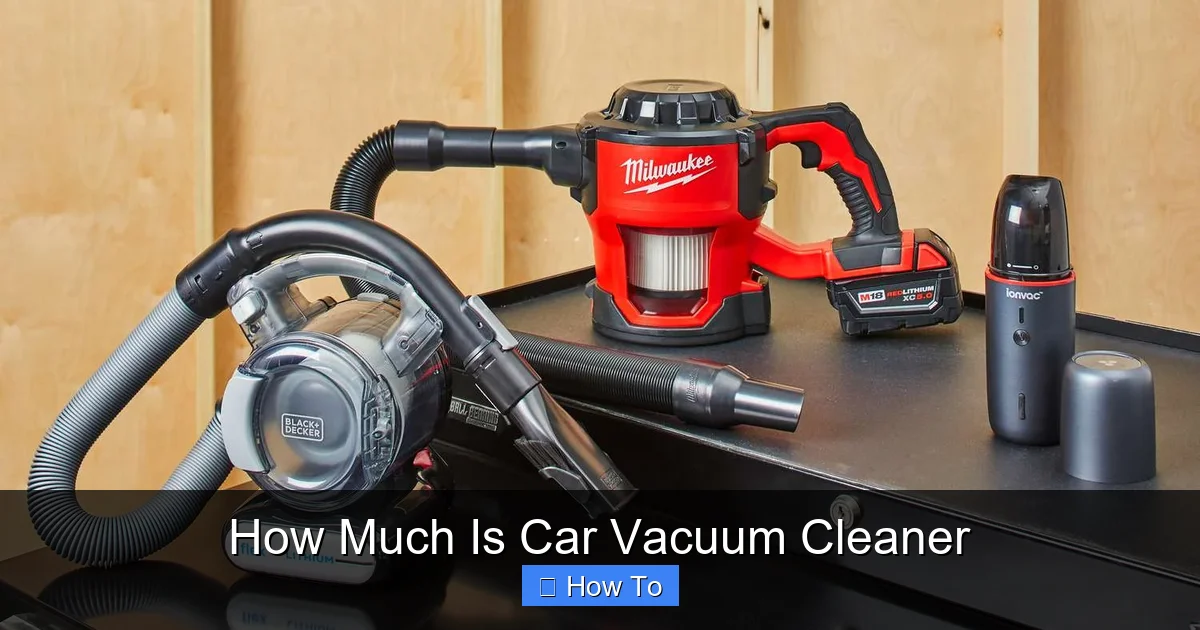
Understanding how much a car vacuum cleaner costs involves looking at various factors like type, suction power, battery life, and included accessories. Prices typically range from $20 for basic models to over $200 for premium, professional-grade units. This guide will help you navigate the market, identify what influences cost, and ultimately choose the best car vacuum cleaner that fits your budget and specific cleaning needs.
How Much Is Car Vacuum Cleaner? A Comprehensive Buyer’s Guide
Keeping your car’s interior clean isn’t just about aesthetics; it’s about maintaining hygiene, preserving your car’s value, and creating a more pleasant driving experience. A dedicated car vacuum cleaner is an indispensable tool for this task, far more convenient than lugging your household vacuum outside. But when you start shopping, a common question quickly arises: “How much is a car vacuum cleaner?”
The answer, as with many things, is “it depends.” The market for car vacuum cleaners is incredibly diverse, offering everything from basic, budget-friendly models to powerful, professional-grade machines. Understanding the price variations and what influences them is key to making an informed purchase that perfectly matches your needs and budget.
This comprehensive guide will break down the cost of car vacuum cleaners, explore the factors that drive these prices, help you determine your ideal budget, and offer practical tips for making a smart purchase. By the end, you’ll have a clear understanding of what to expect financially and how to choose the best car vacuum cleaner for your ride.
Key Takeaways
- Price Range Varies Widely: Car vacuum cleaners can cost anywhere from $20 for simple, corded handheld models to $200+ for powerful, cordless, feature-rich units or wet/dry shop vacs.
- Type Dictates Cost: Corded handheld vacuums are generally the most affordable, followed by cordless handhelds (which vary based on battery life and power), and then larger, more powerful wet/dry shop vacs designed for comprehensive detailing.
- Key Factors Influence Price: Suction power (measured in KPa or AW), battery capacity/run time, included attachments, filtration system (e.g., HEPA), brand reputation, and wet/dry capability significantly impact the final price.
- Assess Your Needs First: Before setting a budget, consider how often you’ll use it, the type of dirt you’ll be cleaning, and whether portability or raw power is more important to you. Occasional light cleaning won’t require the same investment as frequent, heavy-duty detailing.
- Don’t Just Look at Price: While budget is important, also consider product reviews, warranty, brand reliability, and user-friendliness to ensure you get a durable and effective car vacuum cleaner that offers good value for its price.
- Maintenance Extends Value: Regular cleaning of filters, proper charging (for cordless models), and appropriate storage can extend the lifespan of your car vacuum cleaner, making your initial investment last longer.
Quick Answers to Common Questions
What’s the best price range for a reliable car vacuum cleaner?
For a good balance of performance and value, aim for the $50-$100 range. This typically gets you a cordless model with decent suction, adequate battery life, and useful attachments, suitable for most regular car cleaning needs.
Is a more expensive car vacuum cleaner always better?
Not always, but higher prices often reflect superior suction, longer battery life, better filtration (like HEPA), more durable construction, and comprehensive accessory kits. It’s about matching the features to your specific needs, not just buying the priciest option.
How do I know if the suction power is good enough for a car vacuum cleaner?
Look for specifications like Air Watts (AW) or Kilopascals (KPa). For general car cleaning, aim for at least 30 AW or 5-7 KPa. If you deal with embedded pet hair or heavy dirt, look for 50+ AW or 8+ KPa.
Should I choose a corded or cordless car vacuum cleaner for my budget?
If budget is tight (under $40) and you have easy access to a power outlet, a corded 12V model offers consistent power. If convenience and portability are key, even entry-level cordless models (starting around $30-$50) are great, though their battery life and suction might be more limited.
Are car vacuum cleaners with wet/dry capabilities worth the extra cost?
If you frequently deal with spilled drinks, muddy shoes, or live in a rainy climate, a wet/dry car vacuum cleaner (often a compact shop vac) is definitely worth the investment. They are usually more expensive but provide versatile cleaning for both solids and liquids.
Understanding Car Vacuum Cleaner Types & Their Price Ranges
The type of car vacuum cleaner you choose is perhaps the biggest determinant of its cost. Let’s explore the main categories and their typical price ranges.
Cordless Handheld Car Vacuum Cleaners
These are arguably the most popular choice for car owners due to their portability and convenience. You’re not tethered to an outlet, allowing you to reach every nook and cranny of your vehicle, even if you’re parked far from a power source.
* Entry-Level ($20 – $50): These models typically offer decent suction for light dust, crumbs, and pet hair. Battery life might be shorter (10-15 minutes), and charging times can be longer. They might come with basic attachments and a simple filter.
* Mid-Range ($50 – $100): In this segment, you’ll find stronger suction power, improved battery life (15-30 minutes), faster charging, and often better filtration (sometimes including HEPA filters). They usually include a wider array of specialized attachments like crevice tools, brush nozzles, and flexible hoses. Brands in this range often have a good reputation for reliability.
* High-End ($100 – $200+): These are premium cordless car vacuum cleaners, often featuring exceptional suction comparable to some corded models. They boast extended battery life (30+ minutes, sometimes with interchangeable batteries), very fast charging, multi-stage filtration systems, and robust build quality. They often come from well-known brands specializing in cleaning appliances and might include features like LED lights, intelligent power management, and comprehensive accessory kits.
Corded Handheld Car Vacuum Cleaners
Corded models require an external power source, either a 12V cigarette lighter outlet in your car or a standard 120V wall outlet (depending on the model). The main advantage is consistent, often stronger suction power without worrying about battery life.
* Entry-Level ($20 – $40): These are typically 12V models designed to plug into your car’s cigarette lighter. They provide basic cleaning for everyday messes. Suction power is usually adequate for dry debris, but might struggle with embedded dirt. Cord length is a key consideration here.
* Mid-Range ($40 – $70): You’ll find more powerful 12V options or even some compact 120V corded vacuums in this price range. They offer better suction, longer cords, and more durable construction. Some might even include wet/dry capabilities.
* High-End ($70 – $120+): These are often robust 120V corded vacuums, sometimes marketed as “detailing vacuums.” They provide very strong, sustained suction, durable hoses, and a wide array of professional-grade attachments. They are ideal if you have consistent access to a power outlet and prioritize raw power over portability.
Wet/Dry Shop Vacs for Car Cleaning
While not exclusively “car vacuum cleaners,” many people purchase smaller wet/dry shop vacs for dedicated car cleaning. These are excellent for heavy-duty messes, including spilled liquids, and offer superior suction power compared to handhelds.
* Small/Compact (2-5 Gallon) ($60 – $150): These are ideal for car use due to their manageable size. They offer significant suction, both for dry debris and liquids, and usually come with a good selection of attachments. They are corded and require a 120V outlet.
* Medium (6-10 Gallon) ($150 – $250+): While larger, these provide professional-grade power and capacity. They are often chosen by detailing enthusiasts or those who need a multi-purpose shop vac for their garage and vehicles.
Factors That Influence Car Vacuum Cleaner Cost
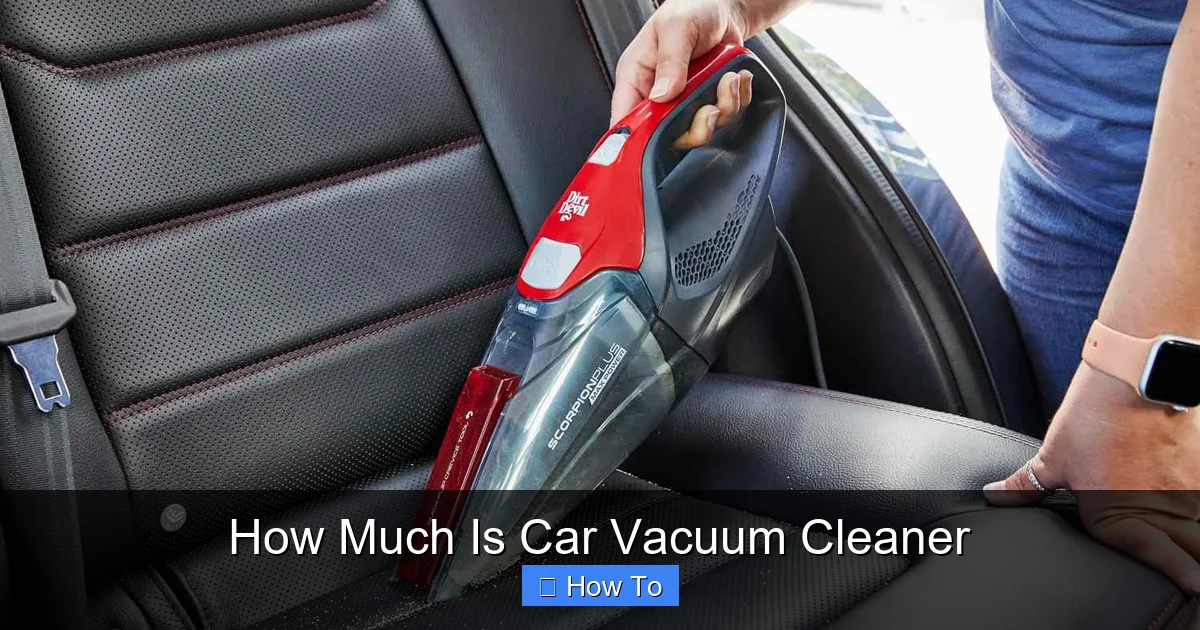
Visual guide about How Much Is Car Vacuum Cleaner
Image source: people.com
Beyond the basic type, several key features and specifications can significantly impact how much a car vacuum cleaner costs. Understanding these will help you justify higher prices or identify areas where you can save.
Suction Power
This is often the most critical factor for users and directly correlates with price. Suction power is measured in different units:
* Air Watts (AW): A more accurate measure of cleaning power. Higher AW means better suction.
* Kilopascals (KPa): Measures static pressure, indicating how strong the vacuum can pull air. Higher KPa means stronger suction.
* Volts (V): For cordless models, higher voltage generally means more power, but it’s not a direct measure of suction.
Generally, a car vacuum cleaner with superior suction power will cost more because it requires more robust motors and battery systems.
Battery Life and Charging (for Cordless Models)
For cordless models, battery quality and capacity are major cost drivers.
* Longer Run Time: Vacuums offering 20-30+ minutes of consistent power will naturally be more expensive than those lasting 10-15 minutes. This usually means a larger, higher-capacity lithium-ion battery.
* Faster Charging: Models with quick-charge technology (recharging in 2-3 hours vs. 4-6 hours) also tend to be pricier.
* Removable/Interchangeable Batteries: Some high-end models offer batteries you can swap out, effectively doubling your run time. This convenience comes at a premium.
Attachments and Accessories
The more specialized and comprehensive the accessory kit, the higher the price.
* Basic Kits: Include a crevice tool and a brush nozzle.
* Advanced Kits: May feature flexible hoses, pet hair brushes, upholstery tools, extender wands, dedicated car cleaning kits, storage bags, and even carrying cases. Each additional, high-quality attachment adds to the manufacturing cost and, consequently, the retail price.
Filtration System
Effective filtration is crucial for trapping dust and allergens.
* Standard Filters: Most basic car vacuum cleaners come with washable, often foam or mesh filters.
* HEPA Filters: High-Efficiency Particulate Air (HEPA) filters are superior for trapping microscopic particles, pollen, and allergens. Vacuums with HEPA filtration are generally more expensive but offer significant health benefits, especially for allergy sufferers.
Brand Reputation and Warranty
Established brands known for quality and reliability (e.g., Dyson, Black+Decker, Bissel, DeWalt, Milwaukee for shop vacs) often command higher prices. This is due to their investment in R&D, better materials, quality control, and customer support. A longer warranty period also reflects the manufacturer’s confidence in their product and can add to the initial cost.
Wet/Dry Capability
A car vacuum cleaner that can handle both dry debris and liquid spills requires a more complex motor design, specialized filters (or the ability to remove certain filters for wet use), and a durable collection tank. This added functionality will invariably increase the price compared to a dry-only vacuum.
Build Quality and Materials
The overall construction of the car vacuum cleaner plays a big role.
* Durable Plastics: High-grade, impact-resistant plastics contribute to longevity but cost more than cheaper, brittle plastics.
* Motor Quality: A more efficient, durable motor will extend the vacuum’s life but also increases its initial price.
* Hose and Nozzle Durability: Flexible, crack-resistant hoses and robust nozzle attachments also add to the cost.
How to Determine Your Ideal Budget for a Car Vacuum Cleaner
Now that you know what influences the cost, let’s figure out how much you should plan to spend.
Assess Your Cleaning Needs
* Light, Occasional Cleaning: If you just need to pick up crumbs, light dust, or a stray leaf every now and then, a basic corded or entry-level cordless car vacuum cleaner (under $50) will likely suffice.
* Regular Maintenance, Pet Owners: For weekly or bi-weekly cleaning, dealing with pet hair, or moderate dirt, a mid-range cordless or a more powerful corded model ($50 – $100) is a good investment. Look for good suction and a decent array of attachments.
* Detailing Enthusiast / Heavy Duty Use: If you’re meticulous about your car’s interior, frequently transport kids or pets, or need to tackle heavy dirt, sand, or even liquid spills, consider a high-end cordless unit or a compact wet/dry shop vac ($100 – $200+). These offer the power and features for comprehensive cleaning.
Consider Frequency of Use
The more often you plan to use your car vacuum cleaner, the more worthwhile it is to invest in a higher-quality, more durable model with better features. A vacuum used daily will wear out faster if it’s a very cheap, flimsy unit.
Don’t Forget Long-Term Value
Sometimes, spending a little more upfront on a reliable car vacuum cleaner with good features and a solid warranty can save you money in the long run by avoiding frequent replacements or frustratingly ineffective cleaning sessions.
Where to Find the Best Deals
Once you have a budget in mind, knowing where to shop can help you get the most for your money.
Online Retailers
* Amazon, eBay, Walmart.com, Target.com: Offer vast selections, competitive pricing, and user reviews that are invaluable for research. Look out for flash sales, daily deals, and coupon codes.
* Manufacturer Websites: Sometimes offer exclusive deals, bundles, or refurbished units directly from the brand.
Brick-and-Mortar Stores
* Electronics Stores (e.g., Best Buy): May carry higher-end brands and allow you to physically inspect the product.
* Big Box Stores (e.g., Walmart, Target, Home Depot, Lowe’s): Offer a range from budget to mid-tier models, especially shop vacs.
* Automotive Stores (e.g., AutoZone, Advance Auto Parts): Specialize in car accessories and may have car-specific models or detailing kits.
Seasonal Sales and Promotions
Keep an eye out for major sales events like Black Friday, Cyber Monday, Prime Day, or end-of-season clearances. These are excellent opportunities to snag a quality car vacuum cleaner at a reduced price.
Making an Informed Purchase Beyond Just Price
Price is a significant factor, but it shouldn’t be the *only* factor.
Read Reviews
Customer reviews offer real-world insights into a product’s performance, durability, battery life, and suction power. Pay attention to common complaints or praises. A car vacuum cleaner might be cheap, but if reviews consistently mention poor suction or battery failure, it’s not a good value.
Check Warranty and Return Policies
A good warranty (1-3 years is typical) provides peace of mind. Understand the retailer’s return policy in case the car vacuum cleaner doesn’t meet your expectations.
Consider Ergonomics and Ease of Use
A powerful car vacuum cleaner is useless if it’s too heavy, uncomfortable to hold, or difficult to maneuver in tight spaces. If possible, try to handle the vacuum in a store. For online purchases, read reviews specifically mentioning weight, balance, and ease of emptying the dustbin.
Maximizing the Value of Your Car Vacuum Cleaner
Once you’ve made your purchase, proper care can significantly extend its lifespan, making your investment truly worthwhile.
Regular Maintenance
* Empty the Dustbin: Do this after every use, or when it’s full. A full dustbin reduces suction.
* Clean Filters: Most filters are washable. Rinse them thoroughly and let them air dry completely before reinserting. Clogged filters dramatically reduce suction and can strain the motor.
* Check Attachments: Ensure nozzles and brushes are free from hair or debris that could impede airflow.
Proper Storage
* Store in a Cool, Dry Place: Extreme temperatures can degrade batteries (for cordless models) and plastic components.
* Charge Cordless Batteries Correctly: Follow the manufacturer’s recommendations for charging. Overcharging or fully draining lithium-ion batteries too often can shorten their lifespan.
Conclusion
So, how much is a car vacuum cleaner? The answer spans a broad range, from around $20 for a basic, corded handheld to upwards of $200 for a premium cordless or a robust wet/dry shop vac. The price hinges on factors like suction power, battery life, included accessories, filtration type, brand reputation, and overall build quality.
By carefully assessing your cleaning needs, understanding the features that drive costs, and doing a bit of research, you can confidently navigate the market. Remember, the goal isn’t just to find the cheapest car vacuum cleaner, but to find the one that offers the best balance of features, performance, and durability for your budget. An informed decision will lead to a cleaner car and greater satisfaction with your purchase for years to come. Happy cleaning!
🎥 Related Video: Amr TVC Car Vacuum Cleaner Unboxing 🔥
📺 The Box Opening
Amr TVC Car Vacuum Cleaner Unboxing Hello Everyone ! Here, we bring you the coolest and most exciting remote control …