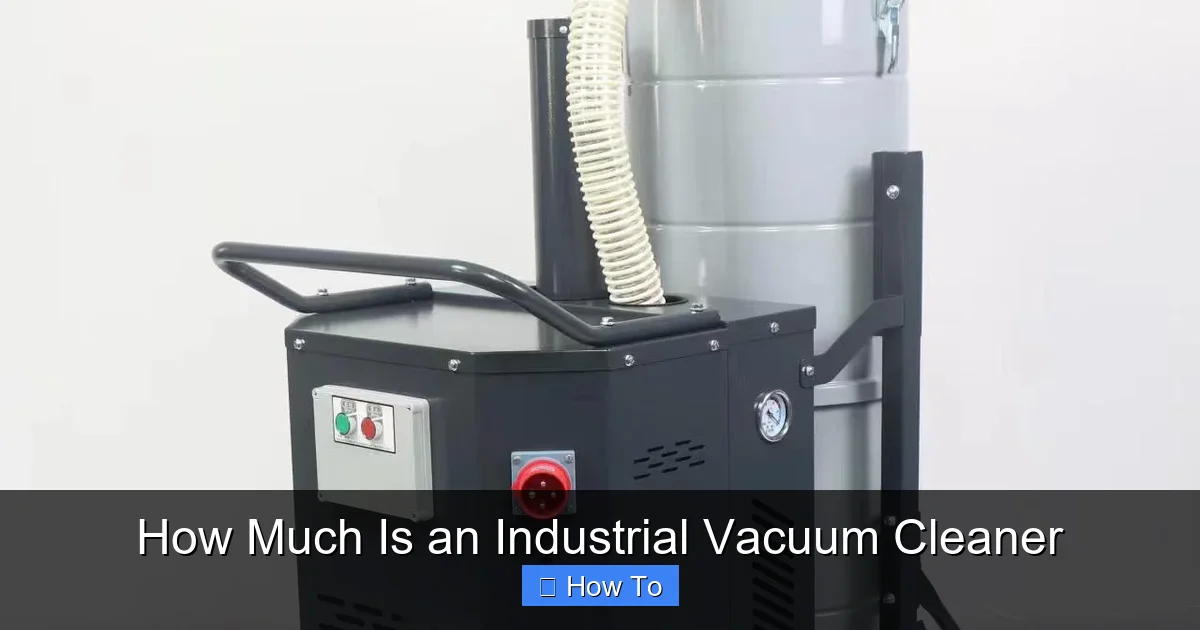
Understanding how much an industrial vacuum cleaner costs involves evaluating several key factors. Prices vary significantly based on power, capacity, filtration, construction materials, and specialized features like HEPA or ATEX certifications. Making the right choice means balancing initial investment with long-term performance and total cost of ownership to meet your specific industrial cleaning needs.
How Much Is an Industrial Vacuum Cleaner?
Welcome! If you’re running a business, managing a workshop, or overseeing a production facility, you know that keeping things clean isn’t just about aesthetics; it’s about safety, efficiency, and maintaining expensive equipment. A regular shop vac just won’t cut it for industrial-level messes. That’s where an industrial vacuum cleaner comes in. But then you hit the big question: “How much is an industrial vacuum cleaner?”
It’s a fantastic question, and one without a single, simple answer. The cost of an industrial vacuum cleaner can vary wildly, from a few hundred dollars to tens of thousands. This guide will help you understand *why* there’s such a broad range and, more importantly, how to figure out what kind of investment you’ll need to make for your specific situation. We’ll break down all the factors that influence the price, explore different price tiers, and give you practical tips to make an informed decision. Let’s dive in!
Key Takeaways
- Price Range Varies Greatly: Industrial vacuum cleaners can cost anywhere from a few hundred dollars for basic models to tens of thousands for highly specialized units, depending on their features and capabilities.
- Key Cost Drivers: The main factors influencing the price are power (motor strength, airflow, waterlift), capacity (tank size, wet/dry capability), filtration system (HEPA, ULPA), construction materials (stainless steel, specialized coatings), and unique features (explosion-proof, continuous duty).
- Assess Your Specific Needs: Before buying, carefully evaluate your cleaning environment, the type and volume of debris, frequency of use, and any required safety certifications (e.g., ATEX, cleanroom standards).
- Don’t Forget Total Cost of Ownership (TCO): The initial purchase price is just one piece of the puzzle. Consider ongoing costs like replacement filters, accessories, energy consumption, maintenance, and potential downtime if a cheaper, less durable unit fails.
- Filtration is Crucial: High-performance filtration systems, especially HEPA or ULPA, significantly increase the cost but are essential for fine dust, allergens, or hazardous materials, protecting both equipment and personnel.
- Brand and Support Matter: Reputable brands often come with a higher price tag but typically offer better build quality, reliability, warranties, and readily available spare parts and customer support, contributing to a longer lifespan and better value.
Quick Answers to Common Questions
What’s the absolute minimum I should expect to pay for an industrial vacuum cleaner?
For a very basic, lighter-duty industrial vacuum cleaner suitable for small workshops or infrequent use, you might find models starting around $500 to $800. However, these will have limited features, capacity, and power compared to more robust units.
How much more do HEPA filters add to the cost?
An industrial vacuum cleaner with true HEPA filtration can easily add several hundred to over a thousand dollars to the purchase price compared to a similar model without it. The cost also includes the multi-stage system designed to protect the HEPA filter.
Is it ever worth buying a really cheap industrial vacuum cleaner?
Only if your industrial cleaning needs are very minimal, infrequent, and non-hazardous. For critical applications, heavy debris, or continuous use, a really cheap unit will likely fail quickly, cost more in repairs and downtime, and potentially compromise safety.
Do I need an ATEX-certified industrial vacuum cleaner if I only have a small amount of combustible dust?
If any amount of combustible dust is present in an area, and there’s a risk of explosion, ATEX certification (or equivalent) is legally and ethically mandated. The quantity of dust doesn’t negate the risk; proper safety equipment is always required.
How does leasing an industrial vacuum cleaner work for managing costs?
Leasing allows you to pay a monthly fee instead of a large upfront cost. It conserves capital, can make high-end models more accessible, and sometimes includes maintenance, making it a good option for budget management and flexibility.
Understanding the Basics: What Defines an Industrial Vacuum?
Before we talk about cost, it’s crucial to understand what sets an industrial vacuum cleaner apart from its commercial or residential cousins. These aren’t your everyday household appliances.
Key Characteristics
An industrial vacuum cleaner is built for demanding environments. It features powerful motors, robust construction, large capacities, and advanced filtration systems. They’re designed to handle everything from fine dust and metal shavings to liquids, heavy debris, and even hazardous materials, often for continuous operation.
Why They Cost More Than Commercial Vacuums
The jump in price from a commercial vacuum to an industrial vacuum cleaner comes down to several factors:
- Durability: Built with tougher materials (e.g., steel, specialized plastics) for harsh use.
- Power: Much stronger motors for superior suction and airflow, often capable of continuous duty.
- Capacity: Larger tanks and collection systems mean less frequent emptying.
- Filtration: Advanced multi-stage and specialized filtration (like HEPA or ULPA) for critical air quality.
- Safety: Often include features for explosive dusts (ATEX certified), static control, or heat resistance.
- Specialization: Designed for very specific tasks and materials that general vacuums can’t handle.
Factors That Influence the Price of an Industrial Vacuum Cleaner
When you ask “how much is an industrial vacuum cleaner,” you’re really asking about the sum of its parts and capabilities. Here are the key factors that drive the price up or down:
Power and Suction Capability
This is arguably the biggest differentiator. The more powerful the motor and the greater its ability to move air (airflow, measured in CFM or m³/h) and lift heavy materials (waterlift, measured in inches of H₂O or kPa), the higher the price. High-performance industrial vacuum cleaners can generate incredible suction for heavy debris, which requires robust engineering.
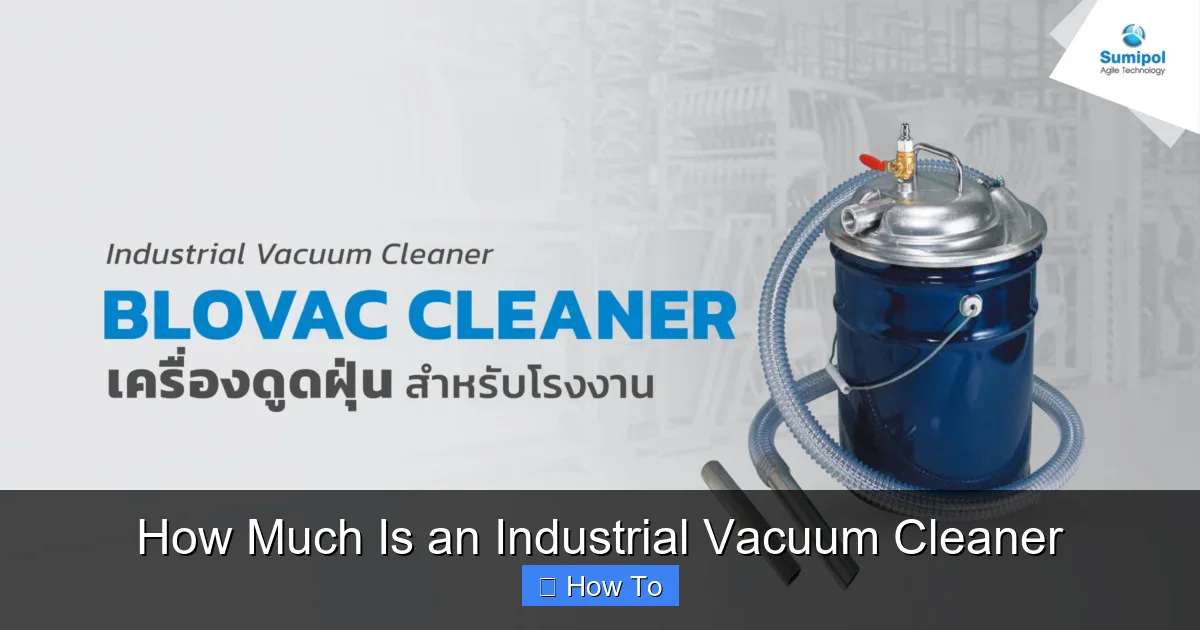
Visual guide about How Much Is an Industrial Vacuum Cleaner
Image source: sumipol.com
- Motor Type: Single-phase motors are common for smaller units, while three-phase or turbine motors offer continuous, heavy-duty operation and come with a higher price tag.
- Airflow (CFM): Crucial for picking up lighter, voluminous dusts quickly. Higher CFM often means a larger, more expensive motor.
- Waterlift (Inches H₂O): Essential for heavy debris like metal chips, gravel, or liquids. A higher waterlift rating indicates a more powerful and often more expensive pump or motor system.
Capacity
The size of the collection tank directly impacts how long you can clean before needing to empty it. Larger tanks are convenient but add to the material cost and bulk of the industrial vacuum cleaner.
- Tank Size: From 10-gallon (approx. 38 liters) models for light industrial use to 100-gallon (approx. 380 liters) or even larger systems for continuous operation or very heavy materials. Larger capacity means a higher price.
- Dry vs. Wet/Dry: Most industrial vacuums are wet/dry, but some specialized dry-only units exist. Wet/dry capability often requires specific internal components and corrosion-resistant materials, affecting the price.
Filtration System
This is a critical factor, especially if you’re dealing with fine dust, allergens, or hazardous materials. The quality and type of filtration system significantly impact the cost.
- Standard Filtration: Basic filter bags and cartridges are less expensive.
- Multi-Stage Filtration: Many industrial vacuum cleaners use multiple filters (e.g., pre-filter, main filter, safety filter) to protect the motor and capture more particles, increasing efficiency and cost.
- HEPA (High-Efficiency Particulate Air) Filtration: Essential for capturing 99.97% of particles 0.3 microns and larger. HEPA filters are crucial for health and safety in industries like pharmaceuticals, food processing, or construction with silica dust. They add a significant cost to the industrial vacuum cleaner.
- ULPA (Ultra-Low Penetration Air) Filtration: Even more stringent than HEPA, capturing 99.999% of particles 0.12 microns or larger, typically used in cleanrooms or highly sensitive environments, pushing the price even higher.
- Automatic Filter Cleaning: Systems that automatically shake or pulse-clean filters reduce manual maintenance but add to the unit’s complexity and cost.
Construction Material and Durability
Industrial environments are tough, so the vacuum needs to be tougher. The materials used affect both longevity and price.
- Polyethylene/Rotomolded Plastic: Common for lighter-duty industrial vacuums, offering good chemical resistance and impact strength at a lower cost.
- Painted Steel: A sturdy and common choice for many industrial applications.
- Stainless Steel: Highly resistant to corrosion and chemicals, making it ideal for wet applications, food processing, pharmaceuticals, or cleanrooms. It significantly increases the price of an industrial vacuum cleaner.
- Special Coatings: For specific chemical resistance or electrostatic discharge (ESD) protection, adding to the cost.
Special Features and Certifications
When an industrial vacuum cleaner needs to meet specific safety or operational standards, its price will naturally increase.
- ATEX Certification / Explosion-Proof: Absolutely essential for environments with combustible dust or flammable vapors (e.g., woodworking, grain processing, chemical plants). These vacuums feature spark-free motors, grounded components, and specific designs to prevent ignition, making them among the most expensive types of industrial vacuum cleaners.
- Continuous Duty: Designed to run for long periods without overheating, crucial for production lines or large facilities. This requires heavy-duty motors and cooling systems.
- Static-Safe/ESD Protection: For electronics manufacturing or other static-sensitive areas.
- Liquid Shut-Off: Prevents overfilling when vacuuming liquids.
- Power Take-Off (PTO) Sockets: For connecting power tools directly to the vacuum.
- Specific Industry Compliance: Such as FDA compliance for food processing.
Brand and Manufacturer Reputation
Just like with cars or electronics, established brands with a reputation for quality, innovation, and reliability often command higher prices. You’re not just paying for the machine; you’re paying for the engineering, testing, warranty, and customer support that comes with it. Well-known industrial vacuum cleaner manufacturers often provide better long-term value.
Accessories and Attachments
A good industrial vacuum cleaner is only as good as its accessories. While some basic tools might be included, specialized nozzles, floor tools, wands, hoses of varying lengths, and disposal systems (e.g., longopac bagging systems) often need to be purchased separately, adding to the total cost.
After-Sales Support, Warranty, and Availability of Parts
A longer warranty, readily available spare parts, and responsive customer service might not be line items on the initial quote, but they contribute to the overall value and can reflect a higher quality (and therefore higher priced) product. Downtime is expensive in industrial settings, so reliable support is invaluable.
Price Ranges: A General Overview
So, how much is an industrial vacuum cleaner in actual dollar figures? Here’s a rough breakdown:
Entry-Level Industrial Vacuums (Light Duty)
Price: $500 – $2,500
These are typically smaller units, often single-phase, with moderate power and capacity. They might have good standard filtration but rarely advanced HEPA. Construction is usually heavy-duty plastic or painted steel. Ideal for small workshops, infrequent use in lighter industrial settings, or as supplementary units.
Mid-Range Industrial Vacuums (Medium to Heavy Duty)
Price: $2,500 – $10,000
This category covers a wide range. You’ll find more powerful single-phase or even entry-level three-phase models. Capacities are larger, and advanced features like HEPA filtration become common. You might see stainless steel options, automatic filter cleaning, and robust construction suitable for manufacturing plants, construction sites, and regular heavy-duty use. This is where most serious industrial operations will find their fit.
High-End & Specialized Industrial Vacuums (Extreme Duty, Hazardous Materials, Cleanrooms)
Price: $10,000 – $50,000+
These are top-tier machines, designed for continuous operation, handling highly dangerous materials, or meeting stringent industry standards. Expect powerful three-phase or turbine motors, very large capacities, ULPA or multi-stage HEPA filtration, full stainless steel construction, and essential certifications like ATEX for explosive atmospheres. Custom-built solutions for unique industrial challenges can push prices even higher, sometimes exceeding $100,000 for complex central vacuum systems.
Beyond the Initial Purchase Price: Total Cost of Ownership (TCO)
When budgeting for an industrial vacuum cleaner, don’t just look at the sticker price. The Total Cost of Ownership (TCO) gives you a more accurate picture of the long-term investment.
Maintenance Costs
Filters are consumables. HEPA filters, especially, can be expensive to replace. Hoses, brushes, and other attachments also wear out. Consider the cost and frequency of replacing these parts. A cheaper industrial vacuum cleaner might have less durable components that need replacing more often.
Energy Consumption
More powerful motors consume more electricity. For units used continuously, this can add up. Factor in the operational cost of power.
Labor Efficiency
A high-quality, efficient industrial vacuum cleaner can significantly reduce cleaning time, freeing up labor for other tasks. A unit that constantly clogs or requires frequent emptying can actually cost you more in lost productivity.
Downtime Costs
If a cheaper, less robust industrial vacuum cleaner breaks down frequently, the cost of repairs and, more importantly, the cost of halted operations or delayed cleaning, can far outweigh initial savings. Reliability is key in industrial settings.
How to Determine Your Budget and Needs
Now that you understand the factors, here’s how to pinpoint what you need and how much you should expect to pay.
Assess Your Cleaning Environment and Debris Type
- What are you cleaning? Fine dust (wood, concrete, flour), metal chips, liquids, oily sludge, gravel, hazardous chemicals, fibers? Each requires specific features.
- How much debris? Small amounts intermittently, or large volumes continuously?
- Are there safety concerns? Is the dust combustible (ATEX zone)? Are fumes present? Is the area sensitive to static electricity? Are there strict air quality standards (e.g., cleanroom)?
Consider Frequency and Duration of Use
- Daily use for hours? You’ll need a continuous-duty, robust, high-capacity industrial vacuum cleaner.
- Once a week for an hour? A mid-range or even entry-level industrial vacuum cleaner might suffice.
Identify Essential Features and Certifications
Make a list of non-negotiables based on your assessment. Do you absolutely need HEPA? Is ATEX certification mandatory? Must it be stainless steel? These will define your minimum price point.
Research Brands and Read Reviews
Look for reputable manufacturers known for industrial cleaning equipment. Read reviews and seek recommendations from peers in similar industries.
Request Quotes and Demos
Once you have a clear idea of your needs, contact multiple suppliers. Ask for detailed quotes for models that meet your specifications. Many suppliers offer on-site demonstrations, which can be invaluable for seeing the industrial vacuum cleaner in action and assessing its ergonomics and performance.
Tips for Saving Money Without Compromising Quality
It’s possible to manage your budget without sacrificing essential functionality or safety.
Buy Used or Refurbished (with Caution)
For some applications, a well-maintained used industrial vacuum cleaner from a reputable dealer can offer significant savings. Ensure it comes with a warranty and has been thoroughly inspected, especially if it’s for critical applications like hazardous material cleanup.
Look for Sales and Discounts
Keep an eye out for end-of-quarter sales, trade show discounts, or package deals from suppliers. Sometimes older models might be available at a reduced price.
Consider Leasing Options
If the upfront cost is prohibitive, leasing an industrial vacuum cleaner can spread the expense over time and might include maintenance. This is a great option for short-term projects or when you want to avoid a large capital outlay.
Focus on Core Needs, Avoid Unnecessary Features
Don’t pay for features you don’t truly need. If you don’t operate in an ATEX zone, don’t get an ATEX-certified vacuum. If you don’t deal with ultra-fine particles, ULPA might be overkill. Stick to your essential requirements list.
Common Pitfalls to Avoid When Buying an Industrial Vacuum
Making an informed decision means avoiding common mistakes that can lead to buying the wrong industrial vacuum cleaner or overspending.
Underestimating Power Requirements
A common mistake is buying a vacuum that’s not powerful enough for your heaviest debris or highest volume of dust. This leads to inefficiency, frustration, and potential damage to the unit. Always err on the side of slightly more power than you think you’ll need.
Neglecting Filtration Needs
Skimping on filtration, especially when dealing with fine or hazardous dust, is a serious safety risk. Investing in the correct HEPA or ATEX-certified filtration system is non-negotiable for worker safety and regulatory compliance.
Ignoring Maintenance and Replacement Costs
Overlooking the ongoing cost of filters, bags, and spare parts can lead to budget surprises down the line. Factor these into your TCO calculations.
Not Considering Operator Comfort and Ergonomics
An industrial vacuum cleaner that is difficult to maneuver, empty, or operate can lead to worker fatigue and reduced productivity. Consider features like large wheels, ergonomic handles, easy-to-access controls, and simple emptying mechanisms during your evaluation.
Conclusion
Determining “how much is an industrial vacuum cleaner” is less about finding a fixed price and more about understanding value. The cost is a direct reflection of its power, durability, capacity, and specialized features designed to tackle demanding industrial cleaning tasks safely and efficiently.
By carefully assessing your specific cleaning needs, understanding the factors that drive price, and considering the total cost of ownership, you can make an informed decision. Don’t let the initial price tag scare you; view it as an investment in your facility’s cleanliness, safety, and operational efficiency. Choose an industrial vacuum cleaner that not only fits your budget but also reliably meets the unique challenges of your industrial environment for years to come.
🎥 Related Video: 🏭 Introducing the Essential Industrial Vacuum – Waidr WX-3078P!
📺 Waidr Industrial Vacuum Cleaner
Introducing the Essential Industrial Vacuum – Waidr WX-3078P! ✓ Large Dust Capacity | ✓ Dry & Wet Use ✓ Front Push-Suction …