Discovering how much is a small vacuum cleaner involves understanding various types like handheld, stick, robotic, and compact canister models. Prices vary significantly, ranging from under $20 for basic handhelds to over $1000 for advanced robotic units, influenced by factors such as suction power, battery life, filtration, and brand. This guide helps you define your needs, identify key features, and set a realistic budget to find the perfect small vacuum without overspending.
How Much Is a Small Vacuum Cleaner?
Welcome to the ultimate guide on understanding the cost of a small vacuum cleaner! If you’re looking for a compact, convenient cleaning solution, you’ve probably asked yourself, “how much is a small vacuum cleaner?” The answer, as you’ll soon discover, isn’t a single number. It’s a spectrum, influenced by a variety of factors from the type of vacuum to its features, brand, and even where you buy it.
In this comprehensive guide, we’re going to break down everything you need to know. We’ll explore the different categories of small vacuums, demystify what drives their prices, and give you practical steps to find the perfect model that fits both your cleaning needs and your budget. By the end of this guide, you’ll be equipped with the knowledge to make an informed decision, ensuring you get great value for your money. Let’s dive in!
Key Takeaways
- Defining “Small”: The term “small vacuum cleaner” encompasses several types, including handheld, stick, robotic, and compact canister models, each serving different purposes and having distinct price ranges.
- Price Range Variability: Expect to pay anywhere from $20 for a simple handheld vacuum up to $1000+ for a high-end robotic or premium cordless stick vacuum, depending on features and brand.
- Key Cost Drivers: Major factors influencing the price of a small vacuum cleaner include suction power, battery technology (for cordless models), advanced filtration (like HEPA), specialized attachments, smart features, and overall brand reputation.
- Match Needs to Features: To avoid overspending, accurately assess your primary cleaning tasks and prioritize only the essential features required, rather than opting for the most expensive model with unnecessary bells and whistles.
- Research is Crucial: Always compare prices across various online and physical retailers, extensively read user reviews, and be on the lookout for sales, discounts, or even certified refurbished options to secure the best value.
- Budgeting is Essential: Establish a realistic budget before you start shopping, considering both the initial purchase price and the long-term value and expected lifespan of the small vacuum cleaner.
Quick Answers to Common Questions
Is a Corded Small Vacuum Cheaper?
Generally, yes. Corded small vacuum cleaners (typically stick or compact canister models) tend to be more affordable than their cordless counterparts. This is because they don’t require expensive battery technology, which is a significant cost driver for cordless models, making them a great budget-friendly option if portability isn’t your top priority.
How Important is HEPA Filtration?
HEPA filtration is crucial if you or anyone in your household suffers from allergies or asthma. It effectively traps microscopic particles like dust mites, pollen, and pet dander, preventing them from being recirculated into the air. If allergies are not a concern, a standard filtration system might be sufficient and more cost-effective.
Can I Use a Handheld for Pet Hair?
Yes, many handheld small vacuum cleaners are specifically designed with pet hair in mind, often featuring specialized motorized brushes or rubber nozzles. However, their effectiveness can vary. Look for models explicitly advertised for pet hair removal and check reviews to ensure strong suction and effective brush design for stubborn fur.
What’s the Best Battery Type for Small Vacuums?
Lithium-ion (Li-ion) batteries are generally considered the best for cordless small vacuum cleaners. They offer longer runtimes, consistent power output throughout the charge cycle, faster charging times, and a longer overall lifespan compared to older battery types like NiMH, though they do contribute to a higher initial cost.
Should I Consider Refurbished Models?
Absolutely! Certified refurbished small vacuum cleaner models can offer significant savings (often 20-50% off retail price) on higher-end brands and models. They are typically inspected, cleaned, and tested by the manufacturer or authorized sellers, often coming with a warranty, making them a smart way to get premium features on a tighter budget.
Step 1: Define “Small” for Your Needs
The first crucial step to understanding how much a small vacuum cleaner costs is to define what “small” means to you. This isn’t just about physical size; it’s about the type of cleaning tasks you have in mind. Different categories of small vacuums are designed for different jobs, and their price tags reflect that specialization.
Handheld Vacuums
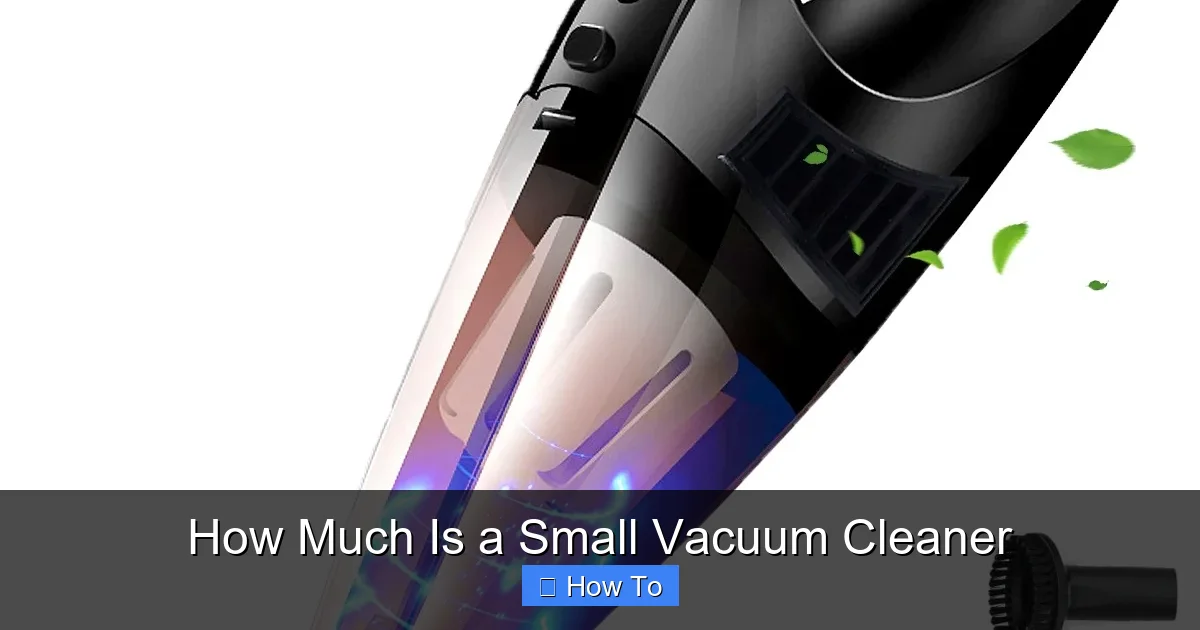
These are often what people first think of when they hear “small vacuum cleaner.” Handheld vacuums are cordless, extremely portable, and perfect for quick cleanups. Think spilled cereal, crumbs on the couch, or tidying up car interiors. They are generally the most affordable category of small vacuums.
Stick Vacuums
Stick vacuums are lightweight, typically cordless, and designed for more extensive everyday cleaning than a handheld, but still within a compact form factor. They excel on hard floors and low-pile carpets, offering good maneuverability and often converting into a handheld for versatility. Their price point is usually higher than basic handhelds due to increased power, battery life, and larger dustbins.
Robotic Vacuums
These are the ultimate hands-free small vacuum cleaner. Robotic vacuums navigate your home autonomously, cleaning on a schedule. While incredibly convenient, they come with a significantly higher price tag due to their advanced technology, sensors, and smart features. They are ideal for maintaining cleanliness between deeper cleans, especially in homes with hard floors or short-pile rugs.
Compact Canister Vacuums
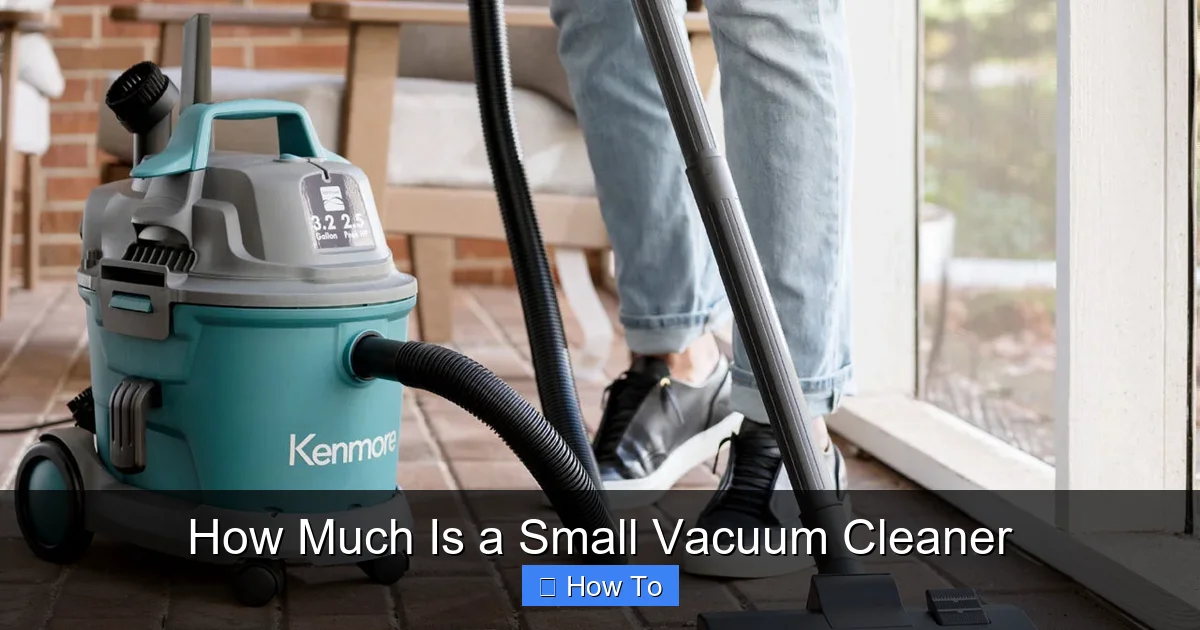
While less common in the “small vacuum cleaner” discussion than cordless options, compact canister vacuums are excellent for smaller homes or apartments where you still need strong suction for various surfaces, including medium-pile carpets. They offer more power than many stick vacuums and often come with a range of attachments, all in a footprint much smaller than a traditional upright vacuum. Their prices tend to sit somewhere between mid-range stick vacuums and entry-level robotic models.
Tip: Take a moment to consider your primary cleaning needs. Do you need something for quick spills, daily floor maintenance, hands-free cleaning, or more powerful spot cleaning? Your answer will guide you to the right type of small vacuum cleaner and help narrow down your cost expectations.
Step 2: Understand the Price Ranges by Type
Visual guide about How Much Is a Small Vacuum Cleaner
Image source: cdn11.bigcommerce.com
Now that we’ve identified the main types of small vacuum cleaners, let’s explore their typical price ranges. Remember, these are general guidelines; specific brands and sales can always cause fluctuations.
Handheld Vacuums: $20 – $150
At the lower end, you’ll find basic models with modest suction, shorter battery life (if cordless), and minimal attachments. These are fantastic for very light, occasional use. As you move towards the $70-$150 range, you’ll see improvements in battery technology (often lithium-ion for longer runtimes), stronger suction power, larger dustbins, and more specialized nozzles for pet hair or crevices. For a reliable, effective small vacuum cleaner for quick jobs, budgeting around $50-$100 is a good starting point.
Stick Vacuums: $50 – $600+
The price variation here is substantial.
- Entry-level (Under $150): These are often corded stick vacs or very basic cordless models with limited battery life and suction. They work well for small apartments with mostly hard floors.
- Mid-range ($150 – $350): This is a sweet spot for many. You’ll find cordless stick vacs with decent battery life (20-40 minutes), good suction, and useful attachments. Brands like Shark, Hoover, and Bissell often have strong contenders in this segment. This is where many people find a very capable small vacuum cleaner.
- Premium ($350 – $600+): Dominated by brands like Dyson and some high-end Tineco or Samsung models. These offer superior suction, advanced filtration (HEPA), extended battery life (often 60+ minutes), intelligent features (like auto-adjusting power), and premium build quality. You’re paying for cutting-edge technology and often a stronger warranty.
Robotic Vacuums: $100 – $1000+
- Basic ($100 – $250): These models typically offer random navigation patterns, basic obstacle detection, and often rely on app control for scheduling. Suction might be moderate, best for hard floors.
- Mid-range ($250 – $500): You start to see more sophisticated navigation (e.g., systematic cleaning paths), better suction, and sometimes basic mapping capabilities. Some might include virtual boundaries. Brands like Eufy, Roomba (entry-level), and Roborock offer good value here.
- Premium ($500 – $1000+): These are the workhorses, featuring precise LiDAR or camera-based mapping, advanced app control, self-emptying dustbins, stronger suction, and smart home integration. Brands like high-end Roomba, Roborock, and Ecovacs dominate this segment. The cost of a small vacuum cleaner in this category reflects significant technological investment.
Compact Canister Vacuums: $80 – $300
- Entry-level ($80 – $150): Often bagless models with standard filtration and moderate suction. Good for light-duty cleaning on hard floors and low-pile rugs.
- Mid-range ($150 – $300): You’ll find options with stronger motors, better filtration (sometimes HEPA-capable), a wider array of attachments, and improved build quality. Some might offer bagged systems, which are excellent for allergy sufferers. Brands like Kenmore, Bissell, and certain Shark models fit this bill. This type of small vacuum cleaner can be a powerful alternative to stick vacs.
Tip: Don’t be swayed by the lowest price or the most expensive. Focus on finding a small vacuum cleaner within the range that aligns with the performance and features you actually need.
Step 3: Identify Key Features that Impact Cost
Beyond the type of vacuum, specific features play a huge role in determining how much is a small vacuum cleaner. Understanding these can help you decide where to save and where to splurge.
Suction Power (Air Watts, CFM)
Generally, the more powerful the suction, the higher the price. Higher suction is crucial for deep cleaning carpets, picking up pet hair effectively, or dealing with larger debris. If you only need to clean hard floors or light crumbs, you can save money by opting for a model with moderate suction.
Battery Life & Type (for Cordless Vacuums)
For cordless stick and handheld vacuums, battery performance is a major cost factor.
- Battery Type: Lithium-ion (Li-ion) batteries are more expensive than older NiMH batteries but offer longer runtimes, consistent power, and faster charging.
- Runtime: Vacuums with 40-60 minutes of run time on a single charge will cost more than those offering 15-20 minutes. Consider your home size and cleaning habits.
- Replaceable Battery: Models with easily swappable batteries often cost more initially but offer practical advantages if you need extended cleaning sessions.
Filtration (HEPA)
HEPA (High-Efficiency Particulate Air) filtration systems are a significant upgrade, especially for allergy sufferers or homes with pets. They capture a high percentage of tiny particles, including dust mites and pet dander. Vacuums with true HEPA filters (not just “HEPA-like” or “sealed system”) will typically carry a higher price tag for this enhanced air purification.
Attachments & Accessories
A basic small vacuum cleaner might come with one or two standard nozzles. More expensive models often include a variety of specialized tools like crevice tools, dusting brushes, upholstery tools, pet hair attachments, motorized brush heads for carpets, or even flexible hoses. Each additional, well-designed attachment adds to the vacuum’s versatility and, consequently, its cost.
Brand Reputation & Warranty
Established, premium brands (like Dyson, Miele, high-end Shark or Roomba) often command higher prices due to their reputation for innovation, durability, customer service, and longer warranties. While you might pay more upfront, you’re often investing in reliability and peace of mind. Conversely, lesser-known brands can offer competitive features at a lower price but might have shorter warranties or less proven longevity.
Smart Features (for Robotic Vacuums)
This category significantly impacts the price of a small vacuum cleaner, specifically robotic models.
- Mapping Technology: Basic robots wander randomly; advanced ones use LiDAR or cameras to map your home, allowing for more efficient cleaning paths, virtual boundaries, and room-specific cleaning.
- App Control: Almost standard now, but advanced apps offer more control over schedules, suction power, and no-go zones.
- Self-Emptying Dustbins: A premium feature where the robot empties its dustbin into a larger bin on its charging dock, allowing for weeks of hands-free operation. This adds hundreds to the overall cost.
- Voice Assistant Integration: Compatibility with Alexa or Google Assistant for hands-free commands.
Tip: Make a list of your “must-have” features and your “nice-to-have” features. Prioritize to find the best balance between functionality and how much is a small vacuum cleaner for your budget.
Step 4: Research and Compare Prices
Once you have a good idea of the type of small vacuum cleaner and the features you need, it’s time to hit the market. Strategic research can save you a significant amount of money.
Online Retailers
Websites like Amazon, Best Buy, Walmart, Target, and the manufacturer’s own websites offer a vast selection.
- Pros: Wide variety, competitive pricing, easy comparison tools, access to countless user reviews.
- Cons: You can’t physically inspect the vacuum or test its weight/maneuverability.
Brick-and-Mortar Stores
Electronics stores, department stores, and even some supermarkets carry a range of small vacuums.
- Pros: Opportunity to see, touch, and sometimes even test the vacuum. Sales associates can offer advice.
- Cons: Limited selection compared to online, prices might be higher.
Sales and Discounts
Keep an eye out for major sales events like Black Friday, Cyber Monday, Prime Day, and seasonal clearances. Prices for a small vacuum cleaner can drop significantly during these periods. Signing up for email newsletters from your favorite retailers can also alert you to upcoming deals.
Refurbished Models
Many reputable manufacturers and retailers offer certified refurbished vacuums. These are units that have been returned, repaired (if necessary), cleaned, and tested to meet original factory standards. They often come with a warranty (though sometimes shorter than new products) and can offer significant savings on higher-end models. This is an excellent way to get a premium small vacuum cleaner for a lower price.
Read Reviews
User reviews and independent product tests are invaluable. They offer real-world insights into performance, battery life, durability, and common issues that specifications alone won’t reveal. Pay attention to comments about suction, ease of cleaning, noise levels, and long-term reliability.
Tip: Always compare the total cost, including any shipping fees, potential extended warranty costs, and the price of any replacement parts or accessories you might need down the line (e.g., filters, specific attachments).
Step 5: Set a Realistic Budget and Stick to It
After all this research, you should have a solid understanding of how much is a small vacuum cleaner based on your specific requirements. The final step is to set a budget and commit to it.
Entry-Level Budget (Under $100)
In this range, you’ll find basic handheld vacuums for quick spot cleaning and some corded stick vacuums suitable for very small spaces with light cleaning needs. Don’t expect powerful suction, long battery life (if cordless), or advanced features. This is perfect if your demands are minimal for a small vacuum cleaner.
Mid-Range Budget ($100 – $300)
This is where you’ll find a wide variety of capable small vacuum cleaners. You can get good quality cordless stick vacuums with decent battery life, entry-level robotic vacuums, and solid compact canister models. This range offers a great balance of features, performance, and value for most typical household needs.
Premium Budget (Over $300)
If your budget allows, this range opens up advanced features, superior performance, and cutting-edge technology. Expect powerful suction, extended battery life, advanced filtration, smart mapping in robotic vacuums, and durable build quality from reputable brands. These small vacuum cleaners are often designed for intensive use, larger areas, or specific challenges like significant pet hair.
Tip: Think about the “cost per use.” If you’re going to use a small vacuum cleaner daily for several years, investing a bit more upfront might be more cost-effective than repeatedly replacing cheaper, less durable models.
Troubleshooting: Common Questions About Small Vacuum Cleaner Costs
Sometimes, despite your research, you might still have questions about pricing.
“Why is this small vacuum so expensive?”
High prices for a small vacuum cleaner typically reflect significant research and development, cutting-edge technology (like advanced motors, superior battery cells, LiDAR mapping, or self-emptying docks), premium materials, and a strong brand reputation with excellent customer support and warranty. For example, Dyson’s high prices stem from their powerful digital motors and innovative designs, while top-tier robotic vacuums integrate complex AI and sensor arrays.
“Is a cheaper small vacuum good enough?”
Absolutely, depending on your needs. For very light, occasional tasks like cleaning crumbs off a table, picking up spilled dry goods, or tidying a car, a basic, inexpensive handheld vacuum might be perfectly adequate. If you need it for daily floor cleaning in a small apartment, an entry-level corded stick vacuum could suffice. However, if you have pets, allergies, or larger areas to clean, a cheaper model might lead to frustration and a need for an upgrade sooner than expected, making it less “good enough” in the long run.
“How long should a small vacuum last?”
The lifespan of a small vacuum cleaner varies greatly by type, brand, and usage.
- Basic Handhelds: 1-3 years.
- Mid-range Stick/Compact Canister: 3-5 years.
- Premium Stick/Robotic: 5-8+ years with proper maintenance.
Investing more in a reputable brand with better build quality and a good warranty often translates to a longer lifespan, reducing the “cost of ownership” over time. Regularly cleaning filters and avoiding misuse also significantly prolongs any vacuum’s life.
Conclusion
Understanding “how much is a small vacuum cleaner” is less about finding a single price point and more about navigating a diverse market to find the best value for your specific needs. By carefully considering the type of vacuum, the features that matter most to you, and doing thorough price comparisons, you can confidently choose a small vacuum cleaner that fits your lifestyle and budget.
Whether you opt for a budget-friendly handheld for quick cleanups, a versatile stick vacuum for daily floor care, a hands-free robot for automated maintenance, or a powerful compact canister, an informed decision will lead to a cleaner home and satisfaction with your purchase. Happy cleaning!
🎥 Related Video: Product Link in Bio ( # 2333 ) ▶️ Hyper Clean Wireless Portable Vacuum Cleaner
📺 MaviGadget
You can also find the product links in our bio @MaviGadgets Product Number: # 2333 Product Name: Hyper Clean Wireless …