
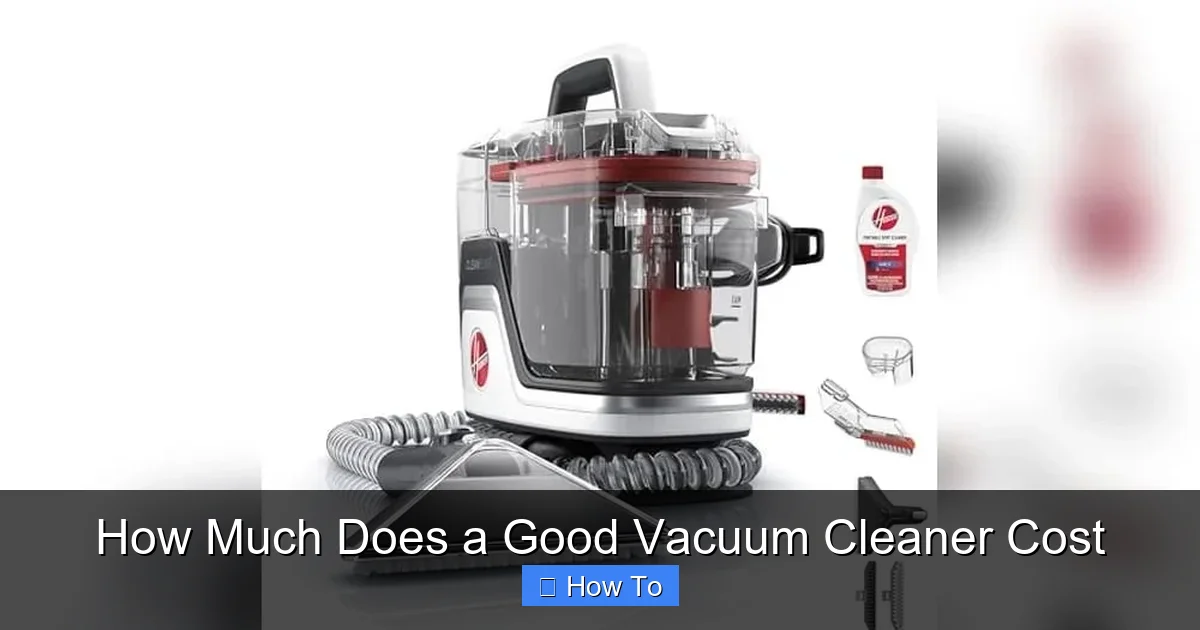
Understanding how much a good vacuum cleaner costs involves more than just a price tag. A truly good vacuum balances powerful performance, durable build quality, and essential features tailored to your needs. Expect to invest anywhere from $200 to $700+ for a reliable model, though excellent budget options and premium picks exist at both ends of the spectrum. The key is to match your home’s unique demands with the right vacuum type and features, ensuring long-term value and cleaning satisfaction.
How Much Does a Good Vacuum Cleaner Cost?
Are you on the hunt for a new vacuum cleaner? Maybe your old one finally bit the dust, or perhaps you’re tired of inefficient cleaning. One of the first questions that pops into most people’s minds is, “How much does a good vacuum cleaner cost?” It’s a fantastic question, but the answer isn’t a simple dollar amount. It’s more of a journey through features, types, brands, and, most importantly, your specific cleaning needs.
In this comprehensive guide, we’ll help you navigate the world of vacuum cleaner pricing. We’ll break down what makes a vacuum “good,” explore the factors that influence its price, give you realistic cost ranges, and provide practical tips for finding the perfect balance between performance and your budget. By the end, you’ll have a clear understanding of how much you can expect to invest and how to ensure every dollar spent on a good vacuum cleaner cost is worth it.
Key Takeaways
- Cost Varies Widely: The cost of a good vacuum cleaner can range significantly, from around $150 for basic yet effective models to over $1000 for high-end, feature-rich options.
- “Good” is Subjective: What defines a “good” vacuum cleaner depends entirely on your specific cleaning needs, home size, type of flooring, presence of pets, and any allergy concerns you might have.
- Key Factors Influence Price: The type of vacuum (upright, canister, robot), brand reputation, included features (HEPA filtration, smart technology), suction power, and overall build quality are major determinants of the final price.
- Mid-Range Offers Best Value: Many excellent, reliable, and high-performing vacuum cleaners fall into the $200-$500 range, often providing the best balance of features, durability, and cost-effectiveness for most households.
- Consider Long-Term Value: Investing a bit more upfront in a durable, high-performance model can often save money in the long run by reducing the need for frequent replacements or repairs, ultimately making the good vacuum cleaner cost more justifiable.
- Research is Crucial: Before making a purchase, thoroughly research specific models, read user and expert reviews, and carefully assess your home’s unique cleaning requirements to ensure you’re paying for features and performance you’ll truly benefit from.
Quick Answers to Common Questions
What’s the ideal budget for a good vacuum?
For most households, an ideal budget for a good vacuum cleaner ranges from $200 to $500. This range typically offers a great balance of performance, durability, and essential features without venturing into unnecessary premium territory.
Do I really need HEPA filtration?
If anyone in your household suffers from allergies, asthma, or respiratory sensitivities, HEPA filtration is highly recommended. It traps tiny particles like pollen, dust mites, and pet dander, significantly improving indoor air quality, which justifies the slightly higher good vacuum cleaner cost.
Bagged or bagless: which is better?
Bagged vacuums are often better for allergy sufferers as they seal dust and allergens completely, making disposal cleaner. Bagless vacuums save on ongoing bag costs and are more environmentally friendly, but emptying them can release dust back into the air.
How often should I replace my vacuum?
A good quality vacuum cleaner, especially one in the mid-to-high range, should last 5-10 years with proper care and maintenance. Cheaper models might only last 2-4 years, while premium brands like Miele can last 20 years or more.
Are robotic vacuums worth the cost?
Robotic vacuums offer unmatched convenience for daily maintenance cleaning, especially for pet owners or busy individuals. For comprehensive deep cleaning, a traditional vacuum is still necessary, but a good robotic vacuum (starting around $300-$500) can significantly reduce the frequency of manual vacuuming.
Understanding “Good”: What Defines a Quality Vacuum Cleaner?
Before we dive into numbers, let’s define what we mean by “good.” A good vacuum cleaner isn’t necessarily the most expensive one. Instead, it’s a model that effectively meets your specific cleaning challenges, is durable enough to last for years, and offers features that genuinely make your life easier. Here are the core components of a “good” vacuum:
- Effective Cleaning Performance: It should pick up dirt, dust, pet hair, and debris efficiently from your specific floor types (carpets, hard floors, rugs). This means strong suction, effective brush rolls, and good airflow.
- Durability and Build Quality: A good vacuum cleaner is built to last. It uses quality materials that can withstand regular use without parts breaking or wearing out prematurely.
- Appropriate Features: Does it have HEPA filtration if you have allergies? Does it come with attachments for upholstery and crevices? Is it easy to maneuver? The right features enhance its utility.
- Ease of Use and Maintenance: A good vacuum should be easy to assemble, operate, empty, and maintain. User-friendly design is key.
- Brand Reputation and Support: Reputable brands often back their products with good warranties and customer service, which adds to the long-term value.
When considering how much does a good vacuum cleaner cost, remember you’re investing in these qualities, not just a price tag.
Factors Influencing Vacuum Cleaner Cost
Many elements contribute to the final price tag of a vacuum cleaner. Understanding these can help you decide which features are essential for your home and which you can live without to manage your good vacuum cleaner cost.
Type of Vacuum
The style of vacuum cleaner you choose plays a huge role in its price.
- Upright Vacuums:
These are the traditional workhorses, great for homes with a lot of carpet. They often have powerful brush rolls to dig deep into carpet fibers. Uprights typically range from $100 for basic models to $600+ for premium, feature-rich ones. A good upright vacuum cleaner cost usually starts around the $200 mark.
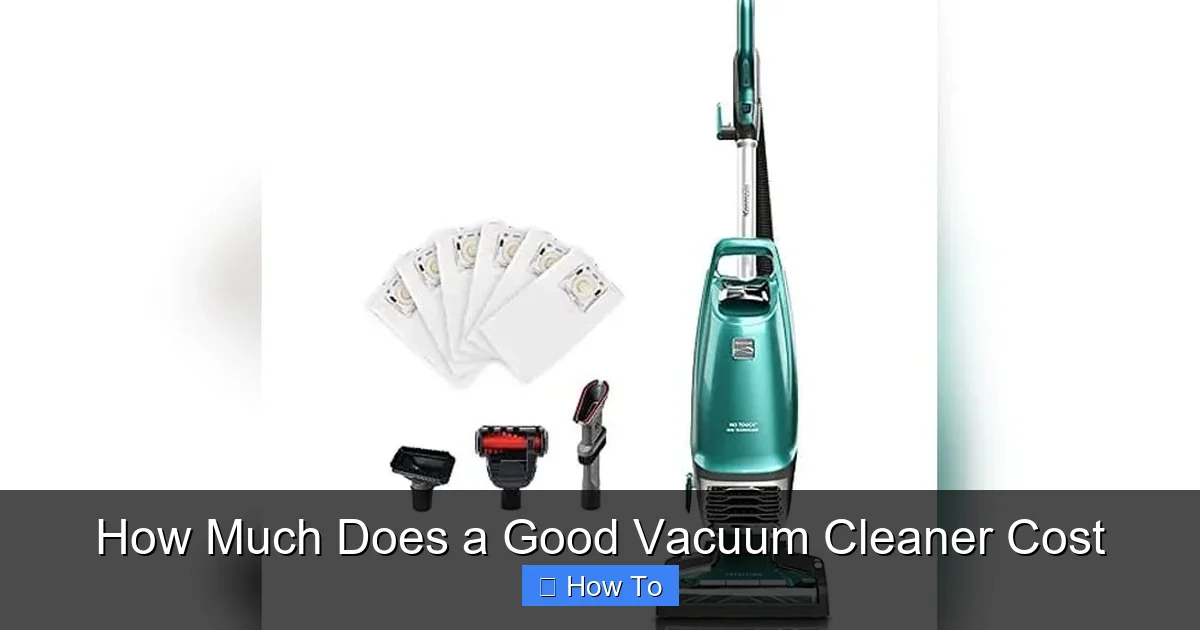
Visual guide about How Much Does a Good Vacuum Cleaner Cost
Image source: genuinehomecleaner.com
- Canister Vacuums:
Known for their versatility, canister vacuums have a separate canister body and a long hose with a cleaning head. They excel on hard floors and stairs and are often quieter than uprights. Prices for canister vacuums vary widely, from $150 for simple models to $800+ for high-end European brands. For a robust and reliable model, expect a good vacuum cleaner cost in the $300-$600 range.
- Stick Vacuums (Cordless):
Lightweight and convenient, stick vacuums are perfect for quick clean-ups and smaller homes. Most are cordless, offering great maneuverability. However, battery life and dustbin capacity can be limitations. Expect to pay anywhere from $150 for entry-level models to $700+ for powerful, long-lasting cordless sticks from premium brands. A truly good vacuum cleaner cost in this category typically starts around $250-$350.
- Robotic Vacuums:
These autonomous cleaners offer the ultimate convenience, cleaning your floors with minimal intervention. Prices are diverse, from $100 for basic models with random navigation to $1000+ for smart models with advanced mapping, app control, and self-emptying docks. A good robotic vacuum cleaner cost often falls in the $300-$700 bracket for effective navigation and cleaning.
- Handheld Vacuums:
Small, portable, and ideal for quick spills, car interiors, and upholstery. Most are cordless. Prices range from $30 for basic units to $150+ for more powerful models with better battery life. These are usually supplemental to a main vacuum.
- Wet/Dry Vacuums (Shop-Vacs):
Designed for heavy-duty messes, including liquids. Often used in garages, workshops, or for DIY projects. Prices typically range from $50 for small units to $300+ for large, powerful commercial-grade models. While powerful, they are not usually considered a primary indoor household good vacuum cleaner cost factor.
Brand and Reputation
Established brands like Dyson, Miele, Shark, Hoover, and Bissell often command higher prices due to their research and development, proven reliability, and extensive customer support networks. Newer or less-known brands might offer competitive features at lower price points, but their long-term durability or support can be less certain. The reputation of a brand directly impacts how much does a good vacuum cleaner cost.
Features and Technology
The more advanced features a vacuum has, the higher its price will likely be.
- Filtration Systems (HEPA): Essential for allergy sufferers, HEPA filters trap 99.97% of airborne particles. Vacuums with true HEPA filtration tend to be more expensive.
- Suction Power: While higher wattage doesn’t always equal better suction, powerful motors and efficient airflow systems contribute to better cleaning, especially on deep carpets.
- Brush Rolls and Heads: Specialized brush rolls (e.g., tangle-free, multi-surface) and powerheads for different floor types add to the cost. Some adjust automatically to flooring, increasing convenience and price.
- Attachments and Tools: A comprehensive set of tools for pet hair, crevices, upholstery, and dusting adds versatility and, consequently, cost.
- Smart Features: Robotic vacuums with Wi-Fi connectivity, app control, mapping capabilities, and self-emptying docks are at the higher end of the good vacuum cleaner cost spectrum.
- Bagged vs. Bagless: Bagged vacuums might have a slightly higher upfront cost due to the filter bags, but they offer superior dust containment for allergy sufferers. Bagless vacuums save on bag costs but require more frequent filter cleaning.
Build Quality and Materials
Premium vacuums often use more durable materials like high-grade plastics, metal components, and sturdy hoses, which significantly increase their lifespan and justify a higher price point. Cheaper vacuums might use flimsier plastics that are prone to cracking.
Warranty and Customer Support
A longer warranty period (e.g., 5-10 years) and readily available customer service can be a sign of a manufacturer’s confidence in their product. This often comes with a higher initial good vacuum cleaner cost, but it provides peace of mind.
Cost Ranges for Different Vacuum Types
Let’s break down approximate good vacuum cleaner cost ranges you can expect across different quality tiers.
Entry-Level (Under $150-$200)
At this price point, you’ll find basic uprights, some simple canister models, and entry-level stick vacuums, often from less-known brands or older models from reputable brands. They’re suitable for small homes, apartments, or as a secondary vacuum. They typically offer basic suction, limited features, and may not be as durable for heavy, daily use. You might find a decent bagged upright or a simple stick vacuum that serves its purpose for light cleaning.
Mid-Range ($200-$500)
This is often the sweet spot for a truly good vacuum cleaner cost. Here, you’ll discover a wide variety of excellent uprights, versatile canister vacuums, powerful cordless stick models, and capable robotic vacuums with basic mapping. You can expect improved suction, better build quality, specialized brush rolls (especially for pet hair), and often HEPA filtration. Brands like Shark, Hoover, and some Dyson models frequently fall into this category, offering a great balance of performance, features, and durability for most households.
High-End ($500-$1000+)
In this category, you’ll find premium brands like Miele, Dyson (their top-tier models), and advanced robotic vacuums from Roomba (iRobot) and Roborock. These vacuums boast superior engineering, robust materials, cutting-edge technology (e.g., advanced filtration, intelligent sensors, self-emptying docks), powerful and consistent suction, and extended warranties. They are designed for discerning users with specific needs, large homes, or those willing to pay a premium for exceptional performance and longevity. The good vacuum cleaner cost here reflects a commitment to innovation and unparalleled quality.
How to Determine Your Vacuum Cleaner Budget
Knowing how much does a good vacuum cleaner cost is only half the battle; the other half is figuring out how much you *should* spend.
Assess Your Cleaning Needs
Think about your home. Do you have mostly carpets, hard floors, or a mix? Is it a small apartment or a large multi-story house? Do you clean daily, weekly, or less frequently? More demanding cleaning situations usually warrant a higher investment.
Consider Your Home Size and Type of Flooring
For large homes with extensive carpeting, a powerful upright or canister is often best, justifying a mid-to-high range cost. For small apartments with mostly hard floors, a mid-range stick or basic robotic vacuum might be perfect. Matching the vacuum to your home prevents overspending on unnecessary features or underspending on a machine that can’t handle the job.
Factor in Allergies or Pets
If anyone in your household suffers from allergies or if you have pets that shed heavily, HEPA filtration and strong pet hair attachments are non-negotiable. These features typically push the good vacuum cleaner cost into the mid-to-high range, but the health benefits are well worth it.
Think About Long-Term Value vs. Upfront Cost
A cheaper vacuum might save you money initially, but if it breaks down frequently or doesn’t clean effectively, you’ll end up frustrated and potentially buying a replacement sooner. Investing more in a durable, high-performance model often means it will last longer, perform better, and offer a lower cost of ownership over time. This makes the initial good vacuum cleaner cost a smart investment.
Don’t Forget Operating Costs
Consider the cost of replacement bags (if applicable), filters, and brushes. While usually small, these can add up over the lifespan of the vacuum. Bagless vacuums save on bag costs but might require more frequent filter cleaning or replacement.
Tips for Finding the Best Value
Even when you know how much a good vacuum cleaner cost, finding the best deal is still important.
Research Brands and Models
Don’t just jump at the first good-looking vacuum. Read reviews from reputable consumer organizations (like Consumer Reports) and popular tech sites. Look at user reviews on retail sites to gauge real-world performance and durability.
Read Reviews
Pay close attention to reviews that mention longevity, customer service, effectiveness on your specific floor types, and how well it handles pet hair or allergens, if applicable. These insights can save you from buyer’s remorse.
Look for Sales and Discounts
Major retailers often have sales events, especially around holidays (Black Friday, Prime Day, Memorial Day, etc.). Subscribing to brand newsletters can also alert you to exclusive discounts. Sometimes, last year’s model can be an excellent buy at a reduced good vacuum cleaner cost.
Consider Refurbished Models
Many reputable brands offer certified refurbished vacuums directly or through authorized sellers. These units are typically returned, inspected, repaired if necessary, and sold with a warranty, often at a significant discount. This can be a great way to get a high-end vacuum for a mid-range good vacuum cleaner cost.
Test Before You Buy (If Possible)
If you’re buying from a physical store, ask if you can test the vacuum. Check its weight, maneuverability, how easy it is to empty the dustbin, and how simple it is to attach/detach tools. Ergonomics play a big part in user satisfaction.
Is a More Expensive Vacuum Always Better?
Not necessarily. While higher prices often correlate with better materials, more advanced features, and stronger performance, there’s a point of diminishing returns. A $1000 vacuum might offer only marginal improvements over a $500 model for many users. The key is to pay for features and quality that genuinely benefit *your* specific needs, not just for the highest price tag. Sometimes, a mid-range good vacuum cleaner cost delivers excellent value without unnecessary extras.
Troubleshooting Common Misconceptions
Let’s clear up some common myths about vacuum cleaner costs and performance.
“All vacuums are the same.”
Absolutely not! The internal mechanisms, motor quality, filtration systems, and design vary wildly. A cheap vacuum might push dirt around, while a good one truly cleans and improves air quality. Understanding how much does a good vacuum cleaner cost helps differentiate the quality.
“I need the most powerful suction.”
While suction is important, it’s not the only factor. Efficient airflow, effective brush rolls, and a sealed system can be just as crucial, especially for deep carpet cleaning or allergy control. Overly powerful suction can sometimes make a vacuum harder to push on certain carpets. Balance is key.
“Brand X is always the best.”
Every brand has its strengths and weaknesses, and models within the same brand can differ significantly. What works for one person’s home might not work for another’s. Always look at specific model reviews rather than relying solely on brand loyalty when assessing a good vacuum cleaner cost.
Conclusion
So, how much does a good vacuum cleaner cost? As we’ve seen, it’s not a single number, but rather a range influenced by type, features, brand, and your individual cleaning needs. For most homes, investing in a mid-range vacuum cleaner – typically between $200 and $500 – will provide an excellent balance of performance, durability, and essential features. If you have specific requirements like severe allergies or multiple pets, or if you simply value premium build quality and advanced technology, be prepared to spend $500 to $1000+.
The best approach is to carefully consider your home’s unique demands, set a realistic budget, and then do your research. By understanding what makes a vacuum “good” for *you* and comparing options based on value rather than just the lowest price, you’ll be able to confidently answer the question of how much does a good vacuum cleaner cost for your household, securing a cleaning companion that will serve you well for years to come.