Choosing the right vacuum cleaner involves more than just looking at wattage. While watts indicate a vacuum’s power consumption, they don’t directly measure its cleaning efficacy or suction power. To find the ideal vacuum, you need to consider factors like air watts, airflow, suction pressure, motor efficiency, and your specific cleaning needs, such as floor type and pet hair. It’s about finding the right balance of features for optimal cleaning, not just chasing a higher watt number.
How Many Watts Should a Vacuum Cleaner Have
Choosing a new vacuum cleaner can feel like a maze, with so many numbers and features to consider. One of the most common questions people ask is: “How many watts should a vacuum cleaner have?” It’s a great question, but the answer isn’t as simple as picking the highest number you see on the box. In fact, focusing solely on wattage can lead you down the wrong path entirely!
This comprehensive guide will unpack the truth about vacuum cleaner wattage, explain what truly matters for powerful cleaning, and help you choose the perfect vacuum for your home’s unique needs. You’ll learn that while watts play a role, they’re just one piece of a much larger puzzle. Let’s dive in and demystify the world of vacuum cleaner power!
Key Takeaways
- Watts Primarily Indicate Power Consumption: A vacuum cleaner’s wattage tells you how much electricity its motor uses, not necessarily how strong its suction power is. Higher watts don’t automatically mean better cleaning performance.
- Look Beyond Watts for True Suction Power: To understand a vacuum’s actual cleaning ability, focus on metrics like air watts, airflow (CFM/L/s), and suction pressure (kPa/inches of water lift). These give a much clearer picture of performance.
- Match Your Vacuum to Your Cleaning Needs: The ideal “power” depends heavily on your home. Consider your floor types (hardwood, carpet), whether you have pets, allergy concerns, and the size of your living space.
- Efficiency and Design Matter More: A well-designed vacuum with an efficient motor, effective brush roll, and sealed filtration system can often outperform a higher-wattage, poorly designed model.
- Different Vacuum Types Have Different Power Profiles: Uprights and canisters often have higher wattage and air watt ratings for deep cleaning, while stick and handheld vacuums prioritize portability with lower power.
- Don’t Be Misled by Marketing: Many manufacturers emphasize high wattage. Always read specifications thoroughly and consult independent reviews to get an accurate understanding of a vacuum’s real-world performance.
Quick Answers to Common Questions
What’s the best wattage for a vacuum cleaner?
The “best” wattage is misleading. Instead, focus on air watts (AW). Aim for 150-220 AW for general use, and 220+ AW for deep carpet cleaning or pet hair. Watts indicate electricity consumption, not cleaning power.
Do more watts mean more suction?
Not necessarily! More watts mean more electricity consumption. A vacuum’s actual suction power is better measured by “air watts,” airflow (CFM), and suction pressure (kPa). An efficient lower-wattage vacuum can outperform an inefficient higher-wattage one.
What’s the ideal air watt range for pet hair?
For effective pet hair removal, especially from carpets, look for a vacuum with at least 180-220 air watts or more. Also, ensure it has a powerful brush roll and good filtration to capture dander.
Is a 900-watt vacuum powerful enough?
Yes, absolutely! Many modern, highly efficient vacuums in regions with wattage caps (like the EU) are limited to 900 watts and still deliver excellent cleaning performance. It’s about design and efficiency, not just the raw watt number.
How can I check a vacuum’s true performance before buying?
Look for air watt ratings, read independent reviews from reliable consumer testing sites, and watch video demonstrations online. Don’t rely solely on manufacturer claims or simple wattage numbers.
Step 1: Understand What Vacuum Cleaner Watts Actually Mean
When you see a vacuum cleaner advertised with a wattage number, like “1200 watts” or “1800 watts,” it’s natural to assume that a higher number means more powerful suction. However, this is one of the biggest misconceptions in the world of vacuum cleaners.
What Watts Represent
- Power Consumption: A vacuum cleaner’s wattage primarily indicates how much electrical power its motor consumes, not necessarily how much suction power it generates at the nozzle. Think of it like a car’s engine size; a bigger engine uses more fuel, but it doesn’t automatically mean it’s faster or more efficient at transferring that power to the wheels.
- Heat Generation: A higher wattage motor will often generate more heat, which can lead to energy loss if not managed efficiently.
- Energy Bill Impact: A higher wattage vacuum will consume more electricity during operation, potentially leading to slightly higher energy bills if used frequently.
The key takeaway here is this: a vacuum that draws 1800 watts might be incredibly inefficient, wasting a lot of that power as heat and noise, while a well-designed 1200-watt vacuum could provide superior suction and cleaning performance.
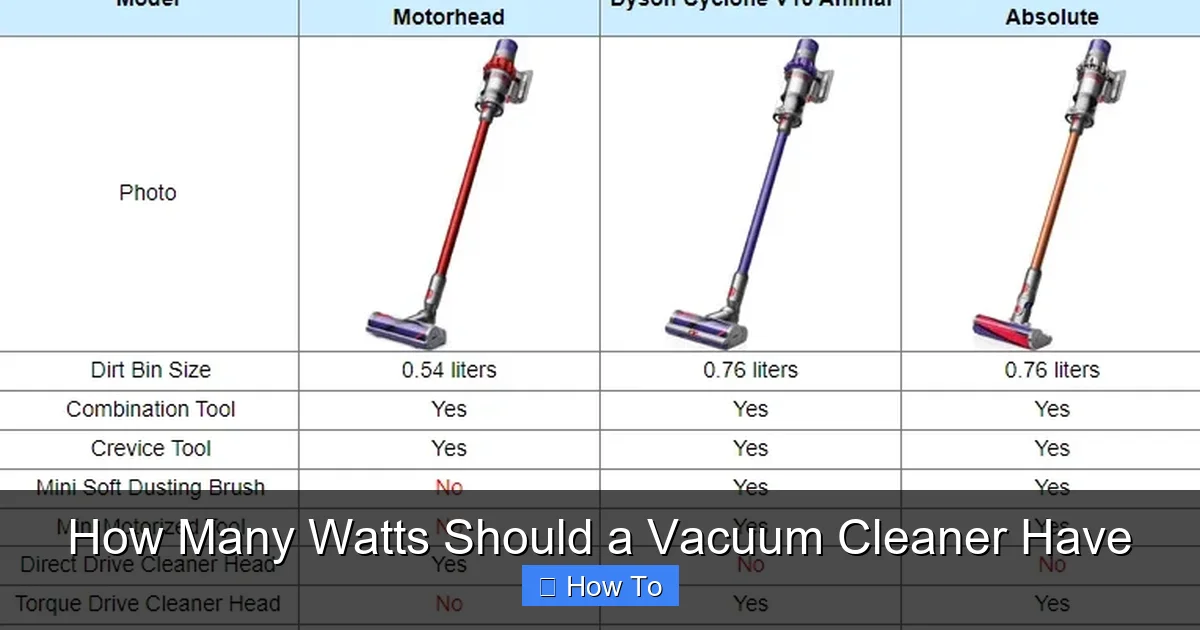
Step 2: Debunk the Myth: Higher Watts Don’t Always Equal Better Suction
This point is so crucial it deserves its own section. Many consumers are tricked into believing that more watts automatically translate to a better-performing vacuum. This is simply not true, and here’s why:
Visual guide about How Many Watts Should a Vacuum Cleaner Have
Image source: uploads-eu-west-1.insided.com
- Efficiency Matters: The efficiency of the motor and the design of the vacuum’s air pathways (hoses, filters, nozzles) play a far greater role in converting electrical energy into useful suction power. A poorly designed vacuum, even with a high-wattage motor, will struggle to pick up dirt effectively.
- Regulatory Differences: In some regions (like the EU), there are regulations that cap the maximum wattage for vacuum cleaners (e.g., 900 watts). Manufacturers in these regions have been forced to innovate, creating highly efficient vacuums that use less power but still deliver excellent cleaning results. This proves that high wattage isn’t a prerequisite for powerful cleaning.
- Focus on What it Picks Up: Ultimately, you want a vacuum that picks up dirt, dust, and debris efficiently. The number of watts it consumes to do that is secondary to its actual cleaning efficacy.
So, if watts aren’t the best indicator, what should you look for?
Step 3: Discover the True Metrics of Vacuum Cleaner Performance
To truly understand how powerful and effective a vacuum cleaner is, you need to look beyond the simple wattage number and examine these key specifications:
Air Watts (AW)
- What It Is: Air watts are arguably the best single indicator of a vacuum cleaner’s effective suction power. This metric measures the amount of power consumed by a vacuum to carry a unit of air through the nozzle. It combines airflow and suction pressure into a single, more meaningful number.
- Why It Matters: Higher air watts generally mean better cleaning performance because it indicates how efficiently the electrical power is converted into actual dirt-lifting power at the cleaning head.
- Typical Ranges:
- Handheld/Stick Vacs: 20-100 AW
- Mid-range Uprights/Canisters: 100-220 AW
- High-Performance Vacs: 220+ AW
Note: Not all manufacturers provide air watt ratings, which can make direct comparisons difficult.
Airflow (CFM or L/s)
- What It Is: Airflow measures the volume of air that the vacuum motor moves per minute. It’s often expressed in Cubic Feet per Minute (CFM) or Liters per Second (L/s).
- Why It Matters: Good airflow is crucial for picking up larger debris and for moving air through filters effectively. A vacuum with high airflow can quickly sweep up items like pet hair, crumbs, and larger dust bunnies.
- Ideal For: Primarily useful for cleaning hard floors and low-pile carpets where the debris isn’t deeply embedded.
Suction Pressure (kPa or Inches of Water Lift)
- What It Is: Suction pressure (also called sealed suction or static pressure) measures the vacuum’s ability to lift heavy debris and pull dirt from deep within carpets. It’s often expressed in kilopascals (kPa) or “inches of water lift.”
- Why It Matters: High suction pressure is vital for deep cleaning carpets, extracting embedded dirt, and effectively removing fine dust and allergens.
- Ideal For: Deep-pile carpets, pet hair removal, and allergy sufferers.
Motor Type and Efficiency
The quality and design of the motor itself greatly impact performance. Brushless motors, for instance, are often more efficient, quieter, and last longer than brushed motors, converting more electrical energy into suction rather than heat or noise.
Brush Roll Design (Agitation)
For carpets, the brush roll (or beater bar) is just as important as suction. It agitates carpet fibers, loosening embedded dirt, pet hair, and debris so that the suction can then lift them away. A powerful motor won’t clean a carpet well if the brush roll is ineffective or poorly designed.
Filtration System
A good filtration system (especially a sealed HEPA system) ensures that the dirt and allergens picked up by the vacuum remain trapped inside, preventing them from being released back into the air. This is vital for allergy and asthma sufferers.
Step 4: Assess Your Cleaning Needs to Determine Your Ideal Power
The “right” amount of power isn’t universal. It depends entirely on your home and your specific cleaning challenges. Ask yourself the following questions:
What are Your Floor Types?
- Hard Floors (Wood, Tile, Laminate): You generally need less raw suction power here. Good airflow to pick up surface debris and a soft brush roll (or no brush roll) to prevent scratches are more important. Mid-range air watts (100-150 AW) are usually sufficient.
- Low-Pile Carpets and Rugs: A balance of good airflow and moderate suction pressure, combined with an effective brush roll, is key. Around 150-200 AW is a good target.
- High-Pile Carpets and Thick Rugs: This is where high suction pressure and strong brush roll agitation become crucial. You’ll want a vacuum with higher air watts (200+ AW) and excellent deep-cleaning capabilities to extract deeply embedded dirt.
Do You Have Pets?
Pet hair can be incredibly challenging to remove. If you have furry friends, you’ll need:
- Strong Suction Pressure: To pull hair out of carpets and upholstery.
- Powerful Brush Roll: To effectively gather embedded hair.
- Good Filtration: To capture pet dander and allergens.
- Specialized Tools: Pet turbo brushes or tangle-free brush rolls are a huge plus.
Aim for a vacuum with at least 180-220+ AW and excellent agitation for pet-heavy homes.
Are Allergies or Asthma a Concern?
For allergy and asthma sufferers, the focus should shift to filtration and a sealed system rather than just raw power:
- HEPA Filtration: Essential for trapping microscopic particles like pollen, dust mites, and pet dander.
- Sealed System: Ensures that all the air entering the vacuum passes through the filter before being exhausted, preventing leaks of unfiltered air.
- Good Suction Pressure: To remove embedded allergens from carpets and upholstery.
A vacuum with moderate-to-high air watts (150-220+ AW) combined with a certified sealed HEPA system is ideal.
What Type of Vacuum Cleaner Do You Need?
Different vacuum types are designed for different tasks and have varying power profiles:
- Upright Vacuums: Generally offer strong suction and powerful brush rolls, making them excellent for carpeted homes. Often have higher air watt ratings.
- Canister Vacuums: Very versatile, good for both hard floors and carpets. Can offer very strong suction and airflow, often comparable to or exceeding uprights in air watts.
- Stick Vacuums: Lightweight and convenient for quick clean-ups and smaller spaces. They typically have lower wattage and air watt ratings (20-100 AW) but are sufficient for light tasks on hard floors.
- Robot Vacuums: Designed for hands-free daily maintenance. Their suction power is generally lower (10-50 AW) than traditional vacuums but is suitable for surface dirt.
- Handheld Vacuums: For small spills and spot cleaning. Very low wattage and air watts (5-30 AW).
How Big is Your Home?
For larger homes with extensive carpeting, a powerful upright or canister with higher air watts (200+ AW) will be more efficient. For smaller apartments or homes with mostly hard floors, a less powerful but more maneuverable stick or canister vacuum might be perfect.
Step 5: How to Choose the Right Vacuum Based on Actual Performance Metrics
Now that you understand the crucial factors, here’s a step-by-step approach to making your decision:
1. Assess Your Specific Needs (Recap)
Think about your floor types, presence of pets, allergy concerns, house size, and what vacuum style best fits your lifestyle.
2. Look for Air Watt Ratings First
If available, prioritize air watt (AW) ratings over simple wattage. This is your best single indicator of true cleaning power. Aim for:
- Light Cleaning/Hard Floors: 50-150 AW
- Mixed Floors/General Use: 150-220 AW
- Deep Carpet/Pet Hair/Large Homes: 220+ AW
3. Consider Airflow (CFM/L/s) and Suction Pressure (kPa)
If air watts aren’t provided, look for these individual metrics. High CFM indicates good debris pickup; high kPa indicates good deep cleaning. Seek a balance that matches your floor types.
4. Evaluate Design Features
- Brush Roll: Does it match your carpets? Is it adjustable for hard floors?
- Filtration: Is it a sealed HEPA system if allergies are a concern?
- Attachments: Does it come with tools for upholstery, crevices, and pet hair?
- Maneuverability: Is it easy to push and pull?
5. Read Independent Reviews and Watch Demonstrations
Don’t just trust manufacturer claims. Look for reviews from reputable sources and other users. Real-world tests will often reveal the true performance of a vacuum far better than any numbers on a box. Pay attention to how well it picks up different types of debris on various surfaces.
Troubleshooting Common Misconceptions
- “My high-watt vacuum isn’t powerful enough!”
This is a common complaint. The issue is rarely the wattage itself, but rather inefficiencies in the vacuum’s design. Check for:
- Clogged Filters: Dirty filters drastically reduce suction. Clean or replace them regularly.
- Blocked Hoses/Attachments: Hair, socks, or debris can create blockages.
- Worn Brush Roll: If the brush roll isn’t agitating effectively, dirt won’t be lifted.
- Poor Seal: Leaks in the system mean suction is lost before it reaches the nozzle.
- Inefficient Design: Some vacuums are simply not well-engineered to convert power into effective cleaning.
- “I need the highest wattage possible for deep cleaning.”
As discussed, focusing on air watts, suction pressure, and proper agitation is far more effective for deep cleaning than just high motor wattage. A 900-watt vacuum with a great design can easily outperform a 2000-watt vacuum with a poor design.
Conclusion: Power Smart, Not Just Power Hungry
When asking “how many watts should a vacuum cleaner have,” remember that it’s a bit of a trick question. While wattage tells you about electricity consumption, it’s not the ultimate measure of a vacuum’s cleaning prowess. Instead, empower yourself with knowledge about air watts, airflow, suction pressure, and crucial design elements like brush rolls and filtration.
By understanding your own cleaning needs and looking at the right metrics, you can confidently choose a vacuum cleaner that offers genuinely powerful and effective cleaning, without falling for the “higher watts are always better” trap. Happy cleaning!