
Understanding how many watts is good for a vacuum cleaner goes beyond just the number on the box. While motor wattage indicates electrical consumption, actual cleaning performance depends more on efficient design, powerful airflow (Air Watts), and overall suction capability. This comprehensive guide will help you decipher vacuum cleaner specifications, understand the critical metrics beyond mere watts, and confidently choose the best vacuum cleaner to meet your specific cleaning needs, ensuring excellent results without overpaying for unnecessary power.
How Many Watts Is Good for a Vacuum Cleaner
Choosing a new vacuum cleaner can feel like navigating a maze of numbers and features. One of the most common specifications you’ll encounter is “watts.” Many people instinctively believe that “more watts” equals “better suction” or “superior cleaning power.” While it’s a natural assumption, the truth about how many watts is good for a vacuum cleaner is a bit more nuanced.
This guide is designed to cut through the confusion. We’ll explore what vacuum cleaner watts actually mean, why they aren’t the sole indicator of performance, and what other crucial metrics you should consider. By the end, you’ll be equipped with the knowledge to make an informed decision, selecting a vacuum that perfectly suits your home and cleaning habits, ensuring effective results without wasting money on unnecessary power.
Key Takeaways
- Watts Primarily Measure Electrical Input: The stated wattage on a vacuum cleaner usually refers to the motor’s power consumption, not necessarily its effective cleaning power at the nozzle.
- Air Watts (AW) is a Better Indicator: For real cleaning performance, Air Watts is a superior metric as it measures the combination of airflow and suction power at the cleaning head.
- Design and Technology Are Crucial: A vacuum’s overall efficiency, nozzle design, brushroll, filtration system, and sealed airflow path significantly impact cleaning effectiveness, often more than raw motor wattage.
- Consider Your Cleaning Needs First: The “good” wattage (or Air Watts) depends on your flooring types (hard floors vs. deep carpets), presence of pet hair, and typical cleaning tasks.
- There’s No Single “Good” Wattage: What’s ideal for one home might be overkill or insufficient for another. Focus on performance metrics like Air Watts, CFM, and kPa relevant to *your* environment.
- Don’t Just Chase Higher Numbers: More watts don’t always translate to better cleaning; modern, efficient vacuums can perform exceptionally well with moderate power consumption, saving energy.
Quick Answers to Common Questions
What’s the best wattage for pet hair?
For pet hair, focus less on input watts and more on high Air Watts (200 AW+ for cordless, 350 AW+ for corded) combined with a powerful, often motorized, brushroll specifically designed to tackle pet fur.
Can a low-wattage vacuum clean well?
Yes, absolutely! Modern, well-designed vacuums with efficient airflow paths and effective brushrolls can deliver excellent cleaning performance with lower input wattage, especially on hard floors and low-pile carpets, saving energy.
Is higher Air Watts always better?
While higher Air Watts generally indicates more effective cleaning power, “better” depends on your needs. For light cleaning on hard floors, excessively high Air Watts might be overkill, increasing noise and energy consumption unnecessarily.
Do cordless vacuums list watts?
Cordless vacuums typically focus on battery voltage (e.g., 18V, 25.2V) and Air Watts, rather than input watts. Their power is limited by battery capacity and runtime.
How does filtration affect vacuum power?
A good filtration system, especially a HEPA filter in a sealed system, prevents dust from re-entering the air and protects the motor. However, very clogged filters can restrict airflow and reduce suction, so regular maintenance is crucial.
Understanding Vacuum Cleaner Watts
Let’s start by demystifying the most talked-about specification: watts. When you see a vacuum cleaner advertised with, say, 1200 watts, what exactly does that number represent?
What Do Watts Actually Measure?
In the simplest terms, watts (W) measure the electrical power consumed by the vacuum cleaner’s motor. It tells you how much electricity the motor draws from the wall outlet to operate. A higher wattage typically indicates a more powerful motor, capable of rotating the fan at a higher speed. This, in turn, *can* generate more airflow and suction.
However, think of it this way: a powerful car engine (high horsepower) doesn’t guarantee a fast car if the transmission is inefficient, the tires are flat, or the design is heavy. Similarly, a high-wattage vacuum motor is just one piece of the puzzle. It tells you about the *input* power, but not necessarily how effectively that power is converted into actual dirt-lifting capability at the nozzle.
The Difference Between Input Watts and Suction Watts (Air Watts)
This distinction is arguably the most critical piece of information when trying to understand how many watts is good for a vacuum cleaner.
Input Watts (Motor Watts):
This is the number most commonly displayed. It refers to the electrical power consumed by the motor, typically ranging from 600W to 2000W for corded models, and significantly less for cordless models (as they run on batteries with different power metrics).
Example: A vacuum cleaner proudly states “1600W Motor.” This means its motor draws 1600 watts of electricity.
Air Watts (AW):
This is where the rubber meets the road. Air Watts is a much more accurate and meaningful measurement of a vacuum cleaner’s actual cleaning power. It quantifies the amount of power the vacuum generates at the cleaning head, combining both airflow (how much air moves) and suction (how much lifting force is applied). It’s a derived unit, calculated from the vacuum’s airflow and static pressure. Essentially, it tells you how efficiently the vacuum converts electrical energy into cleaning energy.
Why Air Watts is Better: Imagine two vacuums, both with 1500 input watts. One has a poorly designed airflow path, leaky seals, and an inefficient nozzle. The other has an optimized design that channels air directly to the cleaning head with minimal loss. The second vacuum, despite having the same input watts, will have significantly higher Air Watts and, consequently, better cleaning performance.
Most reputable manufacturers will list Air Watts in their specifications, especially for high-performance models. For cordless stick vacuums, Air Watts are often the primary power metric provided.
Why “More Watts” Doesn’t Always Mean “Better Cleaning”
It’s tempting to think that a vacuum with 2000 watts must be better than one with 1200 watts. However, as we’ve discussed, raw input wattage doesn’t tell the whole story. Several other factors play a huge role in a vacuum’s effectiveness.
The Role of Design and Technology
Modern vacuum cleaner design has come a long way. Engineers focus on creating highly efficient systems that maximize airflow and suction while minimizing energy waste.
- Airflow Path Efficiency: A straight, sealed, and uncluttered airflow path from the nozzle to the collection bin ensures that the air being sucked in reaches the motor with minimal resistance or leakage. Poorly designed paths or leaks can drastically reduce effective suction, regardless of motor power.
- Nozzle and Brushroll Design: The cleaning head is where the action happens. A well-designed nozzle creates optimal suction contact with the floor. A powerful, efficient brushroll (often motorized) is crucial for agitating and lifting dirt, especially from carpets. Without an effective brushroll, even high suction can struggle to dislodge embedded grime.
- Cyclonic Technology: Many modern vacuums use cyclonic separation to spin dust and debris out of the airflow before it reaches the filter. This helps maintain consistent suction power as the dustbin fills and protects the motor and filters.
- Sealed Systems: A truly sealed vacuum ensures that all the air entering the machine passes through its filtration system before being expelled. This not only prevents allergens from escaping but also maintains stronger, more consistent suction by eliminating power loss through leaks.
Filtration Systems and Attachments
These components also significantly influence cleaning performance and overall value.
- Filtration: High-quality filters, especially HEPA (High-Efficiency Particulate Air) filters, are essential for trapping allergens and fine dust. While filters can slightly restrict airflow, a well-designed system balances filtration effectiveness with maintaining strong suction. A clogged or poor-quality filter will reduce performance regardless of how many watts your vacuum has.
- Attachments: The right tools for the job can dramatically improve cleaning. A specialized pet hair tool, a crevice tool for tight spaces, or a dusting brush can make a vacuum with moderate suction perform better than a high-wattage vacuum without the proper accessories for specific tasks.
Determining Your Ideal Vacuum Cleaner Wattage (and more)
Since “how many watts is good for a vacuum cleaner” doesn’t have a single, universal answer, the next step is to understand *your* specific needs.
Consider Your Home Size and Type of Flooring
Your living environment plays a huge role in determining the right vacuum for you.
- Small Apartments/Hard Floors: If you live in a smaller space primarily with hard floors (wood, laminate, tile), you likely don’t need a vacuum with extremely high Air Watts. Good airflow for picking up light debris and gentle brushrolls are more important. A powerful motor might be overkill and just consume more energy.
- Large Homes/Mixed Flooring: For larger homes with a mix of hard floors and low-to-medium pile carpets, a moderately powerful vacuum with good Air Watts (200-300 AW for corded, 150-200 AW for cordless) and an effective brushroll should suffice.
- Homes with Thick Carpets/Rugs: Deep-pile carpets and area rugs demand significant power to dislodge embedded dirt. Here, you’ll want a vacuum with higher Air Watts (300+ AW for corded, 200+ AW for cordless) and a robust, often motorized, brushroll.
Evaluate Your Cleaning Needs
Beyond flooring, consider specific challenges your home might present.
- Pet Hair: Pet owners know the struggle. Look for vacuums specifically designed for pet hair, which typically feature strong suction, anti-tangle brushrolls, and specialized pet tools. High Air Watts are beneficial here.
- Allergies/Asthma: For allergy sufferers, a vacuum with a sealed system and a true HEPA filter is paramount. This ensures that allergens are trapped inside and not recirculated into the air.
- Quick Clean-ups vs. Deep Cleaning: If you mostly need a vacuum for quick, daily tidy-ups, a lightweight cordless stick vacuum with moderate Air Watts might be perfect. For thorough, weekly deep cleans, a more powerful upright or canister vacuum might be a better choice.
Look Beyond Watts: Key Performance Indicators
To truly understand a vacuum’s cleaning prowess, look for these metrics in product specifications:
- Air Watts (AW): As discussed, this is the most holistic measure of cleaning power. A good range for general household cleaning is typically 150-250 AW for cordless models and 200-500+ AW for corded models.
- CFM (Cubic Feet per Minute) or L/s (Liters per Second): This measures the volume of air that moves through the vacuum per minute (or second). High CFM indicates good airflow, which is excellent for picking up larger debris like cereal, pet food, or dust bunnies.
- kPa (Kilopascals) or Inches of Water Lift: This measures the static suction pressure. High kPa indicates strong lifting power, crucial for pulling dirt out of thick carpets or lifting heavy particles.
The ideal vacuum achieves a good balance of both high CFM and high kPa. High CFM with low kPa might pick up light debris but struggle with embedded dirt. High kPa with low CFM might lift heavy dirt slowly. A balance means efficient and thorough cleaning.
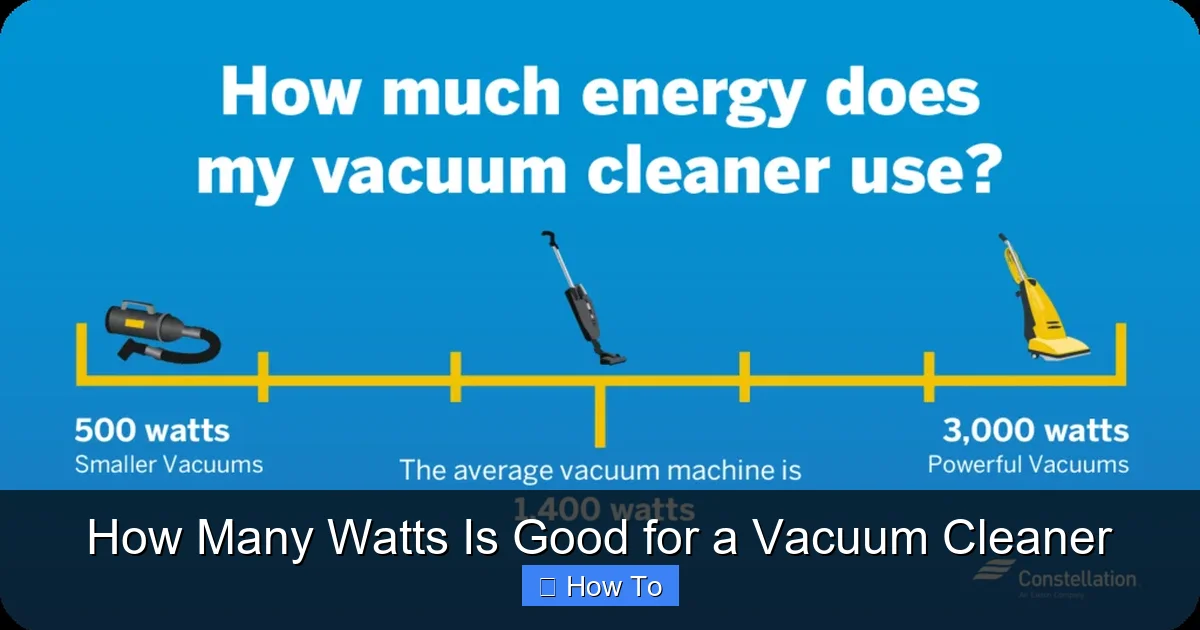
Visual guide about How Many Watts Is Good for a Vacuum Cleaner
Image source: blog.constellation.com
Corded vs. Cordless Vacuums and Power Consumption
The power source also impacts wattage and performance.
- Corded Vacuums: Generally offer consistent, unlimited power. They often boast higher input watts and Air Watts, making them suitable for extensive deep cleaning. Their power isn’t constrained by battery life.
- Cordless Vacuums: Prioritize convenience and portability. While older models had lower power, modern cordless vacuums have made significant strides, often delivering impressive Air Watts (e.g., 150-250 AW) in boost mode. However, their high power modes drain batteries quickly, so “consistent” power is limited by runtime. Their “wattage” isn’t typically advertised in the same way as corded units, focusing instead on battery voltage and Air Watts.
Finding the “Sweet Spot” for Watts (and Suction Power)
There isn’t a magic number for “how many watts is good for a vacuum cleaner” that applies to everyone. Instead, consider these general guidelines, always prioritizing Air Watts where available.
General Guidelines for Different Scenarios
For Light Cleaning & Hard Floors Only:
- Air Watts: 100-150 AW (cordless stick)
- Input Watts: 600-900W (corded, if efficient)
- Focus on lightweight design, good maneuverability, and gentle brushrolls or hard floor attachments.
For Mixed Flooring & Moderate Cleaning (most households):
- Air Watts: 150-250 AW (cordless stick), 200-350 AW (corded upright/canister)
- Input Watts: 900-1400W (corded)
- This range offers a good balance of power for both hard floors and low-to-medium pile carpets, handling general dust, dirt, and some pet hair.
For Deep Cleaning, Thick Carpets & Pet Hair:
- Air Watts: 200-300+ AW (high-end cordless), 350-500+ AW (corded upright/canister)
- Input Watts: 1400-2000W (corded)
- These vacuums provide the strong suction and powerful brushroll agitation needed to tackle embedded dirt, stubborn pet hair, and plush carpets effectively.
When Less Wattage Can Be Enough (Energy Efficiency)
It’s important to remember that higher wattage also means higher electricity consumption. Modern advancements mean that many vacuums are far more energy-efficient than older models. An intelligently designed 1000-watt vacuum today might outperform an inefficient 1800-watt vacuum from a decade ago. Opting for a vacuum with appropriate (not excessive) power for your needs can also lead to modest energy savings over time. Don’t fall into the trap of believing that only the highest wattage will deliver results.
Practical Tips for Choosing the Best Vacuum
Beyond understanding the numbers, here are some actionable tips to help you make your final decision.
Read Reviews and Check Specifications
Customer reviews offer invaluable real-world insights into a vacuum’s performance, durability, and user-friendliness. Look for comments specifically about suction power, how it handles different floor types, and its effectiveness with pet hair if that’s a concern. Always scrutinize the specifications for Air Watts, CFM, and kPa, as these tell you more about performance than input watts alone.
Test It Out If Possible
If you can, try out a vacuum in a store. Feel its weight, check its maneuverability, listen to its noise level, and see how easy it is to empty the dustbin or change attachments. These practical considerations significantly impact your satisfaction with the vacuum over time.
Don’t Forget Maintenance
Regardless of its initial power, a vacuum’s performance will degrade if not properly maintained. Regularly clean or replace filters, check the brushroll for tangled hair or debris, and empty the dustbin before it gets too full. A well-maintained vacuum will consistently deliver optimal suction, regardless of its wattage.
Common Misconceptions About Vacuum Power
Let’s quickly debunk a few persistent myths:
- Myth: Higher input watts always means stronger suction.
Reality: Not necessarily. Input watts tell you about power *consumption*, not power *delivery* at the nozzle. An inefficient 1800W vacuum might have weaker actual suction than an efficient 1200W model. - Myth: All vacuums with the same watts perform equally.
Reality: False. Design, sealing, filtration, and nozzle efficiency cause huge variations in performance even among vacuums with identical input wattage. - Myth: Only suction power matters; airflow is secondary.
Reality: Both are crucial. Suction lifts, but airflow carries. You need strong suction to pull dirt from carpets and high airflow to transport it efficiently into the dustbin. Air Watts combines both into one useful metric.
Conclusion
Navigating the world of vacuum cleaner specifications, particularly “how many watts is good for a vacuum cleaner,” requires a bit of education. By now, you should understand that while motor wattage plays a role, it’s not the ultimate determinant of cleaning power. Instead, focus on performance metrics like Air Watts, CFM, and kPa, and consider how well the vacuum’s design, filtration, and attachments align with your specific home environment and cleaning needs.
Armed with this knowledge, you can confidently choose a vacuum cleaner that offers the perfect balance of power, efficiency, and features, ensuring your home stays sparkling clean without getting bogged down by misleading numbers. Happy vacuuming!