
A vacuum cleaner’s wattage typically ranges from 500 to 2000 watts, indicating the electrical power it consumes. This power rating is a key factor in understanding how much electricity an appliance uses, but it doesn’t directly measure cleaning performance. While higher wattage often suggests a more powerful motor, effective cleaning also depends on design, suction technology, and airflow efficiency.
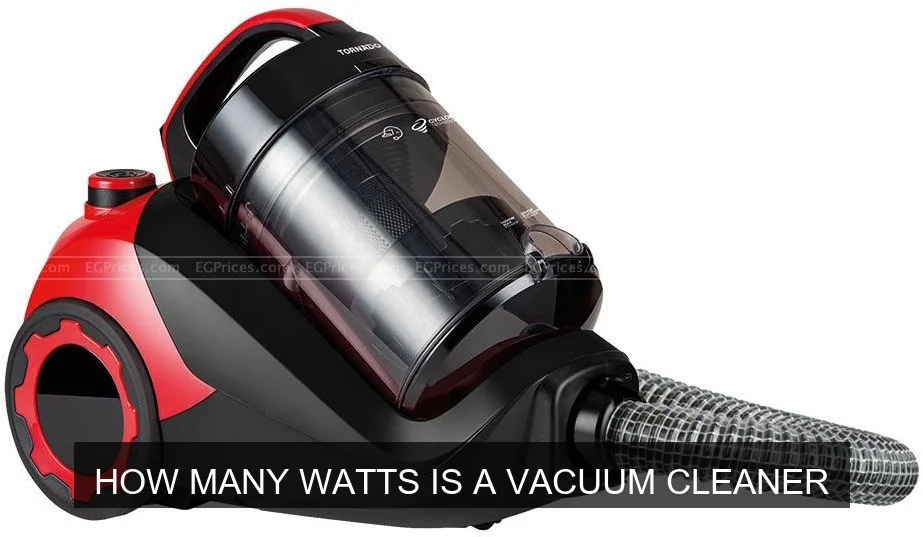
Image source: Egprices
📋 Table of Contents
- 🔹 Understanding Vacuum Cleaner Wattage
- 🔹 What is Wattage in a Vacuum Cleaner?
- 🔹 The Average Wattage Range
- 🔹 Why Does Wattage Matter for a Vacuum Cleaner?
- 🔹 How Wattage Relates to Performance (and How It Doesn’t)
- 🔹 Benefits of Understanding Vacuum Cleaner Watts
- 🔹 Common Misconceptions About Vacuum Wattage
- 🔹 Practical Tips for Vacuum Cleaner Power and Usage
- 🔹 Frequently Asked Questions About Vacuum Cleaner Wattage
- 🔹 Conclusion: The Bigger Picture of Vacuum Power
Understanding Vacuum Cleaner Wattage
Ever wondered about the numbers on your vacuum cleaner or puzzled over what “watts” actually means for a cleaning appliance? You’re in good company! Many people look at a vacuum cleaner’s wattage and wonder if it directly translates to cleaning power. It’s a common question, and understanding the answer can help you make sense of how these machines work.
This article will dive deep into what wattage means for a vacuum cleaner. We’ll explore the typical range of watts you might see, explain why this measurement is important, and clear up some common misunderstandings. By the end, you’ll have a clear picture of how much electrical power a vacuum cleaner uses and what that tells you about its operation.
What is Wattage in a Vacuum Cleaner?
Simply put, wattage is a measure of electrical power consumption. When you see a vacuum cleaner rated at, say, 1200 watts, it means the motor inside is designed to draw 1200 watts of electricity when it’s running. It’s similar to how light bulbs are rated in watts – a 60-watt bulb uses 60 watts of power.
For a vacuum cleaner, this power is primarily used to operate the motor. The motor then spins a fan or impeller, which creates the suction that pulls dirt and debris into the machine. So, in essence, wattage tells you how much electrical energy the vacuum needs to do its job.
It’s important to remember that wattage measures input power, not necessarily output cleaning efficiency. Think of it like a car’s horsepower. A car with more horsepower certainly has a more powerful engine, but its actual speed also depends on aerodynamics, weight, and driver skill. Similarly, a vacuum’s cleaning ability involves more than just its raw wattage.
The Average Wattage Range
Vacuum cleaners come in many shapes and sizes, and their wattage can vary quite a bit. You’ll find different power ratings depending on the type of vacuum and its intended use. Here’s a general idea of what you might expect:
- Small handheld vacuums: These often have lower wattages, typically ranging from 50 to 200 watts. They’re designed for quick clean-ups and don’t need intense power.
- Cordless stick vacuums: While many cordless models use battery power, if you look at their motor’s power consumption in watts, it might range from 150 to 500 watts. They prioritize convenience and lighter weight.
- Upright and canister vacuums: These are your more traditional, full-sized vacuums. Their wattage commonly falls between 1000 and 2000 watts. This higher range allows for stronger motors suitable for whole-house cleaning.
- Wet/Dry shop vacuums: Industrial or garage vacuums can be very powerful, sometimes going up to 2000 watts or even higher, especially for heavy-duty tasks.
It’s worth noting that energy regulations in some regions have led to caps on vacuum cleaner wattage. For example, in the European Union, new vacuum cleaners are limited to 900 watts. This shows that manufacturers are increasingly focusing on efficiency rather than just raw power consumption.
Why Does Wattage Matter for a Vacuum Cleaner?
While not the only factor, understanding wattage is important for a few reasons:
- Electricity Consumption: A higher wattage vacuum will consume more electricity. If you use your vacuum frequently, a very high wattage model could contribute more to your electricity bill over time compared to a lower wattage, equally effective model.
- Circuit Load: Knowing the wattage helps you understand the electrical load your vacuum puts on your home’s circuits. Plugging a very high wattage vacuum into an overloaded circuit could trip a breaker. Most household circuits can handle 1500-2000 watts safely, but it’s always good to be aware.
- Initial Indication of Power: Generally, a higher wattage vacuum cleaner has a more powerful motor. A more powerful motor can generate greater suction, which is often desirable for deeper cleaning of carpets and tackling tough messes. However, this isn’t a guaranteed one-to-one relationship.
- Design and Engineering: Manufacturers often design higher wattage vacuums for heavy-duty tasks, suggesting they’re built to handle more demanding cleaning jobs.
So, while it’s not the be-all and end-all, wattage gives you a baseline understanding of the machine’s electrical demands and its potential motor strength.
Is a High Wattage Vacuum Cleaner Necessary?
Not always! The “necessity” of a high-wattage vacuum depends entirely on your specific cleaning needs and priorities. For light cleaning on hard floors, a lower-wattage, more energy-efficient model might be perfectly sufficient and even preferred due to its lighter weight and lower energy use.
However, if you have thick carpets, pets that shed heavily, or frequently deal with stubborn dirt, a vacuum with a more powerful motor (and thus likely higher wattage) could be more effective. The key is to match the vacuum’s capabilities, including its wattage, to the tasks you need it to perform.
How Wattage Relates to Performance (and How It Doesn’t)
It’s easy to assume that more watts automatically mean better cleaning. This isn’t always the case. Here’s why:
The wattage primarily drives the vacuum’s motor, which creates a vacuum (low pressure) inside the machine, leading to suction. But suction alone doesn’t equal superior cleaning. Several other factors play a huge role:
- Airflow (Air Watts): This is a more direct measure of actual cleaning power. Air Watts combine suction and airflow to show how much air and debris a vacuum can move. A vacuum with efficient design can have excellent airflow and suction even with a moderate wattage.
- Brush Roll Design: For carpets, a powerful brush roll (sometimes called a beater bar) is crucial. It agitates the carpet fibers, loosening dirt and pet hair, making it easier for the suction to pick them up. A strong motor helps power these brushes effectively.
- Filtration System: A good filtration system, like HEPA filters, ensures that the air expelled from the vacuum is clean. This doesn’t directly relate to wattage but is vital for overall performance, especially for allergy sufferers.
- Sealing and Design Efficiency: A well-sealed vacuum system prevents air leaks, ensuring that all the suction power is directed where it’s needed. Efficient ducting and nozzle design also play a big part in how effectively the vacuum can pick up dirt, regardless of the motor’s raw power.
- Attachments and Tools: Different attachments are designed for specific tasks (crevices, upholstery, pet hair). The effectiveness of these tools contributes significantly to the vacuum’s overall cleaning utility.
Think of it this way: two cars can have the same horsepower, but one might be much faster if it’s lighter and more aerodynamic. Similarly, two vacuums with the same wattage might clean very differently due to their design.
“Wattage tells you how much electricity a vacuum consumes, but true cleaning performance is a symphony of motor power, airflow, brush design, and efficient engineering.”
Benefits of Understanding Vacuum Cleaner Watts
Knowing about vacuum cleaner wattage offers several practical advantages:
- Energy Awareness: You become more aware of how much electricity your appliance is using. This can help you make more informed choices if energy efficiency is a priority for you.
- Circuit Safety: You’re better equipped to avoid overloading electrical circuits in your home. This is especially useful if you’re using other high-power appliances simultaneously.
- Informed Decision-Making: While not the only factor, wattage provides one piece of the puzzle when evaluating a vacuum cleaner’s potential power. It helps you understand what’s under the hood, so to speak.
- Comparing Models (with a caveat): When comparing two similar types of vacuums from the same brand, a higher wattage might indeed indicate a more powerful motor. However, this comparison breaks down quickly across different brands or vacuum types due to varying designs and efficiencies.
It helps you move beyond simply seeing a number and truly understanding its implications for both performance and energy use.
Common Misconceptions About Vacuum Wattage
Let’s clear up some myths that often circulate about vacuum cleaner wattage:
- “Higher watts always means better suction.” As we’ve discussed, this is not a direct correlation. Efficient design can make a lower-wattage vacuum perform as well as, or even better than, a higher-wattage one. Airflow (measured in CFM or Air Watts) is a much better indicator of suction power.
- “A powerful vacuum must have high wattage.” Not necessarily. Modern engineering focuses on optimizing performance while minimizing energy consumption. Many excellent vacuums deliver fantastic cleaning results with moderate wattage thanks to advanced motor technology and aerodynamic design.
- “Wattage directly measures cleaning ability.” Wattage measures electricity consumption. Cleaning ability is a complex combination of suction, airflow, brush agitation, filtration, and overall design.
- “All watts are created equal.” The quality and efficiency of a vacuum’s motor, even at the same wattage, can vary. A well-engineered motor can convert more electrical energy into useful mechanical work (like spinning the fan) than a less efficient one.
Understanding these points helps you look beyond just the wattage number and consider the vacuum cleaner as a whole system.
Practical Tips for Vacuum Cleaner Power and Usage
Here are some practical tips related to vacuum cleaner power and usage:
- Look Beyond Wattage: When researching vacuums, also look for “Air Watts” or “CFM” (Cubic Feet per Minute) ratings if available. These measurements give you a better idea of actual cleaning power.
- Consider Your Cleaning Needs: For light daily cleaning, a lower-wattage, more nimble vacuum might be ideal. For deep cleaning of dense carpets, you might appreciate a model designed for higher power and stronger agitation.
- Check for Energy Efficiency Ratings: Some regions or manufacturers provide energy efficiency ratings. These can give you a better overall picture of a vacuum’s energy consumption.
- Maintain Your Vacuum: Regular maintenance, like cleaning filters and emptying the dustbin, helps your vacuum maintain its optimal performance. A clogged filter can significantly reduce suction, making even a high-wattage vacuum seem less effective.
- Use the Right Attachments: Using the correct nozzle or attachment for the surface you’re cleaning (e.g., a bare floor tool on hard floors, a power brush on carpet) will maximize cleaning efficiency regardless of wattage.
- Be Mindful of Your Home’s Electrical System: If you’re using a very high-wattage vacuum, avoid plugging it into an extension cord that is too thin or sharing the outlet with other high-power appliances to prevent circuit overload.
Frequently Asked Questions About Vacuum Cleaner Wattage
What is a good wattage for a vacuum cleaner?
A “good” wattage really depends on your cleaning tasks and priorities. For most household use, a vacuum in the range of 1000 to 1600 watts is often sufficient. However, for efficient models with great design, even 500-900 watts can provide excellent cleaning power, especially on hard floors. It’s more about the overall design and efficiency, not just the raw wattage number.
Do more watts mean better suction?
Not directly or always. More watts generally mean a more powerful motor, which can generate more suction. However, a vacuum’s overall suction power and cleaning ability also depend heavily on its internal design, airflow pathways, filtration system, and brush roll effectiveness. An efficiently designed 900-watt vacuum might have better actual cleaning performance than a poorly designed 1500-watt one.
How do air watts compare to motor watts?
Motor watts (the standard wattage we’ve discussed) measure the electrical power consumed by the vacuum’s motor. Air watts, on the other hand, are a measure of a vacuum’s actual cleaning power, combining both airflow (how much air moves) and suction (how strong the pull is). Air watts give a more accurate representation of how much power is effectively used to pick up dirt, rather than just how much electricity the motor draws.
Can a vacuum cleaner use too many watts for a standard outlet?
Most standard household electrical outlets in North America are on 15-amp circuits, which can safely handle up to about 1800 watts (120 volts * 15 amps = 1800 watts). In other regions, like Europe, circuits might be 10 amps or 16 amps, dictating similar limits. A vacuum cleaner typically drawing 1200-2000 watts will usually be fine on its own, but running it simultaneously with other high-wattage appliances (like a microwave, hair dryer, or toaster) on the same circuit could trip a breaker. Modern vacuums rarely exceed this limit to ensure home electrical safety.
Why are some modern vacuums lower wattage than older models?
This is largely due to advancements in motor technology and overall vacuum design. Modern motors can be more efficient, converting more electrical power into useful suction and airflow with less waste heat. Additionally, better sealing, optimized airflow paths, and improved brush roll designs mean that less raw power is needed to achieve excellent cleaning results. Regulatory changes in some regions (like the EU’s wattage caps) have also pushed manufacturers to innovate for efficiency.
Conclusion: The Bigger Picture of Vacuum Power
So, how many watts is a vacuum cleaner? The answer usually falls between 500 and 2000 watts, depending on the type and design. This wattage figure is a helpful indicator of the electrical power an appliance consumes, and it often hints at the motor’s strength.
However, it’s crucial to remember that wattage is just one piece of the puzzle. While a more powerful motor (and thus higher wattage) can certainly contribute to better cleaning, the true effectiveness of a vacuum cleaner is a sophisticated combination of its motor power, efficient design, strong airflow, effective brush agitation, and filtration system. For optimal cleaning, consider the whole package, not just the watts.
Understanding wattage helps you manage energy use and ensures you’re not overloading your home’s electrical circuits. But when it comes to picking up dirt, airflow and smart engineering often speak louder than watts alone. This knowledge empowers you to understand your appliances better and appreciate the clever ways technology helps keep our homes clean.