
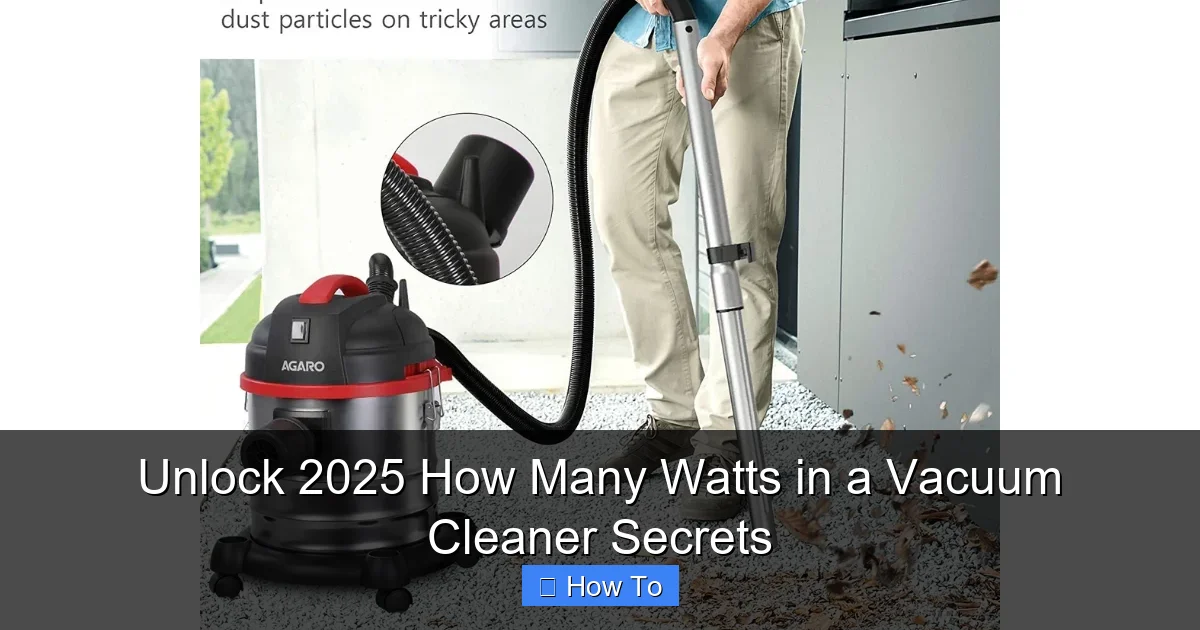
In 2025, understanding how many watts in a vacuum cleaner is crucial for smart buying. This guide demystifies wattage, revealing that raw power isn’t the only metric. We’ll explore airflow, suction, and air watts as key indicators of cleaning performance, especially with modern energy-efficient designs and advanced battery technology. Prepare to make an informed decision for a cleaner home.
Unlock 2025 How Many Watts in a Vacuum Cleaner Secrets
Welcome to the ultimate 2025 guide on understanding vacuum cleaner power! You’re here because you want to make an informed decision about your next cleaning companion. Perhaps you’re looking at a sleek new model and wondering, “How many watts in a vacuum cleaner are truly necessary?” Or maybe you’re comparing specifications and feeling a bit lost. You’ve come to the right place.
Gone are the days when a bigger number on the “watts” label automatically meant a better vacuum. In 2025, technology has evolved significantly, making vacuum cleaners more efficient, smarter, and often, more powerful with fewer watts than their predecessors. This guide will cut through the noise, demystify the numbers, and equip you with the knowledge to choose the perfect vacuum for your home. We’ll explore what watts really mean, what other metrics matter more, and how to assess your needs in today’s market. Let’s dive in!
Key Takeaways
- Watts Don’t Tell the Whole Story: In 2025, simple wattage (input power) no longer directly equals cleaning effectiveness. Focus on metrics like “air watts,” airflow (CFM), and suction power (kPa).
- Efficiency is King: Modern vacuum cleaners achieve superior cleaning with lower wattage thanks to advanced motor designs, optimized airflow paths, and intelligent brush heads. High wattage often indicates older, less efficient technology.
- Cordless Revolution: Battery-powered stick and robot vacuums dominate the market. For these, consider motor watts, but prioritize battery run-time, charge time, and consistent power delivery over the full charge cycle.
- Match Power to Your Needs: Heavy pet hair, thick carpets, or large homes demand different power profiles than small apartments with hard floors. Assess your specific cleaning challenges before choosing.
- Understand Different Wattage Types: Be aware of input watts (total power consumed), motor watts (power delivered to the motor), and air watts (actual cleaning power at the nozzle). Air watts are the most important for performance.
- Regulations Drive Innovation: Global energy efficiency regulations have pushed manufacturers to innovate, creating vacuums that are both powerful and energy-saving, often with lower input wattage.
Quick Answers to Common Questions
What’s the best wattage for a vacuum cleaner?
There’s no single “best” wattage. In 2025, look for high air watts (150-300 AW for corded, 80-200 AW for cordless boost modes) rather than just input watts. Efficiency and effective cleaning power are key.
Do more watts mean better suction?
Not always. While some power is needed, modern vacuum cleaners achieve excellent suction with lower input watts due to improved motor efficiency, sealed systems, and optimized airflow paths. Focus on kPa and air watts instead.
How many watts do most stick vacuums have?
Most cordless stick vacuums in 2025 have motor wattages ranging from 100W to 300W. More important than this number is their air watt rating (50-200 AW on max settings) and consistent battery performance.
Is 600W enough for a vacuum cleaner?
Yes, absolutely! Many high-performing corded vacuums in 2025 operate very effectively within the 600W-900W range (input power). Thanks to modern engineering, a 600W vacuum can deliver excellent cleaning power and suction for most homes.
How does battery life relate to watts for cordless vacuums?
For cordless models, higher motor watts often mean shorter battery life at max power. You’ll need to balance desired cleaning power (air watts) with the required run-time for your cleaning tasks. Look for models with good battery management systems that provide consistent power.
Understanding Watts in the 2025 Vacuum Cleaner Landscape
Before we get into the nitty-gritty of choosing a vacuum, let’s clarify what “watts” actually represent. When you see a wattage number on a vacuum cleaner, it typically refers to the electrical power the appliance *consumes* from the wall outlet (input watts). It’s a measure of energy consumption, not necessarily a direct indicator of cleaning power or suction.
In 2025, this distinction is more important than ever. Thanks to advancements in motor design, airflow efficiency, and nozzle technology, modern vacuums can achieve incredible cleaning results with significantly less power consumption than models from even a decade ago. Think of it like cars: a powerful engine doesn’t guarantee efficiency or performance without good aerodynamics and smart engineering. The same applies to vacuum cleaners.
The Shift from Raw Watts to Efficiency
Historically, consumers often looked for vacuums with 2000W or even 2400W. These high numbers were often associated with powerful suction. However, in many regions, including the European Union, regulations have been in place for years, limiting the maximum input power of vacuum cleaners (currently capped at 900W for corded models since 2017). This wasn’t to make vacuums weaker, but to drive innovation towards more energy-efficient designs.
What has been the result? Manufacturers have developed highly efficient digital motors, improved sealed systems, and smarter brush roll designs that maximize airflow and suction where it counts – at the floor. So, a 900W vacuum cleaner today can often outperform an older 2000W model in terms of actual dirt pickup, all while using less electricity. This is a crucial secret when considering how many watts in a vacuum cleaner you need in 2025.
Beyond Watts: The Metrics That Truly Matter in 2025
If input watts aren’t the sole indicator of cleaning power, what should you be looking for? In 2025, several other specifications provide a much clearer picture of a vacuum’s effectiveness.
Air Watts: The Golden Standard for Cleaning Power
This is arguably the most important metric for understanding cleaning performance. Air watts measure the effective power a vacuum cleaner produces at the nozzle, taking into account both airflow (how much air it moves) and suction (how hard it pulls). A vacuum might have high suction but low airflow, or vice-versa; air watts combine these to give you a true sense of dirt-lifting capability.
* Why it matters: A higher air watt rating means better cleaning power. For corded vacuums, you might see ratings between 100-300 AW. For cordless stick vacuums, the range is typically 50-200 AW, often with a “max” or “boost” setting for higher numbers.
Airflow (CFM or L/s): Moving the Dirt
Airflow measures the volume of air moving through the vacuum’s system per minute (Cubic Feet per Minute – CFM) or per second (Liters per second – L/s). Good airflow is essential for picking up larger debris like cereal, pet hair, and dust bunnies. Without sufficient airflow, dirt might be lifted but struggle to travel efficiently into the dustbin.
* Why it matters: High airflow is crucial for effective pickup, especially on hard floors and for larger debris.
Suction Power (kPa or Inches of Water Lift): Lifting the Embedded Dirt
Suction power measures the force with which the vacuum pulls air. It’s often expressed in kilopascals (kPa) or “inches of water lift.” High suction is vital for deep cleaning carpets, extracting embedded dirt, and lifting stubborn debris.
* Why it matters: Strong suction helps lift dirt from deep within carpet fibers or crevices. For cordless vacuums, you might see kPa ratings between 10-30 kPa.
Motor Efficiency and Design
Modern vacuum cleaners, especially premium models, often feature digital inverter motors or brushless motors. These are significantly more efficient, quieter, and durable than older carbon-brush motors. They can generate more power per watt consumed and deliver consistent performance.
Brush Head and Nozzle Design
The design of the brush head and nozzle plays a massive role in how effectively a vacuum cleans, regardless of its raw power. Advanced brush rolls (like those with anti-tangle technology or self-adjusting heights), LED headlights, and specialized nozzles can make a “lower wattage” vacuum outperform a “higher wattage” one with a basic head.
Step-by-Step Guide: Choosing the Right Wattage/Power for Your 2025 Vacuum
Let’s walk through how to choose a vacuum cleaner in 2025, focusing on true performance rather than just misleading wattage numbers.
Step 1: Assess Your Cleaning Needs and Home Environment
Before looking at any specs, think about your home. This is the foundational step for understanding how many watts in a vacuum cleaner you actually need.
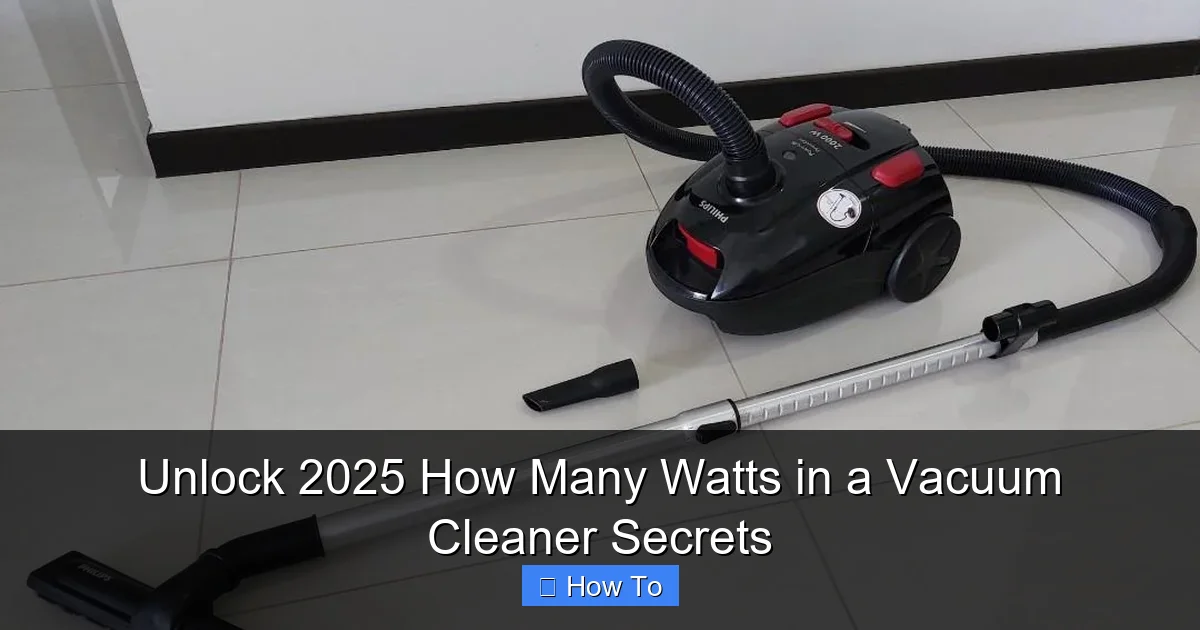
Visual guide about Unlock 2025 How Many Watts in a Vacuum Cleaner Secrets
Image source: media.karousell.com
- Floor Types: Do you have mostly hard floors (wood, tile, laminate), low-pile carpets, high-pile carpets, or a mix? Thick carpets generally require more powerful suction and effective brush agitation.
- Pet Hair: Dealing with pet hair is a significant challenge. If you have furry friends, you’ll need strong suction and a specialized brush roll that won’t tangle easily.
- Home Size: A small apartment might be fine with a compact stick vacuum, while a large multi-story house might benefit from a powerful upright or canister, perhaps supplemented by a robot vacuum.
- Cleaning Frequency: Daily quick clean-ups vs. weekly deep cleaning sessions.
- Allergies: If anyone in your household has allergies, look for advanced HEPA filtration, which ensures fine particles are trapped.
Step 2: Understand Vacuum Types and Their Power Profiles
Different vacuum types inherently have different power requirements and usage patterns.
- Corded Upright/Canister Vacuums: These traditionally offer the most consistent and powerful suction, drawing continuous power from an outlet. In 2025, their input wattage typically ranges from 500W to 900W (due to regulations in many markets), but their air watts can be very high (150-300 AW). Ideal for deep cleaning large homes, especially with carpets and pet hair.
- Cordless Stick Vacuums: These are incredibly popular for their convenience and versatility. Their “motor watts” (power supplied to the motor) can range from 100W to 300W. Instead of constant input power, you’ll be looking at battery runtime (e.g., 20-60 minutes), charge time, and the consistency of suction as the battery drains. Air watts for these can range from 50-200 AW on max settings. Great for quick clean-ups, hard floors, and light-to-medium carpet cleaning.
- Robot Vacuums: Designed for autonomous daily maintenance. Their input power is very low (e.g., 20W-70W) as they prioritize battery life and efficiency for continuous operation. Cleaning power is lower than traditional vacuums, but they make up for it in convenience. Look at their kPa suction rating and brush design.
- Handheld Vacuums: Small and portable, typically 20W-150W. Ideal for quick spills, car interiors, and small messes.
Step 3: Look Beyond Stated Watts – Focus on Air Watts, Suction, and Airflow
This is where the “secrets” truly come alive. When comparing models in 2025:
- Prioritize Air Watts: If a manufacturer provides this spec, use it as your primary measure of cleaning power. A higher number is better.
- Check Suction (kPa) and Airflow (CFM): These individual metrics give you insights into the vacuum’s ability to lift embedded dirt and move larger debris, respectively. Compare these across similar models.
- Read Reviews: What do real users say about cleaning performance on your specific floor types or with pet hair? User experience often provides the most accurate insight into a vacuum’s true capabilities.
- Evaluate Brush Head Technology: Is it optimized for multiple surfaces? Does it have anti-tangle features? Is it motorized? A well-designed brush head can significantly enhance cleaning, making the most of the available power.
- Consider Filtration: HEPA filters are essential for allergy sufferers. A sealed system ensures that allergens aren’t simply blown back into the air.
Step 4: Consider Energy Efficiency and Environmental Impact
In 2025, sustainability is a key factor. Lower input wattage doesn’t just mean lower electricity bills; it also means a smaller environmental footprint. Manufacturers are increasingly using recycled materials and designing for repairability, so consider these aspects too.
Step 5: Read Expert Reviews and Compare Models
Once you’ve narrowed down your choices based on your needs and understanding of the metrics, delve into detailed expert reviews from reputable consumer organizations. Compare several models side-by-side, focusing on their real-world performance, durability, and user-friendliness.
Step 6: Test Drive (If Possible)
If you’re able to visit a store, try out the vacuum. Feel its weight, maneuverability, and listen to its noise level. While you can’t truly test its cleaning power in a store, you can get a sense of its ergonomics.
Common Wattage Ranges for 2025 Vacuum Cleaners
Here’s a rough idea of what to expect for input/motor watts in 2025, but remember to prioritize air watts and other performance metrics:
* Corded Upright/Canister: Typically 500W – 900W (input power). Their effective air watts can be 150-300 AW.
* Cordless Stick Vacuums: Motor power often stated as 100W – 300W. Their air watts can range from 50 AW to 200 AW on boost mode.
* Robot Vacuums: Very low input power, typically 20W – 70W, optimized for long battery life.
* Handheld Vacuums: 20W – 150W, designed for quick spot cleaning.
Troubleshooting Common Misconceptions About Vacuum Cleaner Watts
You might still have some lingering questions or assumptions. Let’s clear those up.
“My old vacuum was 2000W, why are new ones so low?”
This is a common question! As explained, regulations and technological advancements mean newer vacuums (especially in Europe and similar markets) have lower input wattages but deliver equivalent or even superior cleaning performance. Your old 2000W vacuum likely wasted a lot of energy as heat, whereas a 2025 800W model converts electricity into effective cleaning power much more efficiently.
“Doesn’t higher wattage mean stronger suction?”
Not necessarily. While a certain amount of power is needed to drive the motor, it’s the efficiency of that motor, the sealed system, and the design of the cleaning head that dictate how much of that power translates into effective suction and airflow. A 600W vacuum with excellent engineering can easily outperform a poorly designed 1000W model.
“For cordless, how many watts are good?”
For cordless vacuums, focus less on “how many watts in a vacuum cleaner” as a raw number and more on “air watts,” battery run-time, and consistent power delivery. A cordless vacuum might have a “motor watts” rating of 150W, but if its battery can only sustain max power for 8 minutes, it’s not as practical as a 100W motor that provides consistent, strong suction for 30 minutes. Always check reviews for real-world battery performance.
Conclusion: Empowering Your 2025 Vacuum Cleaner Choice
Congratulations! You’ve successfully navigated the complexities of vacuum cleaner wattage in 2025. You now understand that relying solely on “how many watts in a vacuum cleaner” is an outdated approach. Instead, you’re equipped to look for the true indicators of cleaning power: air watts, suction, and airflow, all backed by efficient motor and brush head designs.
By assessing your specific cleaning needs, understanding the different vacuum types, and prioritizing performance metrics over raw input power, you can confidently choose a vacuum cleaner that not only cleans your home effectively but also does so efficiently and sustainably. Happy cleaning in 2025!
🎥 Related Video: Avatar World New Update Claim Now Mansion House Maker Luxury Appliances #avatarworld #pazu #shorts
📺 Raisha Aksha TV
Avatar World New Update Claim Now Mansion House Maker Luxury #avatarworld #pazu #avatarworldsecrets #avatarbaby …