
For a vacuum cleaner, “how many watts” typically refers to its electrical power consumption (motor watts), which can range broadly from 400 to over 2000 watts. However, a more accurate measure of cleaning effectiveness is “air watts,” which quantifies actual suction power at the cleaning head. A higher number of motor watts doesn’t always directly mean better cleaning, as a vacuum’s design and efficiency play a crucial role in converting that power into effective suction.
Ever wondered what “watts” truly mean for your vacuum cleaner? This comprehensive guide breaks down the essential differences between motor watts and air watts, explaining how each impacts a vacuum’s performance. You’ll learn why simply looking at a higher watt number isn’t enough and discover practical tips for understanding a vacuum’s real cleaning potential.
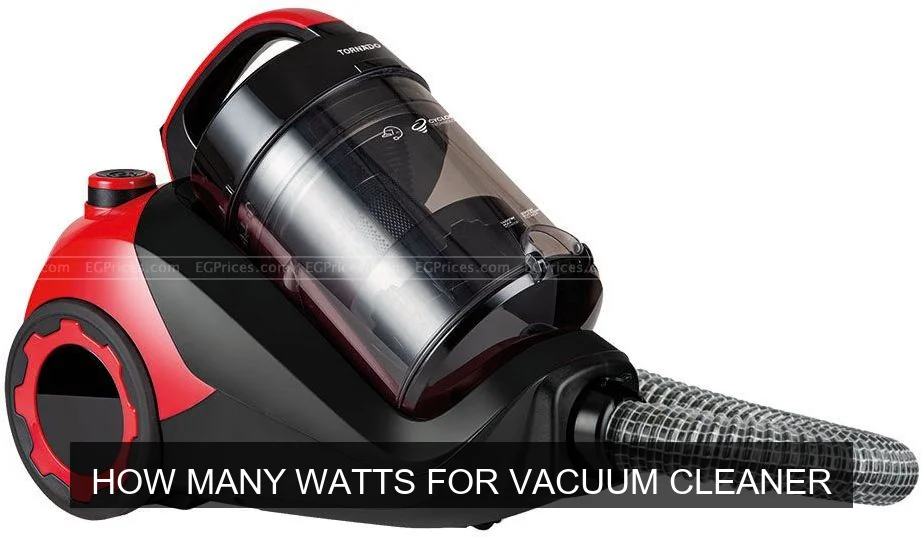
Image source: Egprices
📋 Table of Contents
- 🔹 Introduction: Unpacking Vacuum Cleaner Watts
- 🔹 What Do Vacuum Cleaner Watts Really Mean?
- 🔹 Understanding the Different Types of Watts
- 🔹 Why Watts Matter: The Link Between Power and Cleaning Performance
- 🔹 How Vacuum Cleaner Watts Work: From Plug to Pickup
- 🔹 The Benefits of Understanding Vacuum Cleaner Wattage
- 🔹 Common Misconceptions About Vacuum Cleaner Watts
- 🔹 Practical Tips for Interpreting Wattage Information
- 🔹 Real-Life Examples: Wattage in Different Vacuum Types
- 🔹 People Also Ask About Vacuum Cleaner Watts
- 🔹 Conclusion: Beyond the Watt Number
Introduction: Unpacking Vacuum Cleaner Watts
You’re probably used to seeing “watts” listed on many of your home appliances. From light bulbs to microwaves, this number gives us an idea of how much power an item uses. When it comes to vacuum cleaners, seeing a high wattage might make you think “powerful!” But is it really that simple? Understanding how many watts a vacuum cleaner uses, and what that number truly represents, is key to grasping its cleaning capabilities.
This article will dive deep into the world of vacuum cleaner wattage. We’ll explore the different ways power is measured, explain why these numbers matter, and clear up some common misunderstandings. By the end, you’ll have a much clearer picture of what to look for and how to interpret the power specifications for any vacuum cleaner you might encounter. We’ll demystify terms like “motor watts” and “air watts” so you can move beyond simple numbers and truly understand what makes a vacuum cleaner effective.
What Do Vacuum Cleaner Watts Really Mean?
At its core, a “watt” is a unit of power. For electrical devices like vacuum cleaners, it tells us about the rate at which electricity is consumed or converted into other forms of energy. Think of it like this: if voltage is the “pressure” of electricity, and amperes (amps) are the “flow rate,” then watts are the total “work” being done or the energy used per second. So, when you see a vacuum cleaner listed with, say, 1200 watts, it means its motor is designed to draw 1200 joules of electrical energy every second it’s running.
However, what happens to that electrical energy once it enters the vacuum? This is where things get a little more interesting and why “how many watts for vacuum cleaner” isn’t a single, straightforward answer. Not all of that electrical power translates directly into effective cleaning force. Some of it gets lost as heat due to friction and resistance, and some powers other components like rotating brushes, lights, or electronic controls, which don’t directly contribute to suction.
Understanding the Different Types of Watts
When we talk about vacuum cleaner watts, we’re actually often referring to two distinct measurements: motor watts and air watts. It’s super important to know the difference because they tell us very different things about a vacuum’s performance.
Motor Watts (Input Power)
Motor watts, sometimes called “input watts” or “electrical watts,” measure the total electrical power the vacuum cleaner’s motor draws from the wall outlet. This is usually the larger number you’ll see prominently displayed on packaging or specifications. It tells you about the electrical appetite of the machine. A vacuum cleaner with a higher motor wattage generally has a more powerful motor, theoretically capable of generating more suction.
- What it means: How much electricity the appliance consumes from your home’s power supply.
- Typical range: Can be anywhere from 400 watts for smaller, less powerful models to over 2000 watts for very powerful industrial or older consumer models.
- Limitation: High motor watts don’t automatically guarantee excellent cleaning. Efficiency matters! A poorly designed vacuum might have a very powerful motor but still deliver weak suction due to air leaks, inefficient fan design, or restrictive airflow paths. It’s simply consuming a lot of electricity without effectively converting it into useful work.
Air Watts (Suction Power)
Now, this is where the rubber meets the road for cleaning performance! Air watts are a measure of the actual useful power a vacuum cleaner produces at the cleaning head – the combination of airflow and suction power. It’s a calculation derived from the volume of air moved per minute (CFM – Cubic Feet per Minute) and the suction pressure (water lift, measured in inches or kPa).
The formula for air watts is a bit technical, but essentially, it combines how much air the vacuum can pull and how strongly it can pull it. More air watts usually means better cleaning performance because it indicates stronger suction that can lift debris more effectively from various surfaces, including deep within carpet fibers.
- What it means: The actual cleaning power generated by the vacuum, reflecting its ability to lift dirt and debris.
- Typical range: Varies greatly, but generally 100-250 air watts for good cordless vacuums, and 150-300+ air watts for effective corded models. Some high-end models can exceed 300 air watts, signifying truly powerful cleaning.
- Benefit: This is a more direct and reliable indicator of a vacuum’s ability to pick up dirt and debris compared to motor watts alone.
- Challenge: Not all manufacturers report air watts, making direct comparisons sometimes tricky. When it is provided, however, it’s a valuable metric.
Think of it like this: A car’s engine might have a lot of horsepower (motor watts), but if the transmission is bad or the tires are flat, that power doesn’t fully translate into speed (air watts) on the road. The air watts measurement accounts for all those internal efficiencies and losses, giving you a clearer picture of real-world cleaning capability.
Why Watts Matter: The Link Between Power and Cleaning Performance
Understanding “how many watts for vacuum cleaner” is important because it gives you insight into its potential and efficiency. While motor watts indicate electrical consumption, air watts tell you about the vacuum’s ability to clean. Here’s why both are relevant:
- Energy Consumption: Higher motor watts mean the vacuum draws more electricity. This can impact your energy bill if you use it frequently, though vacuums aren’t typically high energy hogs compared to, say, air conditioners. It’s useful to be aware of this, especially for older, less efficient models or those used in commercial settings for extended periods.
- Cleaning Effectiveness: Ultimately, you want a vacuum that cleans well. This is where air watts shine. A vacuum with higher air watts will generally be better at picking up deeply embedded dirt from carpets, larger debris, and pet hair. It indicates the true force available to tackle stubborn messes, ensuring a thorough clean.
- Matching to Tasks: Different cleaning tasks require different levels of power. A small handheld vacuum for quick spills doesn’t need the same wattage as an upright designed to tackle thick carpets in a large home. Knowing wattage helps you align the tool with the job, preventing under-powering or over-powering a task.
- Efficiency: The ratio between motor watts and air watts can hint at a vacuum’s overall efficiency. A vacuum that produces high air watts with relatively lower motor watts is considered more efficient. It’s doing more with less electrical input, which is a sign of good engineering and can result in lower operating costs over time.
How Vacuum Cleaner Watts Work: From Plug to Pickup
Let’s trace the journey of power in a vacuum cleaner, from the wall socket to the actual cleaning action:
- Drawing Power: When you plug in and turn on your vacuum, it draws electrical current from the outlet. The total electrical power consumed by the motor and other electrical components is what we call “motor watts.”
- Motor Activation: This electricity powers the motor, which is essentially an electric fan encased in housing. The motor spins at very high speeds, often tens of thousands of revolutions per minute.
- Creating Suction: The rapidly spinning fan blades create a low-pressure area (a partial vacuum) inside the vacuum’s main body. This pressure difference pulls air (and anything in it, like dirt, dust, and debris) from the cleaning head, through the hose or nozzle, and into the dustbin or bag.
- Airflow and Filtration: The air, carrying debris, passes through various stages of filtration (like cyclonic separation, pre-filters, HEPA filters) to trap particles before the cleaned air is exhausted back into the room.
- Cleaning Action: The combination of strong airflow and significant suction pressure at the cleaning head is what physically removes dirt from surfaces. This effective cleaning force, which is the most important for getting things clean, is quantified by “air watts.”
So, while motor watts are the input, air watts represent the useful output – the actual work done in moving dirt. Factors like the design of the motor, the seals along the airflow path, the shape of the nozzle, the diameter of the hose, and the quality of the filtration system all influence how much of that initial electrical wattage (motor watts) gets converted into effective suction wattage (air watts). A well-engineered vacuum minimizes energy loss and maximizes conversion to air watts.
The Benefits of Understanding Vacuum Cleaner Wattage
Being informed about “how many watts for vacuum cleaner” empowers you in several ways, even if you’re not making an immediate purchase:
- Better Expectations: You can better predict how effective a vacuum might be for different cleaning tasks. A lower wattage handheld might be great for quick crumbs but won’t replace a powerful upright for deep carpet cleaning. Understanding this helps manage your expectations.
- Informed Comparisons: When looking at specifications, you can move beyond just the big motor watt number. If air watts are provided, you have a much more meaningful metric for comparison across different models or brands, even if their motor watts are similar.
- Recognizing Efficiency: You can start to spot efficient designs. A vacuum that achieves impressive air watts with a moderate motor wattage is likely well-engineered, showcasing smart design over sheer raw power consumption.
- Troubleshooting Clues: If your vacuum suddenly seems less powerful, understanding wattage can help you think about potential issues. Is it losing suction due to clogs (affecting air watts) or is the motor struggling (suggesting a motor issue related to input watts)? This knowledge can guide your diagnostic process.
- Environmental Awareness: Being aware of motor wattage gives you a rough idea of the vacuum’s energy draw, contributing to more conscious energy use in your home. Choosing more efficient models can also lessen your environmental footprint over time.
Common Misconceptions About Vacuum Cleaner Watts
There are a few common misunderstandings people have when they ask “how many watts for vacuum cleaner”:
“More motor watts always means better cleaning.”
Correction: Not always. While a powerful motor is a prerequisite for strong suction, a vacuum’s design, seals, airflow path, and brush head efficiency are just as, if not more, important. An inefficient design can waste a lot of motor power as heat or noise, leading to less actual cleaning despite a high motor watt rating.
“All watts are the same.”
Correction: As we’ve discussed, motor watts and air watts measure different things. Focusing solely on motor watts can be misleading for cleaning performance because it doesn’t account for how effectively that electrical power is converted into suction.
“Wattage is the only thing that matters for suction.”
Correction: Wattage, especially air watts, is a key indicator, but other factors also play a huge role in effective suction and overall cleaning. These include the design and effectiveness of the brush roll, the quality and type of filtration, the diameter and sealing of the hose, and even the specific design of the cleaning head for different surfaces. A powerful brush roll, for instance, can agitate dirt effectively, helping a vacuum with moderate air watts perform surprisingly well.
“A high wattage vacuum will use a lot of electricity and cost a fortune to run.”
Correction: While higher motor watts mean more electricity consumed per hour of operation, vacuums aren’t typically used for very long periods, usually only for 15-60 minutes at a time. The overall energy cost is usually quite low compared to appliances that run for many hours a day, such as refrigerators or air conditioners.
Practical Tips for Interpreting Wattage Information
When you’re trying to figure out “how many watts for vacuum cleaner” truly means for a specific model, keep these tips in mind:
- Look for Air Watts First: If available, prioritize the air watts measurement. This is the most direct and reliable indicator of suction power and cleaning effectiveness. It tells you about the work the vacuum can actually do.
- Don’t Obsess Over Motor Watts Alone: Use motor watts as a general guide for the power class, but remember it’s not the full story. A 1000-watt vacuum with excellent design might outperform a 1500-watt vacuum with poor airflow efficiency and numerous leaks.
- Consider the Type of Vacuum: Different types of vacuums have different power requirements and expectations. A small handheld unit will naturally have lower wattage than a full-sized upright or canister model designed for whole-home cleaning.
- Read Beyond the Numbers: Remember that a vacuum’s overall performance is a blend of wattage, filtration quality, brush roll design, attachment versatility, ease of use, and overall build quality. The numbers give you a part of the picture, but not the whole masterpiece.
- Check for Industry Standards: Reputable manufacturers often test and report air watts using standardized methods (like ASTM F558), which can make comparisons more reliable across different brands. Always check for such certifications if you can.
Real-Life Examples: Wattage in Different Vacuum Types
The “how many watts for vacuum cleaner” question also depends heavily on the type of vacuum and its intended use. Let’s look at some general ranges and expectations across common vacuum cleaner categories.
Upright Vacuums
These are often designed for larger areas and carpet cleaning, often incorporating powerful brush rolls. They tend to have robust motors.
- Motor Watts: Typically range from 800 to 1800 watts.
- Air Watts: Can range from 150 to over 250 air watts, depending on efficiency and design. Models with strong brush rolls and good seals tend to convert motor watts into air watts more effectively, leading to superior carpet cleaning.
Canister Vacuums
Known for their versatility, maneuverability, and often strong suction, especially on hard floors and with various attachments.
- Motor Watts: Similar to uprights, often between 800 and 1600 watts.
- Air Watts: Often boast high air watt figures, sometimes exceeding 300, as their sealed systems and efficient hoses can create powerful and consistent suction, making them excellent for both carpets and hard floors.
Handheld and Robot Vacuums
These are designed for convenience, quick cleanups, and lighter tasks, so their power requirements are naturally much lower due to their size and specific roles.
- Motor Watts: Can range from a modest 20 watts (for some simple robot vacuums) up to 200-400 watts for more powerful cordless stick vacuums or handhelds.
- Air Watts: Typically much lower, perhaps 15-50 air watts for handhelds, and 50-180 air watts for effective cordless stick vacuums. Robot vacuums are often less about raw suction (though it’s improving) and more about consistent, methodical cleaning with brushes combined with suction.
| Vacuum Type | Typical Motor Watts (Input) | Typical Air Watts (Output) |
|---|---|---|
| Upright Vacuum | 800 – 1800 W | 150 – 250+ AW |
| Canister Vacuum | 800 – 1600 W | 150 – 300+ AW |
| Cordless Stick Vacuum | 150 – 400 W | 50 – 200 AW |
| Handheld Vacuum | 20 – 150 W | 15 – 50 AW |
| Robot Vacuum | 20 – 100 W | 10 – 40 AW (often combined with brushes) |
People Also Ask About Vacuum Cleaner Watts
Is Higher Wattage Always Better for a Vacuum Cleaner?
No, higher wattage, specifically higher motor watts, is not always better for a vacuum cleaner. While a powerful motor is necessary, the vacuum’s overall design, airflow efficiency, filtration system, and brush roll all critically influence how effectively that power translates into actual cleaning ability (air watts). A well-designed vacuum with moderate motor watts can often outperform a poorly designed one with much higher motor watts by efficiently converting electrical power into effective suction.
Do All Vacuum Cleaners Measure Watts the Same Way?
Vacuum cleaners generally measure motor watts (electrical input power) consistently, as it’s a standard electrical measurement determined by the power drawn from the outlet. However, the calculation and reporting of air watts (actual suction power) can vary among manufacturers, and some may not report air watts at all. This lack of universal standardization for air watts, especially without adherence to specific industry testing standards, can make direct comparisons a bit challenging.
Can I Reduce My Vacuum Cleaner’s Wattage?
You cannot directly reduce your vacuum cleaner’s fixed motor wattage, as it’s an inherent design specification for the maximum power it can draw. However, many modern vacuums come with power settings (e.g., “eco mode,” “normal,” or “max power”) that allow you to vary the motor’s speed. Using a lower power setting will reduce the instantaneous wattage drawn by the motor and, consequently, its power consumption and suction.
What is a Good Wattage for a Powerful Vacuum Cleaner?
For a powerful corded vacuum cleaner (upright or canister), you might look for motor watts in the range of 1000-1800 watts. More importantly, aim for air watts of 180 to 250 or more for effective deep cleaning on carpets and tough messes. For powerful cordless stick vacuums, good air wattage typically falls between 100 and 200 air watts, which is significant for battery-powered devices.
How Does Wattage Affect Noise Levels?
Generally, higher motor wattage can correlate with higher noise levels because more powerful motors spinning at higher RPMs tend to produce more sound. The sheer force of moving air also contributes to noise. However, modern vacuum cleaners often incorporate advanced noise-reduction technologies and acoustic dampening materials in their design. So, while a very high wattage vacuum might be louder, it’s not a universal rule; efficient design and sound insulation can help keep noise down even with significant power output.
Conclusion: Beyond the Watt Number
Hopefully, you now have a much clearer understanding of “how many watts for vacuum cleaner” really works. It’s not just about one big number; it’s about distinguishing between the electricity consumed by the motor (motor watts) and the actual cleaning power delivered at the nozzle (air watts). While motor watts give you an idea of the machine’s electrical appetite, air watts are the true measure of its ability to pick up dirt and debris, offering a more practical gauge of performance.
Remember, a vacuum cleaner’s effectiveness is a combination of many factors: powerful suction (especially air watts), an efficient filtration system, a well-designed and effective brush roll, quality attachments, and robust construction. By understanding what each “watt” measurement signifies, you’re better equipped to interpret specifications and appreciate the engineering that goes into a truly effective cleaning machine. Don’t let a single number mislead you; look at the whole picture for real cleaning insights and to match a vacuum’s capabilities to your cleaning needs!