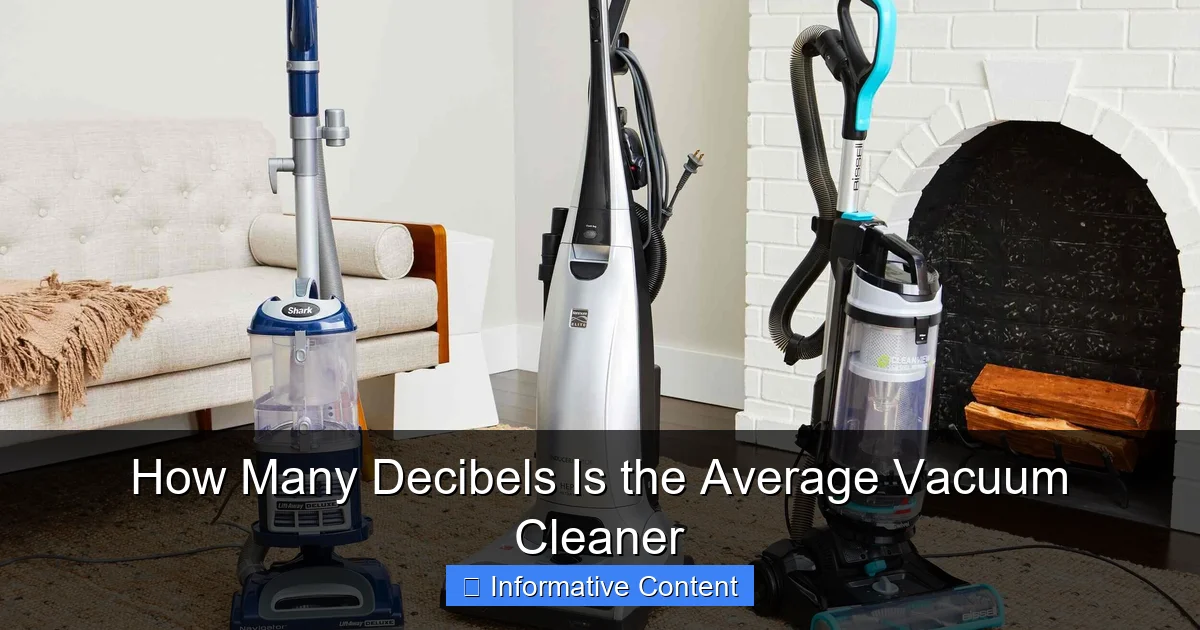
Most standard vacuum cleaners operate at noise levels between 70 to 85 decibels (dB), which is comparable to a loud conversation or heavy city traffic. While this might seem acceptable for short periods, prolonged exposure to noise at these levels can contribute to hearing fatigue or even long-term damage, making it crucial to understand the implications of how many decibels is the average vacuum cleaner for your health and comfort. Selecting a quieter model or using hearing protection can significantly improve your cleaning experience.
Let’s face it: vacuuming is often a necessary evil, a chore that keeps our homes spick and span but often comes with a significant soundtrack. That distinctive roar or whine can be more than just an annoyance; it’s a sound that tells us something important about our home environment and potentially our health. Have you ever wondered just how loud your trusty cleaning companion actually is? It’s a question many of us ponder, especially when we’re trying to hold a conversation over its hum or notice our pets scamper away at its mere presence.
Understanding the noise level of household appliances, especially something as frequently used as a vacuum cleaner, isn’t just about peace and quiet. It’s about protecting one of our most precious senses: hearing. The unit we use to measure sound intensity is the decibel (dB), and knowing **how many decibels is the average vacuum cleaner** can empower you to make more informed choices for your home and health. This article will dive deep into the world of vacuum cleaner noise, exploring what those decibel numbers mean, how they impact us, and what you can do to turn down the volume.
So, let’s pull back the curtain on the noise levels of these everyday machines. We’ll explore the typical decibel ranges, the factors that contribute to a vacuum’s loudness, and practical tips for choosing and using quieter models. By the end of this read, you’ll have a much clearer picture of the soundscape of your cleaning routine and how to make it a more pleasant, and safer, experience for everyone.
Key Takeaways
- Average Noise Level: Most conventional vacuum cleaners typically produce noise ranging from 70 to 85 decibels (dB), with some powerful models exceeding 90 dB.
- Hearing Risk Threshold: Prolonged exposure to noise levels above 85 dB can lead to permanent hearing damage, making awareness of your vacuum’s dB level crucial.
- Factors Affecting Noise: Motor power, design, filtration systems, age of the vacuum, and even the type of surface being cleaned all influence a vacuum cleaner’s decibel output.
- Quieter Options Exist: Many modern vacuums, including some canister, stick, and especially robotic models, are specifically designed for quieter operation, often falling into the 60-70 dB range.
- Impact Beyond Hearing: Excessive vacuum noise can disturb household members, pets, and cause user fatigue, affecting overall comfort and well-being during cleaning tasks.
- Tips for Reduction: Regular maintenance, using hearing protection, and strategically scheduling vacuuming times can help mitigate the effects of noisy vacuum cleaners.
Quick Answers to Common Questions
What is a decibel (dB)?
A decibel is a unit used to measure the intensity or loudness of a sound. It’s a logarithmic scale, meaning small numerical increases represent significant increases in sound power.
How many decibels is the average vacuum cleaner?
The average traditional vacuum cleaner typically operates at noise levels between 70 to 85 decibels (dB).
Is 80 dB dangerous for hearing?
Yes, prolonged or repeated exposure to noise levels at or above 85 dB can cause permanent hearing damage over time. 80 dB is close to this threshold, so extended exposure should still be minimized.
Which type of vacuum cleaner is generally the quietest?
Robotic vacuum cleaners are typically the quietest, often operating in the 55-70 dB range, due to their design for autonomous, longer cleaning cycles.
What is one simple way to reduce vacuum cleaner noise?
Regular maintenance, such as emptying the dust bin, cleaning filters, and checking for blockages, can significantly reduce the noise output of your current vacuum cleaner.
📑 Table of Contents
Understanding Decibels and Hearing Safety
Before we dive into the specifics of vacuum cleaners, let’s get a basic understanding of what a decibel is and why certain noise levels are a concern for our hearing. The decibel scale isn’t like a regular ruler; it’s logarithmic. This means that a small increase in decibel numbers actually represents a much larger increase in sound intensity. For example, an increase of 10 dB represents a tenfold increase in sound power! This is why a sound that is “only” 10 dB louder can feel twice as loud to our ears.
What’s a Safe Noise Level?
Our ears are remarkable, but they have their limits. Exposure to very loud noises, even for short periods, or moderate noises over extended periods, can lead to permanent hearing damage. The Occupational Safety and Health Administration (OSHA) sets guidelines for workplace noise exposure, which can be a good benchmark for our homes too. Generally, noise levels below 70 dB are considered safe for continuous exposure. However, prolonged or repeated exposure to noise at or above 85 dB can cause permanent hearing loss. Think of it this way: if you have to raise your voice to be heard by someone just an arm’s length away, the noise level is likely around 85 dB or higher.
Common Noise Levels for Context
To put things into perspective, let’s look at some everyday sounds and their approximate decibel levels:
- 0 dB: The softest sound a human can hear.
- 30 dB: A whisper.
- 60 dB: Normal conversation, an air conditioner at 100 feet.
- 70 dB: A washing machine, office noise, light city traffic.
- 80-85 dB: A garbage disposal, a noisy restaurant, heavy city traffic. This is where the risk of hearing damage starts with prolonged exposure.
- 90 dB: A lawnmower, a motorcycle 25 feet away.
- 100 dB: A jackhammer, a chain saw.
- 120 dB: A rock concert, an ambulance siren. This level can cause immediate hearing damage.
Now that we have a better grasp of the decibel scale, let’s apply this knowledge to our cleaning appliances and finally answer the question: **how many decibels is the average vacuum cleaner**?
How Many Decibels Is the Average Vacuum Cleaner?
Visual guide about How Many Decibels Is the Average Vacuum Cleaner
Image source: bestvacuumexpert.com
The moment of truth! When you consider **how many decibels is the average vacuum cleaner**, you’ll find there’s quite a range, depending on the type, brand, and age of the machine. However, most traditional vacuum cleaners fall into a specific noise bracket.
Typical Decibel Ranges by Vacuum Type
- Upright and Canister Vacuums (Traditional Models): These are often the workhorses of household cleaning, known for their powerful motors. They typically produce noise levels between 70 to 85 dB. Some older, less efficient, or extremely powerful models might even push past 90 dB, which is definitely in the range where hearing protection is recommended for extended use.
- Stick Vacuums and Handhelds: Generally, these tend to be a bit quieter due to smaller motors, often ranging from 65 to 75 dB. However, their noise can still be quite piercing or high-pitched, which some people find more irritating than a lower-frequency roar.
- Robotic Vacuums: These are often designed with quiet operation in mind, as they typically run for longer periods unattended. Many robotic vacuums operate in the 55 to 70 dB range, with some premium models even dipping below 60 dB. This makes them significantly quieter than their traditional counterparts.
So, in summary, when considering **how many decibels is the average vacuum cleaner**, you can generally expect a noise output in the 70-85 dB range for most standard models.
Factors Influencing Vacuum Cleaner Noise Levels
Why do some vacuums sound like a jet engine while others purr like a kitten? Several design and operational factors contribute to a vacuum cleaner’s decibel output:
- Motor Power: A more powerful motor often means more noise. While some manufacturers manage to insulate powerful motors well, raw power generally correlates with higher dB levels.
- Airflow and Suction Design: The way air moves through the vacuum’s system – from the intake nozzle, through the filters, and out the exhaust – can generate significant noise. Any turbulence, constrictions, or inefficient pathways can increase sound.
- Filtration System: Some high-efficiency filters (like HEPA filters) can restrict airflow slightly, causing the motor to work harder and thus generate more noise. However, well-designed systems can mitigate this.
- Construction and Materials: The quality of materials, the thickness of the plastic, and the presence of sound-dampening insulation within the vacuum’s casing play a huge role in containing motor and airflow noise.
- Age and Maintenance: An older vacuum with worn-out bearings, loose parts, or clogged filters and hoses will almost always be louder than a well-maintained, newer model. Blockages force the motor to strain, increasing noise.
- Floor Type: Believe it or not, the surface you’re cleaning also affects perceived noise. A vacuum running on hard floors will often sound louder and harsher than the same vacuum on thick carpet, which absorbs some of the sound.
The Impact of Vacuum Cleaner Noise
Beyond just being an annoyance, the noise from your vacuum cleaner can have several noticeable impacts on your daily life, your health, and even your pets. Knowing **how many decibels is the average vacuum cleaner** isn’t just trivia; it’s knowledge that informs your well-being.
On Hearing Health
As we discussed, repeated exposure to sounds over 85 dB can cause hearing damage. While vacuuming usually isn’t a continuous eight-hour activity, if you vacuum frequently or for extended periods (say, cleaning a large house for an hour or more), and your vacuum operates at the higher end of the 80+ dB spectrum, you could be putting your hearing at risk over time. This risk increases significantly if you’re already exposed to other loud noises in your daily life. Hearing loss often develops gradually and painlessly, making it easy to overlook until it’s too late.
On Household Peace and Quiet
A loud vacuum can turn a peaceful home into a noisy construction zone. It can disrupt:
- Conversations: You might have to shout to be heard or simply pause all communication.
- Working from Home: If you’re trying to concentrate or take a video call, a noisy vacuum makes it impossible for anyone in the vicinity.
- Napping Children or Pets: The sudden roar can wake them up, leading to crankiness or anxiety.
- Relaxation: Trying to listen to music, watch TV, or just enjoy some quiet time is out of the question.
On Pets
Animals often have more sensitive hearing than humans. The high-pitched whine or powerful rumble of a vacuum cleaner can be incredibly distressing for dogs, cats, and other household pets. They might hide, bark excessively, or show signs of anxiety. Understanding **how many decibels is the average vacuum cleaner** can help you empathize with your furry friends and consider their comfort.
On User Experience and Fatigue
Constantly being exposed to loud noise, even if it’s not immediately damaging, can lead to auditory fatigue. This can manifest as stress, irritability, difficulty concentrating after vacuuming, or even headaches. A quieter vacuum can make the chore feel less arduous and more bearable.
Tips for Choosing a Quieter Vacuum Cleaner
If the revelation about **how many decibels is the average vacuum cleaner** has you considering an upgrade, or if you’re in the market for a new one, here are some tips to help you find a quieter model.
Look for dB Ratings
Many manufacturers now proudly display the decibel rating of their vacuums, especially if they are designed to be quiet. Check the product specifications, packaging, or online listings for a dB number. Aim for models in the 60-70 dB range for a noticeable difference in quietness.
Consider the Vacuum Type
- Robotic Vacuums: As mentioned, these are typically the quietest option, making them ideal if you’re very sensitive to noise or want to clean while you’re away or asleep.
- Canister Vacuums: Often, the motor is housed in a separate canister that can be further away from your ears, and their design can sometimes lend itself to better sound insulation than uprights.
- Stick Vacuums: While some are quieter than uprights, their motor is usually right in your hand, so be sure to check specific models for their dB ratings.
Features to Look For
- Sound-Dampening Technology: Some brands specifically design their vacuums with features like insulated motor housings, specialized air channels to reduce turbulence, and softer wheels to minimize noise.
- Brush Roll Shut-Off: Being able to turn off the rotating brush roll (often used for carpets) can significantly reduce noise, especially on hard floors.
- Power Settings: Vacuums with adjustable power settings allow you to use a lower, quieter setting for less demanding tasks.
Read Reviews and Watch Videos
Online reviews from other users can be incredibly helpful. Many people specifically mention how loud or quiet a vacuum is. Some tech reviewers even include sound tests or decibel readings in their video reviews, giving you a real-world sense of the noise level.
Reducing Vacuum Noise and Protecting Your Hearing
Even if you’re not ready to buy a new vacuum, there are still steps you can take to make your current cleaning routine a bit more tolerable and protect your hearing. Understanding **how many decibels is the average vacuum cleaner** you own is the first step; taking action is the next.
Regular Maintenance is Key
A well-maintained vacuum is a quieter vacuum.
- Empty the Dust Bin/Bag: A full dust bin or bag restricts airflow, making the motor work harder and louder.
- Clean or Replace Filters: Clogged filters choke the motor and increase noise. Clean reusable filters regularly and replace disposable ones as recommended.
- Check for Blockages: Hoses, nozzles, and brush rolls can get clogged with hair, debris, or lost items. Clearing these obstructions improves airflow and reduces strain on the motor.
- Inspect for Wear and Tear: Loose screws, worn-out bearings, or cracked casings can all contribute to increased rattling and noise. Tighten what’s loose and consider repairs for significant damage.
Use Hearing Protection
This is the simplest and most effective way to protect your hearing from a noisy vacuum.
- Earplugs: Disposable foam earplugs are inexpensive and effective, offering significant decibel reduction.
- Earmuffs: Over-the-ear earmuffs offer excellent protection and are comfortable for longer periods. You can even find noise-canceling headphones that double as hearing protection.
Vacuuming Strategies
- Schedule Strategically: If possible, vacuum when others are out of the house or when they are occupied in areas away from the noise.
- Take Breaks: If you have a large area to clean and a loud vacuum, take short breaks to give your ears (and mind) a rest.
- Targeted Cleaning: Only vacuum areas that truly need it, rather than doing a full sweep every time, reducing overall exposure.
Acoustic Treatments in Your Home
While this might be a bigger undertaking, soft furnishings like carpets, rugs, heavy curtains, and upholstered furniture can help absorb sound within a room, making any noise source, including a vacuum, sound a little less harsh.
Conclusion
The question of **how many decibels is the average vacuum cleaner** leads us down a path of understanding not just noise, but also its impact on our health, our comfort, and our household environment. We’ve learned that most traditional vacuums operate in the 70-85 dB range, a level that, with prolonged exposure, can pose a risk to our hearing. We’ve also explored the various factors that contribute to this noise, from motor power to maintenance, and the broader implications for our peace of mind and the well-being of our loved ones and pets.
Thankfully, you’re not powerless against the roar. Armed with this knowledge, you can make smarter choices when purchasing a new vacuum, prioritizing models with lower decibel ratings and sound-dampening features. And even with your current machine, simple maintenance, strategic vacuuming, and the use of hearing protection can significantly improve your cleaning experience. Ultimately, finding the right balance between powerful cleaning performance and a quieter operation is key to maintaining both a sparkling home and healthy ears. So, listen closely to your vacuum – and your ears – the next time you power it on.
Frequently Asked Questions
What causes a vacuum cleaner to be so loud?
The primary sources of vacuum cleaner noise are the powerful motor, the turbulent airflow through the system (nozzle, hose, filters, exhaust), and vibrations within the machine’s casing. Factors like clogged filters or blockages can also force the motor to work harder, increasing noise.
Can vacuum cleaner noise harm my pets?
Yes, pets often have more sensitive hearing than humans, and the loud, often high-pitched noise of a vacuum cleaner can cause them stress, anxiety, or even pain. Many animals will try to hide or show agitated behavior when a vacuum is in use.
Are quiet vacuum cleaners less powerful?
Not necessarily. While extremely powerful motors can generate more noise, modern engineering and sound-dampening technologies allow manufacturers to produce very effective vacuums that are also quiet. It’s about efficient design and insulation, not just raw motor power.
How can I find the decibel rating of a vacuum cleaner before buying?
Most manufacturers will list the decibel (dB) rating in the product specifications, on the packaging, or in the online description, especially if the model is designed to be quiet. You can also check product reviews and consumer reports, which often include noise level assessments.
Should I wear ear protection when vacuuming?
If your vacuum cleaner operates at 80 dB or higher, and you vacuum for extended periods (e.g., more than 30-60 minutes at a time), wearing earplugs or earmuffs is a wise precaution to protect your hearing from potential long-term damage.
Does the type of floor affect how loud a vacuum sounds?
Yes, the surface being cleaned can influence the perceived loudness. Vacuums on hard floors (wood, tile) often sound louder and harsher because these surfaces reflect sound, while carpets and rugs tend to absorb sound, making the vacuum seem a bit quieter.