Understanding how many decibels a vacuum cleaner emits is crucial for hearing health and household comfort. In 2025, vacuum noise levels typically range from 60 to 80 dB, but some older or less efficient models can exceed safe thresholds. This guide helps you measure your vacuum’s sound, identify if it’s too loud, and explore solutions for a quieter cleaning experience.
How many decibels is a vacuum cleaner 2025 Is Yours Too Loud
Ever find yourself wincing or raising your voice over the roar of your vacuum cleaner? You’re not alone! The sound of a vacuum can be surprisingly intense, and understanding how many decibels a vacuum cleaner actually produces is more important than you might think. Not only does excessive noise create an unpleasant cleaning experience, but prolonged exposure to high decibel levels can actually impact your hearing health.
In this comprehensive guide, tailored for 2025, we’re going to dive deep into the world of vacuum cleaner noise. We’ll explore what decibels mean for your ears, what you can expect from modern vacuum cleaners, and most importantly, how to tell if your vacuum is too loud. We’ll also equip you with practical steps and solutions to ensure your cleaning routine is as quiet and comfortable as possible, without sacrificing power.
Key Takeaways
- Understanding Decibel Levels: Most modern vacuum cleaners in 2025 operate between 60 and 80 decibels (dB), with 85 dB being the threshold for potential hearing damage with prolonged exposure.
- Measuring Your Vacuum’s Noise: You can determine your vacuum’s decibel level by checking manufacturer specifications or using a reliable sound level meter app on your smartphone.
- Factors Influencing Loudness: A vacuum’s noise level is affected by its motor power, filtration system, design, age, and maintenance status. Blockages and worn-out parts can significantly increase sound.
- Protecting Your Hearing: If your vacuum is consistently above 80 dB, consider wearing hearing protection like earmuffs or earplugs, especially during longer cleaning sessions.
- Solutions for a Quieter Clean: Solutions include performing regular maintenance, using quieter attachments, scheduling vacuuming when noise is less disruptive, or investing in a newer, low-decibel model.
- Maintenance is Key: Regularly cleaning filters, checking for clogs, and inspecting belts can prevent your vacuum from becoming excessively loud and extend its lifespan.
- The Future is Quieter: As of 2025, manufacturers are increasingly focusing on advanced noise-reduction technologies, offering more powerful yet quieter vacuum cleaners to meet consumer demand.
Quick Answers to Common Questions
What is a safe decibel level for a vacuum cleaner?
Ideally, a vacuum cleaner should operate below 80 decibels (dB) for comfortable use. Prolonged exposure above 85 dB is considered potentially harmful to hearing.
Can a vacuum cleaner cause hearing damage?
Yes, if it consistently operates above 85 dB and you use it for extended periods without hearing protection, it can contribute to temporary or even permanent hearing damage over time.
How can I make my current vacuum cleaner quieter?
Regular maintenance like clearing clogs, cleaning/replacing filters, and checking the brush roll for tangled hair can significantly reduce your vacuum’s noise level.
Are robotic vacuums quieter than traditional ones?
Generally, yes. Robotic vacuums are designed for autonomous, often background operation, and typically range from 55-70 dB, making them among the quietest options.
When should I consider buying a new, quieter vacuum?
If your current vacuum constantly measures above 85 dB even after maintenance, causes discomfort or ringing in your ears, or significantly disrupts your household, it’s a good time to consider upgrading to a low-decibel model.
Understanding Decibels and Hearing Safety
Before we talk about vacuum cleaners specifically, let’s get a handle on what a “decibel” (dB) actually is. Decibels are units used to measure the intensity of sound. It’s a logarithmic scale, which means a small increase in decibels represents a very large increase in sound energy. For example, an increase of just 10 dB means the sound is ten times more powerful!
Why does this matter for your hearing? Our ears are sensitive instruments, and continuous exposure to loud noises can cause permanent damage. Here’s a quick breakdown of common sound levels:
- 0-30 dB: Very faint sounds (e.g., a whisper)
- 30-60 dB: Quiet to moderate (e.g., a quiet office, normal conversation)
- 60-80 dB: Moderate to loud (e.g., ringing telephone, city traffic)
- 80-100 dB: Very loud to extremely loud (e.g., lawnmower, motorcycle)
- 100+ dB: Painfully loud (e.g., rock concert, chainsaw)
The 85 dB Threshold: Your Hearing’s Warning Sign
Health organizations generally recommend limiting exposure to sounds above 85 dB. For every 3 dB increase above 85 dB, the permissible exposure time before potential damage is cut in half. For instance, you can safely listen to 85 dB for about 8 hours, but 88 dB is safe for only 4 hours. Many vacuum cleaners, especially older or less efficient models, can easily push past this 85 dB mark. Knowing how many decibels is a vacuum cleaner is vital for protecting your long-term hearing.
How Many Decibels is a Vacuum Cleaner in 2025? The Core Answer
So, exactly how many decibels is a vacuum cleaner today? As of 2025, the industry has made significant strides in noise reduction. Most modern vacuum cleaners aim for a range that is powerful yet tolerable. Generally, you can expect a contemporary vacuum cleaner to operate within these ranges:
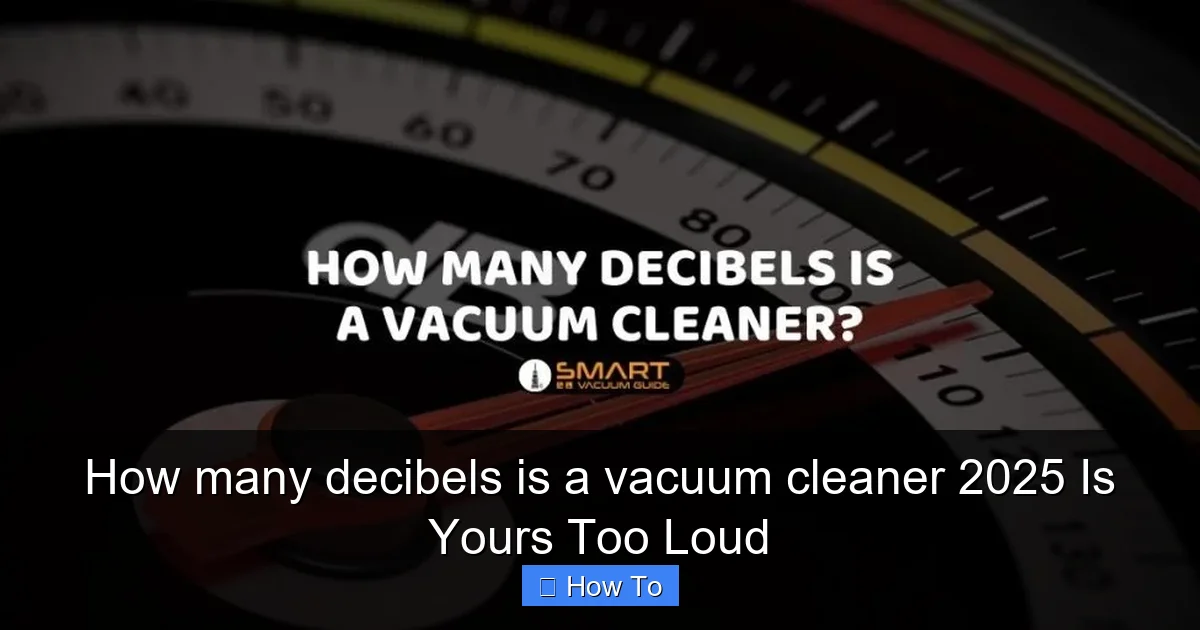
Visual guide about How many decibels is a vacuum cleaner 2025 Is Yours Too Loud
Image source: smartvacuumguide.com
- Stick Vacuums: Often 60-75 dB. Their lighter motors and compact designs tend to make them quieter.
- Robotic Vacuums: Typically 55-70 dB. Designed to run autonomously, quiet operation is a key feature.
- Upright Vacuums: Usually 70-80 dB. These often have powerful motors for deep cleaning carpets, leading to more noise.
- Canister Vacuums: Generally 65-75 dB. The motor is housed separately from the cleaning head, often allowing for better insulation.
- Handheld Vacuums: Can range from 60-78 dB. Smaller motors but often less insulation.
It’s important to remember these are general ranges. Some high-end, purpose-built “quiet” models might dip into the high 50s, while older, less maintained, or budget models can easily exceed 85-90 dB.
Factors Influencing Vacuum Cleaner Noise
Several elements dictate how many decibels a vacuum cleaner produces:
- Motor Power: More powerful motors generally produce more noise, though advancements in motor design are mitigating this.
- Filtration System: Dense filters (like HEPA) can restrict airflow, making the motor work harder and thus louder.
- Design and Insulation: Well-designed vacuums incorporate sound-dampening materials and clever airflow pathways to reduce noise.
- Attachments and Floor Type: Hard floor tools tend to be quieter than power brushes on thick carpets.
- Age and Maintenance: An older vacuum with clogged filters, blockages, or worn-out parts will almost always be louder than a well-maintained one.
Step 1: Determine Your Vacuum Cleaner’s Decibel Level
The first step to knowing if your vacuum is too loud is to find out its actual decibel rating. Here’s how:
Check Manufacturer Specifications
The easiest way to find out how many decibels is a vacuum cleaner you own is to look at its specifications. Check the product manual, the manufacturer’s website, or even the product listing if you bought it online. Many reputable brands will list the dB rating as a key feature, especially if it’s a quiet model. Look for a specification like “Noise Level: XX dB.”
Use a Sound Level Meter App/Device
If you can’t find the official specs, or just want to verify, you can measure the noise yourself! There are many sound level meter apps available for smartphones (both iOS and Android). While not as precise as professional equipment, they provide a good estimate for household use.
- How to Use: Download a reliable app. Make sure your phone’s microphone is clean and unobstructed. Run your vacuum cleaner on a hard, flat surface (to minimize carpet drag noise) and hold your phone about 3 feet away from the main motor unit. Note the peak and average readings. Repeat a few times for consistency.
- Dedicated Device: For more accuracy, you can purchase an inexpensive dedicated sound level meter online. These are often more reliable than phone apps.
Listen for Warning Signs
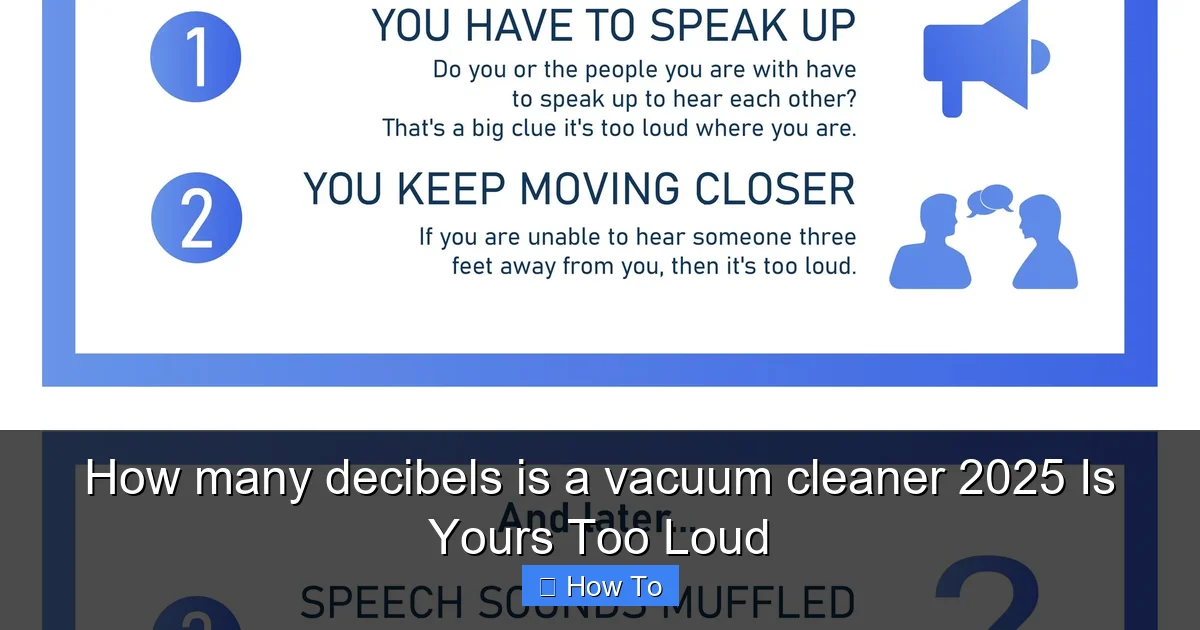
Sometimes, your ears are the best indicator. If you find yourself:
- Needing to raise your voice significantly to be heard over the vacuum.
- Experiencing ringing in your ears (tinnitus) after vacuuming.
- Feeling a dullness or temporary hearing loss immediately after use.
- Noticing pets or children clearly distressed by the noise.
These are strong indicators that your vacuum is operating at an unhealthy decibel level, regardless of its official rating.
Step 2: Assess if Your Vacuum is Too Loud
Now that you have a decibel number, let’s determine if it’s actually “too loud.”
Compare to Safety Guidelines
As mentioned, the 85 dB mark is critical. If your vacuum consistently measures above 80 dB, and you use it for extended periods (more than 30 minutes at a time, several times a week), it’s probably too loud for comfort and potentially for your long-term hearing health. Anything consistently above 85 dB definitely puts you at risk.
Consider Usage Duration
A vacuum that registers 90 dB for 5 minutes might be less concerning than one that hits 82 dB for an hour. The longer the exposure, the greater the risk of hearing damage. Think about your typical cleaning sessions: are they quick tidies or extensive whole-house cleans?
Evaluate Impact on Others
Beyond your own ears, consider your household. Does your vacuum disturb sleeping babies, startle pets, interrupt work-from-home calls, or annoy neighbors? A vacuum that is merely “loud” can become “too loud” when its noise pollution affects the quality of life for those around you.
Step 3: What to Do If Your Vacuum is Too Loud
If you’ve determined your vacuum is indeed too loud, don’t despair! You have several options:
Wear Hearing Protection
This is the quickest and often most effective immediate solution. Simple foam earplugs or over-ear hearing protection earmuffs can significantly reduce the decibel level reaching your ears. Look for options with a high Noise Reduction Rating (NRR) – usually 25 dB or higher. This can bring a 90 dB vacuum down to a safer 65 dB.
Perform Basic Maintenance
Often, a loud vacuum is a sign of a struggling vacuum. Addressing common issues can drastically reduce noise. This is a crucial step to improve how many decibels a vacuum cleaner emits.
- Check for Clogs: Blockages in the hose, brush roll, or filters force the motor to work harder, leading to increased noise. Disassemble and clear any obstructions.
- Clean/Replace Filters: Clogged filters restrict airflow and make the motor strain. Clean washable filters or replace disposable ones regularly according to your manual.
- Inspect Brush Roll and Belt: Hair and debris tangled in the brush roll can create friction and noise. A worn or loose belt can also cause grinding sounds.
- Check for Loose Parts: Vibrating plastic panels or loose attachments can rattle loudly. Tighten screws or secure parts as needed.
Upgrade to a Quieter Model
If your vacuum is old, poorly designed, or simply beyond repair, it might be time to invest in a new one. In 2025, many manufacturers specifically highlight low decibel ratings as a selling point. Look for features like “quiet technology,” “silent mode,” or specific dB ratings below 70 dB when shopping. Brands like Miele, Dyson, and certain models from Shark often get good reviews for quieter operation.
Adjust Vacuuming Habits
Sometimes, simple adjustments to your routine can help:
- Schedule Smart: Vacuum during times when noise is less disruptive, such as midday or when others are out.
- Shorter Sessions: Break up long vacuuming sessions into shorter bursts to reduce continuous exposure.
- Use Quieter Settings: If your vacuum has multiple power settings, use a lower one for lighter cleaning tasks.
Troubleshooting a Loud Vacuum
If your vacuum suddenly got louder, or if it’s always been noisy, here’s a dedicated troubleshooting section:
Check for Clogs and Blockages
This is the number one cause of sudden vacuum loudness. Disconnect the hose, check the entry point to the dirt bin, examine the brush roll housing, and look through all tubes and attachments. A lodged sock, toy, or hairball can create a high-pitched whine or a deep growl as the motor struggles against it.
Inspect Filters
A dirty filter can reduce airflow by up to 50%, forcing your motor to work twice as hard. This not only makes it louder but also reduces suction power. Remove all filters (pre-motor, post-motor/HEPA) and clean or replace them according to your vacuum’s manual.
Examine Brushes and Belts
For uprights and powerhead canisters, the brush roll spinning mechanism is a common noise source. Remove the brush roll, clear any tangled hair, strings, or carpet fibers. Check the belt; if it’s stretched, cracked, or loose, it can slip and cause squealing or grinding noises. Replace worn belts promptly.
Look for Loose Parts
Over time, vibrations can loosen screws or clips on the vacuum’s body, dustbin, or attachments. These loose components can rattle and vibrate, amplifying the overall noise. Give your vacuum a thorough once-over, gently tightening any visible screws or re-snapping loose panels.
Consider Motor Wear
If your vacuum is very old and has been well-used, the motor bearings or internal components might be wearing out. This can manifest as a persistent, grinding, or extremely high-pitched whine that doesn’t go away with cleaning. Motor replacement is often costly and might indicate it’s time for a new machine.
The Future of Quiet Vacuuming (2025 Context)
Looking ahead in 2025, the trend towards quieter home appliances continues to accelerate. Manufacturers are investing heavily in research and development to achieve powerful suction with minimal noise. Expect to see:
- Advanced Motor Design: Brushless DC motors and more efficient fan designs are becoming standard, reducing mechanical noise.
- Improved Acoustic Engineering: Vacuum bodies are being designed with specialized sound-dampening materials and optimized airflow paths to trap and absorb sound.
- Smart Technology Integration: AI-powered vacuums can now sense floor types and adjust power (and therefore noise) dynamically, only using maximum suction when truly needed.
- Focus on User Experience: Quiet operation is now a top-tier feature, not just a bonus. Consumers in 2025 expect to be able to vacuum without disrupting their household or conversations.
Conclusion
Understanding how many decibels is a vacuum cleaner and its impact on your environment and health is an essential part of modern home maintenance. While a certain level of noise is inevitable with powerful suction, knowing your vacuum’s decibel rating and taking proactive steps can make a huge difference.
From simple maintenance checks to investing in hearing protection or a newer, quieter model, you have the power to control the noise in your home. Don’t let your vacuum cleaner be a source of discomfort or, worse, a threat to your hearing. Take action today for a cleaner, quieter, and healthier home in 2025 and beyond!
🎥 Related Video: How Loud is Too Loud? Understanding Decibels & Hearing Safety 👂
📺 Doc Bryle Amaya
Decibels: The Language of Sound A decibel (dB) is the unit used to measure sound intensity or loudness. It’s a logarithmic …