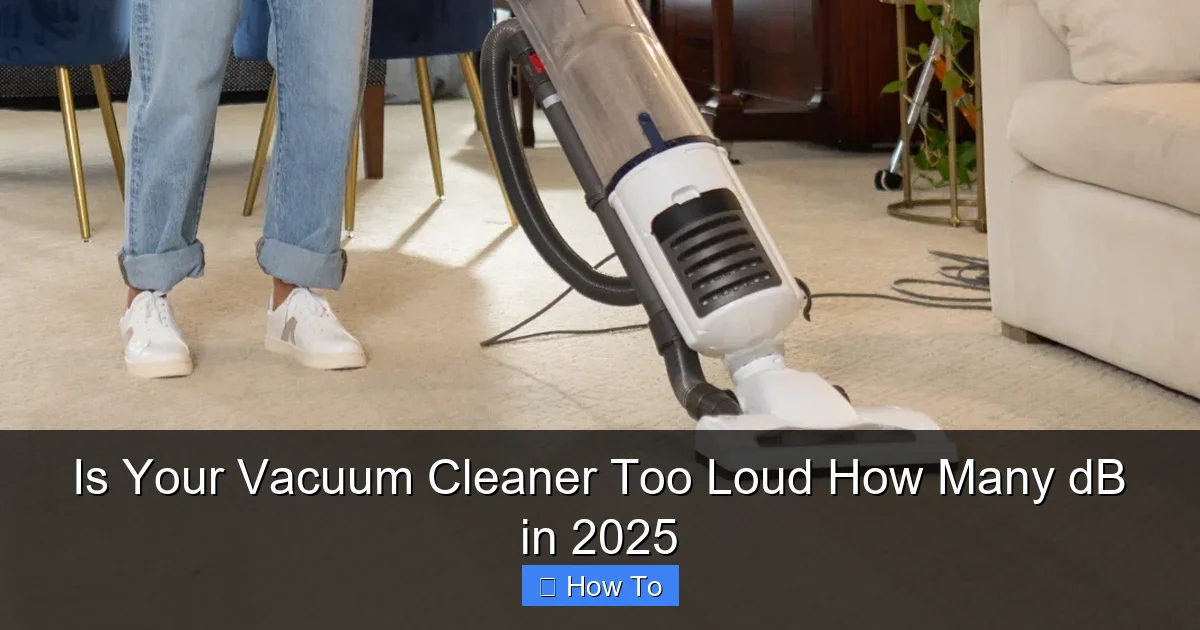
Understanding “how many dB is a vacuum cleaner” is crucial for your hearing health and household comfort in 2025. This guide delves into decibel ratings, explaining what constitutes a safe noise level and how different vacuum types impact sound. You’ll learn where to find dB information, what features contribute to a quieter operation, and practical steps to ensure your cleaning routine doesn’t come at the cost of peace and quiet. Make an informed choice for a less noisy home.
Is Your Vacuum Cleaner Too Loud? How Many dB in 2025
In the hustle and bustle of modern life, our homes are often our sanctuaries. But what happens when one of our most essential cleaning tools, the vacuum cleaner, shatters that peace with a roar? As we head into 2025, consumer awareness about noise pollution and its impact on well-being is at an all-time high. You’re not alone if you’ve ever wondered, “how many dB is a vacuum cleaner?” or if your current model is just too loud.
This comprehensive guide will walk you through everything you need to know about vacuum cleaner noise levels. We’ll demystify decibels, explore what makes vacuums loud, help you understand healthy noise limits, and arm you with the knowledge to choose, maintain, or even quiet down your vacuum cleaner for a more peaceful home environment in 2025 and beyond.
Key Takeaways
- Understanding Decibels: Decibels (dB) measure sound intensity logarithmically, meaning a small numerical increase represents a significant jump in perceived loudness. A-weighted decibels (dBA) are used for human hearing.
- Vacuum Noise Ranges: Most vacuum cleaners operate between 60 dBA (quiet) and 85 dBA (very loud), with some older or industrial models exceeding 90 dBA. Hearing damage can occur with prolonged exposure above 85 dBA.
- Factors Affecting Loudness: Motor power, airflow design, brush roll type, filtration systems, and even clogs or maintenance issues all contribute to a vacuum’s overall noise level.
- Finding dB Ratings: Check product specifications, energy labels, manufacturer websites, and consumer reviews. Many brands now prominently display dBA ratings, especially for quieter models.
- What’s a “Quiet” Vacuum: Generally, a vacuum operating at 70 dBA or below is considered quiet, while anything above 75 dBA might be irritating during extended use. Aim for models under 70 dBA for optimal comfort.
- Tips for Quieter Operation: Regular maintenance (emptying bags/canisters, cleaning filters, checking for clogs), using appropriate attachments, and operating the vacuum efficiently can help reduce noise.
- Buying for Quietness in 2025: Look for features like advanced motor insulation, optimized airflow paths, sealed systems, specialized quiet modes, and robust build quality when purchasing a new vacuum.
Quick Answers to Common Questions
What’s the ideal dB for a quiet vacuum?
Aim for a vacuum cleaner with a dBA rating of 70 or below. Anything in the 60-65 dBA range is considered exceptionally quiet and allows for normal conversation.
Does higher suction power mean a louder vacuum?
Not necessarily. While historically true, advancements in motor insulation and airflow design in 2025 mean many powerful vacuums can now achieve high suction with significantly reduced noise levels.
Can I make my existing vacuum quieter?
Yes, often! Regular maintenance like emptying the dustbin, cleaning filters, and clearing clogs can drastically reduce noise by improving airflow and reducing motor strain.
Are robot vacuums always quieter than traditional ones?
Generally, yes. Their smaller motors and slower cleaning patterns mean robot vacuums typically operate in the 55-70 dBA range, making them among the quietest options available.
Should I wear ear protection when vacuuming?
If your vacuum cleaner operates consistently above 80-85 dBA and you use it for extended periods, wearing ear protection (earplugs or earmuffs) is a sensible precaution to prevent long-term hearing damage.
Understanding Decibels: The Language of Sound
Before we dive into specific vacuum cleaner noise levels, it’s important to understand what a decibel (dB) actually represents. Decibels are a unit of measurement for sound intensity or loudness. It’s not a linear scale, which is crucial to remember.
What is a Decibel (dB)?
A decibel scale is logarithmic, meaning that a small increase in the number of decibels represents a much larger increase in sound energy and perceived loudness. For example:
- An increase of 3 dB effectively doubles the sound *energy*.
- An increase of 10 dB makes a sound seem roughly *twice as loud* to the human ear.
So, a vacuum cleaner at 70 dB isn’t just slightly louder than one at 60 dB; it’s significantly louder in terms of perceived noise.
A-Weighted Decibels (dBA)
When you see dB ratings for appliances like vacuum cleaners, they are almost always “A-weighted decibels,” or dBA. This weighting system adjusts the sound level readings to account for the sensitivity of the human ear, which doesn’t hear all frequencies equally. The dBA scale gives a more accurate representation of how loud something *sounds* to us.
How Loud is “Too Loud”? Understanding Healthy Noise Limits
Exposure to excessive noise can have serious health consequences, including hearing loss, stress, sleep disruption, and even cardiovascular problems. This is why knowing “how many dB is a vacuum cleaner” is more than just about comfort – it’s about health.
Typical Household Noise Levels for Reference
To put vacuum cleaner noise into perspective, here are some common sound levels:
- 30-40 dBA: Quiet library, soft whisper
- 50-60 dBA: Normal conversation, refrigerator hum
- 60-70 dBA: Dishwasher, washing machine
- 70-80 dBA: Busy street traffic, alarm clock, average vacuum cleaner
- 85 dBA: Heavy city traffic, power lawnmower (prolonged exposure can cause hearing damage)
- 100 dBA: Motorcycle, chain saw (damage can occur in minutes)
When Does Noise Become Risky?
According to organizations like the Occupational Safety and Health Administration (OSHA) and the World Health Organization (WHO), prolonged exposure to noise levels above 85 dBA can lead to permanent hearing damage. While you might not be vacuuming for 8 hours straight, repeated exposure to high decibel levels, even for shorter durations, can accumulate and contribute to hearing loss over time.
For comfort and health, aiming for a vacuum cleaner that operates well below the 85 dBA threshold is highly recommended, especially if you clean frequently or for extended periods.
How Many dB is a Vacuum Cleaner: Typical Ranges in 2025
As we move into 2025, the market offers a wide spectrum of vacuum cleaner noise levels, thanks to advancements in motor technology and acoustic engineering.
General dB Ranges by Vacuum Type:
- Robot Vacuums: These are generally the quietest, often ranging from 55 dBA to 70 dBA. Their smaller motors and slower operation contribute to lower noise.
- Canister Vacuums: With the motor typically housed separately from the cleaning head, canister vacuums can range from 60 dBA (very quiet, premium models) to 75 dBA.
- Stick Vacuums (Cordless): These have become increasingly popular for their convenience. Noise levels typically fall between 65 dBA and 78 dBA, though some powerful models can be louder.
- Upright Vacuums: Often the loudest category due to larger motors and airflow paths, uprights can range from 70 dBA to 85 dBA. Industrial or older models might even exceed 90 dBA.
- Wet/Dry Vacuums (Shop Vacs): Designed for heavy-duty tasks, these are usually the loudest, often in the 80 dBA to 95 dBA range.
What’s Considered a “Quiet” Vacuum Cleaner in 2025?
With advancements in technology, a truly quiet vacuum cleaner in 2025 typically operates at **70 dBA or below**. Many premium models now proudly advertise noise levels in the 60-65 dBA range, making conversation possible while cleaning. Anything above 75 dBA can be quite intrusive, especially in smaller spaces or if you have sensitive hearing.
What Makes a Vacuum Cleaner Loud?
Understanding the sources of noise can help you identify potential issues with your current vacuum or make a more informed choice when buying a new one.
The Motor
The primary source of noise is the electric motor that creates suction. Higher horsepower motors often generate more noise, but modern engineering can mitigate this with better insulation and design.
Airflow and Suction Path
The movement of air through the vacuum’s hoses, filters, and dustbin creates turbulence and whistling sounds. Poorly designed or restrictive airflow paths can significantly amplify noise.
Brush Roll and Agitation
The rotating brush roll (especially on uprights and powerheads) can generate considerable noise as it spins, agitates carpet fibers, and makes contact with hard floors. Different brush materials and designs affect this.
Filtration System
Some filtration systems, particularly those with multiple layers or HEPA filters, can restrict airflow slightly, causing the motor to work harder and potentially increase noise.
Build Quality and Materials
Cheaper vacuums often use thinner plastics and less insulation, allowing more motor and airflow noise to escape. Well-built, premium vacuums typically incorporate sound-absorbing materials and tighter seals.
Clogs and Maintenance Issues
A common cause of sudden loudness is a clog in the hose, filter, or brush roll. When airflow is restricted, the motor strains, leading to increased noise. Worn belts, bearings, or loose parts can also contribute.
How to Find Your Vacuum Cleaner’s dB Rating
Armed with the knowledge of what decibels mean and what levels are safe, your next step is to find out “how many dB is a vacuum cleaner” that you currently own or are considering buying.
1. Check the Product Specifications
The easiest way is to look at the vacuum cleaner’s technical specifications. Manufacturers are increasingly aware of consumer demand for quieter appliances and often list the dBA rating:
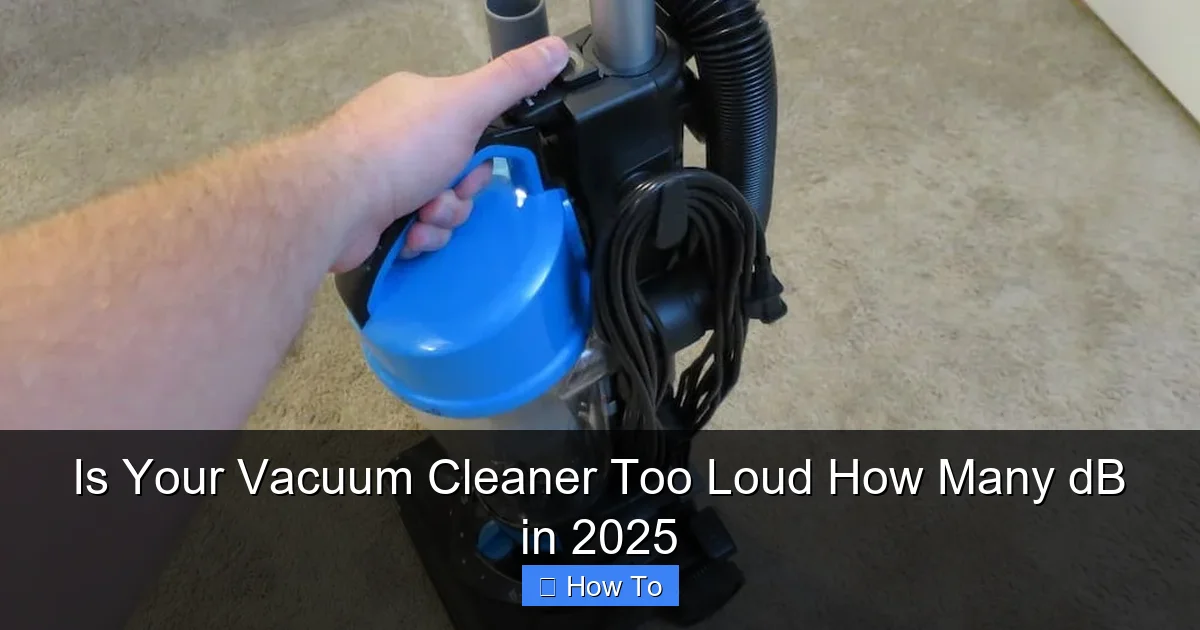
Visual guide about Is Your Vacuum Cleaner Too Loud How Many dB in 2025
Image source: themvacuums.com
- Manufacturer’s Website: Navigate to the specific model page.
- Product Manual: Your physical or digital manual should contain this information.
- Product Packaging/Labels: Some newer models, especially in regions with specific energy labeling requirements (like the EU), will have the noise level prominently displayed.
2. Read Online Reviews and Consumer Reports
If the manufacturer doesn’t explicitly state the dB level, look for independent reviews. Many tech and home appliance review sites measure and report the noise levels of the vacuums they test. Consumer reports are an excellent resource for objective data.
3. Use a Sound Meter App (with Caution)
You can download sound meter apps for your smartphone. While these aren’t professional-grade tools, they can give you a rough estimate. For best results:
- Close windows and doors to minimize ambient noise.
- Hold your phone at arm’s length, about 1 meter (3 feet) from the running vacuum.
- Perform the test on different surfaces (hard floor, carpet) and with different attachments to get a range.
Remember, these apps are indicative, not precise, but they can still tell you if your vacuum is exceptionally loud.
Tips for Quieter Vacuum Cleaner Operation
Even if you already own a vacuum that isn’t the quietest, there are steps you can take to reduce its noise output.
1. Regular Maintenance is Key
This is arguably the most important tip. A well-maintained vacuum runs more efficiently and quietly.
- Empty the Dustbin/Bag: A full dustbin or bag restricts airflow, making the motor work harder and louder.
- Clean or Replace Filters: Clogged filters drastically reduce airflow and increase motor strain. Refer to your manual for cleaning instructions.
- Check for Clogs: Hoses, attachments, and brush rolls can get clogged with debris. Regularly inspect and clear any blockages.
- Clean the Brush Roll: Hair and threads wrapped around the brush roll can cause it to drag and make more noise.
2. Use the Right Setting and Attachment
Some vacuums have variable power settings. Use the lowest effective setting for the task. Additionally, using the correct attachment (e.g., a hard floor tool instead of a power brush on bare floors) can reduce unnecessary noise.
3. Minimize Obstructions
Clear small rugs, cords, or other items that could get sucked up and cause the vacuum to strain or vibrate excessively.
4. Check for Loose Parts
Over time, screws or components can loosen, leading to rattling or vibrating noises. Periodically check and tighten any loose parts if safe to do so.
5. Consider the Surface
Vacuuming hard floors is generally quieter than vacuuming thick carpets with a rotating brush, as the brush interacts more heavily with the carpet fibers.
Buying a Quiet Vacuum Cleaner in 2025
If you’re in the market for a new vacuum cleaner and quietness is a top priority, here’s what to look for in 2025.
1. Prioritize dB Ratings
Make the dBA rating one of your primary comparison points, just as you would suction power or features. Aim for models under 70 dBA, with 60-65 dBA being ideal for ultimate quietness.
2. Look for “Silent” or “Quiet Mode” Features
Many leading brands now offer specific models or modes designed for reduced noise. These often involve insulated motors, optimized airflow paths, and specialized brush designs.
3. Consider Canister or Robot Vacuums
As mentioned, these types generally offer quieter operation compared to many uprights and shop vacs. For everyday cleaning, a quiet robot or canister vacuum can be a game-changer.
4. Evaluate Motor Insulation and Design
Premium vacuums often feature advanced motor housing and insulation to dampen sound. Look for descriptions that mention “sound dampening,” “acoustic engineering,” or “sealed systems.”
5. Check Airflow Path Optimization
A well-designed airflow path minimizes turbulence and resistance, contributing to both efficient suction and quieter operation. Manufacturers often highlight this in their product descriptions.
6. Read Reviews on Noise Specifically
Even if a manufacturer lists a dBA, sometimes the *type* of noise (e.g., high-pitched whine vs. low hum) can affect perceived loudness. Read user reviews for subjective feedback on how loud the vacuum truly sounds during use.
Troubleshooting: Why Did My Vacuum Get Louder?
It’s a common complaint: “My vacuum used to be quiet, but now it’s so loud!” Here’s a quick troubleshooting guide:
1. Check for Clogs
This is the number one culprit. Turn off and unplug the vacuum, then systematically check the brush roll, nozzle, hose, and filter for any blockages. A forgotten sock or piece of plastic can dramatically increase noise.
2. Inspect Filters
Are your filters dirty or expired? A clogged filter restricts airflow, forcing the motor to work harder and louder. Clean washable filters or replace disposable ones.
3. Examine the Brush Roll
If you have a rotating brush roll, check for tangled hair, string, or debris that might be impeding its movement. A worn or damaged brush roll can also make excess noise. Some brush rolls are user-replaceable.
4. Listen to the Motor
Is the noise coming directly from the motor housing? A sudden, high-pitched whine, grinding, or rattling from the motor could indicate a problem with the motor itself, its bearings, or a worn belt. This might require professional repair or replacement.
5. Loose or Damaged Components
Check all attachments, hoses, and the dustbin for proper seating and any cracks or damage. A loose connection can cause air leaks and an increase in noise.
6. Age and Wear
Like any appliance, vacuum cleaners wear out over time. Bearings can degrade, insulation can break down, and seals can weaken, all contributing to increased noise. Sometimes, an older, very loud vacuum simply needs to be retired.
Conclusion
Knowing “how many dB is a vacuum cleaner” is a vital piece of information for maintaining a comfortable and healthy home environment in 2025. By understanding decibel ratings, recognizing the sources of noise, and actively seeking out quieter models, you can protect your hearing and enjoy a more peaceful cleaning experience. Whether you’re maintaining your current machine or investing in a new one, prioritize quiet operation alongside suction power and features. Your ears (and your family) will thank you!
🎥 Related Video: Dyson V15 vacuum EXPOSED
📺 The Last Honest Influencer
Exposed the Dyson V15 for you. Save your money. This thing costs $1000 and is made CHEAP. This is the most honest and …