
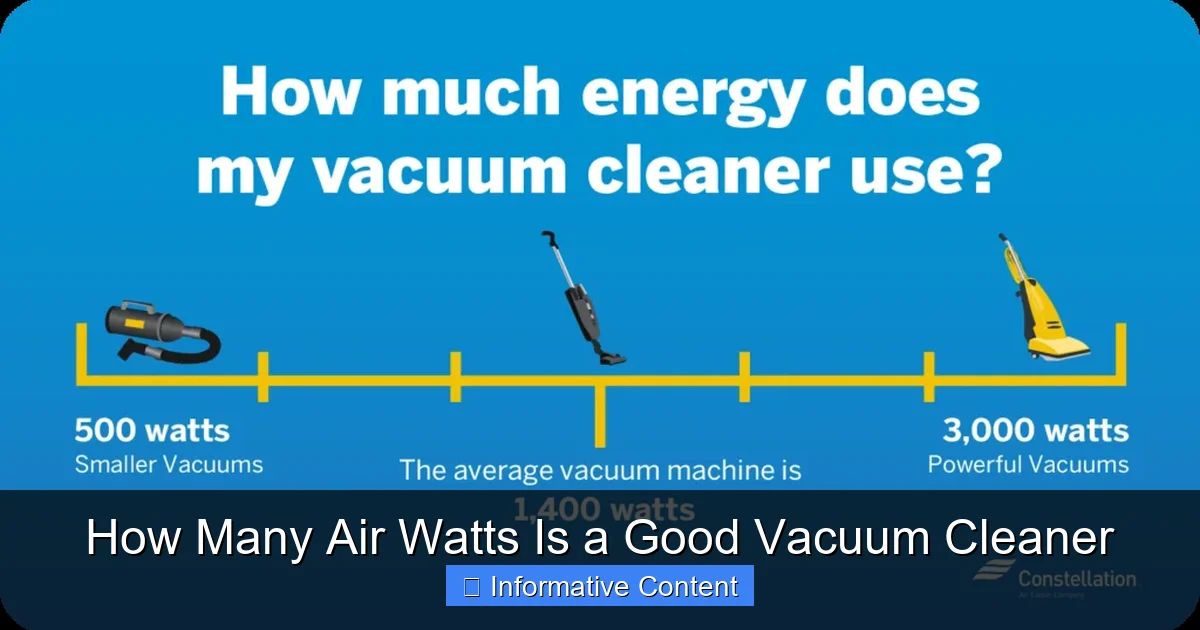
Understanding how many air watts is a good vacuum cleaner is crucial, but it’s not the only factor for superior cleaning. Air watts measure actual suction power at the nozzle, offering a more reliable indicator of performance than motor watts. While higher air watts generally mean better cleaning, a truly good vacuum also boasts efficient brush rolls, effective filtration, and a well-sealed design tailored to your specific cleaning needs.
How Many Air Watts Is a Good Vacuum Cleaner
Stepping into the world of vacuum cleaner shopping can feel like navigating a maze of confusing specifications. You see numbers like “2000W,” “12 Amps,” and then suddenly “200 Air Watts.” It’s enough to make anyone’s head spin! You just want a vacuum that actually *cleans*, right? You want to know how many air watts is a good vacuum cleaner without needing an engineering degree to figure it out.
The good news is that understanding air watts can simplify your decision-making significantly. It’s one of the most reliable metrics for judging a vacuum’s true cleaning prowess. But, like most things in life, it’s not the only piece of the puzzle. Let’s demystify air watts and explore what truly makes a vacuum cleaner “good” for your home. We’ll dive deep into what air watts mean, why they matter, and how to balance this crucial spec with other important features to find your perfect cleaning companion.
Key Takeaways
- Air Watts are Key: Air watts (AW) measure the actual suction power at the vacuum’s nozzle, making them a much better indicator of cleaning effectiveness than motor wattage alone.
- “Good” is Relative: What constitutes a “good” amount of air watts depends heavily on your specific cleaning needs, such as floor types, presence of pet hair, and frequency of cleaning.
- General Guidelines: While there’s no magic number, 100-200 AW is often good for hard floors and light carpets, 200-300 AW is strong for mixed surfaces and pet hair, and 300+ AW indicates high-performance cleaning.
- More Than Just AW: A good vacuum cleaner combines strong air watts with other vital features like efficient brush rolls, excellent filtration (e.g., HEPA), a sealed system, and appropriate attachments.
- Consider All Factors: When choosing a vacuum, evaluate your home environment, compare air watt ratings, but also look at reviews, design quality, and the overall feature set to ensure holistic cleaning performance.
- Beware of Misleading Specs: Don’t be fooled by high “motor watts” or “amps”; these don’t directly correlate to effective suction power. Always look for the air watt rating when available.
Quick Answers to Common Questions
What are air watts in a vacuum cleaner?
Air watts (AW) measure the actual cleaning power or suction at the vacuum cleaner’s nozzle, combining both airflow and suction strength. It’s a more accurate indicator of performance than motor watts.
Is 200 air watts good for a vacuum cleaner?
Yes, 200 air watts is generally considered a very good amount of suction power, suitable for a wide range of tasks including cleaning hard floors, low to medium-pile carpets, and effectively picking up pet hair.
Do more air watts mean better cleaning?
Generally, yes, more air watts indicate stronger suction and better cleaning capability. However, other factors like brush roll design, filtration, and overall vacuum sealing also significantly impact a vacuum’s real-world effectiveness.
Are air watts the same as motor watts?
No, air watts and motor watts are different. Motor watts refer to the electrical power the motor consumes, while air watts measure the actual power delivered as suction and airflow at the cleaning head.
What is a good air watt range for pet hair?
For homes with pets, a good air watt range to look for is typically 200 AW or more. This higher suction power helps effectively remove stubborn pet hair from various surfaces, especially carpets.
📑 Table of Contents
- Understanding Vacuum Power: Beyond Amps and Watts
- What Exactly Are Air Watts (AW)?
- The “Good Vacuum Cleaner” Baseline: How Many Air Watts Do You Need?
- Factors Influencing Your Air Watt Needs
- The Great Debate: Air Watts vs. Other Performance Metrics
- Choosing Your Perfect Vacuum: More Than Just Air Watts
- Conclusion
Understanding Vacuum Power: Beyond Amps and Watts
Before we talk about how many air watts is a good vacuum cleaner, it’s essential to clarify what common terms like “amps” and “watts” actually refer to in the vacuum world. Often, manufacturers will highlight these numbers, but they can be misleading if you’re looking for true suction power.
Motor Watts vs. Suction Power
When you see a vacuum cleaner advertised with “1800 Watts” or “2000 Watts,” this typically refers to the electrical power the motor *consumes*, not the power it delivers as suction. A higher motor wattage *can* indicate a more powerful motor, but it doesn’t automatically translate to better cleaning performance at the nozzle. Why? Because a lot of that electrical power can be lost as heat, noise, or simply inefficient design.
Think of it like this: a car with a big engine might consume a lot of fuel (motor watts), but if it’s poorly designed, heavy, or has inefficient tires, it won’t necessarily be the fastest or most efficient on the road. The same principle applies to vacuums. A highly efficient motor with a lower wattage might actually generate more effective suction than a less efficient, higher-wattage motor.
The Amperage Myth
Similarly, “amps” (amperes) refer to the electrical current drawn by the vacuum’s motor. This number is more about the electrical circuit requirements in your home than it is about cleaning power. A high amperage rating might tell you to be careful not to trip a breaker, but it tells you very little about how effectively the vacuum will lift dirt from your carpets. So, while motor watts and amps are technical specifications, they aren’t the best indicators for understanding how many air watts is a good vacuum cleaner.
What Exactly Are Air Watts (AW)?
This is where the real talk about suction power begins. Air watts (AW) are a measurement of the air flow and power at the cleaning head of the vacuum cleaner. Unlike motor watts, which measure electrical input, air watts measure the *output* of cleaning power—the actual work being done to lift dirt.
How Air Watts are Measured
Air watts are calculated using a formula that takes into account both airflow (measured in cubic feet per minute or CFM) and suction power (measured in inches of water lift or kPa). The industry standard for measuring air watts is often based on the ASTM F558 standard, which provides a consistent way to compare performance between different vacuum cleaners.
In simpler terms, air watts represent the combination of how much air the vacuum can move and how strongly it can pull that air. A vacuum needs both good airflow to carry debris into the dustbin and strong suction to lift stubborn dirt and debris from surfaces. A good balance of these two factors equals a higher air watt rating and, generally, a more effective cleaning machine.
Why Air Watts Matter More
If you’re asking how many air watts is a good vacuum cleaner, focusing on this metric is far more practical than looking at motor watts. It gives you a direct indication of the vacuum’s ability to pick up dust, dirt, pet hair, and debris. When a manufacturer provides an air watt rating, they’re essentially telling you how much power is actually being delivered where it counts: at the cleaning nozzle. This is why air watts are a superior metric for comparing cleaning performance.
The “Good Vacuum Cleaner” Baseline: How Many Air Watts Do You Need?
So, down to the burning question: how many air watts is a good vacuum cleaner? The truth is, there’s no single magic number, as “good” is subjective and depends entirely on your specific needs. However, we can provide some general ranges to help you understand what to look for.
Air Watt Ranges and What They Mean
Let’s break down air watt ratings into categories:
-
Entry-Level/Handheld Vacuums (20-100 Air Watts):
These smaller units are typically designed for quick clean-ups, spills, and car interiors. They’re great for light tasks but won’t be sufficient for deep cleaning entire homes. For instance, a small handheld might have 20-40 AW, while a powerful stick vacuum might hit 80-100 AW, making it suitable for light daily maintenance on hard floors.

Visual guide about How Many Air Watts Is a Good Vacuum Cleaner
Image source: cdn.shopify.com
-
Mid-Range Vacuums (100-200 Air Watts):
This range is generally considered good for homes with mostly hard floors, low-pile carpets, or for those who perform light to moderate cleaning. Many basic upright and canister vacuums fall into this category. If you don’t have pets or very thick carpets, a vacuum in this range with efficient brush rolls could be a perfectly good vacuum cleaner for daily use.
-
Powerful All-Rounders (200-300 Air Watts):
Now we’re talking about serious cleaning power! Vacuums in this range are excellent for mixed floor types, including medium-pile carpets, and are often a good choice for homes with pets where significant hair clean-up is needed. Many high-quality upright and canister models will feature air watt ratings within this bracket. For many households, 200-300 AW represents how many air watts is a good vacuum cleaner for versatile and effective cleaning.
-
High-Performance/Heavy-Duty (300+ Air Watts):
These are the powerhouses of the vacuum world. Vacuums with 300 or more air watts are designed for deep cleaning thick carpets, tackling heavily soiled areas, or managing multiple shedding pets. Commercial-grade vacuums or top-tier residential models often boast these impressive figures. If you have a large home, plush carpets, or significant cleaning challenges, aiming for this range is a smart move.
Remember, these are guidelines. A stick vacuum with 100 AW for a small apartment with hardwood floors could be considered a “good vacuum cleaner,” while a homeowner with thick shag carpets and three dogs might need 300+ AW to achieve the same level of satisfaction.
Factors Influencing Your Air Watt Needs
Knowing how many air watts is a good vacuum cleaner isn’t just about picking a number; it’s about matching that number to your lifestyle and home environment. Several factors will dictate your ideal air watt range.
Floor Types
- Hard Floors (Hardwood, Tile, Laminate): These typically require less suction power to clean effectively. Even a vacuum with 100-150 AW can do a fantastic job, especially if it has soft brush rolls or specialized attachments that don’t just push dirt around.
- Low- to Medium-Pile Carpets: These need more suction to pull dirt from the fibers. A vacuum with 150-250 AW is generally a good starting point.
- High-Pile or Plush Carpets/Rugs: These are the most challenging. You’ll definitely want a vacuum on the higher end, ideally 250 AW or more, combined with an effective brush roll to agitate the fibers and release trapped dirt.
Pet Hair and Allergies
If you have shedding pets, you’ll want to lean towards higher air watt ratings. Pet hair can be notoriously difficult to pick up, especially when embedded in carpets. A vacuum with 200 AW or more will significantly improve your chances of a truly clean home. Furthermore, if anyone in your household suffers from allergies or asthma, strong suction is crucial not just for visible dirt but for pulling in microscopic allergens. Pair this with a HEPA filtration system for the best results.
Home Size and Cleaning Frequency
For larger homes, a more powerful vacuum (higher air watts) can make cleaning more efficient and less time-consuming. You’ll cover more ground and achieve better results in fewer passes. If you clean frequently (e.g., daily or every other day), you might get away with slightly lower air watts for general maintenance, but for weekly deep cleans, more power is always beneficial.
Specific Cleaning Tasks
Consider what else you’ll be using the vacuum for. Will you be cleaning upholstery, drapes, car interiors, or workshop debris? Some tasks demand more specialized attachments and robust suction. A vacuum with variable suction power, even if it has high peak air watts, can be incredibly versatile.
The Great Debate: Air Watts vs. Other Performance Metrics
While air watts are an incredibly useful metric, they don’t tell the whole story. A vacuum cleaner is a system, and its overall effectiveness is a sum of its parts. Focusing solely on air watts would be like buying a car based only on horsepower, ignoring its brakes, suspension, or safety features.
Brush Roll Effectiveness
Especially for carpets, the brush roll (or agitator) is arguably as important as suction power. A strong brush roll effectively loosens dirt, dust, and pet hair from carpet fibers, allowing the vacuum’s suction to pull it in. A high air watt vacuum with a weak or poorly designed brush roll might perform worse on carpet than a lower air watt vacuum with an excellent brush roll. Look for motorized brush rolls, and ideally, ones that can be turned off for hard floors to prevent scratching.
Filtration System
For a truly clean home and improved air quality, the filtration system is paramount. HEPA filters are the gold standard, capturing 99.97% of airborne particles as small as 0.3 microns, including pollen, pet dander, dust mites, and mold spores. A powerful vacuum with a leaky or inadequate filter can simply blow fine dust back into your air, defeating the purpose of cleaning. A good vacuum cleaner combines strong suction with excellent filtration.
Design and Sealing
How well a vacuum cleaner is designed and sealed affects how efficiently its motor’s power translates into air watts. Poorly sealed joints or a clunky design can lead to suction loss, meaning a vacuum might *rate* highly in air watts, but some of that power is wasted before it reaches the cleaning head. Look for well-constructed models from reputable brands.
Attachments and Versatility
A good vacuum cleaner should be versatile. A range of useful attachments (crevice tool, upholstery tool, dusting brush, pet turbo brush) can extend the vacuum’s utility beyond just floor cleaning. Even a vacuum with moderate air watts can be incredibly effective for specialized tasks if it has the right tools.
Maneuverability, Weight, and Noise Level
These ergonomic factors contribute significantly to user satisfaction. A powerful vacuum that’s too heavy, difficult to steer, or excessively loud might deter you from using it regularly. Consider your physical capabilities and living situation when making a choice.
Brand Reputation, Warranty, and Price
Sometimes, a higher price tag comes with better build quality, more efficient motors, and superior components that contribute to better air watts and overall performance. Reputable brands often have better customer service and warranties. Reading user reviews and expert comparisons can provide invaluable insights that go beyond raw specifications.
Choosing Your Perfect Vacuum: More Than Just Air Watts
Now that you have a comprehensive understanding of how many air watts is a good vacuum cleaner, and the other factors that contribute to a vacuum’s effectiveness, let’s put it all together.
1. Assess Your Cleaning Needs First
- What are your primary floor types? (Hardwood, low-pile carpet, plush carpet, mixed?)
- Do you have pets? If so, what kind and how much do they shed?
- Are allergies a concern?
- How large is your home?
- How often do you vacuum?
- What’s your budget?
Answering these questions will help you narrow down the ideal air watt range and feature set.
2. Look for Air Watt Ratings
Prioritize manufacturers who clearly state their air watt ratings, as this indicates transparency and confidence in their product’s actual cleaning power. If a brand only lists motor watts, it’s a red flag. Be prepared to do some research, as not all manufacturers list this metric prominently.
3. Don’t Forget the Brush Roll
Especially for carpeted homes, ensure the vacuum has an effective, motorized brush roll. Adjustable height settings or the ability to turn off the brush roll are bonuses.
4. Prioritize Filtration
If allergies are a concern, a sealed HEPA filtration system is a must. This ensures that the fine dust and allergens picked up by the strong suction stay trapped inside the vacuum.
5. Read Reviews and Watch Demos
Real-world performance can sometimes differ from specifications. User reviews and professional video demonstrations can offer insights into a vacuum’s maneuverability, noise level, and actual cleaning effectiveness on different surfaces. They can often provide a clearer picture of how many air watts is a good vacuum cleaner in practice.
6. Consider the Whole Package
Beyond power, think about the vacuum type (upright, canister, stick, robot), its weight, ease of emptying, maintenance requirements, and the availability of attachments. A powerful vacuum that’s a pain to use isn’t a good vacuum for you.
Conclusion
Deciphering how many air watts is a good vacuum cleaner might seem complex at first, but it truly is one of the most vital metrics for understanding a vacuum’s cleaning capabilities. Unlike motor watts or amps, air watts tell you the real story of suction power at the cleaning head. For general purposes, aiming for a vacuum with 150-250 air watts will serve many households well, with higher numbers (250-300+ AW) being ideal for challenging environments with pets or thick carpets.
However, never lose sight of the bigger picture. A truly good vacuum cleaner is a harmonious blend of strong suction (measured in air watts), efficient brush rolls, superior filtration, and thoughtful design. By considering all these factors in relation to your unique home and cleaning habits, you’ll be well-equipped to choose a vacuum that not only boasts impressive air watts but also delivers a genuinely spotless and healthy living environment. Happy vacuuming!
Frequently Asked Questions
What’s the difference between motor watts and air watts?
Motor watts indicate the electrical power consumed by the vacuum’s motor, a measure of input. Air watts, on the other hand, quantify the actual suction power and airflow at the nozzle, representing the cleaning output. Air watts are a more reliable indicator of a vacuum’s cleaning effectiveness.
Is a higher air watt rating always better?
While a higher air watt rating generally indicates stronger suction, it doesn’t automatically guarantee a “better” vacuum for everyone. The ideal air watt level depends on your specific needs, such as floor types and the presence of pet hair. A vacuum with slightly lower air watts but an excellent brush roll and filtration system might perform better in certain scenarios than a high-AW vacuum with poor design.
How many air watts do stick vacuums typically have?
Stick vacuums usually have lower air watt ratings compared to full-sized upright or canister vacuums, ranging from around 20 AW for basic models up to 150-200 AW for high-end cordless stick vacuums. The stronger ones are quite powerful for their size and excellent for daily maintenance and quick clean-ups.
Why do some manufacturers not list air watts?
Some manufacturers may not list air watts because it’s not a universally mandated standard, or they might prefer to highlight less relevant but larger numbers like motor watts or amps, which can sound more impressive to an uninformed consumer. Companies that do list air watts often use the ASTM F558 standard, indicating transparency and confidence in their product’s performance.
Can a vacuum cleaner have too many air watts?
In terms of cleaning power, a vacuum can’t really have “too many” air watts. However, extremely high air watt vacuums might be overkill for simple tasks, potentially costing more, being louder, or consuming more energy than necessary for your specific needs. The goal is to find the right balance for your home.
Does air wattage affect battery life in cordless vacuums?
Yes, higher air watt settings on cordless vacuums will significantly impact battery life. Generating more suction power requires more energy from the battery, leading to shorter run times. Many cordless vacuums offer different power modes, allowing you to balance suction strength with battery longevity as needed.