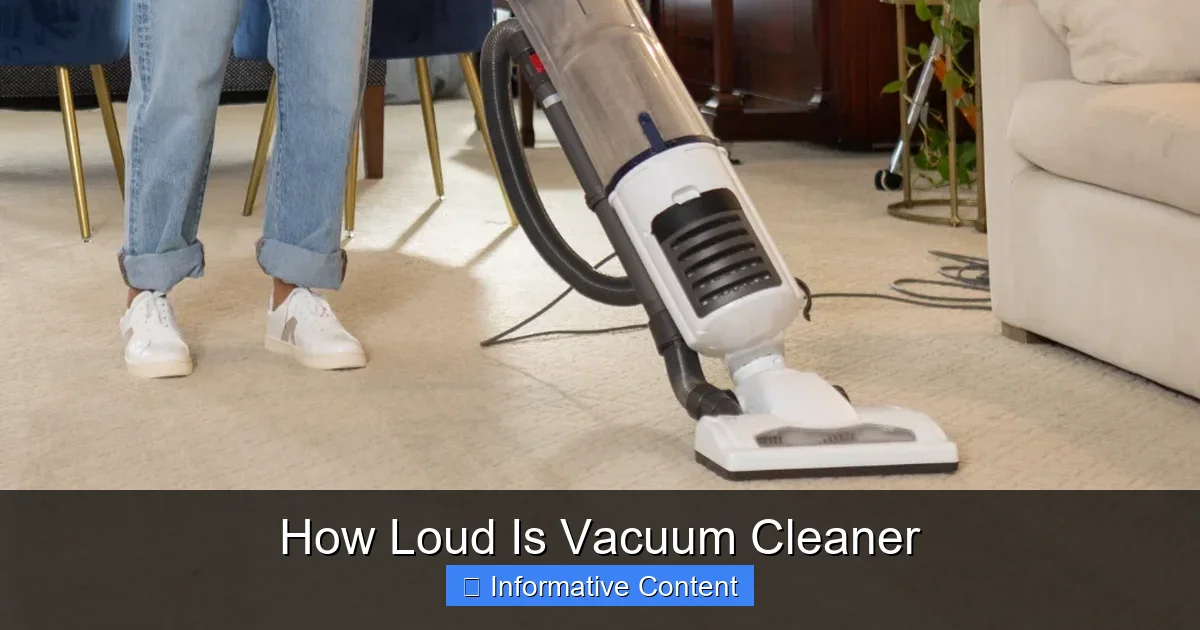
Ever wondered just how loud is a vacuum cleaner? From a quiet whisper to a roaring jet, their noise levels vary significantly, typically ranging from 60 to 85 decibels. Understanding these levels is crucial for protecting your hearing and creating a more comfortable home environment, especially with prolonged use.
Ah, the trusty vacuum cleaner. It’s an essential tool in nearly every home, a marvel of modern convenience that sucks up dirt, dust, and pet hair, keeping our living spaces spick and span. But let’s be honest, for all its utility, it often comes with a significant drawback: the noise. That familiar roar can sometimes feel less like a cleaning companion and more like a jet engine preparing for takeoff in your living room. It’s enough to make you wonder, how loud is vacuum cleaner noise really?
The sound of a vacuum cleaner isn’t just a minor annoyance; it can be a significant factor in how often you clean, when you clean, and even which model you choose. For pet owners, parents of napping toddlers, or anyone living in an apartment building with thin walls, a loud vacuum can turn a simple chore into a noisy nuisance. Beyond personal comfort, there are actual health considerations when it comes to prolonged exposure to loud noises. So, let’s dive deep into the world of decibels and explore just how loud vacuum cleaner models can get, why it matters, and what you can do about it.
Understanding the intricacies of vacuum cleaner noise goes beyond simply knowing it’s “loud.” We’ll explore the science behind sound measurement, delve into the average decibel levels of different vacuum types, discuss the potential health impacts, and arm you with practical tips for choosing and using a quieter machine. By the end of this article, you’ll have a clear picture of what to expect and how to ensure your cleaning routine is as peaceful as possible.
Key Takeaways
- Average Decibel Range: Most vacuum cleaners operate between 60 and 85 dB, comparable to a normal conversation or a noisy restaurant, but some can exceed 90 dB, which is harmful with prolonged exposure.
- Health Risks of Noise: Continuous exposure to vacuum cleaner noise, especially above 70-75 dB, can contribute to hearing fatigue, tinnitus, stress, and even long-term hearing damage.
- Factors Affecting Loudness: Motor power, internal design (insulation, airflow), brush roll type, filter condition, and even the type of flooring all play a role in how loud a vacuum cleaner is.
- Types Vary Widely: Robotic and stick vacuums tend to be quieter (50-70 dB), while powerful uprights and shop vacs can be much louder (75-95+ dB). Canister models often fall in the middle.
- Choosing a Quieter Model: Look for models explicitly advertised as “quiet” or “low noise,” check their dB ratings, and consider features like sealed systems, advanced motor technology, and rubberized wheels.
- Reducing Noise at Home: Regular maintenance (cleaning filters, emptying dustbin, clearing blockages), proper usage (avoiding prolonged use, using lower power settings), and even wearing hearing protection can help mitigate noise.
Quick Answers to Common Questions
What is the average decibel level of a vacuum cleaner?
Most vacuum cleaners operate between 60 and 85 decibels (dB), with quieter models around 50-70 dB and louder ones exceeding 85 dB.
Can vacuum cleaner noise damage hearing?
Yes, prolonged or frequent exposure to vacuum cleaner noise above 70-75 dB can contribute to hearing fatigue, tinnitus, and potentially long-term hearing damage over time.
Which type of vacuum cleaner is typically the quietest?
Robot vacuums and many cordless stick vacuums are generally the quietest, often operating in the 50-70 dB range.
What factors make a vacuum cleaner loud?
Motor power, the design of airflow pathways, the brush roll, poor insulation, clogged filters, and blockages all contribute to a vacuum cleaner’s loudness.
How can I reduce the noise of my existing vacuum cleaner?
Regular maintenance (cleaning filters, emptying the dustbin, clearing blockages), using lower power settings, and even wearing hearing protection can help reduce noise.
📑 Table of Contents
Understanding Decibels (dB): The Language of Sound
Before we can truly grasp how loud is a vacuum cleaner, we need a basic understanding of how sound is measured. The unit we use is the decibel, abbreviated as dB. Decibels are a logarithmic unit, which means that a small increase in the number represents a much larger increase in sound intensity. For example, an increase of 10 dB means the sound is perceived as roughly twice as loud.
What is a Decibel?
A decibel quantifies the intensity or loudness of a sound. It’s not a linear scale, so if one vacuum is 70 dB and another is 80 dB, the 80 dB vacuum isn’t just “a little louder”—it’s significantly louder to the human ear. This logarithmic scale helps us measure the vast range of sounds we experience, from the faintest whisper to the loudest rock concert. The human ear can typically perceive sounds from 0 dB (the threshold of hearing) up to around 120-130 dB (the threshold of pain).
Safe Listening Levels and Common Noise Comparisons
Understanding what constitutes a “safe” noise level is crucial for your hearing health. Health organizations, like the World Health Organization (WHO), recommend that continuous exposure to noise above 70 dB can begin to cause hearing damage over time. Brief exposure to sounds above 120 dB can cause immediate damage. So, how do everyday sounds compare?
- 30 dB: A whisper, a quiet library.
- 50-60 dB: Normal conversation, refrigerator hum.
- 60-70 dB: Dishwasher, washing machine, busy office.
- 70-80 dB: Ringing telephone, busy street traffic, most vacuum cleaners.
- 80-90 dB: Heavy truck traffic, garbage disposal, some very loud vacuum cleaners, power lawnmower.
- 100 dB: Motorcycle, jackhammer, nightclub.
- 120 dB: Thunderclap, chain saw, ambulance siren.
When you consider these comparisons, you can see why the question, “how loud is vacuum cleaner noise?” becomes more than just curiosity—it’s a health consideration. A vacuum operating at 75 dB for an hour or more can contribute to hearing fatigue, and over many years, potentially permanent damage.
How Loud Are Vacuum Cleaners Really? Average dB Levels by Type
The reality of “how loud is vacuum cleaner” truly depends on the type, model, and even its age and condition. There isn’t a single answer, but rather a spectrum. Let’s break down the typical noise levels for different categories of vacuum cleaners.
Visual guide about How Loud Is Vacuum Cleaner
Image source: cleanerstalk.com
Robot Vacuums: The Quietest Cleaners
Generally speaking, robot vacuums are among the quietest options available. Their compact motors and design prioritize stealth for autonomous cleaning. Most robot vacuums operate in the range of 50 to 70 dB. Some premium models boast even lower levels, dipping into the high 40s. This makes them ideal for homes where noise is a major concern, as they can often clean without significantly disrupting conversations or even a TV show.
Stick Vacuums: Convenient and Relatively Quiet
Stick vacuums, especially cordless models, also tend to be on the quieter side, often falling between 60 to 75 dB. Their smaller motors and focus on lightweight design contribute to this. While they might not be as whisper-quiet as some robot vacuums, they are typically less intrusive than traditional upright or canister models, making them a popular choice for quick clean-ups without too much fuss. However, some more powerful cordless stick vacuums designed for deep cleaning can push towards the higher end of this range.
Canister Vacuums: Variable but Often Moderate
Canister vacuums offer a wide range of noise levels, usually between 65 to 80 dB. Their design separates the motor from the cleaning head, which can sometimes allow for better insulation of the motor, leading to quieter operation than a comparable upright. However, powerful canister models with strong suction can still generate significant noise. The quality of insulation and motor design plays a big role here. Many Miele and Electrolux canister vacuums are renowned for their relatively quiet operation within this category.
Upright Vacuums: The Traditional Roar
This is where “how loud is vacuum cleaner” often starts to hit higher numbers. Upright vacuums, particularly those designed for powerful deep cleaning, tend to be the loudest category. Their noise levels typically range from 70 to 85 dB, but some older or less efficient models can easily exceed 90 dB. The motor is often integrated directly into the main body, and powerful suction requires robust motors that can generate substantial noise. The brush roll, especially on hard floors, can also add to the overall decibel reading.
Handheld and Shop Vacs: Situationally Loud
Handheld vacuums are small and convenient for quick messes, and their noise levels can vary widely from 60 to 80 dB. Because they are often used for very short bursts, their noise might be less of a concern. Shop vacuums (wet/dry vacs), on the other hand, are built for heavy-duty tasks and are notoriously loud, often ranging from 80 to 95 dB or even higher. They are designed for power and durability, not quiet operation, and are usually used in garages or workshops where noise isn’t as critical.
Health Impacts of Vacuum Cleaner Noise
It’s not just about comfort; the answer to “how loud is vacuum cleaner noise?” has direct implications for your health. Prolonged or repeated exposure to high noise levels from vacuuming can have several negative effects.
Hearing Fatigue and Damage
The most immediate concern is hearing fatigue. After vacuuming for an extended period, you might notice your ears feeling tired, ringing (tinnitus), or difficulty hearing subtle sounds. While often temporary, consistent exposure to noise above 70-75 dB can lead to permanent hearing loss over time. This is especially true if you vacuum frequently or for long durations, turning a routine chore into a potential health hazard.
Stress and Annoyance
Beyond hearing, loud noise is a common stressor. The persistent drone of a loud vacuum can elevate stress levels, making you feel more irritable, anxious, or tired. It can disrupt concentration, make phone calls or conversations impossible, and generally detract from your home’s peaceful atmosphere. For many, this psychological impact is as significant as the physical one.
Disruption to Others and Pets
Consider others in your household: babies trying to nap, children studying, or family members working from home. A loud vacuum cleaner can be a significant disruption. Pets are often particularly sensitive to loud noises. Dogs and cats can experience fear and anxiety due to the high-pitched whine and powerful suction sound, leading to stress behaviors or attempts to hide. Understanding how loud is vacuum cleaner noise relative to your family’s and pets’ comfort levels is important for a harmonious home.
Factors Influencing Vacuum Cleaner Loudness
Why do some vacuums sound like a gentle hum while others mimic a jet engine? Several key factors contribute to how loud is vacuum cleaner noise.
Motor Power and Design
At the heart of every vacuum is its motor. More powerful motors, while offering stronger suction, often generate more noise. The type of motor (e.g., traditional brushed motors versus newer brushless digital motors) and how well it’s insulated within the vacuum’s casing are crucial. Motors encased in sound-dampening materials will naturally be quieter.
Airflow and Suction Mechanism
The way air moves through the vacuum also greatly impacts noise. Turbines, fans, and the design of the air pathways all contribute to the sound. Efficient airflow design can reduce turbulence and therefore noise, while blockages or poorly designed air channels can create whistling or roaring sounds. Stronger suction often means more air being pulled through, which can be inherently louder.
Brush Roll and Head Design
The brush roll (or beater bar) is another major contributor to noise, especially on hard floors. A spinning brush roll can create a significant amount of noise as it hits the floor and stirs up debris. Some vacuums offer brush roll shut-off features for hard floors, which not only protects the floor but also reduces noise. The type of wheels and the construction of the cleaning head itself can also affect how loudly the vacuum glides across different surfaces.
Filtration System and Sealing
A poorly sealed vacuum can allow air (and thus noise) to escape through unintended gaps. High-quality filtration systems, especially HEPA filters, can sometimes slightly increase motor strain, potentially making the vacuum work harder and be a little louder, but this is usually minor compared to other factors. A well-sealed system, however, ensures air only flows where it’s supposed to, which can help contain noise.
Maintenance and Floor Type
Believe it or not, how you maintain your vacuum plays a role in how loud it becomes. Clogged filters, full dustbins, or blockages in the hose or brush roll can make the motor work harder, increasing noise. Additionally, the type of surface you’re cleaning impacts the sound. Vacuuming plush carpets might dampen some noise, while hard floors can amplify motor sounds and the clatter of the brush roll.
Tips for Choosing a Quieter Vacuum Cleaner
If you’re in the market for a new vacuum and prioritizing peace and quiet, here’s what to look for when considering how loud is vacuum cleaner noise:
Check Decibel Ratings
The most direct way to assess a vacuum’s loudness is to check its advertised decibel (dB) rating. Many manufacturers, especially those marketing “quiet” models, will explicitly state this. Aim for models rated 70 dB or below for significantly quieter operation. Keep in mind that a 5 dB difference is noticeable, and a 10 dB difference is perceived as twice as loud.
Look for “Silent” or “Low Noise” Models
Some brands specifically design and market vacuums as “silent” or “low noise.” These models often incorporate advanced sound-dampening materials, optimized airflow pathways, and quieter motor technologies. Brands like Miele, Electrolux, and certain Dyson models often feature prominently in this category.
Consider Vacuum Type
As discussed, robot and stick vacuums are generally quieter than traditional uprights and shop vacs. If your cleaning needs align with these types, you’re already on the path to a quieter home. Canister vacuums can also be a good option if you choose a model known for its quiet design.
Features for Quiet Operation
- Sealed Systems: A tightly sealed system prevents air (and noise) from escaping through cracks.
- Brush Roll Shut-Off: Being able to turn off the spinning brush roll on hard floors significantly reduces noise and protects your floors.
- Rubberized Wheels: These glide more quietly across hard surfaces than plastic wheels.
- Soft Start Motors: Motors that power up gradually can be less jarring than those that immediately jump to full power.
- Multiple Power Settings: Many stick and robot vacuums offer different power modes. Using a lower power setting when sufficient will result in less noise.
Strategies to Reduce Vacuum Noise in Your Home
Even if you already own a vacuum, there are ways to manage and reduce the noise, addressing the question, “how loud is vacuum cleaner when I use it?”
Regular Maintenance is Key
A well-maintained vacuum runs more efficiently and often quieter. Regularly:
- Empty the Dustbin/Change Bag: A full dustbin or bag restricts airflow, forcing the motor to work harder and louder.
- Clean/Replace Filters: Clogged filters also impede airflow. Cleanable filters should be washed regularly, and disposable filters replaced as per manufacturer instructions.
- Clear Blockages: Check hoses, attachments, and the brush roll for any lodged debris (hair, socks, paper) that can hinder airflow or cause rattling.
- Clean the Brush Roll: Hair and fibers wrapped around the brush roll can reduce its efficiency and increase noise.
Use Hearing Protection
For particularly loud vacuums or extended cleaning sessions, consider wearing earplugs or noise-canceling headphones. This is a simple, effective way to protect your hearing, especially if you have an older, very loud model.
Time Your Cleaning Sessions
If possible, vacuum during times when noise will be less disruptive. This might mean mid-morning when family members are out, or during the day if you live in an apartment, rather than late at night or early in the morning.
Vacuum on Lower Settings
Many modern vacuums, especially stick and canister models, come with variable power settings. Unless you’re tackling deeply embedded dirt, using a lower suction setting can significantly reduce noise while still providing effective cleaning.
Consider Acoustic Solutions
While not directly related to the vacuum itself, the acoustics of your home can impact how loud a vacuum cleaner sounds. Rooms with lots of hard surfaces (wood floors, bare walls) will reflect sound, making it seem louder. Adding rugs, curtains, upholstered furniture, and even wall art can help absorb sound and make the overall environment feel quieter.
Conclusion
The question of “how loud is vacuum cleaner” is more complex than it first appears, revealing a spectrum of noise levels that can impact not just your comfort, but also your health and the peace of your home. From the gentle hum of a robotic cleaner to the robust roar of a powerful upright, understanding decibel ratings and the factors influencing loudness empowers you to make informed decisions.
Whether you’re investing in a new model or trying to quiet down your existing machine, remember that quiet cleaning is within reach. By choosing models with lower dB ratings, prioritizing maintenance, and adopting smart cleaning habits, you can effectively reduce vacuum cleaner noise. A quieter vacuum doesn’t just mean a more pleasant chore; it contributes to a more serene home environment for everyone, including your furry friends. So next time you reach for your vacuum, you’ll be armed with the knowledge to make your cleaning routine as silent (or at least as quiet) as possible.
Frequently Asked Questions
How does a vacuum cleaner’s decibel rating compare to everyday sounds?
A vacuum cleaner’s typical range of 60-85 dB is comparable to sounds like a normal conversation (60 dB), a washing machine (70 dB), or a busy street (75 dB). Some louder models can approach the noise level of heavy traffic or a power lawnmower (85-90 dB).
Are “silent” vacuums truly silent?
No, “silent” vacuums are not truly silent, as all operating machinery produces some sound. However, they are specifically engineered with advanced sound-dampening technology to operate at significantly lower decibel levels (often 50-60 dB) than conventional models, making them much quieter and less disruptive.
Does a higher suction power always mean a louder vacuum?
Not necessarily. While historically more powerful motors often meant more noise, advancements in motor technology and acoustic design allow modern vacuums to achieve high suction with lower noise levels. Efficient airflow design and good insulation can help mitigate noise even with strong suction.
Can wearing headphones while vacuuming protect my hearing?
Yes, wearing earplugs or noise-canceling headphones can effectively protect your hearing from vacuum cleaner noise, especially during extended cleaning sessions or if you own a particularly loud model. This is a practical solution for immediate noise reduction.
Do full dustbins or bags make a vacuum louder?
Absolutely. A full dustbin or bag, along with clogged filters, restricts airflow, forcing the vacuum’s motor to work harder to maintain suction. This increased effort often results in a noticeable increase in the overall operating noise level of the machine.
Is it bad for pets to be around a loud vacuum cleaner?
Yes, many pets are highly sensitive to loud noises, and the sound of a vacuum cleaner can cause them significant stress, anxiety, or fear. Prolonged exposure can lead to behavioral issues or discomfort, so it’s advisable to consider a quieter model or clean when pets are in another room.