
Vacuum cleaners typically operate between 60 and 85 decibels (dB), with some older or less efficient models exceeding 90 dB. This noise level can pose a risk of noise-induced hearing loss with prolonged or regular exposure, making it important to understand the factors affecting vacuum sound and how to choose quieter alternatives for a healthier home.
Have you ever stopped to really *listen* to your vacuum cleaner? For many of us, the roar, whine, or hum of a vacuum is just part of the routine, a necessary evil in the quest for a clean home. We might crank up the TV, shout over the noise, or simply tolerate it for the short time it takes to get the job done. But have you ever truly considered the impact of that noise on your hearing and your overall well-being?
It’s a question worth asking, especially as we spend more time at home and become more conscious of our immediate environment. Understanding how loud is a vacuum cleaner in decibels isn’t just about curiosity; it’s about making informed choices for your health and comfort. From the moment you hit the power button, your ears are exposed to a certain level of sound, and depending on your vacuum and how long you use it, this exposure can add up.
This article is your friendly guide to demystifying vacuum cleaner noise. We’ll dive into what decibels actually mean, what the typical noise levels are for different types of vacuums, and crucially, why these numbers matter for your health. Plus, we’ll share practical tips on how to choose a quieter vacuum and even how to make your current one a little less disruptive. Let’s turn down the volume on confusion and clear up the facts about vacuum cleaner noise!
Key Takeaways
- Typical Decibel Range: Most household vacuum cleaners fall within the 60-85 dB range, which can be comparable to a normal conversation or heavy city traffic.
- Hearing Health Risks: Prolonged exposure to noise levels above 70-85 dB can contribute to noise-induced hearing loss, making understanding how loud is a vacuum cleaner in decibels crucial.
- Factors Influencing Noise: Motor power, airflow design, filtration systems, construction materials, and the age/maintenance of the vacuum all play a significant role in its overall sound level.
- Quieter Options Exist: Many modern vacuum cleaners are specifically designed for quiet operation, often rated below 70 dB, offering a more comfortable cleaning experience.
- Check Decibel Ratings: Always look for the decibel rating on a vacuum cleaner’s specifications before purchasing to make an informed choice for a quieter home environment.
- Practical Noise Reduction: Simple steps like regular maintenance, cleaning filters, and even using hearing protection can help manage noise from your existing vacuum.
Quick Answers to Common Questions
How loud is a vacuum cleaner in decibels on average?
Most household vacuum cleaners typically operate in the range of 60 to 85 decibels (dB), with some older or more powerful models potentially exceeding 90 dB.
Is 70 dB considered loud for a vacuum cleaner?
While 70 dB is generally considered the threshold for potential hearing damage with prolonged exposure, for a vacuum cleaner, it’s actually on the quieter side, often comparable to a normal conversation.
What decibel level is safe for vacuuming?
There isn’t a single “safe” decibel level for all durations. However, continuous exposure to anything above 70-75 dB can pose a risk over time. For optimal hearing protection, aiming for a vacuum cleaner under 70 dB is recommended.
Do quiet vacuums compromise on suction power?
Not necessarily. Modern engineering allows manufacturers to design vacuums that offer powerful suction while employing advanced noise-reduction technologies, meaning you can often find quiet vacuums with excellent cleaning performance.
Can I reduce the noise of my current loud vacuum cleaner?
Yes, you can! Regularly emptying the dustbin, cleaning or replacing filters, checking for blockages, and ensuring all components are tight can often help reduce the noise output of an existing vacuum.
📑 Table of Contents
Understanding Decibels and Vacuum Noise
Before we talk about how loud a vacuum cleaner is in decibels, let’s get a basic understanding of what decibels (dB) are. It’s not just a number; it’s a measurement that helps us understand sound intensity, which directly relates to how loud something sounds to our ears.
What Exactly Are Decibels?
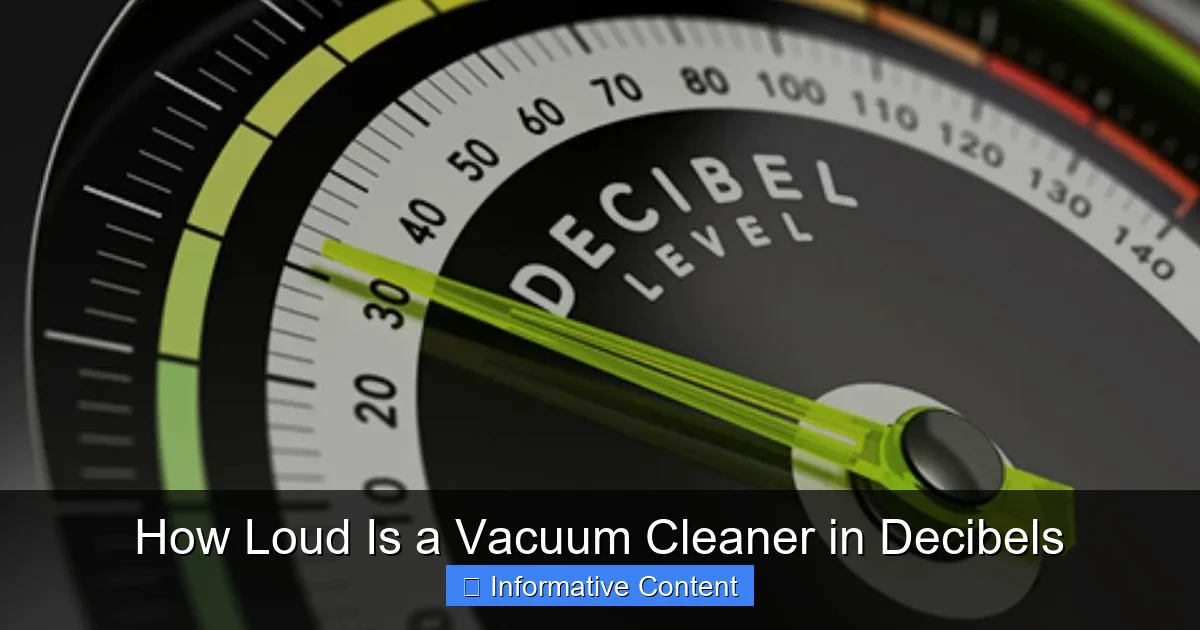
Decibels are units used to measure the intensity of sound. What’s interesting is that the decibel scale is logarithmic, meaning a small increase in decibel numbers represents a very large increase in sound energy. For example, an increase of just 10 dB means the sound is perceived as twice as loud. This is why a vacuum cleaner at 80 dB sounds much, much louder than one at 70 dB. Think about it:
- 0 dB: The softest sound a human can hear.
- 30 dB: A whisper.
- 60 dB: Normal conversation or the hum of a refrigerator.
- 70 dB: A busy street or a ringing phone.
- 80-85 dB: Heavy city traffic, a noisy restaurant, or, you guessed it, many vacuum cleaners.
- 100 dB: A jackhammer or a motorcycle.
- 120 dB: A rock concert or a thunderclap.
These comparisons help put vacuum cleaner noise into perspective. When you consider how loud is a vacuum cleaner in decibels, you’re essentially comparing it to other everyday sounds you encounter.
Why Vacuum Noise Matters for Your Ears
The human ear is an amazing but delicate instrument. Prolonged exposure to loud noises can cause permanent damage to the tiny hair cells in your inner ear, which are responsible for sending sound signals to your brain. This damage is often irreversible and leads to noise-induced hearing loss.
Experts generally agree that continuous exposure to noise levels above 70 dB can begin to damage hearing over time. For sounds above 85 dB, the risk increases significantly, and the safe exposure time decreases rapidly. If your vacuum cleaner is operating at 80-85 dB or higher, and you’re using it regularly for extended periods, you’re putting your hearing at risk. This is a crucial aspect of understanding how loud is a vacuum cleaner in decibels and its potential impact.
The Decibel Range of Common Vacuum Cleaners
Visual guide about How Loud Is a Vacuum Cleaner in Decibels
Image source: smartvacuumguide.com
So, how loud is a vacuum cleaner in decibels, really? The truth is, there’s no single answer. The noise level varies significantly depending on the type of vacuum, its design, age, and even how well it’s maintained. However, we can look at typical ranges for different categories.
Upright Vacuums: The Traditional Roar
Traditional upright vacuum cleaners, especially older or more powerful models, are often the loudest. Many uprights fall in the 75 to 85 dB range. Some older models or those with particularly strong motors might even push into the 90 dB range. This level of noise is comparable to a loud lawnmower or a food blender, which can be quite jarring for prolonged use.
Canister Vacuums: Often a Quieter Choice
Canister vacuums tend to be a bit quieter than their upright counterparts. Because the motor is typically housed in a separate canister, often with better insulation, the noise produced directly at the user’s ear can be lower. You can often find canister vacuums operating in the 65 to 75 dB range. Some premium, quiet models can even dip below 60 dB, making them a much more pleasant option for those sensitive to noise.
Robot Vacuums: The Gentle Hum
Robot vacuums are designed to operate autonomously, often while people are home, so manufacturers prioritize quieter operation. Most robot vacuums operate in the 55 to 70 dB range, with many hovering around 60-65 dB. This is roughly the equivalent of a normal conversation or soft music, making them ideal for background cleaning without much disruption.
Stick Vacuums: Portable Power, Varying Noise
Stick vacuums offer a blend of portability and power. Their noise levels can vary widely. Cordless stick vacuums, especially those with powerful digital motors, can be surprisingly loud, sometimes reaching 70 to 80 dB. However, some newer models are focusing on noise reduction, so it’s worth checking individual specifications.
Handheld Vacuums: Compact but Can Be Loud
Don’t let their small size fool you. Handheld vacuums can be quite noisy due to their compact design and powerful motors, often without much noise insulation. They can range from 65 dB to over 80 dB. While used for shorter bursts, their intense noise can still be a concern if used frequently.
Factors Influencing Vacuum Cleaner Noise
Why do some vacuum cleaners roar like a jet engine while others purr like a happy cat? Several key factors determine how loud is a vacuum cleaner in decibels.
Motor Power and Design
The motor is the heart of the vacuum, and its power directly impacts noise. More powerful motors often generate more noise, especially if they are not well-insulated. The design of the motor and its housing plays a crucial role too. Some motors are designed to run more quietly, even at high power, through advanced engineering.
Airflow and Suction Technology
The way air moves through the vacuum is another major noise contributor. Turbulent airflow, narrow passages, and inefficient ducting can all create whistling, hissing, and roaring sounds. Manufacturers focusing on quiet operation often design smoother, wider airflow paths to reduce resistance and noise while maintaining strong suction. The design of the brush roll and suction head also impacts noise, especially on hard floors or when encountering larger debris.
Filtration Systems and Exhaust
A vacuum’s filtration system, especially HEPA filters, can sometimes contribute to noise by restricting airflow, making the motor work harder and generate more sound. The exhaust port—where the filtered air exits the machine—can also be a source of noise if not properly designed or muffled. Quality quiet vacuums will have well-designed exhaust systems that minimize sound output.
Construction Materials and Insulation
The materials used to build the vacuum’s body and the amount of sound insulation incorporated are critical. Cheaper plastics might vibrate more, amplifying motor noise. Higher-quality vacuums often use denser plastics, rubber gaskets, and internal sound-dampening materials to absorb vibrations and contain noise within the unit, significantly reducing how loud a vacuum cleaner is in decibels.
Age and Maintenance
An older vacuum cleaner, or one that hasn’t been properly maintained, will almost always be louder than a new, well-kept one. Clogged filters, full dustbins, worn-out bearings in the motor, or loose parts can all increase noise levels. This is why regular cleaning and maintenance are essential not just for performance but also for keeping the noise down.
Health Impacts of Loud Vacuum Cleaners
Beyond just being annoying, the noise from a vacuum cleaner can have real health implications. Understanding how loud is a vacuum cleaner in decibels is the first step in protecting yourself.
Understanding Noise-Induced Hearing Loss
As mentioned earlier, noise-induced hearing loss (NIHL) is a serious concern. It’s often gradual and painless, making it hard to notice until the damage is significant. Each time you expose your ears to loud noises, you’re potentially damaging those delicate hair cells.
- Temporary Threshold Shift: That “muffled” feeling after vacuuming for a long time? That’s a temporary threshold shift, a warning sign that your ears were overexposed.
- Permanent Damage: Repeated exposure, even to sounds that don’t seem *that* loud, can lead to permanent hearing loss. This might manifest as difficulty understanding conversations in noisy environments, needing to turn up the TV volume, or experiencing tinnitus (ringing in the ears).
Consider the cumulative effect. If you vacuum for an hour twice a week with an 80 dB machine, that’s two hours of significant noise exposure. Over months and years, this can contribute to hearing problems.
Beyond Hearing: Other Health Concerns
Noise pollution isn’t just about your ears. High levels of noise can also contribute to:
- Stress and Anxiety: Constant loud noise can elevate stress hormones, leading to feelings of irritation, anxiety, and even difficulty concentrating.
- Sleep Disruption: While you’re not typically vacuuming while sleeping, prolonged exposure during the day can affect sleep quality at night.
- Cardiovascular Issues: Some studies suggest a link between long-term exposure to environmental noise and increased risk of high blood pressure and other heart problems.
These broader health impacts underscore why choosing a quieter appliance, after considering how loud is a vacuum cleaner in decibels, is more important than you might think.
Safe Listening Levels: What the Experts Say
The National Institute for Occupational Safety and Health (NIOSH) recommends limiting exposure to 85 dB for no more than 8 hours a day. For every 3 dB increase above 85 dB, the safe exposure time is halved. For instance:
- 85 dB: 8 hours
- 88 dB: 4 hours
- 91 dB: 2 hours
- 94 dB: 1 hour
If your vacuum is 80 dB, you technically have more “safe” time, but why push it? If it’s 85 dB or higher, you’re rapidly approaching risky territory within an hour of use.
How to Choose a Quieter Vacuum and Reduce Noise
Armed with the knowledge of how loud is a vacuum cleaner in decibels, what can you do about it? Plenty!
Checking Decibel Ratings Before You Buy
This is your most powerful tool! Many manufacturers now proudly advertise the decibel rating of their vacuum cleaners.
- Look for the dB number: It’s usually found in the specifications list, often alongside wattage and suction power.
- Aim for 70 dB or below: For a noticeably quieter experience, try to find models rated at 70 dB or less. Many premium quiet vacuums are now in the 60-65 dB range.
- Read reviews: Beyond the numbers, read user reviews. Sometimes, the *type* of noise (a low hum vs. a high-pitched whine) can be just as important as the absolute decibel level.
- Test in-store: If possible, ask to plug in and briefly run the vacuum in the store. It might be loud there, but it can give you a feel for its sound profile.
Features to Look For in a Quiet Vacuum
Beyond just the decibel rating, specific design features contribute to a quieter operation:
- Motor insulation: Vacuums specifically designed with sound-dampening materials around the motor.
- Aerodynamic airflow paths: Smooth, wide internal channels that reduce air turbulence and whistling.
- Soft wheels and bumper: To reduce noise when moving around and bumping into furniture.
- Sealed system design: Prevents air leakage, which can cause whistling noises, and improves overall efficiency.
- Specialized brush heads: Some brush heads are designed to be quieter on specific floor types.
- Variable power settings: Allows you to reduce suction (and thus noise) for lighter cleaning tasks.
Tips for Reducing Noise from Your Current Vacuum
You don’t necessarily need to buy a new vacuum to reduce noise. Here are some quick tips for your existing machine:
- Empty the dustbin/change bag regularly: A full bin restricts airflow and makes the motor work harder and louder.
- Clean or replace filters: Clogged filters also restrict airflow and increase motor strain and noise.
- Check for blockages: Inspect the hose, wand, and brush head for any obstructions that could be creating whistling or straining the motor.
- Lubricate moving parts: If your brush roll or wheels are squeaking, a little lubricant (check your manual first!) might help.
- Tighten loose components: Rattling sounds often come from loose screws or connections. A quick check and tighten can help.
- Wear hearing protection: For older, very loud vacuums, consider wearing earplugs or noise-canceling headphones during use. It’s a simple, effective way to protect your hearing.
- Vacuum in shorter bursts: Instead of one long session, break up your cleaning into shorter segments to give your ears a break.
The Future of Quiet Cleaning
Manufacturers are increasingly aware of consumer demand for quieter appliances. Innovations like brushless motors, advanced sound-absorbing materials, and smarter airflow designs are continuously pushing the boundaries of quiet operation. The trend is moving towards vacuums that not only clean effectively but also contribute to a more peaceful home environment. So, when you ask how loud is a vacuum cleaner in decibels, the good news is that the answer is getting lower and lower for many new models.
Conclusion
Understanding how loud is a vacuum cleaner in decibels is more than just a technical detail; it’s about being aware of your home environment and protecting your long-term health. While many vacuums operate at noise levels that can be harmful with prolonged exposure, there are numerous options available that prioritize quiet operation without sacrificing cleaning power.
By paying attention to decibel ratings, looking for specific quiet-design features, and maintaining your current vacuum, you can significantly reduce the noise pollution in your home. Remember, a clean home shouldn’t come at the expense of your hearing or peace of mind. Make an informed choice, and enjoy a cleaner, quieter living space!
Frequently Asked Questions
What is a good decibel level for a quiet vacuum cleaner?
For a noticeably quiet experience, a good decibel level for a vacuum cleaner is generally 70 dB or below. Many excellent models are now available in the 60-65 dB range, offering a much more pleasant cleaning session.
How does vacuum cleaner noise compare to other household appliances?
A vacuum cleaner at 75-85 dB is often louder than a refrigerator (35-50 dB) or a dishwasher (50-60 dB), but comparable to a garbage disposal (80 dB) or a blender (85-90 dB).
Do cordless stick vacuums tend to be louder or quieter?
Cordless stick vacuums can vary widely. While some are designed for quiet operation, many powerful models can be quite loud, often reaching 70-80 dB due to their compact motor housing and powerful suction.
Why do older vacuum cleaners seem to be louder than new ones?
Older vacuum cleaners often lack modern noise-dampening technologies and may have worn-out parts like motor bearings or less efficient seals, all of which contribute to increased noise levels over time.
Does a full dust bag or filter affect vacuum cleaner noise?
Yes, absolutely. A full dust bag or clogged filter restricts airflow, forcing the motor to work harder to maintain suction. This increased strain on the motor almost always results in a louder operating noise.
Is it worth paying more for a quieter vacuum cleaner?
For many, the investment in a quieter vacuum cleaner is well worth it. It contributes to a more peaceful home environment, reduces stress, and importantly, protects your hearing from potential noise-induced damage over time.