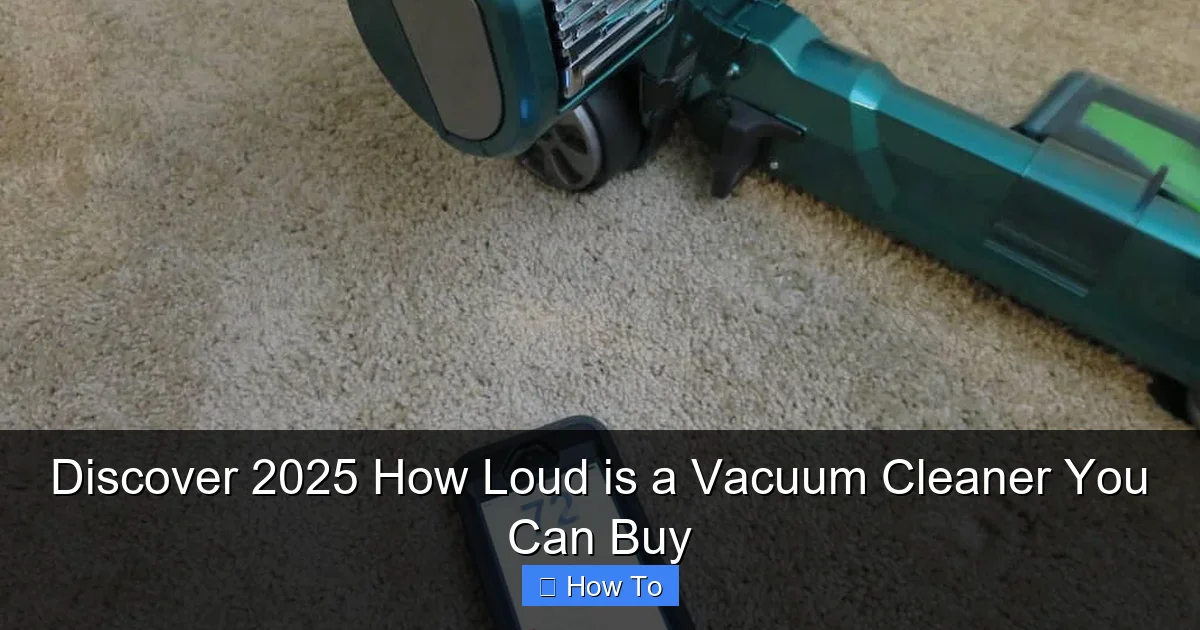
Navigating the world of vacuum cleaner noise can be challenging, but this 2025 guide makes it easy. Learn to understand decibel (dB) ratings and discover which vacuum cleaner types offer the quietest operation. We’ll help you choose a model that cleans effectively without disrupting your peace, ensuring you find the perfect low-noise solution for your home. This guide will reveal the secrets to finding a vacuum that’s both powerful and quiet, making your cleaning routine much more pleasant.
Discover 2025 How Loud is a Vacuum Cleaner You Can Buy
Welcome to 2025! In our busy lives, a clean home is a happy home. But what about the noise? The sound of a vacuum cleaner can be a real pain. It can interrupt calls, wake up sleeping babies, or annoy pets. Nobody wants a headache after cleaning. Good news! Vacuum technology has come a long way. Manufacturers are now making much quieter machines.
This guide will help you understand “how loud is a vacuum cleaner” in today’s market. We’ll look at what makes vacuums noisy. We’ll also explore the quietest options available this year. By the end, you’ll know exactly how to pick a powerful vacuum that doesn’t scream at you. Let’s make your cleaning routine calmer and more enjoyable. You’re about to become an expert in quiet cleaning!
Key Takeaways
- Decibel Levels Matter: Understanding what decibels (dB) mean is crucial for comparing vacuum cleaner noise. A small dB difference can mean a noticeable change in loudness.
- Noise Varies by Type: The loudness of a vacuum cleaner differs significantly across types like upright, canister, stick, and robot models. Robotic vacuums are often among the quietest options.
- 2025 Brings Quieter Tech: Modern vacuum cleaners in 2025 feature advanced motors, acoustic dampening, and optimized airflow, all designed to significantly reduce operational noise.
- Check Specs and Reviews: Always look for the manufacturer’s dB rating and read user reviews for real-world feedback on a vacuum’s actual noise level before buying.
- Maintenance Affects Noise: A well-maintained vacuum cleaner—with clean filters and an empty dustbin—will generally operate more quietly than a neglected one.
- “Quiet” Doesn’t Mean Weak: Advances in 2025 technology mean you no longer have to sacrifice powerful suction for a quieter cleaning experience.
- Troubleshoot Noise Increases: If your vacuum suddenly gets louder, it’s often due to clogs, full bags/bins, or dirty filters, which are usually simple to fix.
Quick Answers to Common Questions
What dB is considered a quiet vacuum cleaner?
For 2025, anything below 65 dB is generally considered very quiet. Models in the 55-60 dB range are exceptionally quiet, often marketed as “silent.”
Do powerful vacuums have to be loud?
Not anymore! Thanks to advanced digital motors and acoustic dampening technology, many powerful vacuum cleaners in 2025 can maintain strong suction while operating at surprisingly low noise levels.
Can robot vacuums be quiet?
Yes, robot vacuums are often among the quietest types, typically ranging from 50-65 dB. Their smaller motors and slower cleaning patterns contribute to lower noise output, making them great for continuous quiet cleaning.
How does maintenance affect vacuum cleaner noise?
Proper maintenance, such as regularly emptying the dustbin, cleaning filters, and clearing blockages, can significantly reduce noise. A well-maintained vacuum runs more efficiently and quietly, preventing the motor from overworking.
Where can I find the dB rating for a vacuum cleaner?
You can usually find the dB rating in the product specifications section on the manufacturer’s website, on the product packaging, or in detailed online retail listings. Look for symbols like “dB” or “sound power level.”
Understanding Vacuum Cleaner Noise Levels: The Decibel Scale
Before we dive into specific models, let’s talk about how noise is measured. It’s all about decibels, or “dB.” This is the unit used to rate sound intensity. The decibel scale is a bit tricky. It’s not a simple straight line. A small increase in dB can mean a much bigger jump in how loud something *feels*.
What Are Decibels (dB)?
Decibels measure sound pressure level. Zero dB is the quietest sound a human ear can hear. Each 10 dB increase represents a sound that’s roughly twice as loud to our ears. So, a 70 dB vacuum isn’t just “10 dB louder” than a 60 dB one. It actually sounds twice as loud! This difference is important when you’re thinking about how loud is a vacuum cleaner.
Common Sounds and Their dB Levels
To give you some context, here are some typical sound levels:
- 0 dB: The softest sound a human can hear.
- 30 dB: A whisper or quiet library.
- 40-50 dB: A quiet office or refrigerator hum.
- 60 dB: Normal conversation. Many quiet vacuums aim for this range.
- 70 dB: A washing machine or city traffic from inside a car. This is where many older vacuums used to be.
- 80 dB: A busy street, alarm clock, or loud restaurant. Some more powerful vacuums can still reach this level.
- 85 dB: The point where hearing damage can start with long exposure.
When a vacuum cleaner claims to be 65 dB, it’s significantly quieter than an 80 dB model. That’s why understanding these numbers is key to choosing your next appliance. Knowing “how loud is a vacuum cleaner” in dB terms really helps.
Average Noise Levels of Vacuum Cleaners in 2025
The good news for 2025 is that vacuum cleaners are, on average, much quieter than they used to be. Most models now fall into the 60-75 dB range. The “how loud is a vacuum cleaner” question now has a more comfortable answer. However, the exact noise level still depends heavily on the type and design.
Noise by Vacuum Type
- Robotic Vacuums (50-65 dB): These are often the quietest. Their motors are smaller. They also clean slowly, reducing overall noise. Many high-end robot vacuums in 2025 are designed for very low noise.
- Stick Vacuums (65-75 dB): Cordless stick vacuums are very popular. They are generally quieter than traditional uprights. This is due to their lighter motors and streamlined designs. However, they can get louder on max power settings.
- Canister Vacuums (60-70 dB): Canister models tend to be quieter. Their motor is housed in a separate canister, away from the floorhead. This design naturally dampens sound. This makes them a strong contender if you’re asking “how loud is a vacuum cleaner” for overall home use.
- Upright Vacuums (70-80 dB): Traditional uprights often have more powerful motors directly in the main unit. This can lead to higher noise levels. However, many 2025 uprights now feature better insulation to reduce sound.
- Handheld Vacuums (70-85 dB): These small units are powerful for their size. But their compact design often means less soundproofing. They are usually used for short bursts, so the noise might be less of an issue.
Silent vacuum cleaners are no longer a dream in 2025. Many brands now offer models specifically marketed as “silent” or “ultra-quiet,” often hovering around the 55-60 dB mark. This is a significant improvement! When considering “how loud is a vacuum cleaner,” remember that some models are designed from the ground up to be very quiet.
Factors Influencing How Loud Is a Vacuum Cleaner
The reported decibel level is a good starting point. But several other things can affect how loud your vacuum cleaner sounds in your home.
Motor Power vs. Suction
You might think a powerful motor equals a loud vacuum. Not always true! Modern vacuum cleaners use advanced motor technology. They can deliver strong suction with less noise. Digital motors and brushless designs are key here. They spin faster and more efficiently, often making less noise than older motor types. So, a high-wattage vacuum isn’t necessarily super loud.
Design and Insulation
How a vacuum is built plays a huge role.
- Motor Housing: Good insulation around the motor reduces noise. Think of it like a soundproof box.
- Airflow Design: A smooth, optimized airflow path reduces turbulence. Turbulence creates whooshing and whistling sounds.
- Materials: Quality plastics and rubber seals help absorb vibrations, making the unit quieter.
Brands investing in these design elements are the ones answering “how loud is a vacuum cleaner” with the lowest numbers.
Filter Quality and Blockage
Dirty or clogged filters force the motor to work harder. This extra effort means more noise. A full dustbin or bag also restricts airflow. This can make your vacuum louder and less effective. Regularly cleaning or replacing filters is crucial for both performance and quiet operation.
Attachments and Floor Types
The attachment you use can change the sound. A brush roll spinning on a thick carpet will sound different than a bare floor tool on hardwood. Certain attachments might create a louder air rush. When thinking “how loud is a vacuum cleaner,” consider what tools you’ll use most.
Age and Maintenance
An older vacuum cleaner might become louder over time. Worn-out parts, loose connections, or accumulated dirt can all increase noise. Regular maintenance can keep it quieter for longer.
Cleaning Mode (Eco vs. Max Power)
Many 2025 vacuums offer different power settings. An “Eco” mode will use less power and be quieter. A “Max” power mode will be louder but offer stronger suction for tough jobs. You can often choose to be quiet when needed.
How to Find Quiet Vacuum Cleaners in 2025
Ready to buy? Here’s your step-by-step guide to finding a quiet vacuum cleaner.
Step 1: Check Specifications for dB Rating
This is your first and best indicator. Most reputable brands will clearly state the decibel level in their product specifications. Look for numbers below 70 dB for a noticeably quieter experience. Anything in the 55-65 dB range is excellent.
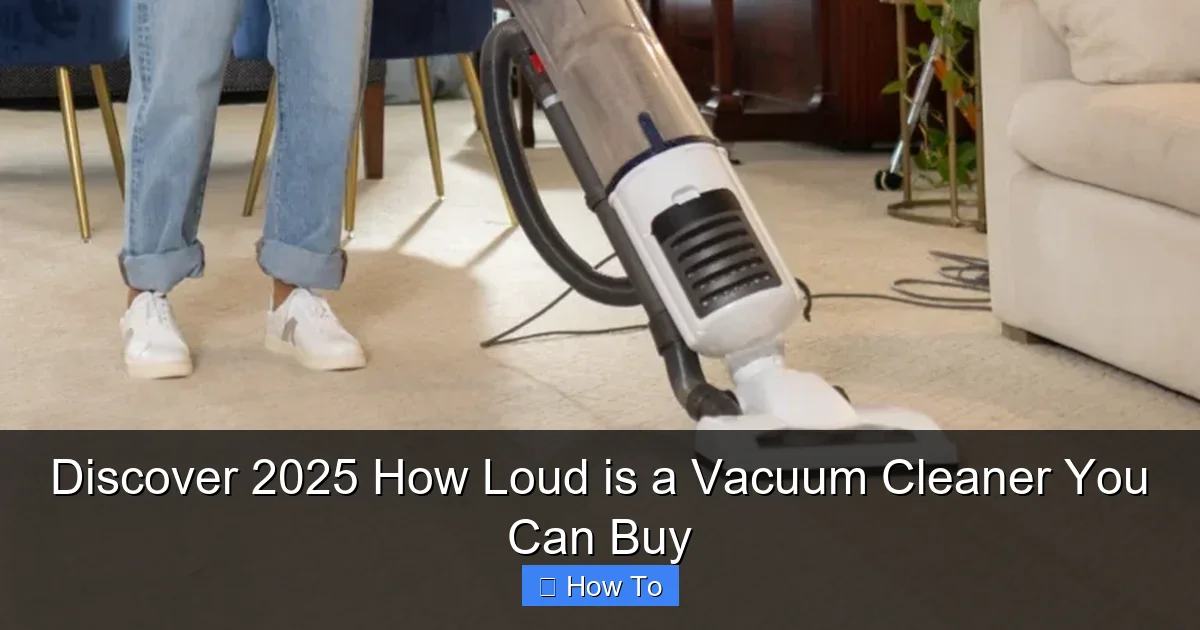
Visual guide about Discover 2025 How Loud is a Vacuum Cleaner You Can Buy
Image source: vacuumcleanertips.com
Step 2: Read User Reviews and Expert Opinions
Manufacturer claims are one thing; real-world experience is another. Look for reviews that specifically mention noise levels. Do users describe it as “quiet,” “bearable,” or “loud”? Expert reviews from consumer magazines or tech websites also often test noise levels directly.
Step 3: Research Brands Known for Quiet Models
Some brands have made quiet operation a key selling point. Look into brands like Miele, Dyson (for specific models), Bosch, Siemens, and some high-end robot vacuum brands like Roborock or iRobot. They often invest heavily in noise reduction technology. When you ask “how loud is a vacuum cleaner” to these brands, they often have a great answer.
Step 4: Look for “Quiet” or “Silent” Designations
Many manufacturers now label their quieter models. You might see terms like “SilenceForce,” “UltraQuiet,” or “Low Noise Technology.” These are strong clues that the brand has focused on reducing sound.
Step 5: If Possible, Listen in Person
Visit a store where vacuums are demonstrated. Ask if you can turn on a few models. This is the best way to get a feel for how loud is a vacuum cleaner. Remember, your perception of “loud” can be subjective. What one person finds quiet, another might find noisy.
Top Technologies for Quieter Vacuuming in 2025
The advancements in 2025 are truly impressive. Here are some of the technologies making vacuums quieter than ever:
Digital Motors (Brushless Motors)
These motors are more efficient and vibrate less than traditional brushed motors. This means less friction, less heat, and significantly less noise. They are common in high-end stick and robot vacuums. They help answer the question “how loud is a vacuum cleaner” with a lower number.
Acoustic Dampening Materials
Manufacturers are using special sound-absorbing foams and composites. These materials are placed around the motor and in the vacuum’s casing. They trap sound waves, preventing them from escaping.
Aerodynamic Airflow Systems
Engineers design the internal air paths to be as smooth as possible. This reduces turbulence and air resistance. Less turbulence means less whistling and whooshing sounds. It helps the vacuum breathe more quietly.
Active Noise Cancellation (Emerging)
While not yet mainstream for all vacuum types, some premium models (especially robot vacuums) are starting to experiment with active noise cancellation. This technology emits opposing sound waves to cancel out ambient noise. It’s a cutting-edge answer to “how loud is a vacuum cleaner” that promises ultra-quiet operation.
Smart Features for Optimal Power Usage
Many 2025 vacuums have sensors that detect floor type or dirt levels. They then adjust suction power automatically. This means the vacuum only uses as much power (and makes as much noise) as needed. No more running on “max” when “eco” would do the trick.
Tips for Reducing Vacuum Cleaner Noise at Home
Even if you have a great, quiet vacuum, there are ways to make your cleaning experience even calmer.
H3: Proper Maintenance is Key
Regularly empty the dustbin or change the bag. Clean or replace filters as recommended by the manufacturer. A clean vacuum works more efficiently and quietly. Clogged filters are a common reason for increased noise.
H3: Use the Right Attachments
Different attachments are designed for different tasks. Using a bare floor tool on hard floors will often be quieter than using a powerful brush roll head. The brush roll might make extra noise on surfaces where it’s not needed.
H3: Choose the Right Power Mode
If your vacuum has multiple power settings, don’t always use the highest one. For light cleaning, a lower, quieter setting might be perfectly sufficient. Save the “Max” mode for really tough messes.
H3: Vacuum During Less Sensitive Times
If you live in an apartment or have housemates, try to vacuum when others are less likely to be disturbed. Mid-day is often better than early morning or late evening. This is a simple but effective way to manage “how loud is a vacuum cleaner” for your household.
Troubleshooting a Suddenly Louder Vacuum Cleaner
Has your once-quiet vacuum started roaring? Don’t panic! A sudden increase in noise usually points to a common issue.
H3: Check for Clogs
This is the most frequent culprit. Check the hose, the wand, the floorhead, and the brush roll. Pet hair, large debris, or even a stray sock can get stuck and block airflow. A blockage forces the motor to work much harder, leading to more noise. Clear any obstructions carefully.
H3: Is the Dustbin Full or Bag Overfilled?
A full dustbin or bag restricts airflow. The motor struggles to pull air through, making it louder. Empty the bin or change the bag to see if the noise returns to normal.
H3: Are Your Filters Dirty or Clogged?
Just like a full bin, dirty filters choke the airflow. Remove and clean or replace all filters (pre-motor and post-motor/HEPA). This can make a huge difference in both noise and suction power.
H3: Inspect for Worn-Out Parts
Check the brush roll for tangled hair or debris. Make sure it spins freely. Sometimes, worn-out belts or bearings can cause a grinding noise. If you suspect a mechanical issue, it might be time for a professional check-up or a replacement part.
H3: Listen to the Motor
If the motor itself is making an unusual grinding, high-pitched, or rattling noise even without blockages, it might be a sign of a motor issue. In this case, especially for newer models still under warranty, contact customer service. For older vacuums, you might need to consider repair or replacement. This is the trickiest answer to “how loud is a vacuum cleaner” when it’s suddenly *too* loud.
The Future of Quiet Vacuum Cleaners
Looking ahead, 2025 is just the beginning. We can expect even more innovation in noise reduction.
- Hyper-Efficient Motors: Motors will become even smaller, more powerful, and virtually silent.
- Advanced Materials: Expect new breakthroughs in sound-absorbing materials that are lighter and more effective.
- Smarter AI Integration: Vacuums will intelligently adapt to their surroundings. They will learn optimal cleaning patterns and power levels to minimize noise in specific areas or during certain times.
- Personalized Noise Profiles: Imagine a vacuum that learns your household’s “quiet times” and adjusts its operation accordingly.
The goal is to make the cleaning experience as seamless and unobtrusive as possible. The question “how loud is a vacuum cleaner” will hopefully have an even more delightful answer in the years to come.
Conclusion
Choosing a vacuum cleaner in 2025 means you have more options than ever before. You don’t have to tolerate a noisy appliance just to get a clean home. By understanding decibel levels, knowing what factors affect noise, and using our tips for finding quiet models, you can make an informed decision.
Remember to prioritize models with low dB ratings, read reviews, and consider the vacuum type that best suits your needs. With the right choice, your next cleaning session will be a peaceful one. Say goodbye to the loud roar and hello to a quieter, more enjoyable home environment. Happy vacuuming!
🎥 Related Video: Dyson V11 Vacuum Cleaner Review #review #cleaning #vacuum
📺 Life’s Little Adventures
Looking for a vacuum that can handle everyday messes? Check out my review of the Dyson V11. I thought out house was pretty …