
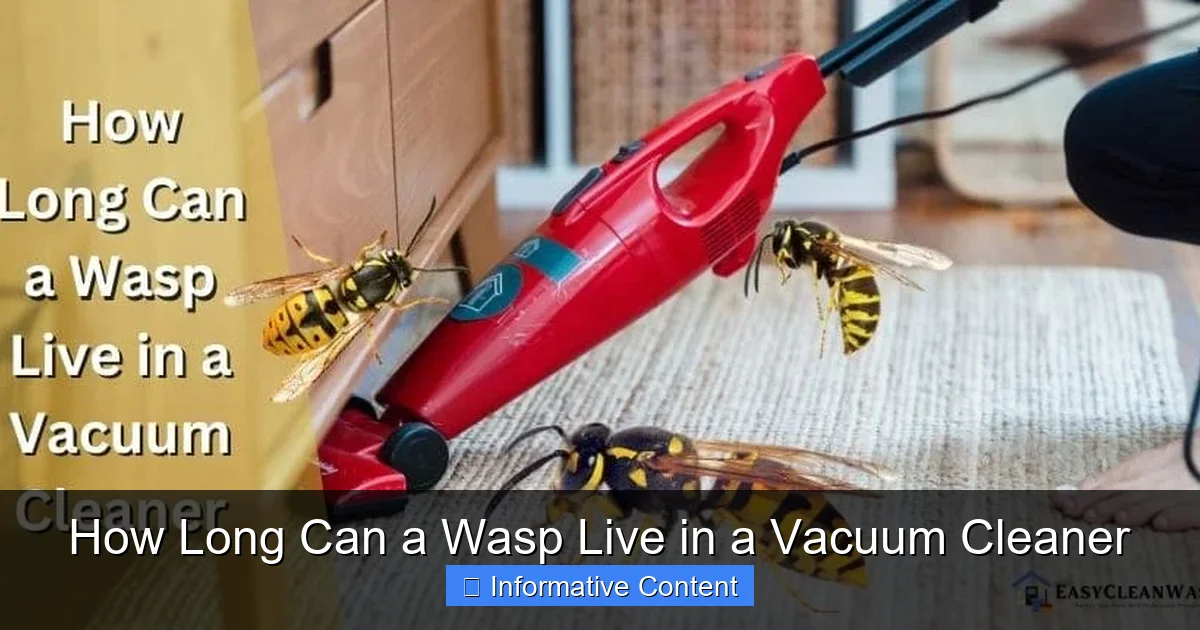
When a wasp meets a vacuum cleaner, its chances of long-term survival are incredibly slim. While a wasp might briefly survive the initial trauma, the harsh, dusty, and confined environment of a vacuum bag or canister quickly leads to dehydration, suffocation, or further physical damage. Most wasps perish within minutes to a few hours at most, making immediate disposal outdoors the safest and most effective solution.
The sudden, frantic buzz of a wasp in your home can instantly transform a peaceful afternoon into a high-stakes, adrenaline-fueled chase. Our natural instinct often kicks in: grab the nearest tool, and for many, that’s the trusty vacuum cleaner. With a satisfying whoosh, the pest is gone, sucked into the unknown depths. A sigh of relief, right? But then, the nagging question pops into mind: “Did I actually get it?” And perhaps even more unsettling, “How long can a wasp live in a vacuum cleaner?”
It’s a common concern, one that can lead to anxious glances at the vacuum bag or canister, imagining a vengeful wasp plotting its escape. The thought of an angry stinger emerging from your cleaning appliance is enough to make anyone hesitant to use it again. You’re not alone in these worries; the fear of an insect, especially a stinging one, surviving its trip through the vacuum and reappearing later is a widespread one.
Let’s dive deep into this surprisingly complex question. We’ll explore the harsh realities a wasp faces inside your vacuum, separate fact from fiction, and give you practical advice on how to handle these situations with confidence. Understanding the science behind insect survival (or lack thereof) in such a hostile environment can bring peace of mind and help you deal with future encounters effectively.
Key Takeaways
- Initial Trauma is Key: The violent suction and impact against internal vacuum parts are often immediately fatal or cause severe, unsurvivable injuries to the wasp.
- Environment is Hostile: The inside of a vacuum cleaner is a dry, dusty, and oxygen-deprived (relative to the outside world) environment, which is highly unsuitable for insect survival.
- Survival Time is Short: Most wasps will die within minutes of being vacuumed due to physical trauma, suffocation from dust, or rapid dehydration. Exceptional cases might last a few hours, but long-term survival is practically impossible.
- Vacuum Type Matters Slightly: Bagless vacuums might offer a tiny bit more open space compared to tightly packed bags, but this rarely extends survival significantly. Stronger suction generally means quicker demise.
- No Breeding Ground: A vacuum cleaner cannot become a breeding ground for wasps. The conditions are entirely wrong for egg-laying and development.
- Immediate Disposal is Best: To ensure no wasp escapes, always empty bagless canisters immediately outdoors, or seal and dispose of vacuum bags quickly after vacuuming a wasp.
- Fear is Usually Unfounded: The common fear of a wasp escaping and stinging is largely unfounded, as most are dead or incapacitated very quickly. Any lingering buzz is often from other debris or trapped insects.
Quick Answers to Common Questions
Can a wasp escape a vacuum cleaner after being sucked in?
No, it’s highly unlikely a wasp can escape. Vacuum cleaners are designed for one-way airflow, and the internal mechanisms and air resistance make it virtually impossible for an insect to travel back out.
Do wasps die instantly in a vacuum cleaner?
Many wasps die instantly or almost instantly from the severe physical trauma of being propelled at high speed and hitting internal parts. Others may survive briefly but are heavily incapacitated and will quickly succumb to the harsh conditions.
Will a wasp sting me if I empty the vacuum cleaner right after sucking it up?
While extremely unlikely, if a wasp were still alive and incapacitated, there’s a theoretical chance of a sting during immediate emptying. This is why emptying outdoors directly into a sealed bin is recommended, minimizing any potential exposure.
Can a vacuum cleaner become a wasp nest if I don’t empty it?
No, a vacuum cleaner cannot become a wasp nest. The conditions are completely unsuitable for a wasp to lay eggs, and even a queen wasp would die long before she could establish a nest or raise young.
What should I do if I vacuumed a wasp but don’t want to empty the vacuum immediately?
If you cannot empty it immediately, ensure the vacuum cleaner is turned off and stored in an isolated area, preferably outside, until you can safely dispose of the contents. The wasp will almost certainly be dead or incapacitated within a short time.
📑 Table of Contents
- The Immediate Impact: What Happens When a Wasp Gets Vacuumed?
- Survival Factors: What Allows a Wasp to Live (Even Briefly) Inside?
- The Lifespan Inside: Realities and Misconceptions
- Minimizing Risks: What to Do After Vacuuming a Wasp
- Addressing the Fear: Is Your Vacuum a Wasp Breeding Ground?
- Conclusion
The Immediate Impact: What Happens When a Wasp Gets Vacuumed?
When a wasp is sucked into a vacuum cleaner, it’s not a gentle ride. It’s a violent journey through a gauntlet of challenges that are specifically designed to be lethal to small insects.
The Initial Trauma: Physical Damage
Imagine being propelled at high speed through a narrow, winding tunnel, slamming into various hard surfaces along the way. That’s essentially what happens to a wasp.
- High-Velocity Impact: The sheer force of the suction propels the wasp at considerable speed. It’s not just floating; it’s being launched.
- Internal Collisions: Inside the vacuum cleaner’s hose, attachments, and main unit, there are numerous bends, baffles, and the spinning brushes of the beater bar (if it’s an upright model). The wasp will collide repeatedly with these surfaces. These impacts can easily crush its delicate exoskeleton, tear off wings or legs, or cause massive internal damage. For many wasps, this initial trauma is instantly fatal.
- Debris Bombardment: Along with the wasp, the vacuum is sucking up dust, dirt, crumbs, and other debris. These particles become projectiles that can further batter and overwhelm the insect, embedding in its spiracles (breathing holes) or causing additional physical harm.
The Suffocation Factor: Oxygen Deprivation (or lack thereof)
A common misconception is that a vacuum cleaner creates a perfect vacuum, thus instantly suffocating anything inside. While it’s true that a vacuum removes air, the environment inside a vacuum bag or canister is not a true vacuum. There’s still air present, just less dense air pressure than outside, and often heavily laden with dust.
- Dust Clogging Spiracles: Wasps, like other insects, breathe through small holes called spiracles along their bodies. The fine dust and debris inside a vacuum are incredibly effective at clogging these vital openings. This effectively suffocates the wasp, even if there’s still some ambient air.
- Reduced Oxygen Levels: While not a true vacuum, the air circulation within a sealed bag or canister is very poor. Any oxygen present will quickly be used up by trapped organisms (like the wasp, or even bacteria and fungi in the dust), leading to a slow but certain form of suffocation.
The Dehydration Risk: A Dry, Dusty Tomb
Insects are highly susceptible to desiccation, or drying out. The environment inside a vacuum cleaner is exceptionally dry.
- Moisture Sucked Away: The very nature of vacuuming involves drawing air and moisture out of the cleaned surface. This means the air inside the vacuum’s chamber or bag is often very dry.
- Rapid Water Loss: A wasp’s body, while somewhat protected by its exoskeleton, will rapidly lose moisture in a dry environment. Without access to water, its bodily functions will quickly shut down. Dehydration is a significant, often overlooked, factor in how quickly a wasp succumbs inside a vacuum cleaner.
Survival Factors: What Allows a Wasp to Live (Even Briefly) Inside?
While the odds are heavily stacked against them, some factors can influence a wasp’s brief survival time within a vacuum cleaner. It’s important to note that “survival” here almost always means “survival for a very short duration” rather than “thriving.”
Wasp Species and Resilience
Not all wasps are created equal. Different species exhibit varying degrees of hardiness.
- Size and Strength: Larger, more robust wasp species might be able to withstand the initial physical trauma better than smaller, more fragile ones. For instance, a queen yellow jacket might be more resilient than a smaller paper wasp worker.
- Metabolic Rate: Some insects have lower metabolic rates, which can allow them to endure adverse conditions for longer. However, the extreme stress of being vacuumed is likely to override this advantage.
- “Playing Dead”: Some insects will enter a state of torpor or “play dead” when under stress. A wasp might appear incapacitated but still be alive, only to perish shortly after from the other environmental factors.
Type of Vacuum Cleaner Matters
The design of your vacuum can play a small role in the wasp’s fate.
- Bagged vs. Bagless Vacuums:
- Bagged Vacuums: Once the wasp enters the bag, it’s often compacted among all the other debris. The limited space, crushing weight of other contents, and lack of air circulation in a tightly packed bag significantly reduce survival chances.
- Bagless Vacuums: These often have a canister with more open space, at least initially. This might give a wasp a tiny bit more room to move, and potentially slightly better airflow, delaying suffocation for a short period compared to a compressed bag. However, the dust levels are still very high, and dehydration remains a critical factor.
- Suction Power: A high-powered vacuum with strong suction will typically deliver more physical trauma and propel the wasp with greater force, leading to a quicker demise. Weaker suction might mean less initial physical impact, but the wasp will still face the same hostile environment.
- Filters: While not directly impacting survival, HEPA filters and other fine filters ensure that any insect parts or fine dust (which helps suffocate) are trapped effectively.
Contents of the Vacuum Bag/Canister
What else is in your vacuum? It could subtly affect the wasp.
- Dust and Debris: As mentioned, dust is a major killer. It clogs spiracles and causes suffocation. If the vacuum contains a lot of fine dust, the wasp’s chances diminish rapidly.
- Crumbs and Organic Matter: While a wasp primarily feeds on nectar, fruit, and other insects, the presence of organic matter doesn’t offer any real sustenance in this context. It just adds to the dusty, suffocating environment.
- Spiderwebs: If you’ve vacuumed up spiderwebs, these sticky strands can further entangle and immobilize the wasp, preventing movement and potentially contributing to suffocation.
The Lifespan Inside: Realities and Misconceptions
So, after all those factors, what’s the verdict on how long a wasp can live in a vacuum cleaner?
The “Escaped Wasp” Myth vs. Reality
Many people worry that a vacuumed wasp will escape and re-emerge later to sting them. This fear is almost entirely unfounded.
- One-Way Trip: Vacuum cleaners are designed for a one-way flow of air and debris. Once an object is sucked in, it’s extremely difficult, if not impossible, for it to travel back up the hose against the airflow and through the machine’s internal mechanisms.
- Misidentification: Often, when someone believes a wasp has “escaped” their vacuum, it’s actually a different wasp that has flown into the house, or perhaps another insect entirely that was already in the vacuum and making noise. The likelihood of the original vacuumed wasp surviving and escaping is negligible.
Typical Survival Time: From Minutes to Hours
The definitive answer to “how long can a wasp live in a vacuum cleaner?” is: **not long at all.**
- Most Die Quickly: The vast majority of wasps vacuumed up will die almost instantly from the initial physical trauma. They are either crushed, dismembered, or rendered incapacitated to the point of imminent death.
- Minutes to a Few Hours: For those rare, exceptionally resilient wasps that might survive the initial impact relatively intact, their lifespan inside the vacuum is still measured in minutes, perhaps a few hours at most. The combination of desiccation, lack of oxygen, and continued physical stress (e.g., being bounced around if the vacuum is moved) will rapidly lead to death. They simply cannot survive long in such an inhospitable, dry, and dust-filled environment without food or water.
- No Long-Term Survival: There is virtually no chance of a wasp surviving for days, let alone weeks, inside a vacuum cleaner. The conditions are far too extreme.
The Role of Diapause/Dormancy
Could a wasp enter a dormant state like diapause to survive? Diapause is a state of suspended animation some insects enter to survive harsh conditions, often triggered by environmental cues like cold temperatures or lack of food.
While theoretically possible for some insects in specific, controlled dormant conditions, it is highly unlikely to occur effectively or lead to long-term survival within a vacuum cleaner. The environment is not just harsh; it’s actively destructive. The physical trauma, constant dust, and rapid dehydration are immediate stressors that are far more likely to kill the wasp outright than allow it to enter a protective dormant state.
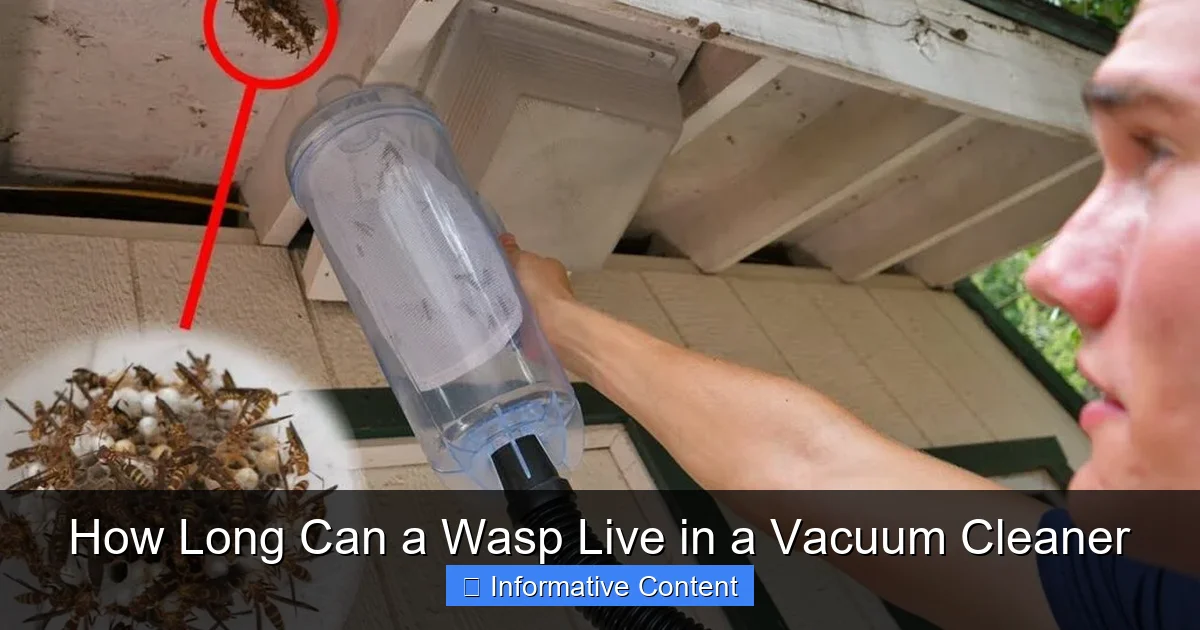
Visual guide about How Long Can a Wasp Live in a Vacuum Cleaner
Image source: easycleanwash.com
Minimizing Risks: What to Do After Vacuuming a Wasp
Even though the risk of a wasp surviving long is minimal, taking a few simple steps can ensure your peace of mind and complete its demise.
Immediate Actions for Bagless Vacuums
These are often the ones that cause the most anxiety because you can sometimes see the contents.
- Empty Immediately Outside: The best practice is to take your bagless vacuum cleaner outside *immediately* after vacuuming a wasp. Open the canister and empty its contents directly into an outdoor garbage bin. This way, if by some minuscule chance the wasp is still alive but incapacitated, it won’t be able to re-enter your home.
- Tap the Canister: After emptying, give the canister a good tap or two against the inside of the garbage bin to dislodge any remaining debris and ensure nothing is clinging on.
- Clean Filters (If Necessary): While not strictly for wasp disposal, regularly cleaning or replacing your vacuum’s filters helps maintain suction power and overall cleanliness, reducing the amount of fine dust that could potentially harbor other tiny insects.
Immediate Actions for Bagged Vacuums
Bagged vacuums are often less of a visual concern, but the principle is the same.
- Seal the Bag and Dispose Outdoors: If your vacuum uses bags, immediately remove the bag, ensuring it’s sealed securely. Many vacuum bags have a tab or mechanism to seal them once removed. Take the sealed bag directly to an outdoor garbage bin.
- Consider Double Bagging: For extra precaution, you might place the sealed vacuum bag inside another plastic grocery bag before tying it off and disposing of it. This provides an additional barrier.
Beyond Disposal: Cleaning and Prevention
Once the immediate wasp situation is handled, consider these steps.
- Clean Vacuum Attachments: Give your vacuum hose and any attachments a quick visual inspection and wipe down, especially if you used them directly on the wasp.
- Check for Nests or Entry Points: If you’re vacuuming wasps regularly, it’s a sign you might have a nest nearby or entry points into your home. Inspect eaves, attics, window frames, and other potential nesting sites. Seal cracks and openings to prevent future invasions.
Addressing the Fear: Is Your Vacuum a Wasp Breeding Ground?
The idea that your vacuum could become a hotbed of wasp activity is a natural extension of the “survival” fear, but it’s completely unfounded.
No, It’s Not a Breeding Ground
It’s important to unequivocally state: your vacuum cleaner will not become a wasp breeding ground.
- Unsuitable Conditions: For wasps to breed, they need specific conditions: a queen to lay eggs, a secure nest structure, and a consistent food supply to feed larvae. A vacuum cleaner provides none of these.
- Rapid Death: As established, wasps die quickly inside a vacuum. A dead wasp cannot lay eggs. Even if a queen wasp were to be vacuumed, she would perish long before she could establish a nest or lay viable eggs in such an environment.
- No Sustenance for Larvae: Wasp larvae are fed by adult worker wasps. Even if eggs were miraculously laid (which they won’t be), there would be no food or care for the young.
Why the Buzzing Continues (Sometimes)
You might vacuum a wasp, empty the canister, and then swear you hear a faint buzzing sound from your vacuum. This can be unsettling.
- Other Trapped Insects: Sometimes, a vacuum cleaner might already contain other small insects – flies, spiders, beetles – that were vacuumed up previously and are still alive, albeit temporarily. These might be the source of the persistent buzzing.
- Residual Vibrations: The vacuum cleaner itself creates vibrations and noises. Your mind, already attuned to the sound of a wasp, might interpret these mechanical sounds as buzzing.
- Psychological Effect: The fear of wasps is real. After a tense encounter, your senses might be heightened, and you might be more prone to imagining sounds or seeing movements that aren’t there.
Ultimately, the sound will subside as any remaining life within the vacuum perishes. It’s a temporary phenomenon, not a sign of a thriving wasp colony.
Conclusion
The lingering question of “how long can a wasp live in a vacuum cleaner?” can finally be put to rest. The answer is consistently short: not long at all. From the moment it’s sucked in, a wasp faces a gauntlet of lethal challenges – physical trauma, desiccation, and eventual suffocation from dust and lack of oxygen. Most wasps will die within minutes, with a few exceptionally hardy individuals perhaps lasting a couple of hours in a somewhat less traumatic, more spacious environment. Long-term survival, let alone escape or breeding, is virtually impossible.
Your vacuum cleaner is a highly effective tool for immediate pest removal, not a wasp hotel. The best course of action after vacuuming a wasp is always swift and secure disposal of the contents outdoors, whether it’s emptying a bagless canister or sealing and discarding a vacuum bag. This ensures any chance of very brief survival is definitively ended and provides you with complete peace of mind. So, next time you hear that unwelcome buzz, grab your vacuum with confidence, knowing that the battle will be decisively won.
Frequently Asked Questions
How long does it take for a wasp to die inside a vacuum cleaner?
Most wasps will die within minutes of being vacuumed due to the intense physical trauma, desiccation, or suffocation from dust. In very rare cases, a wasp might survive for a few hours if it experienced less initial trauma and had more space, but long-term survival is impossible.
Is it safe to vacuum up a live wasp?
Yes, it is generally considered safe and effective to vacuum up a live wasp. The vacuum quickly incapacitates and kills the wasp, making it a preferable method for those who want to avoid direct contact or the use of chemical sprays.
Can the dust in a vacuum cleaner kill a wasp?
Yes, the fine dust and debris inside a vacuum cleaner are very effective at killing wasps. They clog the wasp’s spiracles (breathing holes), leading to suffocation, and contribute to the overall harsh, desiccating environment.
Will a vacuumed wasp come back to life?
No, a wasp will not “come back to life” after being vacuumed. Once it’s dead, it’s dead. Any perceived reappearance is almost always a different wasp or another insect entirely.
Should I put water in my vacuum cleaner after sucking up a wasp?
No, you should absolutely NOT put water into a standard dry vacuum cleaner. This can severely damage the electrical components of your vacuum, pose an electrocution risk, and is entirely unnecessary as the wasp will die quickly anyway.
What if I hear buzzing from the vacuum after sucking up a wasp?
If you hear buzzing, it’s likely either other small insects already in the vacuum, residual vibrations from the machine, or a psychological effect. It’s extremely unlikely to be the original wasp still actively flying around, as it would be dead or severely incapacitated.