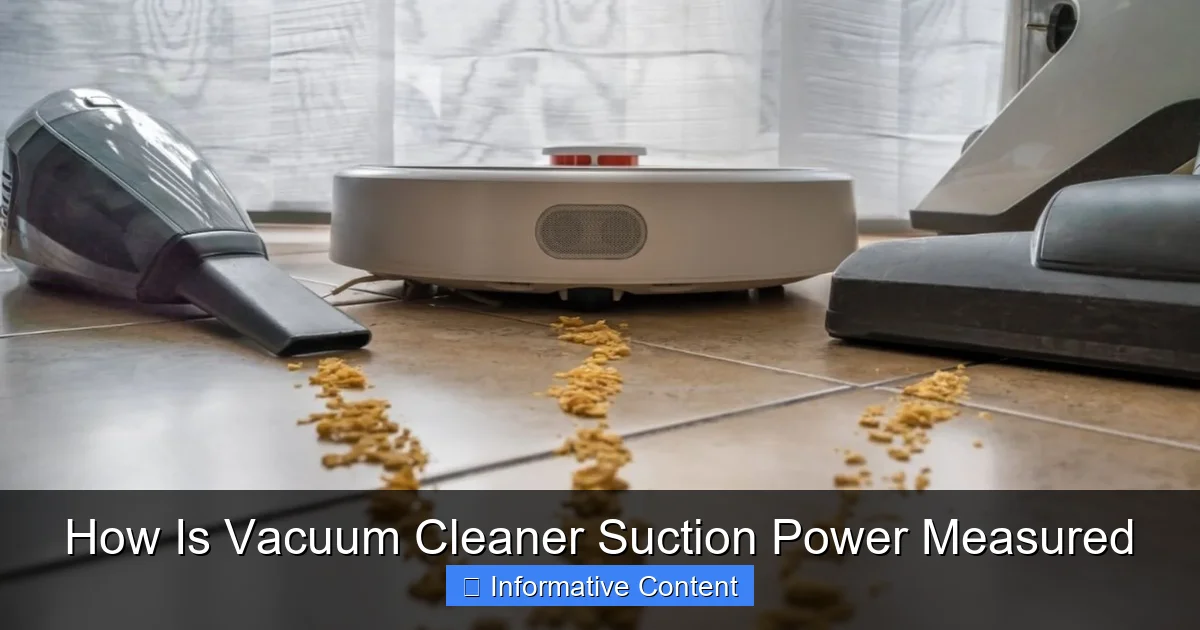
Understanding how vacuum cleaner suction power is measured goes beyond simple Watts. Key metrics like Air Watts, CFM (airflow), and kPa (static pressure) provide a clearer picture of a vacuum’s true cleaning capability. Learning these will help you choose the best model for your specific cleaning needs, ensuring a truly effective and powerful clean every time.
How Is Vacuum Cleaner Suction Power Measured?
We’ve all been there: standing in the vacuum cleaner aisle, staring at a confusing array of numbers and marketing jargon. One vacuum boasts “X Watts!” while another promises “super strong suction!” But what do these numbers actually mean for how clean your floors will get? Choosing the right vacuum often feels like a guessing game, especially when you’re trying to understand the real power behind the promises.
The truth is, understanding how vacuum cleaner suction power is measured can be surprisingly complex. Many people mistakenly believe that a higher wattage automatically equals better cleaning performance. While wattage tells you how much electricity the motor consumes, it doesn’t paint the full picture of how effectively the vacuum will lift dirt, dust, and pet hair from your carpets and hard floors. It’s like judging a car solely by its engine size without considering its aerodynamics, weight, or transmission. To truly make an informed decision, you need to look beyond the surface and delve into the specific metrics that reveal a vacuum’s true cleaning prowess.
This article will pull back the curtain on the science of suction. We’ll demystify the key measurements used to quantify a vacuum cleaner’s performance, explain what each metric signifies, and show you how to interpret these numbers to choose the perfect cleaning companion for your home. By the end, you’ll feel confident in understanding how vacuum cleaner suction power is measured and what to look for, ensuring your next purchase is a powerful and effective one.
Key Takeaways
- Watts are Misleading: While often advertised, motor wattage only indicates electrical consumption, not the actual cleaning power or how vacuum cleaner suction power is measured effectively.
- Airflow (CFM/LPS) Matters for Light Debris: Cubic Feet per Minute (CFM) or Liters Per Second (LPS) quantify how much air a vacuum moves. High airflow is crucial for picking up light particles, pet hair, and surface dust efficiently.
- Static Pressure (kPa/Water Lift) is Key for Deep Cleaning: Measured in kilopascals (kPa) or inches of water lift, static pressure indicates the vacuum’s ability to pull dirt from deep carpets or lift heavier debris. It’s the force of the suction.
- Air Watts (AW) Offer a Comprehensive View: Air Watts combine both airflow and static pressure, providing a more accurate and standardized measure of a vacuum cleaner’s effective cleaning power. It’s often considered the gold standard for comparing suction.
- Real-World Factors Affect Suction: Filtration systems, hose design, nozzle type, dirt bin fullness, and even battery life in cordless models significantly impact a vacuum’s practical suction performance, regardless of its lab-tested metrics.
- Match Suction to Your Needs: For hard floors and light debris, prioritize high CFM. For deep carpets and embedded dirt, look for high kPa. For all-around versatile cleaning, a good Air Watt rating is ideal.
- Maintain for Optimal Performance: Regularly cleaning filters, emptying the dirt bin, and checking for clogs are essential steps to ensure your vacuum maintains its advertised suction power over time.
Quick Answers to Common Questions
What is the most reliable metric for vacuum cleaner suction power?
Air Watts (AW) is generally considered the most reliable metric because it combines both airflow and static pressure, providing a comprehensive measure of a vacuum’s effective cleaning power.
Do higher Watts always mean better suction?
No, higher Watts only indicate higher electrical consumption. It doesn’t necessarily translate to better suction or cleaning power, as efficiency and design play a crucial role in converting that electrical power into effective airflow and suction.
What is the difference between CFM and kPa?
CFM (Cubic Feet per Minute) measures airflow, which is the volume of air moved, important for picking up light debris. kPa (kilopascals) measures static pressure, which is the force of suction, important for lifting heavier debris and deep cleaning.
How often should I clean my vacuum filter to maintain suction?
Most manufacturers recommend cleaning or replacing filters every 3-6 months, or more frequently if you have pets or allergies. Regularly cleaning filters is one of the best ways to maintain optimal vacuum cleaner suction power.
Can a full dust bag or bin reduce suction power?
Yes, absolutely. As the dust bag or bin fills up, it restricts airflow through the vacuum’s system, leading to a noticeable decrease in suction power and overall cleaning effectiveness.
📑 Table of Contents
Beyond “Watts”: Understanding the Basics of Vacuum Power
For years, many vacuum cleaner manufacturers prominently displayed “Watts” on their products as a primary indicator of power. However, this number can be misleading. To truly understand how vacuum cleaner suction power is measured, we need to go beyond simple electrical input.
Why Watts Don’t Tell the Whole Story
When you see a vacuum advertised with, say, “1600 Watts,” what does that actually mean? Watts measure the electrical power consumed by the vacuum cleaner’s motor. It’s the energy input, not the output. A high-wattage motor might be incredibly powerful, but if the vacuum’s design is inefficient, a lot of that power could be lost as heat or noise rather than being converted into effective suction.
Think of it this way: a powerful car engine doesn’t automatically mean a fast car. If the car is poorly designed, too heavy, or has a bad transmission, that powerful engine won’t translate into speed. Similarly, a high-wattage vacuum motor doesn’t guarantee superior cleaning. You need to consider how efficiently that electrical energy is converted into airflow and suction – the actual forces that pick up dirt. So, when considering how vacuum cleaner suction power is measured, we need more specific metrics.
The Core Concept: Airflow and Suction
At its heart, a vacuum cleaner works by creating a partial vacuum (lower pressure) inside the cleaner relative to the outside air. This pressure difference causes air, along with any loose debris, to be sucked into the machine. The effectiveness of this process depends on two primary components:
1. Airflow: This refers to the volume of air the vacuum can move in a given time. It’s about how much air rushes into the nozzle.
2. Suction (Static Pressure): This refers to the force or intensity of the vacuum, its ability to lift heavier objects or pull dirt from deep within carpets. It’s about how strong that pull is.
Both airflow and static pressure are critical for cleaning, but they serve different purposes. A balanced combination of these two is what truly defines an effective vacuum cleaner, and understanding them is central to understanding how vacuum cleaner suction power is measured.
The Key Metrics: Airflow, Suction, and Air Watts
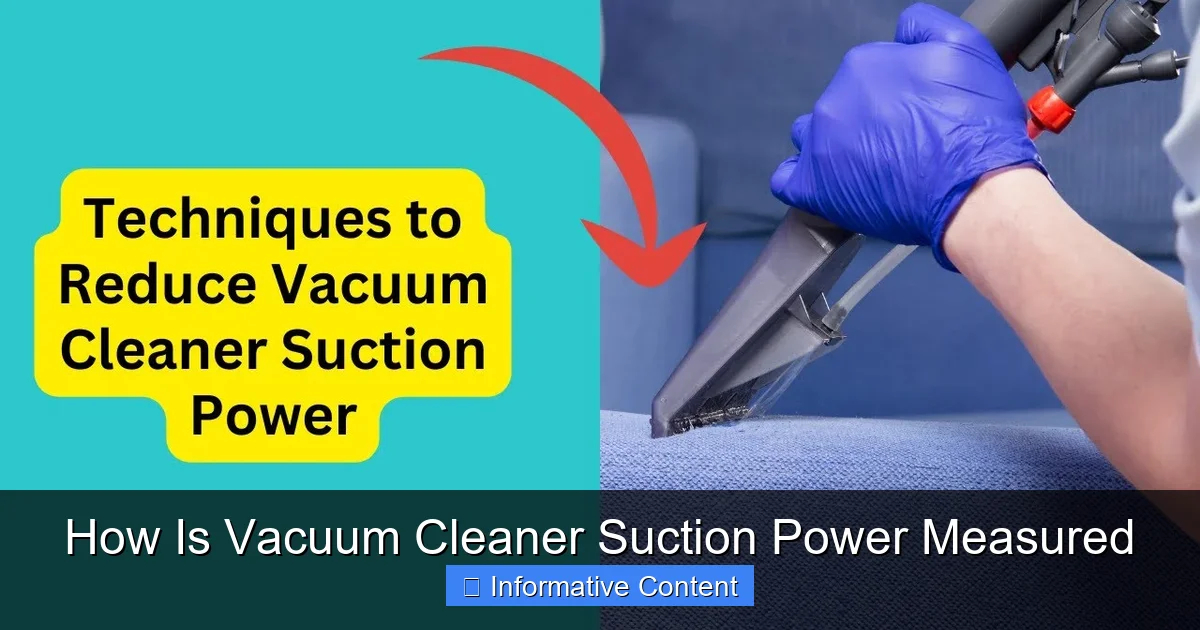
Visual guide about How Is Vacuum Cleaner Suction Power Measured
Image source: i.ytimg.com
To properly gauge how vacuum cleaner suction power is measured, you need to familiarize yourself with these crucial metrics.
Airflow (CFM/LPS)
Airflow is a measure of how much air the vacuum can move through its system in a given amount of time. It’s typically expressed in:
- Cubic Feet per Minute (CFM): Common in the US.
- Liters Per Second (LPS): Common internationally.
A higher CFM or LPS value means the vacuum can move a larger volume of air.
Why Airflow Matters
High airflow is particularly important for picking up lightweight debris like dust bunnies, pet hair, cereal, and other surface-level dirt from hard floors and low-pile carpets. It’s also vital for quickly clearing a large area. If a vacuum has great suction but low airflow, it might be able to lift a heavy coin, but it might struggle to quickly suck up a wide spread of loose dust.
How Airflow Is Measured
Airflow is measured in a controlled laboratory setting. Specialized equipment is used to draw air through the vacuum’s system and measure the volume of air passing through a specific opening over time. Standards like ASTM F558 often dictate the testing procedures to ensure consistency across different manufacturers. When examining how vacuum cleaner suction power is measured, CFM is a fundamental building block.
Static Pressure (kPa/inches of water lift)
Static pressure, often simply referred to as “suction,” measures the vacuum’s ability to lift heavier items or pull dirt embedded deep within carpet fibers. It indicates the force of the vacuum. It’s typically expressed in:
- Kilopascals (kPa): A metric unit of pressure.
- Inches of Water Lift (or simply “Water Lift”): An older, but still used, imperial unit that measures how high the vacuum can lift a column of water in a sealed tube.
A higher kPa or water lift value means the vacuum has a stronger, more intense pull.
Why Static Pressure Matters
Strong static pressure is essential for deep cleaning tasks. This includes removing stubborn dirt, sand, or pet dander embedded in thick carpets, picking up heavier debris like small pebbles, or effectively cleaning upholstery. Without adequate static pressure, a vacuum might just skim over the surface of a plush rug, leaving behind much of the ground-in grime.
How Static Pressure Is Measured
Static pressure is measured using a device called a manometer, which gauges the pressure difference between the vacuum’s inlet and the ambient air. The test is often performed with a sealed or nearly sealed hose end, representing a situation where the vacuum is working against significant resistance, such as pulling dirt from deep carpet. Understanding this aspect is crucial for comprehending how vacuum cleaner suction power is measured for deep cleaning.
Air Watts (AW) – The Gold Standard?
If airflow is about volume and static pressure is about intensity, how can we get a single number that reflects both aspects of a vacuum’s cleaning power? Enter Air Watts.
What are Air Watts?
Air Watts are a derived unit that combines both airflow and static pressure into a single metric, offering a more comprehensive and arguably the most useful measure of a vacuum’s effective cleaning power. It represents the power (in Watts) that the air stream generates. The formula for Air Watts is:
Air Watts = 0.11725 * Airflow (CFM) * Static Pressure (inches of water lift)
A higher Air Watt rating generally indicates a more powerful and efficient vacuum that excels at both moving air and lifting heavy debris. This is why many experts consider Air Watts to be the most reliable metric for how vacuum cleaner suction power is measured.
Standardization and Limitations
The ASTM F558 standard specifically defines how Air Watts should be measured for dry vacuum cleaners, ensuring a level playing field for comparisons. Similar standards exist for wet/dry vacuums (e.g., IEC standards).
However, even Air Watts have limitations. They are typically measured in a laboratory under ideal conditions, often without a floorhead attached, which can restrict airflow. Real-world performance can vary significantly depending on factors like the type of floor, the design of the nozzle, and the condition of the vacuum itself. So, while Air Watts are the best single numerical indicator for how vacuum cleaner suction power is measured, they shouldn’t be the *only* factor in your decision.
Real-World Factors Affecting Suction Power
Even if a vacuum boasts impressive Air Watts, several practical elements can impact its actual performance in your home. These factors are crucial when evaluating how vacuum cleaner suction power is measured in a practical sense.
Filtration System (HEPA filters, bag vs. bagless)
Filters, especially high-efficiency particulate air (HEPA) filters, are designed to trap tiny particles and allergens. While essential for air quality, they also create resistance to airflow. Over time, as filters get clogged with dirt, this resistance increases, directly reducing both airflow and static pressure. This is a common reason why a vacuum’s suction power seems to diminish with use.
Hose and Nozzle Design
The pathway for air from the floor to the motor is critical.
- Hose: A longer, narrower hose with many bends can create more friction and reduce airflow and suction compared to a shorter, wider, smoother hose.
- Nozzle/Floorhead: The design of the vacuum’s head, including its brush roll, bristles, and suction channels, significantly affects how effectively it engages with the surface and directs debris into the airflow. A poorly designed nozzle, even with a powerful motor, can severely hamper cleaning performance.
Dirt Bin/Bag Fullness
As the dust bag fills or the dirt bin accumulates debris, it restricts the path of air. This blockage reduces airflow and can cause a noticeable drop in suction power. Regularly emptying your vacuum is one of the easiest ways to maintain optimal cleaning performance.
Motor Efficiency and Design
Modern vacuum motors are designed for efficiency, but there are still differences. A well-engineered motor and fan system will convert more of its electrical input into useful airflow and suction, making it more efficient and powerful than a less optimized design, even if both have the same wattage rating.
Battery Life (for cordless models)
Cordless vacuums rely on battery power. As the battery depletes, the motor may receive less voltage, leading to a decrease in overall suction power. Many cordless models offer different power modes (e.g., Eco, Standard, Max), with “Max” mode often draining the battery faster but providing the highest suction.
How to Evaluate Suction Power for Your Needs
Now that you understand the metrics, let’s put it into practice. Knowing how vacuum cleaner suction power is measured helps you choose the right tool for the job.
Match Metrics to Cleaning Tasks
- For Hard Floors and Light Debris (e.g., pet hair, dust): Prioritize high CFM/LPS. You need to move a lot of air quickly to sweep up light particles. Static pressure is less critical here.
- For Deep Carpets and Embedded Dirt (e.g., sand, heavy soil): Look for high kPa/Water Lift. Strong static pressure is essential to pull dirt out from deep within carpet fibers. Good CFM is still helpful, but the lifting power is key.
- For All-Around Performance and Versatility: A good Air Watt rating is your best bet. It signifies a balanced vacuum capable of both high airflow for surface debris and strong suction for deeper cleaning.
Beyond the Numbers: Practical Considerations
While metrics are important for understanding how vacuum cleaner suction power is measured, they aren’t the whole story.
- Read Reviews and Watch Demos: See how the vacuum performs in real-world scenarios on various floor types. User experiences can offer invaluable insights.
- Consider Attachments: Specialized attachments (e.g., pet hair tools, crevice tools) can significantly enhance a vacuum’s practical cleaning effectiveness, even if the raw suction numbers aren’t the highest.
- Maneuverability and Weight: A powerful vacuum that’s heavy or cumbersome might not get used as often.
- Noise Level: High suction can sometimes come with high noise. Consider your tolerance.
- Capacity: A larger dirt bin or bag means less frequent emptying, which maintains consistent suction for longer.
Tips for Maintaining Optimal Suction
To ensure your vacuum always performs at its best, and to ensure its suction power is maintained:
- Regularly Clean/Replace Filters: This is arguably the most crucial step. Clogged filters dramatically reduce airflow and suction.
- Empty Dirt Bin/Bag Promptly: Don’t wait until it’s overflowing.
- Check for Clogs: Periodically inspect the hose, nozzle, and brush roll for blockages (e.g., hair, debris) that impede airflow.
- Clean Brush Roll: Remove tangled hair and debris from the brush roll to ensure it spins freely and doesn’t create excessive resistance.
- Inspect Gaskets and Seals: Ensure all connections are tight. Air leaks can reduce effective suction.
The Future of Suction Measurement
The vacuum industry continues to innovate, not just in cleaning technology but also in how vacuum cleaner suction power is measured and presented to consumers.
Smart Vacuums and Adaptive Suction
Newer “smart” vacuums are equipped with sensors that can detect the amount of dirt on the floor or the type of surface. They can then automatically adjust their suction power accordingly, optimizing battery life and cleaning efficiency. This means the vacuum is dynamically determining the “right” amount of suction for the job, rather than relying on a static measurement.
Towards More Standardized and Transparent Reporting
As consumers become more informed, there’s a growing push for manufacturers to provide clearer, more standardized metrics beyond just wattage. The emphasis on Air Watts and independent testing is a step in this direction, aiming to empower consumers with verifiable data rather than vague marketing claims. The goal is to make how vacuum cleaner suction power is measured universally understood and comparable.
Conclusion
Navigating the world of vacuum cleaner specifications can feel like learning a new language. However, by understanding the core metrics – airflow (CFM/LPS), static pressure (kPa/Water Lift), and especially Air Watts (AW) – you’re no longer in the dark. You now have the knowledge to move beyond simple wattage numbers and truly understand how vacuum cleaner suction power is measured and what makes a vacuum genuinely effective.
Remember that while numerical metrics provide a solid foundation, real-world factors like filter cleanliness, hose design, and even how full your dust bin is play significant roles in daily performance. By combining your understanding of these scientific measurements with practical considerations and good maintenance habits, you can confidently choose a vacuum cleaner that not only promises powerful cleaning but genuinely delivers a spotless home. Happy vacuuming!
Frequently Asked Questions
How does a vacuum cleaner create suction?
A vacuum cleaner creates suction by using an electric motor to power a fan, which rapidly spins and pushes air out of the vacuum’s exhaust port. This creates a partial vacuum (lower pressure) inside the cleaner. The higher atmospheric pressure outside then pushes air, along with dirt and debris, into the vacuum’s nozzle and through the system.
Is it possible for a vacuum to have high airflow but low static pressure?
Yes, it is definitely possible. A vacuum with a very open, unrestricted pathway might move a large volume of air (high CFM) but might not have enough force to lift heavy objects or pull deeply embedded dirt (low kPa). This type of vacuum would excel at picking up light, surface debris but struggle with deep cleaning.
Why do manufacturers still advertise Watts if they are misleading?
Many manufacturers continue to advertise Watts because it’s a widely understood and easily comparable number that consumers have traditionally looked for. While it doesn’t tell the full story, it provides a general indication of the motor’s power. However, more reputable brands are also starting to include Air Watts and other specific metrics to provide a clearer picture of their vacuum cleaner suction power measured effectively.
Does hose length affect suction?
Yes, hose length can definitely affect suction power. A longer hose generally creates more resistance and friction for the air moving through it, which can reduce both airflow (CFM) and static pressure (kPa) by the time the air reaches the motor. Shorter, wider hoses tend to maintain better suction.
What is the significance of the ASTM F558 standard?
The ASTM F558 standard is a crucial guideline developed by the American Society for Testing and Materials. It provides a standardized method for testing and reporting the performance characteristics of household vacuum cleaners, including how vacuum cleaner suction power is measured in terms of Air Watts, airflow, and static pressure, allowing for more reliable comparisons between different models and brands.
How do battery-powered vacuums compare in suction to corded ones?
Historically, corded vacuums typically offered stronger and more consistent suction power compared to battery-powered models due to an uninterrupted power supply. However, advancements in battery and motor technology have significantly narrowed this gap, with many high-end cordless vacuums now matching or even exceeding the performance of some corded models, especially on their highest power settings. The main difference lies in consistent suction over longer cleaning times for corded models.