
Robotic vacuum cleaners are sophisticated devices that automate floor cleaning by combining advanced navigation, powerful cleaning mechanisms, and intelligent sensors. They map your home, systematically remove dirt, avoid obstacles, and autonomously return to their charging station, offering unparalleled convenience in modern home maintenance. These smart gadgets simplify daily chores, letting you enjoy a consistently clean environment without lifting a finger.
How Does Robotic Vacuum Cleaner Work
Imagine a world where you never have to drag out that bulky vacuum cleaner again. A world where your floors are always tidy, crumbs disappear as if by magic, and dust bunnies become a distant memory. This isn’t a futuristic dream; it’s the reality brought to you by the humble, yet incredibly complex, robotic vacuum cleaner. These little automated helpers have become staples in many homes, promising effortless cleaning and more free time for us all. But have you ever stopped to wonder, “How does robotic vacuum cleaner work?”
It’s easy to see these devices scooting around, doing their thing, and simply enjoy the spotless outcome. But beneath their sleek exteriors lies a fascinating array of technology, sensors, and clever programming that allows them to navigate your home, identify dirt, and clean with surprising efficiency. From understanding your home’s layout to sucking up pet hair, there’s a lot more going on than meets the eye. Let’s pull back the curtain and explore the intricate mechanisms that make these smart cleaning machines tick. Get ready to dive deep into the world of smart navigation, powerful suction, and intelligent design!
Key Takeaways
- Smart Navigation: Robotic vacuum cleaners utilize sophisticated mapping technologies like LiDAR or VSLAM (camera-based) to create detailed floor plans, allowing them to navigate efficiently and clean systematically without missing spots.
- Advanced Sensor Array: A comprehensive set of sensors, including infrared, bumper, cliff, and dirt detection sensors, enables these devices to avoid obstacles, prevent falls down stairs, and identify high-traffic, dirtier areas for more focused cleaning.
- Multi-Stage Cleaning Mechanism: The cleaning process involves side brushes sweeping debris into the path of main rotating brush rollers, which agitate and lift dirt, followed by powerful suction to pull everything into a filtered dustbin.
- Autonomous Charging: When battery levels drop, robotic vacuum cleaners intelligently locate and return to their charging dock on their own, ensuring they are always powered up and ready for their next cleaning cycle.
- Connectivity and Control: Most modern robotic vacuums offer smartphone app control for scheduling, setting virtual boundaries, monitoring cleaning progress, and even integrating with voice assistants for hands-free operation.
- Self-Emptying Capabilities: Premium models now feature self-emptying docks, which automatically transfer collected dirt from the robot’s small dustbin into a larger bag in the dock, significantly reducing the frequency of manual emptying.
Quick Answers to Common Questions
How do robotic vacuums know where to go?
Robotic vacuums use advanced mapping technologies like LiDAR (laser scanning) or VSLAM (camera-based vision) to build a detailed map of your home’s layout. This map allows them to plan systematic cleaning paths, know where they are, and avoid previously cleaned areas.
What kind of sensors do they use?
They use an array of sensors including infrared sensors for obstacle detection, bumper sensors for physical contact, cliff sensors to prevent falls, and dirt detection sensors to identify areas needing more attention. Some also have optical cameras for advanced object recognition.
Can they clean different floor types?
Yes, most robotic vacuum cleaners are designed to clean various floor types, including hard floors (hardwood, tile, laminate) and low to medium-pile carpets. They often have adaptive brushes and suction settings that automatically adjust to optimize cleaning for different surfaces.
How do they avoid falling down stairs?
Robotic vacuums are equipped with “cliff sensors” on their underside. These infrared sensors detect sudden drops (like stair edges) by emitting light and checking for a reflection. If no reflection is received, the robotic vacuum registers a drop-off and quickly changes direction to avoid falling.
What happens when the battery gets low?
When the battery reaches a low level, the robotic vacuum cleaner will automatically pause its cleaning cycle and return to its charging dock. It uses infrared signals from the dock to guide itself back and connect for recharging, ensuring it’s ready for its next scheduled clean.
📑 Table of Contents
The Brains Behind the Clean: Navigation and Mapping
At the heart of every robotic vacuum cleaner is its ability to “see” and understand its environment. This isn’t just about bumping into things; it’s about building a mental map of your home and finding the most efficient way to clean it. The evolution of robotic vacuum navigation has been truly remarkable, transforming them from simple bumper cars into sophisticated autonomous robots.
Early Navigation: Bumper Cars and Random Paths
In the early days of robotic vacuum cleaners, the navigation strategy was relatively simple, often described as “bump and go.” These pioneering models would move in a straight line until they encountered an obstacle, registered the contact with a bumper sensor, changed direction randomly, and continued on. This method, while functional, was not particularly efficient. It often meant parts of a room were cleaned multiple times, while others were missed entirely. Think of it like a pinball bouncing around your living room. There was no real understanding of the room’s layout, just a reactive response to physical contact. While they still cleaned, the process was often haphazard and time-consuming.
Intelligent Navigation: Systematic Cleaning
Modern robotic vacuum cleaners, especially mid-range to high-end models, employ far more sophisticated navigation techniques. The goal is no longer just to avoid obstacles but to understand the entire layout of your home, create an internal map, and plan the most efficient cleaning path possible. This systematic approach ensures comprehensive coverage and minimizes redundant cleaning.
One of the most common and effective technologies for this is Simultaneous Localization and Mapping (SLAM). SLAM allows the robotic vacuum to build a map of its surroundings while simultaneously tracking its own position within that map. There are two primary ways robotic vacuums achieve SLAM:
- LiDAR (Light Detection and Ranging): Many advanced robotic vacuum cleaners feature a small, spinning turret on top that houses a LiDAR sensor. This sensor emits laser beams and measures the time it takes for them to bounce back after hitting an object. By doing this thousands of times per second, the robotic vacuum can create a highly accurate, 3D point cloud of its environment. This data is then processed to build a precise map of your home, complete with walls, furniture, and other permanent fixtures. It’s like having a tiny, autonomous surveyor mapping your house in real-time.
- VSLAM (Visual Simultaneous Localization and Mapping): Other robotic vacuum cleaners use a camera-based system, often mounted on top or front-facing, to achieve VSLAM. These cameras capture images of the surroundings, and complex algorithms process these visual cues to identify features, track movement, and build a map. VSLAM systems are generally effective in well-lit conditions and can sometimes offer richer contextual information about the environment.
Once a robotic vacuum cleaner has created a map of your home, it can then plan its cleaning strategy. This often involves cleaning in neat, overlapping “Z” or back-and-forth patterns to ensure every inch of the floor is covered. They’ll typically clean the perimeter of a room first, then fill in the middle. The beauty of this mapping is that many models allow you to view the map on your smartphone app, define specific areas for cleaning, set “no-go zones,” or even direct the robotic vacuum to clean a particular room. Some robotic vacuum cleaners can even save multiple maps for multi-story homes!
Seeing and Sensing the World: An Array of Sensors
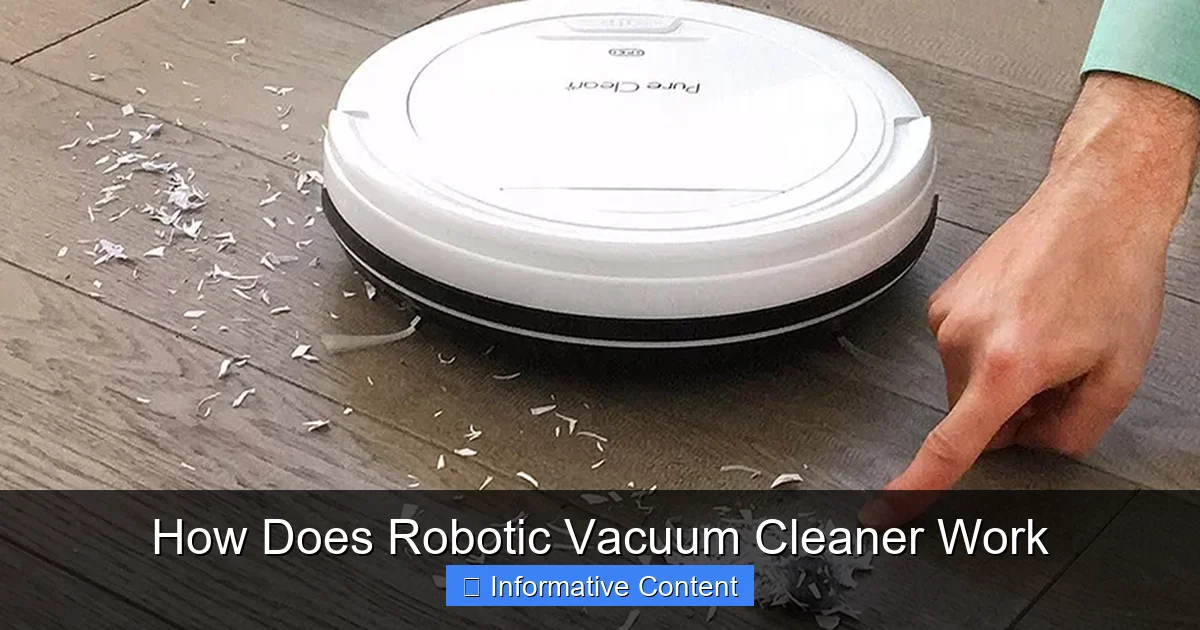
Visual guide about How Does Robotic Vacuum Cleaner Work
Image source: homegearslab.com
Mapping tells a robotic vacuum cleaner where it is and where it needs to go, but sensors tell it what’s immediately around it. Think of sensors as the eyes, ears, and touch of the robotic vacuum, allowing it to navigate safely and effectively in a dynamic environment. Without these, even the smartest map would be useless in a real-world home full of unexpected obstacles.
Obstacle Avoidance Sensors
These are crucial for preventing collisions with furniture, walls, and even your feet!
- Infrared (IR) Sensors: These are very common. Robotic vacuum cleaners emit invisible infrared light and detect when it reflects off an object. By measuring the distance to the object, the robotic vacuum can slow down or change direction before making contact. They are excellent for detecting walls and larger pieces of furniture.
- Bumper Sensors: Even with advanced IR sensors, occasional bumps are inevitable. Bumper sensors are physical switches located within the robotic vacuum’s bumper. When the bumper makes contact with an object, the sensor is triggered, telling the robotic vacuum to stop, reverse slightly, and change direction. This provides a last line of defense against damage to the robotic vacuum or your furniture.
- Optical and Front-Facing Cameras: Some high-end robotic vacuums use front-facing cameras combined with AI to identify specific objects like power cords, pet waste, or shoes. This allows the robotic vacuum to actively avoid these items, preventing entanglement or spreading messes.
Cliff Sensors: Preventing Tumbles
One of the most ingenious and reassuring features of a robotic vacuum cleaner is its ability to detect drops, like stairs. This is handled by “cliff sensors,” typically located on the underside of the robotic vacuum near its edges. These sensors work similarly to infrared obstacle sensors: they emit an infrared beam towards the floor. If the beam doesn’t reflect back (because there’s no floor beneath), the sensor registers a drop-off, and the robotic vacuum will immediately stop, turn around, and continue cleaning in a safe direction. This prevents it from taking a potentially damaging tumble down a flight of stairs.
Dirt Detection Sensors: Targeting Grime
Not all areas of your home get equally dirty. Robotic vacuum cleaners often incorporate sensors specifically designed to detect concentrations of dirt.
- Acoustic Sensors: Some robotic vacuums use tiny microphones to “listen” for the sound of debris hitting the dustbin or internal components. More impacts indicate a dirtier area.
- Optical Sensors: Other models use optical sensors that can detect the density of particles being vacuumed up.
When a robotic vacuum cleaner detects a particularly dirty spot, it might engage a “spot clean” mode, spending more time and making multiple passes over that specific area to ensure thorough cleaning. This is an excellent example of how the robotic vacuum adapts its cleaning strategy to real-time conditions.
Wheel Speed and Drop Sensors
These less-talked-about sensors are also critical for the robotic vacuum’s operation. Wheel speed sensors monitor the rotation of the wheels, helping the robotic vacuum accurately track its distance traveled and detect if a wheel is stuck or slipping. Drop sensors (different from cliff sensors) can detect if the robotic vacuum has been lifted off the ground, causing it to pause its cleaning cycle.
The Cleaning Powerhouse: Suction, Brushes, and Filtration
All the smart navigation and sensing in the world wouldn’t matter if the robotic vacuum cleaner couldn’t actually clean. This is where the powerful mechanical elements come into play, working in concert to pick up everything from fine dust to larger crumbs.
Side Brushes: Reaching the Edges
Look at the underside of most robotic vacuum cleaners, and you’ll see one or two small, rotating brushes with long bristles, often called “side brushes” or “edge brushes.” These are designed to sweep debris from corners, along walls, and around furniture legs into the main cleaning path of the robotic vacuum. Without these, dirt in tight spots would often be missed. They are crucial for extending the cleaning reach beyond the direct path of the main brush roller.
Main Brush Rollers: Agitation and Lift
After the side brushes do their work, the main event begins. The central component for dislodging and lifting dirt is the main brush roller, or sometimes a pair of counter-rotating rollers.
- Bristle and Rubber Combination Brushes: Many robotic vacuum cleaners use a combination brush with both traditional bristles (good for agitating carpets and sweeping fine dust) and rubber fins (excellent for picking up pet hair and preventing tangles on hard floors).
- All-Rubber Brushes: Some newer robotic vacuum cleaners feature all-rubber multi-surface brushes. These are particularly effective at preventing hair tangles, making them ideal for homes with pets, and they perform well on both hard floors and carpets.
These rollers spin at high speeds, agitating carpets to loosen embedded dirt and sweeping debris up from hard floors. This action is critical because suction alone often isn’t enough to lift stubborn dirt and debris effectively.
The Suction System: Pulling it All In
Once the dirt has been agitated and swept, the robotic vacuum’s powerful suction system takes over. A motor creates a vacuum, pulling air and debris up from the floor and into the robotic vacuum’s dustbin. Suction power is typically measured in Pascals (Pa), and higher numbers generally indicate stronger suction.
- Motor and Airflow: The motor is the heart of the suction system. Modern robotic vacuum cleaners often use brushless motors, which are more efficient, quieter, and have a longer lifespan. The design of the airflow path is also critical to maximize suction efficiency.
- Different Power Modes: Many robotic vacuum cleaners offer multiple suction power modes (e.g., standard, turbo, quiet). Higher power modes are great for deeper cleaning but consume more battery, while quieter modes are suitable for light cleaning or when you’re nearby. Some robotic vacuum cleaners can even automatically increase suction when they detect carpet.
Filtration Systems: Trapping Dust and Allergens
As the air is drawn into the robotic vacuum cleaner, it passes through a filtration system before being expelled. This is vital for trapping dust, allergens, and other microscopic particles, preventing them from being recirculated back into the air you breathe.
- Multi-Layer Filters: Most robotic vacuum cleaners use multi-layer filters to capture progressively smaller particles.
- HEPA Filters: Many models incorporate High-Efficiency Particulate Air (HEPA) filters, which are capable of trapping 99.97% of airborne particles 0.3 microns in size or larger. This is particularly beneficial for allergy sufferers and pet owners, ensuring cleaner air in your home.
Regular cleaning or replacement of these filters is crucial for maintaining the robotic vacuum’s suction power and air quality benefits.
Dustbin Management
All that collected dirt and debris needs somewhere to go. Robotic vacuum cleaners feature an onboard dustbin or dirt bin. These vary in size, but due to the compact nature of the robotic vacuum, they are generally smaller than those found in upright vacuums.
- Capacity: Dustbin capacity affects how often you need to empty the robotic vacuum. Larger homes or homes with pets might require more frequent emptying.
- Easy Emptying: Most dustbins are designed for easy removal and emptying, often with a simple latch mechanism. Many are also washable, allowing you to rinse them out for better hygiene.
Understanding these cleaning components helps appreciate the comprehensive approach a robotic vacuum cleaner takes to keep your floors spotless.
Keeping the Clean Going: Batteries and Charging Docks
A robotic vacuum cleaner is designed to be autonomous, and that autonomy extends to its power management. One of the most convenient features is its ability to recharge itself without any human intervention. This ensures the robotic vacuum is always ready for its next cleaning mission.
Battery Technology: Powering the Journey
The vast majority of modern robotic vacuum cleaners are powered by rechargeable Lithium-ion (Li-ion) batteries. These batteries offer a good balance of energy density, lifespan, and consistent power output.
- Runtime: Battery runtime varies significantly between models, typically ranging from 60 minutes to over 180 minutes on a single charge. Factors like suction power used, floor type (carpet requires more power), and obstacles can influence actual runtime.
- Charging Time: When the battery is depleted, it needs to recharge. This usually takes between 2 to 6 hours, depending on the battery size and the charging system.
The efficiency of the robotic vacuum’s navigation and cleaning algorithms also plays a role in maximizing its battery life, as less time spent wandering aimlessly means more time spent cleaning efficiently.
Automatic Recharging: A Smart Return Home
This is where the “robotic” part truly shines. When the robotic vacuum’s battery level drops below a certain threshold, it automatically pauses its cleaning cycle and begins to search for its charging dock.
- Infrared Signals for Dock Guidance: The charging dock typically emits an infrared signal, creating a “homing beacon” that the robotic vacuum’s sensors can detect. The robotic vacuum follows this signal, guides itself back to the dock, and carefully maneuvers to align its charging contacts with those on the base.
- Resuming Cleaning: For robotic vacuum cleaners with mapping capabilities, a truly impressive feature is “resume cleaning.” Once the robotic vacuum has fully recharged, it will often pick up exactly where it left off, ensuring that the entire area gets cleaned, even if it required multiple charging sessions.
This automatic recharging capability means you rarely have to think about plugging in your robotic vacuum cleaner. It just handles its business.
Self-Emptying Docks: The Ultimate Convenience
While automatic recharging is fantastic, emptying the small dustbin on the robotic vacuum itself can still be a regular chore, especially for pet owners. This is where self-emptying docks come in as a game-changer.
- Automatic Dust Transfer: When a robotic vacuum cleaner with a self-emptying dock returns to its station, the dock not only recharges it but also automatically sucks the dirt and debris out of the robotic vacuum’s internal dustbin and into a much larger, sealed bag located within the dock itself.
- Less Frequent Manual Emptying: These larger bags can hold weeks, or even months, worth of dirt, significantly reducing the frequency with which you need to interact with the robotic vacuum’s dirt. This feature truly elevates the hands-free cleaning experience, making robotic vacuum ownership even more convenient.
Beyond Basic Cleaning: Smart Features and Connectivity
Modern robotic vacuum cleaners are more than just automatic floor sweepers; they are increasingly integrated into our smart homes, offering a wealth of features that enhance convenience and control.
App Control and Scheduling
Most contemporary robotic vacuum cleaners connect to your home Wi-Fi network and can be controlled via a dedicated smartphone app. This connectivity unlocks a host of powerful features:
- Remote Control: Start, stop, or pause cleaning cycles from anywhere.
- Scheduling: Set recurring cleaning times and days. Want the robotic vacuum to clean every weekday at 10 AM while you’re at work? No problem!
- Monitoring Status: Check battery level, dustbin status, and cleaning history.
- Custom Cleaning: For mapped homes, you can often select specific rooms to clean, draw virtual walls, or define “no-go zones” where the robotic vacuum should avoid.
The app often provides a visual map of where the robotic vacuum has cleaned, allowing you to see its progress and ensure no spots were missed.
Voice Assistant Integration
Many robotic vacuum cleaners can integrate with popular voice assistants like Amazon Alexa and Google Assistant. This means you can simply say, “Hey Google, tell the robotic vacuum to start cleaning,” or “Alexa, ask the robotic vacuum to go home,” for truly hands-free operation. This seamless integration further enhances the smart home experience.
Zone Cleaning and Virtual Walls
With sophisticated mapping, you gain granular control over where your robotic vacuum cleans.
- Zone Cleaning: Use the app to highlight specific areas on your map (e.g., “clean under the dining table” or “spot clean the entryway”) for the robotic vacuum to focus on.
- Virtual Walls/No-Go Zones: You can electronically define areas the robotic vacuum should avoid, such as a child’s play area, pet food bowls, or a fragile display. This is far more convenient than physical barriers.
Mopping Functionality: Dual-Purpose Devices
Some robotic vacuum cleaners are designed to do more than just vacuum. Many come with a mopping function, transforming them into 2-in-1 devices.
- Water Tanks and Microfiber Pads: These models feature a small water reservoir and an attachable microfiber pad. The robotic vacuum dispenses water onto the pad, which then wipes the floor as it moves.
- Wet/Dry Modes: Some advanced models can vacuum and mop simultaneously or offer distinct vacuuming-only and mopping-only modes. They are typically best for light maintenance mopping rather than deep scrubbing.
This dual functionality adds another layer of convenience, helping maintain cleaner hard floors with even less effort.
Smart Home Integration and Updates
As part of the broader smart home ecosystem, some robotic vacuum cleaners can interact with other smart devices. For example, they might be programmed to start cleaning when you leave the house or pause if a smart security camera detects motion. Furthermore, like other smart devices, robotic vacuum cleaners often receive over-the-air (OTA) firmware updates, which can introduce new features, improve navigation algorithms, or fix bugs, keeping your device up-to-date and improving its performance over time.
Conclusion
From their humble beginnings as simple “bump and go” cleaning robots, robotic vacuum cleaners have evolved into incredibly sophisticated, intelligent devices. The answer to “how does robotic vacuum cleaner work” lies in the brilliant synergy of advanced mapping, diverse sensor technology, powerful multi-stage cleaning mechanisms, and seamless smart home integration. They are a testament to how far automation has come, turning a dreaded chore into an effortless background operation.
These clever little machines don’t just clean your floors; they learn your home, adapt to its challenges, and silently ensure a consistent level of tidiness, all while you focus on more important or enjoyable tasks. As technology continues to advance, we can expect even more intuitive navigation, stronger cleaning power, and deeper smart home integration from future robotic vacuum cleaners. So, the next time your robotic vacuum diligently glides across your floor, you’ll know it’s not just sweeping; it’s a tiny, autonomous marvel of engineering at work, giving you the gift of a clean home and valuable time back.
Frequently Asked Questions
Are robotic vacuums good for pet hair?
Yes, many robotic vacuum cleaners are specifically designed to handle pet hair, often featuring tangle-free rubber brushes and strong suction power. Models with HEPA filters are also excellent for trapping pet dander, which helps improve air quality.
How often should I empty the dustbin?
The frequency depends on your home’s size, how often you clean, and whether you have pets. Generally, you should aim to empty the dustbin after every 1-3 cleaning cycles, or daily in homes with heavy pet hair, to maintain optimal suction and prevent clogs.
Can robotic vacuums replace traditional vacuums?
For daily maintenance cleaning, a robotic vacuum cleaner can significantly reduce the need for a traditional vacuum. However, for deep cleaning, stairs, or very high-pile carpets, a powerful upright or stick vacuum is still often recommended as a supplement.
Do they work in the dark?
Most robotic vacuum cleaners with LiDAR mapping work perfectly well in the dark because LiDAR uses laser light, not ambient light. Those that rely heavily on VSLAM (camera-based vision) might perform less optimally in very low-light conditions but often have supplementary sensors to assist.
How long do robotic vacuum batteries last?
The rechargeable Lithium-ion batteries in robotic vacuums typically last for several years, usually between 2 to 5 years, depending on usage and charging habits. Like all batteries, their capacity will gradually diminish over time, leading to shorter runtimes.
Is it worth getting a self-emptying dock?
For ultimate convenience, a self-emptying dock is often worth the investment, especially for busy individuals, pet owners, or those with allergies. It drastically reduces the frequency of manual dustbin emptying, sometimes for weeks or even months, making the robotic vacuum truly hands-free.