
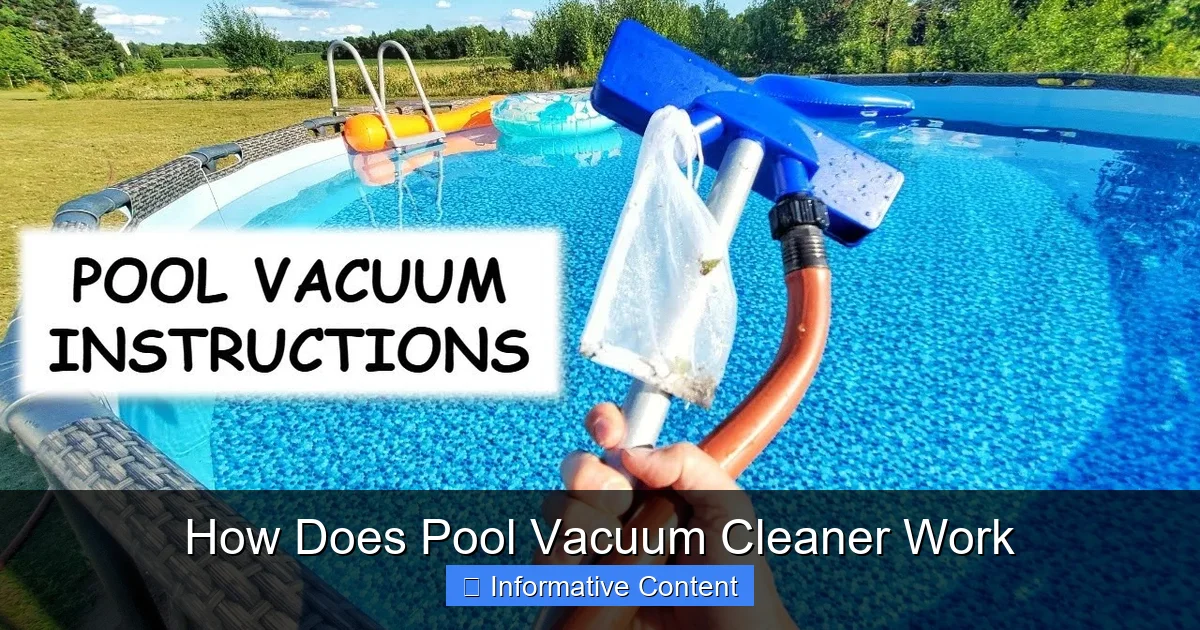
Pool vacuum cleaners are essential tools for maintaining a pristine swimming pool, removing dirt and debris from the bottom and walls. They operate through various mechanisms: some use the pool’s existing pump for suction, others utilize dedicated pressure from a booster pump, while advanced robotic models employ their own internal motors and filtration systems for autonomous cleaning. Understanding how your specific pool vacuum cleaner works helps ensure efficient operation and a consistently sparkling pool.
There’s nothing quite like the inviting shimmer of a crystal-clear swimming pool on a hot day. It’s a perfect oasis for relaxation, fun, and exercise. But let’s be honest, getting that perfect sparkle doesn’t happen by magic. Beneath that inviting surface, dirt, leaves, sand, and even microscopic algae spores are constantly trying to set up residence on your pool’s floor and walls. This is where the unsung hero of pool maintenance steps in: the pool vacuum cleaner.
You might have seen one in action, diligently crawling along the bottom, seemingly swallowing up all the grime. But have you ever stopped to wonder, “How does pool vacuum cleaner work?” It’s a great question, because these devices, while simple in concept, employ some clever engineering to keep your aquatic playground pristine. Understanding the different types and their operational mechanics not only satisfies curiosity but also empowers you to choose the right cleaner for your pool and troubleshoot issues effectively. Let’s dive deep into the fascinating world of pool vacuum cleaners!
Key Takeaways
- Fundamental Function: All pool vacuum cleaners operate by creating suction or using brushes to dislodge and remove debris (dirt, leaves, algae) from the pool’s surfaces, preventing buildup and maintaining water clarity.
- Manual Vacuums: These traditional cleaners require human effort, connecting to the skimmer or a dedicated vacuum line and using the pool pump’s suction to pull debris into a filter bag or the main filter system.
- Suction-Side Automatic Cleaners: These attach to the skimmer or a vacuum line and use the pool’s main pump to create suction, moving randomly across the pool floor while pulling debris into the pump’s filter basket.
- Pressure-Side Automatic Cleaners: Powered by the pool’s return jets or a dedicated booster pump, these cleaners use water pressure to create movement and propulsion, often featuring a separate debris bag to capture collected material before it reaches the main pool filter.
- Robotic Pool Vacuums: These advanced, independent cleaners feature their own internal motors, filtration systems, and often intelligent mapping technology. They operate autonomously, requiring only power and occasional emptying of their debris canisters.
- Maintenance is Key: Regular cleaning of filter bags/canisters, checking hoses for leaks, and inspecting moving parts are crucial for optimal performance and longevity of any pool vacuum cleaner.
- Choosing the Right Cleaner: The best pool vacuum cleaner depends on pool size, type of debris, budget, and desired level of automation. Each type offers distinct advantages and operational principles.
Quick Answers to Common Questions
What is the primary function of a pool vacuum cleaner?
The primary function of a pool vacuum cleaner is to remove debris, dirt, leaves, and other particulate matter from the floor, walls, and steps of a swimming pool, ensuring clean and clear water.
Do all pool vacuum cleaners use the pool’s main pump?
No, not all pool vacuum cleaners use the pool’s main pump. Manual and suction-side automatic cleaners do, but pressure-side cleaners often use a separate booster pump, and robotic cleaners have their own internal motors and pumps.
How does a robotic pool vacuum cleaner differ from other types?
A robotic pool vacuum cleaner is a completely self-contained unit with its own internal motors, pump, and filtration system, operating independently of the pool’s existing plumbing or filter system.
Can a pool vacuum cleaner remove algae?
Yes, pool vacuum cleaners can remove algae, especially robotic cleaners with scrubbing brushes. However, vacuuming algae should ideally be done to waste if possible, as it can quickly clog your filter. Chemical treatment for algae is also usually required.
How often should I use a pool vacuum cleaner?
The frequency depends on your pool’s usage, environment (e.g., nearby trees), and the type of cleaner. Many automatic and robotic cleaners are run daily or every other day, while manual vacuuming might be done weekly or as needed.
📑 Table of Contents
- Unpacking the Basics: What is a Pool Vacuum Cleaner?
- Manual Pool Vacuums: The Classic Hands-On Approach
- Automatic Pool Vacuums: The Modern Workhorses
- Robotic Pool Vacuums: The Smartest Cleaners on the Block
- Choosing the Right Pool Vacuum Cleaner for You
- Keeping Your Cleaner in Top Shape: Maintenance Tips
- The Bottom Line: Enjoying a Sparkling Pool
Unpacking the Basics: What is a Pool Vacuum Cleaner?
At its core, a pool vacuum cleaner is a specialized device designed to remove unwanted debris from your swimming pool. Think of it as a specialized underwater vacuum cleaner for your pool. Instead of cleaning carpets, it’s tackling the likes of leaves, twigs, sand, silt, and even fine particulate matter that settles at the bottom or clings to the walls. Without one, your pool would quickly become murky, unhygienic, and much less appealing.
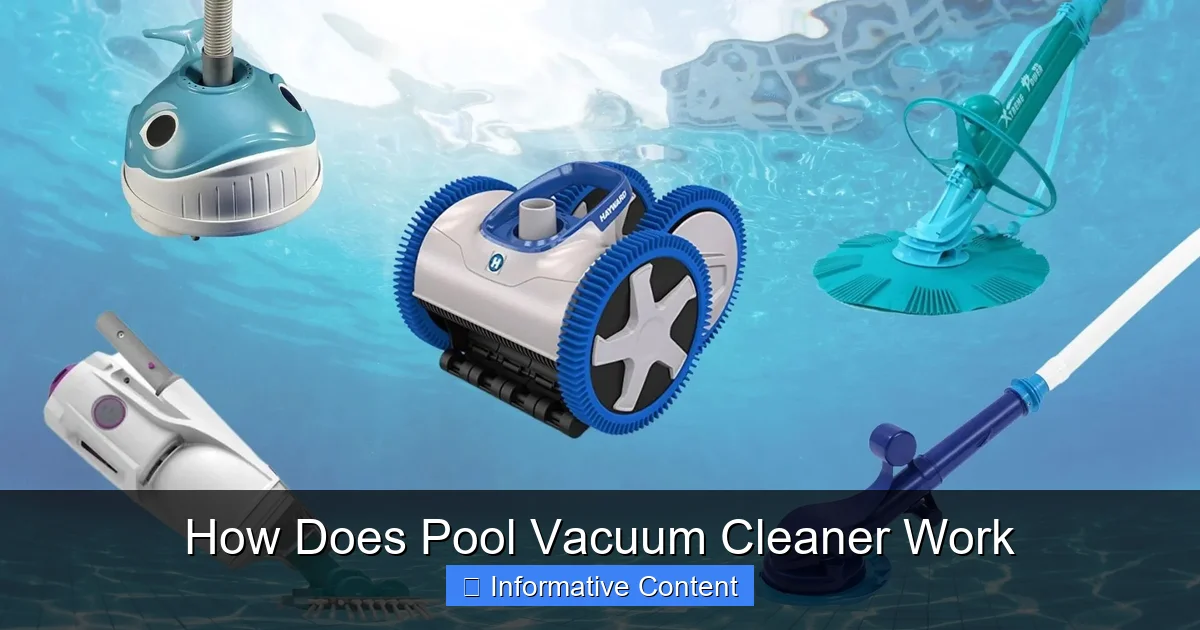
While the goal is the same for all pool vacuum cleaners – a spotless pool – the methods they use to achieve this vary significantly. There are primarily three main categories: manual, automatic (which includes suction-side and pressure-side), and robotic. Each type operates on a distinct principle, leveraging different power sources and filtration methods to get the job done. Understanding these differences is the first step to appreciating the ingenuity behind these essential pool tools.
Manual Pool Vacuums: The Classic Hands-On Approach
Before the advent of sophisticated automatic systems, the manual pool vacuum cleaner was the standard for keeping pools clean. And even today, many pool owners rely on them for spot cleaning or as their primary method, especially for smaller pools or specific debris types. These cleaners require direct human intervention, making you the “driver” of the cleaning process.
Visual guide about How Does Pool Vacuum Cleaner Work
Image source: storables.com
How a Manual Pool Vacuum Works
The operation of a manual pool vacuum cleaner is surprisingly straightforward, relying entirely on your pool’s existing pump and filter system. Here’s a step-by-step breakdown:
- Assembly: First, you connect a flexible vacuum hose to the vacuum head. The vacuum head usually has brushes on the bottom to agitate debris and wheels to help it glide along the pool surface.
- Pole Attachment: The vacuum head is then attached to a telescopic pole, giving you the reach needed to cover the entire pool.
- Submersion and Priming: The entire assembly (head, hose, pole) is submerged in the pool water. It’s crucial to fill the vacuum hose with water to remove all air. This is often done by slowly pushing the hose underwater until water flows out of the open end, or by holding the hose end over a return jet until no more bubbles emerge. This priming step prevents air from entering your pool pump, which could cause it to lose prime or get damaged.
- Connection to Skimmer/Vacuum Port: Once primed, the open end of the vacuum hose is connected to your pool’s skimmer basket opening or a dedicated vacuum line port (if your pool has one). The pool pump is then turned on.
- Creating Suction: With the hose connected and the pump running, the pump begins to pull water, creating a powerful suction force at the vacuum head. This suction pulls water and debris from the pool bottom directly into the hose.
- Filtration: The debris-laden water travels through the hose, past your skimmer basket (which catches larger items), and into your pool’s main filter system (cartridge, D.E., or sand filter). The filter traps the fine dirt and particles, allowing clean water to return to the pool.
Pros and Cons of Manual Pool Vacuums
- Pros: Excellent for targeted spot cleaning, very effective at picking up specific piles of debris, generally inexpensive, and you have complete control over where and how long you clean.
- Cons: Requires significant physical effort and time, can stir up fine debris if not handled carefully, and can put a strain on your main pool filter if used frequently with very dirty pools.
Automatic Pool Vacuums: The Modern Workhorses
For those who prefer a less hands-on approach, automatic pool vacuum cleaners offer a fantastic solution. These devices are designed to autonomously traverse your pool, collecting debris without you having to push a pole around. They come in two main varieties: suction-side and pressure-side, each with its own operational principles.
Suction-Side Pool Vacuums: Drawing Power from Your Pump
Suction-side pool vacuum cleaners are often considered the simplest form of automatic cleaner. They work in a similar way to manual vacuums in that they connect to your pool’s skimmer or a dedicated vacuum line and rely on the pool’s main pump for their power.
How Suction-Side Cleaners Work
- Connection: A long, flexible hose connects the suction-side cleaner to your pool’s skimmer or a dedicated vacuum port. Just like manual vacuums, the hose must be primed to remove air.
- Pump-Powered Suction: When the pool pump is running, it creates a powerful vacuum through the hose and into the cleaner’s intake. This suction not only pulls debris into the cleaner but also propels the cleaner across the pool floor and, in some cases, up the walls.
- Movement Mechanism: Different models use various methods for movement. Some have a pulsating diaphragm or flapper that creates a “foot” motion. Others use gears or a rotating brush to move themselves. The suction force powers these internal mechanisms.
- Debris Collection: Debris is sucked directly into the cleaner’s intake, through the hose, past your skimmer basket, and into your main pool filter. The main pool pump acts as the motor, and the main pool filter system acts as the debris collection unit.
Pros and Cons of Suction-Side Cleaners
- Pros: Generally affordable, easy to install, no additional booster pump needed, and effective at picking up fine debris.
- Cons: Relies on your pool’s main pump, which can reduce its efficiency for filtration and circulation; can clog easily with large debris; and directs all debris to your main pool filter, requiring more frequent backwashing or cartridge cleaning. Their movement patterns can also be somewhat random.
Pressure-Side Pool Vacuums: Their Own Engine of Clean
Pressure-side pool vacuum cleaners operate on the opposite principle of suction-side cleaners. Instead of drawing water in, they use the force of pressurized water to move and collect debris. This often means they’re not relying solely on your main pool pump for cleaning power.
How Pressure-Side Cleaners Work
- Connection to Return Jet or Booster Pump: Pressure-side cleaners connect to a dedicated return jet or, more commonly, to a separate booster pump specifically installed for the cleaner. The booster pump provides high-pressure water to the cleaner.
- Water Pressure for Propulsion: The high-pressure water enters the cleaner and is directed through jets or an internal turbine system. This pressurized water drives the cleaner’s wheels or internal mechanisms, causing it to move around the pool in various patterns.
- Venturi Effect for Suction: As the pressurized water exits through jets inside the cleaner, it creates a “venturi effect.” This effect generates a localized suction at the cleaner’s intake port, drawing in debris from the pool bottom.
- Onboard Debris Bag: Unlike suction-side cleaners, pressure-side cleaners typically feature their own mesh debris bag attached to the cleaner itself. This bag collects all the leaves, sand, and other debris before the water is returned to the pool, preventing it from reaching your main pool filter.
Pros and Cons of Pressure-Side Cleaners
- Pros: Excellent for collecting large debris like leaves and acorns into their own bag, which keeps your main pool filter cleaner; often have more vigorous cleaning action; and do not strain your main pool pump.
- Cons: More expensive upfront, often require a separate booster pump (which adds to energy costs and installation complexity), and can struggle with very fine silt unless equipped with a very fine mesh bag.
Robotic Pool Vacuums: The Smartest Cleaners on the Block
Stepping into the future of pool cleaning, robotic pool vacuum cleaners are the most advanced and autonomous option available. These independent units are essentially smart robots designed specifically for your pool, requiring no connection to your pool’s filtration system.
How Robotic Pool Vacuums Work
- Internal Motors and Pumps: Robotic cleaners are self-contained units. They have their own internal electric motors that power both their movement and a dedicated pump for suction. They typically plug into a standard electrical outlet via a low-voltage transformer.
- Integrated Filtration System: Instead of relying on your pool’s filter, robotic cleaners have their own onboard filtration system, usually a fine mesh basket or cartridge filter. Debris is pulled into the cleaner, filtered, and clean water is then expelled back into the pool.
- Intelligent Navigation: This is where robotic cleaners truly shine. Many models feature sophisticated programming, microprocessors, and even sensors (like gyroscopes or infrared) to map your pool’s shape and size. They can follow systematic cleaning patterns, ensure full coverage, and even climb walls and scrub the waterline.
- Brushing Action: Most robotic pool vacuum cleaners come equipped with scrubbing brushes (PVC, foam, or combination) that actively dislodge stubborn dirt, algae, and grime from surfaces before the debris is sucked up.
- Autonomous Operation: Once programmed and dropped into the pool, a robotic cleaner operates completely independently. When its cycle is complete, it usually shuts off automatically, sometimes even coming to rest near a wall for easy retrieval.
Pros and Cons of Robotic Pool Vacuums
- Pros: Extremely energy-efficient (do not run your main pool pump), provides superior cleaning and scrubbing action, independent filtration keeps your main filter pristine, smart navigation for thorough coverage, and entirely autonomous operation – just plug and play.
- Cons: Highest upfront cost, debris canister needs to be emptied regularly, and cable can sometimes tangle (though many models have tangle-free swivels).
Choosing the Right Pool Vacuum Cleaner for You
With so many options, how do you decide which pool vacuum cleaner is best for your needs? Here are some factors to consider:
- Pool Size and Type: Larger pools or those with complex shapes might benefit more from the systematic cleaning of a robotic cleaner. Smaller pools might be fine with a manual or suction-side cleaner.
- Type of Debris: If you frequently deal with large leaves, a pressure-side cleaner with its big debris bag, or a robotic cleaner with a large canister, might be ideal. For fine silt and sand, a suction-side or robotic cleaner with a fine filter will excel.
- Budget: Manual cleaners are the most affordable, followed by suction-side, then pressure-side (especially with a booster pump), and finally robotic cleaners at the higher end.
- Desired Effort Level: If you enjoy a hands-on approach and want to save money, manual is great. For maximum convenience and autonomy, a robotic cleaner is unmatched.
- Energy Consumption: Robotic cleaners are generally the most energy-efficient as they don’t require your main pool pump to run during cleaning. Pressure-side cleaners with booster pumps will add to your electricity bill.
Keeping Your Cleaner in Top Shape: Maintenance Tips
No matter which type of pool vacuum cleaner you own, regular maintenance is key to its longevity and effective operation. A well-maintained cleaner will perform better and save you hassle in the long run.
- Empty Debris Bags/Canisters Regularly: This is critical for all automatic cleaners. A full bag or canister reduces suction and effectiveness. For robotic cleaners, rinse the filter thoroughly after each use.
- Check Hoses for Leaks: For manual and suction-side cleaners, air leaks in the hose severely compromise suction power. Inspect hoses for cracks or worn spots.
- Clean and Inspect Brushes/Wheels: Over time, brushes can wear down, and wheels can accumulate hair or debris, hindering movement. Clean and replace as needed.
- Inspect Internal Parts: For suction and pressure cleaners, check the diaphragm, flapper, or gears for wear. For robotic cleaners, ensure impellers are free of debris.
- Store Properly: When not in use, especially during the off-season, store your pool vacuum cleaner in a clean, dry, and sheltered area. Keep hoses coiled neatly to prevent kinks.
- Backwash/Clean Main Filter: Remember that manual and suction-side cleaners send debris to your main pool filter. Ensure your filter is clean and functioning optimally.
The Bottom Line: Enjoying a Sparkling Pool
Understanding how a pool vacuum cleaner works demystifies a crucial aspect of pool maintenance. From the simple, human-powered manual systems that rely on your pool pump’s suction, to the intricate engineering of robotic cleaners that independently map and scrub, each type plays a vital role in keeping your swimming environment pristine. Choosing the right tool and giving it the occasional care it needs will ensure that your pool remains a sparkling, inviting sanctuary, ready for endless hours of enjoyment. So go ahead, enjoy that perfectly clean water – now you know just how much work (or how little, thanks to modern tech!) goes into it!
Frequently Asked Questions
How do manual pool vacuums create suction?
Manual pool vacuums create suction by connecting a vacuum head and hose to the pool’s skimmer or a dedicated vacuum line. When the pool’s main pump is running, it pulls water from the skimmer, through the hose, creating a powerful vacuum at the head that sucks up debris.
What is the “venturi effect” in pressure-side cleaners?
In pressure-side cleaners, the venturi effect occurs when pressurized water is forced through a constricted opening, creating a high-velocity jet. This jet in turn generates a low-pressure area nearby, which effectively pulls (sucks) debris into the cleaner’s intake port.
Are robotic pool vacuums energy efficient?
Yes, robotic pool vacuums are generally very energy efficient. They operate using low-voltage electricity (typically 120V transformed to 24V DC) and don’t require your pool’s main, energy-intensive pump to run during their cleaning cycle, leading to significant energy savings.
What’s the main benefit of a pressure-side cleaner having its own debris bag?
The main benefit of a pressure-side cleaner having its own debris bag is that it collects large debris directly into the bag, preventing it from reaching and potentially clogging your pool’s main pump basket or filter. This helps keep your main filtration system cleaner and extends the time between backwashing or cartridge cleaning.
Can I leave my automatic pool vacuum cleaner in the pool all the time?
While some automatic pool vacuum cleaners are designed to be submerged for extended periods, it’s generally recommended to remove them from the pool when not in use. This helps prolong their lifespan by protecting them from prolonged exposure to pool chemicals, UV light, and potential damage from swimmers.
Why is it important to prime the hose when using a manual or suction-side vacuum?
Priming the hose (filling it with water to remove air) is crucial because it prevents air from entering your pool’s main pump. If air enters the pump, it can cause the pump to lose its prime, stop circulating water, and potentially lead to overheating or damage. A fully primed hose ensures continuous, efficient suction.