
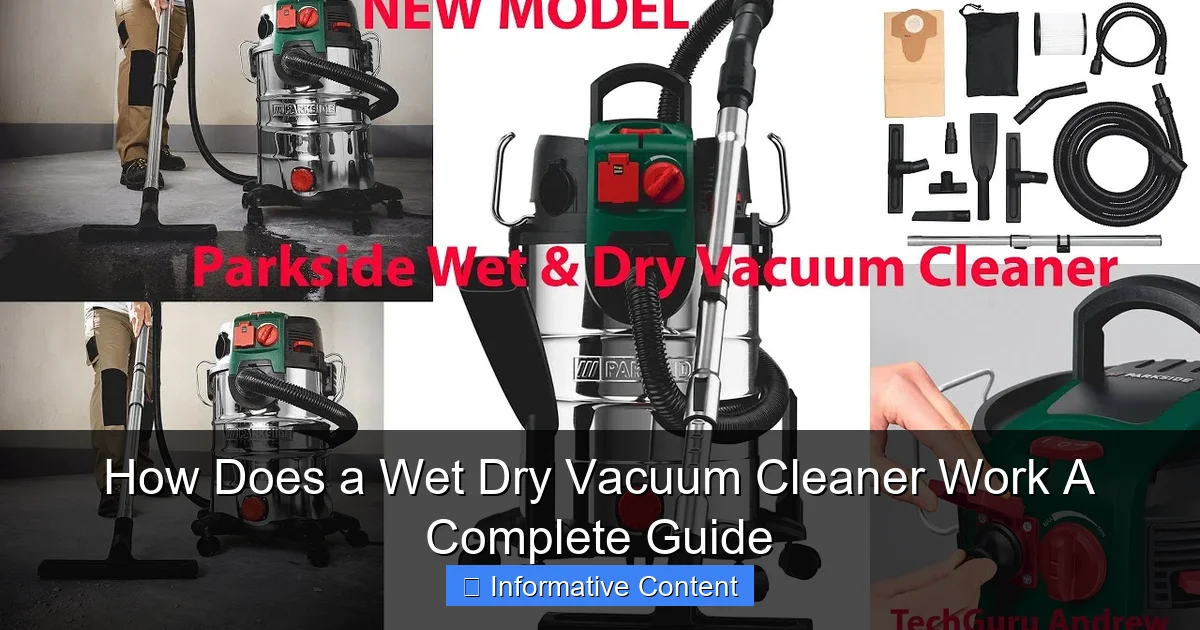
A wet dry vacuum cleaner works by using a powerful motor to create suction, allowing it to pick up both liquid spills and solid debris through a specialized dual-mode design. Its sealed canister and waterproof components prevent damage during wet use, while filters and airflow systems adapt to handle everything from dust to flooded floors. This versatility makes it a must-have tool for heavy-duty cleaning tasks in homes, workshops, or garages.
Key Takeaways
- Powerful suction: Uses a high-performance motor to handle both wet and dry messes effortlessly.
- Dual filtration: Separate filters protect the motor from liquids and fine dust particles.
- Sealed tank design: Prevents leaks and safely stores liquids until disposal.
- Smart float valve: Automatically shuts off suction when the tank is full of liquid.
- Versatile accessories: Swappable nozzles and hoses adapt to floors, crevices, and upholstery.
- Easy cleanup: Detachable tanks and washable parts simplify maintenance and storage.
Quick Answers to Common Questions
How does a wet dry vacuum cleaner handle both liquids and solids?
A wet dry vacuum cleaner uses a powerful motor to create suction, pulling in both liquids and debris through a wide hose or nozzle, which are then separated and stored in a durable tank—making cleanup fast and efficient.
Can I use a wet dry vacuum cleaner for everyday spills?
Absolutely! A wet dry vacuum cleaner is designed for quick cleanup of everyday spills, from kitchen messes to garage leaks, thanks to its waterproof components and strong suction power.
Do I need special filters for wet and dry use?
Yes, most wet dry vacuum cleaners require a foam sleeve or specialized filter for wet messes and a dry filter for debris, ensuring optimal performance and protecting the motor.
Is it safe to vacuum water with a wet dry vacuum cleaner?
Yes, it’s completely safe—unlike regular vacuums, a wet dry vacuum cleaner has a sealed tank and waterproof internals, so it won’t short-circuit or damage the unit when sucking up water.
How do I empty a wet dry vacuum cleaner after use?
Simply detach the tank, pour out liquids or debris, and rinse if needed—most wet dry vacuum cleaner models feature large, easy-open lids for hassle-free cleanup.
📑 Table of Contents
- How Does a Wet Dry Vacuum Cleaner Work A Complete Guide
- The Core Mechanics: How Wet Dry Vacs Handle Liquids and Solids
- Key Components That Make It Work
- Safety Features: Preventing Damage and Hazards
- Real-World Uses: Beyond the Workshop
- Choosing the Right Wet Dry Vac: A Quick Comparison
- Maintenance Tips: Keep Your Vac Running Smoothly
How Does a Wet Dry Vacuum Cleaner Work A Complete Guide
Imagine this: You’re halfway through cleaning your garage when you knock over a bucket of water. Instead of panicking, you reach for your wet dry vacuum cleaner and suck up the spill in seconds. Or maybe you’re tackling a renovation project, and drywall dust and sawdust are everywhere. Again, your trusty vac handles it all—dry messes, wet spills, even debris like screws or nails. But have you ever wondered how this superhero of cleaning tools actually works?
Unlike regular vacuums, wet dry vacs (also called shop vacs) are built to tackle both liquid and solid messes without breaking a sweat. They’re a staple in workshops, basements, and even homes with kids or pets. But their versatility raises questions: How do they avoid short-circuiting when sucking up water? What makes them different from your average upright vacuum? And how can you use one safely and effectively? In this guide, we’ll break down the mechanics, components, and real-world uses of wet dry vacuum cleaners—no engineering degree required.
The Core Mechanics: How Wet Dry Vacs Handle Liquids and Solids
Dual-Filtration System
The secret lies in a dual-filtration system that separates liquids from solids and protects the motor. Here’s how it works:

Visual guide about how does a wet dry vacuum cleaner work
Image source: hardwarepasal.com
- Dry mode: A high-efficiency filter (often foam, cloth, or cartridge-style) traps dust, debris, and allergens. Think of it like a coffee filter—it lets air through but catches the “grounds.”
- Wet mode: The filter is removed, and the vac relies on a gravity separator. When liquid enters the tank, it sinks to the bottom, while air (and any floating debris) is pulled upward through the motor. A float valve shuts off suction when the tank is full, preventing water from reaching the motor.
Pro tip: Always remove the dry filter before tackling liquids. Leaving it in can clog it or ruin the motor.
Centrifugal Force and Airflow
Wet dry vacs use a high-powered motor (typically 4–12 peak horsepower) to create intense suction. As air and debris rush into the tank, centrifugal force spins them outward. This action:
- Flings heavier particles (like nails or sand) to the tank’s walls, letting them drop to the bottom.
- Allows lighter particles (dust, hair) to be captured by the filter.
- Directs clean air through the motor, where a cooling fan prevents overheating.
Fun fact: This is similar to how a cyclone works—nature’s own vacuum cleaner!
Key Components That Make It Work
The Motor and Impeller
The motor is the heart of your wet dry vac. Unlike household vacuums (which use 500–1,000 watts), shop vacs pack 1,000–2,000 watts. This power drives an impeller—a fan-like blade that spins at 10,000–30,000 RPM to create suction. The impeller’s design is critical:
- Open impeller: Better for liquids but less efficient with fine dust.
- Closed impeller: Handles fine particles better but can struggle with thick liquids.
Example: A 5-gallon vac with an open impeller might excel at sucking up spilled soda but need frequent filter changes for drywall dust.
The Tank and Float Valve
The tank is usually made of polyethylene (plastic) for durability and rust resistance. Its design includes:
- Capacity markings: Help you avoid overfilling.
- Float valve: A buoyant ball or disk that rises with the liquid level. When the tank is full, it blocks the suction inlet, shutting off the motor automatically.
Real-world tip: If your vac suddenly stops while cleaning water, the float valve is likely doing its job. Empty the tank, and it’ll restart.
Filters and Accessories
Filters aren’t one-size-fits-all. Common types include:
- Foam sleeve: For liquids (but can degrade over time).
- Cartridge filter: For fine dust (e.g., sawdust, pet hair).
- HEPA filter: For allergens or construction debris (requires a compatible vac).
Accessories like crevice tools, extension wands, and wet squeegees let you adapt to different messes. For instance, a squeegee attachment turns your vac into a floor-cleaning powerhouse for flooded basements.
Safety Features: Preventing Damage and Hazards
Grounding and Waterproofing
Wet dry vacs are designed with safety-first principles:
- Grounded plug: Prevents electric shocks when handling liquids.
- Waterproof motor housing: Seals the motor from moisture (but never submerge the vac!).
- GFCI (Ground Fault Circuit Interrupter): Built into some models, it cuts power if a leak is detected.
Warning: Never use a standard household vacuum for liquids. The motor isn’t waterproof, and you risk electrocution.
Overload Protection
High-end models include thermal cutoffs that shut down the motor if it overheats. This prevents damage from:
- Clogged filters.
- Running the vac for over 30 minutes continuously.
- Sucking up hot debris (e.g., ash from a grill).
Example: A vac left running for an hour might trigger the cutoff. Let it cool for 15 minutes, then restart.
Real-World Uses: Beyond the Workshop
Home Emergencies
Wet dry vacs are lifesavers for:
- Flood cleanup: Suck up standing water from basements or bathrooms.
- Spills: Milk, juice, or pet accidents (just avoid sugary liquids, which can gunk up filters).
- Clogged sinks: Use the vac to pull out standing water before plunging.
Pro tip: For sewage backups, use a vac with a HEPA filter to avoid spreading bacteria.
Workshop and Renovation Projects
Contractors love wet dry vacs for:
- Drywall sanding: Attach a dust port to capture 90% of airborne dust.
- Concrete cutting: Wet mode reduces silica dust (a lung hazard).
- Woodworking: Clean sawdust, nails, and even glue spills.
Example: A 10-gallon vac with a HEPA filter can handle a full-day renovation job without needing to empty the tank.
Outdoor and Automotive Use
Take your vac outside for:
- Pool maintenance: Clear leaves and debris from pool skimmers.
- Car detailing: Suck up water from floor mats or vacuum crumbs from seats.
- Garage cleanup: Tackle oil spills, sawdust, or even snow.
Note: Avoid using your vac on hot materials like ashes. Let them cool first.
Choosing the Right Wet Dry Vac: A Quick Comparison
Not all wet dry vacs are created equal. Here’s a snapshot of key specs to consider:
| Feature | Entry-Level (4–6 gal) | Mid-Range (8–12 gal) | Professional (14–20 gal) |
|---|---|---|---|
| Power (HP) | 3–5 HP | 5–8 HP | 8–12 HP |
| Best For | Small spills, car cleaning | Home renovations, garage use | Contractors, industrial sites |
| Weight | 10–15 lbs | 15–25 lbs | 25–40 lbs |
| Filter Type | Foam or basic cartridge | Cartridge or HEPA-ready | HEPA or multi-stage |
| Price Range | $50–$100 | $100–$200 | $200–$400+ |
Tip: If you’re a DIYer, a 6-gallon mid-range vac (e.g., DeWalt or Craftsman) strikes a great balance between power and portability.
Maintenance Tips: Keep Your Vac Running Smoothly
Empty and Clean the Tank
After every use:
- Dump liquids into a floor drain (not a sink).
- Rinse the tank with water and mild soap.
- Dry thoroughly to prevent mold.
Warning: Never store a vac with liquid inside. It can corrode the tank or grow bacteria.
Filter Care
Clean filters extend your vac’s life. For:
- Foam filters: Rinse with water and air-dry.
- Cartridge filters: Tap gently to remove dust, or use a soft brush.
- HEPA filters: Replace annually (or after major projects).
Pro tip: Keep spare filters on hand. You’ll need them when cleaning sticky messes (like paint or syrup).
Motor and Hose Checks
Every 6 months:
- Inspect the hose for cracks or clogs.
- Check the motor’s cooling vents for dust buildup.
- Lubricate casters (if your model has them).
Wet dry vacuum cleaners are like the Swiss Army knives of cleaning tools—versatile, reliable, and ready for anything. Whether you’re tackling a basement flood, a workshop renovation, or just a spilled coffee, understanding how they work helps you use them smarter and safer. The key takeaway? Respect the machine: Use the right filter, empty it regularly, and never push it beyond its limits (like sucking up gasoline or hot ashes).
At the end of the day, a wet dry vac isn’t just a tool—it’s a problem solver. And with this guide, you’re now equipped to make the most of it. So the next time life throws a messy curveball, you’ll know exactly how to handle it: with suction, speed, and a little bit of know-how.
🎥 Related Video: Heavy Wet and Dry Vacuum Cleaner to keep your home spotless #vacuumcleaner #vacuum #amazon 4
📺 Best Products
The best Wet and Dry Vacuum Cleaner to keep your home spotless #vacuumcleaner #vacuum #shorts #amazon Looking for the …
Frequently Asked Questions
How does a wet dry vacuum cleaner work compared to a regular vacuum?
A wet dry vacuum cleaner uses a powerful motor to create suction, but unlike regular vacuums, it has a sealed tank that can handle both liquid and solid debris. Its design includes a float mechanism or sensor that shuts off suction when the tank is full to prevent overflow.
Can a wet dry vacuum cleaner handle water and other liquids safely?
Yes, a wet dry vacuum cleaner is specifically designed to safely pick up water, spills, and other non-flammable liquids. The motor and electrical components are isolated from the tank, reducing the risk of short circuits or damage.
What is the role of the filter in a wet dry vacuum cleaner?
The filter in a wet dry vacuum cleaner traps fine dust and particles when vacuuming dry debris, ensuring clean air exhaust. For wet use, many models use foam or no filters to avoid clogging, making cleanup easier and more efficient.
How do you use a wet dry vacuum cleaner for both wet and dry messes?
To switch between wet and dry use, simply remove or install the appropriate filter (foam sleeve for liquids, standard filter for dry debris). Always empty and dry the tank thoroughly after wet use to prevent mold or odors.
Why is my wet dry vacuum cleaner losing suction power?
Loss of suction in a wet dry vacuum cleaner is often due to a clogged filter, blocked hose, or a full tank. Regularly cleaning the filter, checking for obstructions, and emptying the tank can restore optimal performance.
Are wet dry vacuum cleaners suitable for heavy-duty cleaning tasks?
Absolutely. A wet dry vacuum cleaner is built for heavy-duty jobs, from workshop debris to basement floods, thanks to its durable tank and high-powered motor. Its versatility makes it ideal for both home and industrial use.