
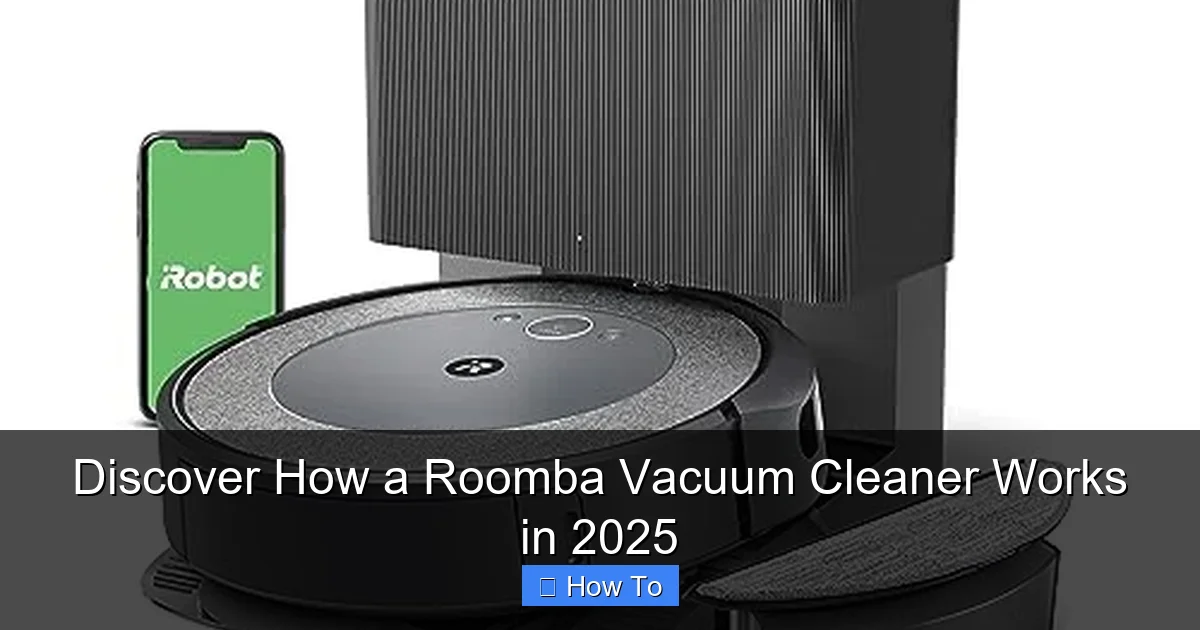
Curious about the magic behind those autonomous cleaners? This guide reveals precisely how a Roomba vacuum cleaner operates in 2025. From its sophisticated array of sensors and AI-powered navigation that intelligently maps your home, to its efficient multi-stage cleaning system that tackles dirt and debris, we’ll break down every step. Understand how these clever devices connect to your smart home, self-empty, and return to their dock, making hands-free cleaning a reality.
Discover How a Roomba Vacuum Cleaner Works in 2025
Welcome to the future of home cleaning! In 2025, the Roomba vacuum cleaner isn’t just a gadget; it’s an indispensable part of millions of smart homes worldwide. These intelligent robots have evolved dramatically since their first appearance, transforming from simple bump-and-go devices into sophisticated cleaning companions that navigate, clean, and even empty themselves with impressive autonomy. If you’ve ever watched a Roomba glide across your floor and wondered, “How does it *do* that?” – you’re in the right place!
This comprehensive guide will demystify the technology and processes that allow a Roomba vacuum cleaner to keep your floors spotless. We’ll delve into its advanced sensors, intelligent navigation, powerful cleaning mechanisms, and the smart features that make it a cornerstone of modern convenience. By the end, you’ll have a complete understanding of the fascinating engineering that goes into every sweep and suction. So, let’s explore the inner workings of your robotic cleaning marvel!
Key Takeaways
- Advanced Navigation & Mapping: Modern Roomba vacuum cleaners use a combination of camera vision, LiDAR technology, and intelligent algorithms to create precise maps of your home, allowing for efficient, methodical cleaning paths rather than random bouncing.
- Multi-Sensor Intelligence: Roombas are equipped with a suite of sensors, including cliff detection, dirt detection (acoustic and optical), bumper sensors, and obstacle avoidance, enabling them to navigate complex environments, avoid drops, and focus on high-traffic dirty areas.
- Three-Stage Cleaning System: The core cleaning process involves a spinning side brush to sweep debris from edges, counter-rotating main brushes (extractors) to agitate and lift dirt, and powerful vacuum suction to pull everything into the dustbin, ensuring thorough cleaning.
- Smart Home Integration & Control: In 2025, Roomba vacuum cleaners seamlessly integrate with smart home ecosystems (like Alexa or Google Assistant), offering voice control, advanced scheduling, specific room cleaning, and “keep out” zone creation via a user-friendly app.
- Self-Emptying & Maintenance: Many current Roomba models feature Clean Base Automatic Dirt Disposal, allowing the robot to automatically empty its dustbin into a larger bag in its charging dock, significantly reducing manual intervention for weeks or even months.
- Adaptive Cleaning & AI Learning: Roombas continually learn and adapt to your home layout and cleaning preferences. Through AI, they can suggest personalized cleaning schedules, identify particularly dirty areas over time, and adjust their cleaning intensity as needed.
Quick Answers to Common Questions
How often should I clean my Roomba’s brushes?
For optimal performance, it’s recommended to clean the Roomba’s main brushes (extractors) at least once a week, or more frequently if you have pets that shed a lot. This prevents hair tangles and maintains cleaning efficiency.
Can my Roomba clean in the dark?
It depends on the model. Roombas that primarily rely on vSLAM (camera-based navigation) perform best in well-lit conditions. However, models equipped with LiDAR technology or advanced IR sensors can navigate and clean effectively even in low light or complete darkness.
What are “Keep Out Zones” and “Clean Zones”?
These are virtual boundaries you set within the iRobot Home app using your Roomba’s smart map. “Keep Out Zones” instruct the robot to avoid specific areas (like pet food bowls or fragile furniture), while “Clean Zones” direct it to focus extra cleaning efforts on high-traffic or particularly dirty spots.
How long do Roomba batteries last?
A Roomba’s lithium-ion battery typically lasts for several hundred cleaning cycles, which translates to a few years of regular use. Its lifespan can be extended by regular use and avoiding leaving the robot uncharged for extended periods.
My Roomba sometimes just sits there and won’t move. What’s wrong?
This often indicates that the Roomba is stuck, has a tangled brush, or its sensors are dirty. Check the wheels and brushes for obstructions, wipe down all external sensors with a dry cloth, and try restarting the robot. The iRobot app might also provide specific error messages.
Understanding the Brain: Powering Up and Initial Setup
Before a Roomba vacuum cleaner can start its cleaning magic, it needs a bit of preparation and intelligence gathering. This initial phase is crucial for its subsequent operations.
Charging and Battery Management
Every Roomba vacuum cleaner starts its day with a full charge. These robots are powered by rechargeable lithium-ion batteries, similar to those found in your smartphone. When the battery runs low, the Roomba intelligently navigates back to its charging station (often called the Home Base or Clean Base) to refuel. Modern Roombas are highly efficient, knowing exactly when to pause cleaning, recharge, and then resume where they left off, ensuring your entire home gets covered. This seamless power management is a cornerstone of its autonomous operation.
Mapping Your Home: The Digital Blueprint
One of the most significant advancements in Roomba technology by 2025 is its sophisticated mapping capabilities. Gone are the days of purely random navigation.
- Vision-Based Navigation (vSLAM): Many Roomba models utilize a top-mounted camera (Visual Simultaneous Localization and Mapping, or vSLAM) to capture thousands of images per second, identifying unique visual features in your home. It then stitches these images together to create a detailed map, understanding its location and orientation within that map. This allows for methodical, row-by-row cleaning.
- LiDAR (Light Detection and Ranging): Higher-end Roomba vacuum cleaner models in 2025 often incorporate LiDAR sensors. These sensors emit laser pulses and measure the time it takes for them to return, creating a precise 3D map of your home. LiDAR excels in low-light conditions and can map larger, more complex environments with incredible accuracy, identifying furniture, walls, and doorways.
This initial mapping run, often guided by you through the Roomba app, helps the robot learn your home’s layout, identify rooms, and even recommend “keep out” zones or “clean zones” for future tasks. The map becomes the Roomba’s digital blueprint for efficient cleaning.
Eyes and Ears: Navigation and Sensor Array
A Roomba vacuum cleaner isn’t just moving blindly; it’s constantly sensing its environment. Its ability to navigate and avoid obstacles is thanks to an impressive suite of sensors.
Bumper Sensors: The Tactile Touch
The most basic, yet essential, sensors are the front bumper sensors. When the Roomba gently makes contact with a wall or piece of furniture, these mechanical sensors detect the pressure, triggering the robot to change direction. While advanced models use other sensors to avoid impacts, the bumper acts as a reliable last line of defense.
Cliff Sensors: Avoiding Tumbles
Located on the underside of the Roomba vacuum cleaner, cliff sensors use infrared light to detect changes in elevation, such as stairs or ledges. By emitting an infrared beam and looking for its reflection, the Roomba knows if there’s floor beneath it. If no reflection is detected, it registers a drop-off and promptly turns away, preventing falls.
Optical and Acoustic Sensors: The Dirt Detectives
This is where the Roomba truly shines in its cleaning intelligence.
- Acoustic Sensors: These microphone-like sensors listen for the sound of debris hitting the Roomba’s internal components. A louder sound indicates a higher concentration of dirt.
- Optical Sensors: These sensors detect microscopic dust and dirt particles by analyzing changes in light reflection.
When either type of dirt detect sensor is triggered, the Roomba vacuum cleaner knows it’s hit a particularly dirty spot. It will then perform concentrated cleaning in that area, often moving back and forth in a tighter pattern until the sensors indicate the area is clean. This adaptive cleaning ensures thoroughness where it’s needed most.
Advanced Obstacle Avoidance (Camera/LiDAR + AI)
Beyond simple bumpers, 2025 Roomba models leverage their mapping technology and AI to proactively avoid obstacles.
- Front-Facing Camera: Some Roomba vacuum cleaner models feature a front-facing camera, combined with AI object recognition, to identify and steer clear of common household items like shoes, pet waste, cables, and even charging cords. The robot learns what objects are permanent fixtures and which ones are temporary clutter.
- LiDAR and IR Sensors: As mentioned for mapping, LiDAR can also detect objects in real-time, creating a temporary 3D map of its immediate surroundings to navigate around furniture legs, pet bowls, and other items without contact. Additional infrared sensors provide short-range detection for walls and other static obstacles.
This combination of vision, LiDAR, and AI processing allows the Roomba to navigate intricate layouts with minimal collisions, making for a smoother and more efficient cleaning experience.
The Core Task: The Roomba’s Cleaning Mechanism
Once the Roomba vacuum cleaner knows where it is and what’s around it, it gets down to business. The actual cleaning process is a sophisticated three-stage system designed to lift, extract, and suck up dirt from various floor types.
The Side Brush: Edges and Corners
The first stage involves a small, rapidly spinning side brush, typically located on one side of the robot. Its primary job is to sweep debris from along walls, baseboards, and into corners, directing it into the path of the main cleaning brushes. This ensures that dirt hiding in difficult-to-reach spots doesn’t get left behind.
The Main Brushes (Extractors): Agitate and Lift
This is the heart of the Roomba vacuum cleaner’s cleaning power. Unlike traditional vacuum cleaners with a single spinning brush roll, Roombas use two counter-rotating multi-surface rubber brushes (often called “extractors”).
- One brush is designed to loosen and agitate dirt from the floor.
- The second brush then lifts and pulls the loosened debris upwards.
These brushes are made of flexible rubber, which helps them adapt to different floor surfaces and prevents hair tangles more effectively than bristled brushes. They work in tandem to pull dirt, dust, and pet hair off carpets and hard floors alike, preparing it for suction.
Vacuum Suction: The Final Sweep
After the side brush and main extractors have done their job of gathering and lifting debris, a powerful vacuum motor creates suction, pulling all the loosened dirt, dust, and particles into the Roomba’s internal dustbin. Modern Roomba vacuum cleaners boast impressive suction power, capable of handling everything from fine dust to larger crumbs. The air then passes through a high-efficiency filter, often a HEPA-style filter, which traps allergens and fine particles, preventing them from being released back into the air.
Filtration System
The air drawn into the Roomba vacuum cleaner passes through a highly efficient filter, typically a HEPA-style filter. This filter traps 99% of pollen, mold, dust mites, and pet dander allergens as small as 10 microns, ensuring that the air exhausted by the robot is cleaner than the air it took in. Regular filter cleaning and replacement are essential for maintaining optimal cleaning performance and air quality.
Smart Features & Connectivity: The 2025 Experience
Beyond its core cleaning function, a 2025 Roomba vacuum cleaner is a truly smart device, deeply integrated into the modern home.
App Control and Scheduling
The iRobot Home app is your command center. From your smartphone, you can:
- Start/Stop/Pause: Control your Roomba from anywhere.
- Schedule Cleanings: Set specific times for your Roomba to clean daily or weekly.
- View Maps: See the cleaning map of your home, including cleaned areas and any obstacles encountered.
- Customize Cleaning: Define specific rooms to clean (e.g., “clean the kitchen only”), set “keep out” zones for areas you want the Roomba to avoid, or create “clean zones” for high-traffic spots.
- Cleaning History: Review past cleaning jobs, duration, and covered area.
This level of control makes managing your Roomba effortless and highly personalized.
Voice Assistant Integration
In 2025, Roomba vacuum cleaners seamlessly integrate with popular voice assistants like Amazon Alexa and Google Assistant. A simple voice command, “Alexa, tell Roomba to clean the living room,” or “Hey Google, start the Roomba,” is all it takes to initiate a cleaning cycle, making hands-free operation incredibly convenient.
Smart Home Ecosystem Integration
Roombas are often part of larger smart home routines. For instance, you could set up an automation where your lights turn off, your smart thermostat adjusts, and your Roomba starts cleaning when you leave the house, all triggered by your phone’s location or a simple “leaving home” command.
Self-Emptying Bins (Clean Base Automatic Dirt Disposal)
One of the most beloved features of many modern Roomba vacuum cleaner models is the Clean Base. After completing a cleaning job, or when its dustbin is full, the Roomba navigates back to its Clean Base. An integrated vacuum in the base automatically sucks the dirt and debris from the robot’s small dustbin into a larger, disposable bag within the Clean Base tower. This allows the Roomba to operate autonomously for weeks or even months without you needing to empty its internal bin, significantly enhancing convenience.
Returning Home: Docking and Recharging
When the Roomba vacuum cleaner finishes its cleaning cycle, when its battery is low, or when its dustbin needs emptying (for Clean Base models), it knows it’s time to return to its Home Base. It uses infrared beacons from the charging station and its internal mapping to accurately navigate back and dock itself for recharging and/or self-emptying, ready for its next cleaning adventure.
Troubleshooting Common Roomba Issues
Even with all its intelligence, a Roomba vacuum cleaner might occasionally encounter a hiccup. Here are some quick fixes for common problems:
Roomba Not Charging
Ensure the Home Base is plugged in and has power (indicated by a light). Check the charging contacts on both the Roomba and the Home Base for dirt or debris and wipe them clean with a dry cloth. Sometimes a quick reset (holding the CLEAN button for 10 seconds) can resolve minor glitches.
Visual guide about Discover How a Roomba Vacuum Cleaner Works in 2025
Image source: images.squarespace-cdn.com
Roomba Stuck or Lost
If your Roomba frequently gets stuck, try “Roomba-proofing” your home. Tidy up loose cables, move small rugs it might snag on, and block off areas it struggles with using virtual walls or “keep out” zones in the app. If it seems lost, ensure its camera/LiDAR isn’t obstructed and that there’s adequate lighting for visual mapping.
Roomba Not Connecting to Wi-Fi
First, ensure your Wi-Fi network is 2.4 GHz, as most Roombas don’t support 5 GHz. Check your Wi-Fi password, and try restarting your router and the Roomba. If issues persist, refer to the iRobot app for specific connection instructions and troubleshooting steps for your model.
Poor Cleaning Performance
Regular maintenance is key! Empty the dustbin frequently (or ensure the Clean Base is functioning). Clean the main brushes, side brush, and filter. Remove any hair or debris wrapped around the brush axles. Also, wipe the cliff sensors and the top camera/LiDAR port to ensure they aren’t obscured.
Conclusion: The Future of Clean
In 2025, the Roomba vacuum cleaner is far more than just a novelty; it’s a testament to the power of robotics, AI, and smart home technology. From its meticulous mapping and sensing capabilities to its efficient multi-stage cleaning process and seamless integration into your digital life, the Roomba is designed to make floor cleaning effortless and intelligent.
By understanding how these sophisticated devices work, you can better appreciate their capabilities and ensure yours operates at peak performance. The Roomba continues to evolve, promising even more advanced features in the years to come, but its core principle remains the same: bringing you cleaner floors with the push of a button—or a simple voice command. Enjoy the clean, enjoy the convenience, and embrace the future of automated home care!
🎥 Related Video: The Amazing Engineering behind the Cleaning Robots!
📺 Sabin Civil Engineering
Cleaning robots are becoming one of the most popular new home appliances, a trusted little cleaning partner in many households …