
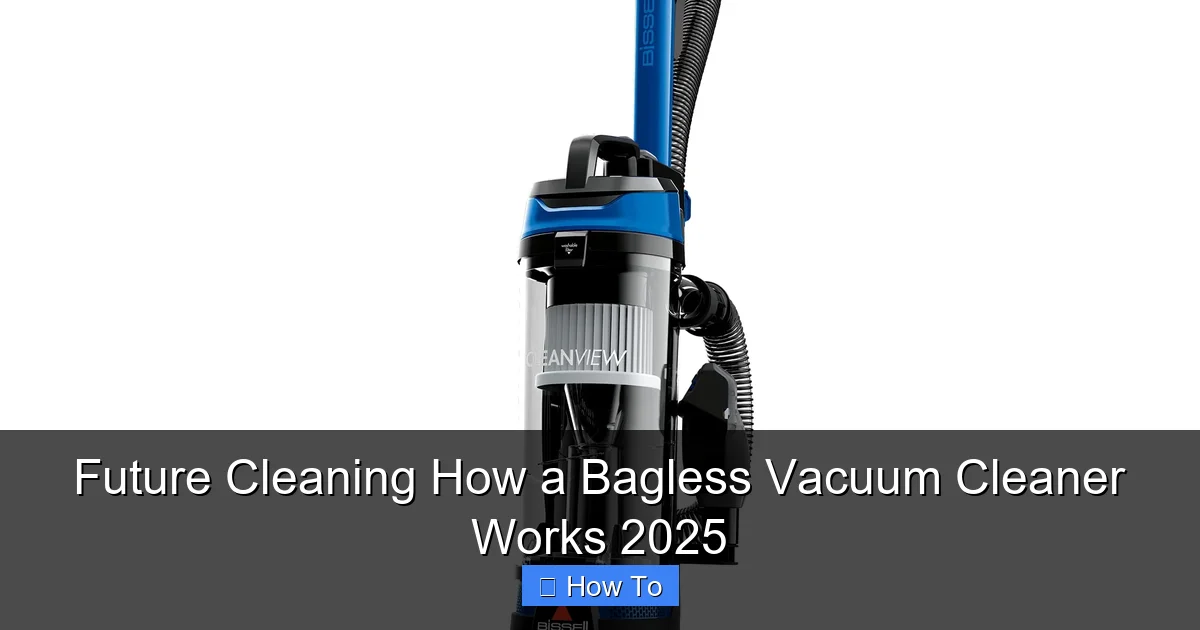
A bagless vacuum cleaner revolutionizes cleaning by using powerful suction and sophisticated cyclonic separation to remove dirt from the air without the need for disposable bags. It employs centrifugal force to spin dust and debris into a collection bin, followed by multi-stage filtration for hygienic air exhaust. This innovative design ensures consistent suction and offers an eco-friendly, cost-effective cleaning solution for your home.
Future Cleaning: How a Bagless Vacuum Cleaner Works 2025
Welcome to the future of home cleaning! In 2025, the bagless vacuum cleaner isn’t just a convenient appliance; it’s a testament to ingenious engineering, combining powerful suction with advanced air purification. If you’ve ever wondered how these modern marvels manage to suck up dirt without needing a messy bag, you’re in the right place. This comprehensive guide will demystify the technology inside your bagless vacuum, breaking down each step of its dirt-devouring process.
You’ll learn about the fundamental principles of airflow and suction, explore the magic of cyclonic separation, understand the critical role of multi-stage filtration, and discover how clean air is ultimately returned to your home. We’ll also provide practical tips for maintenance and troubleshooting to ensure your bagless vacuum cleaner continues to perform at its best. Get ready to understand your cleaning companion like never before!
Key Takeaways
- Bagless vacuums utilize cyclonic technology: They create powerful mini-tornadoes of air to separate dirt and dust particles from the main airflow, channeling them into a collection bin.
- No bags mean consistent suction and cost savings: Eliminating disposable bags means your bagless vacuum cleaner maintains stronger suction longer and saves you money on ongoing bag purchases, reducing waste.
- Multi-stage filtration is paramount for clean air: Pre-motor and post-motor filters, including advanced HEPA options, capture microscopic particles and allergens, ensuring the air exhausted back into your home is clean.
- Centrifugal force is the core separation mechanism: The rapid spinning of air inside the cyclone chamber pushes heavier dirt particles to the outer walls, allowing cleaner air to move towards the filters.
- Regular maintenance ensures peak performance: Emptying the dust cup frequently and cleaning or replacing filters as recommended are crucial steps to maintain the efficiency and longevity of your bagless vacuum cleaner.
- Environmental benefits are a key advantage: By eliminating the need for disposable bags, bagless vacuum cleaners contribute to less landfill waste, aligning with modern sustainability goals in 2025.
Quick Answers to Common Questions
Why is my bagless vacuum losing suction?
Check your dust cup—it might be full! Also, inspect and clean your filters. A clogged filter is the most common culprit for reduced suction in a bagless vacuum cleaner.
How often should I empty the dust cup?
Ideally, after every significant use. A full dust cup compromises performance and can strain the motor. Some models have ‘max fill’ lines to guide you, but earlier is always better for your bagless vacuum cleaner.
Can I wash my vacuum filters?
Many bagless vacuum cleaner filters are washable, but always check your model’s manual first. Ensure they are completely dry before reinserting to prevent mold and damage to your bagless vacuum cleaner.
What’s the benefit of HEPA filters in a bagless vacuum?
HEPA filters capture tiny allergens and pollutants, making your home’s air cleaner. This is especially beneficial for allergy sufferers or homes with pets, providing a higher standard of air purity from your bagless vacuum cleaner.
Is a bagless vacuum better for the environment?
Generally, yes! By eliminating disposable bags, you reduce landfill waste and the continuous consumption of manufacturing resources. It’s a more sustainable choice for home cleaning in 2025.
The Fundamental Principle: Suction and Airflow
At its core, every vacuum cleaner, including a bagless vacuum cleaner, operates on a simple principle: creating a pressure difference. A powerful electric motor, typically housed within the main body of the vacuum, drives a fan or impeller. This rapidly spinning component effectively sucks air in from one side and expels it from the other. This action creates a low-pressure zone inside the vacuum and a higher-pressure zone outside, particularly at the cleaning head.
The surrounding higher-pressure air, carrying dust, dirt, and debris, rushes into the low-pressure zone through the nozzle of your bagless vacuum cleaner. This rapid movement of air is what we perceive as “suction.” The stronger the motor and the more efficiently the airflow is managed, the more powerful the suction will be, allowing the bagless vacuum cleaner to pick up more stubborn dirt and particles from various surfaces.
Step 1: The Initial Air Intake
The journey of dirt begins at the very front of your bagless vacuum cleaner – the nozzle or cleaning head. This is the first point of contact with your floor, carpet, or upholstery.
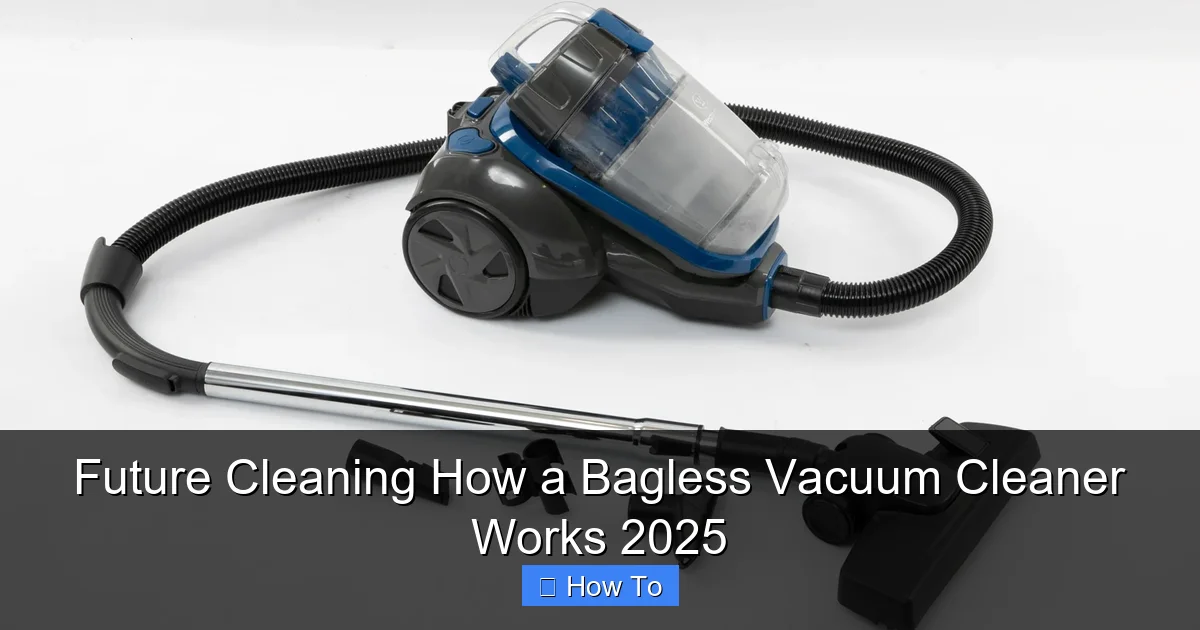
Visual guide about Future Cleaning How a Bagless Vacuum Cleaner Works 2025
Image source: pdbimg.choice.com.au
The Nozzle Design
The design of the nozzle is crucial for effective pickup. It’s engineered to create an optimal seal with the surface, concentrating the suction force. Many bagless vacuum cleaner models in 2025 feature adjustable nozzles, allowing you to optimize performance for different floor types, from hard floors to thick carpets. Some nozzles incorporate small channels or vents designed to funnel debris directly into the airstream.
The Role of the Brush Roll (if applicable)
For most upright and some canister bagless vacuum cleaner models, the cleaning head contains a rotating brush roll, also known as a beater bar. This brush roll is typically belt-driven by the vacuum’s motor. As it spins at high speeds, bristles or rubber fins agitate carpet fibers, loosening embedded dirt, pet hair, and dust. This dislodged debris is then easily lifted by the powerful suction generated by the bagless vacuum cleaner and drawn into the main body of the machine.
Step 2: Journey to the Dust Cup (Pre-Separation)
Once the dirt-laden air enters the bagless vacuum cleaner through the nozzle, it doesn’t immediately hit the filters. Instead, it embarks on a carefully orchestrated journey towards the dust collection cup. This stage often involves an initial separation of larger debris.
The Wider Path and Reduced Speed
The intake path often widens slightly after the nozzle. This widening causes the air velocity to decrease, allowing heavier particles like crumbs, small stones, or pet kibble to lose some of their momentum. Gravity starts to play a role here, causing some of these larger, heavier pieces to fall directly into the bottom of the dust cup before the air even reaches the main cyclonic stage.
Initial Centrifugal Force (if applicable)
In some bagless vacuum cleaner designs, especially those with larger dust cups, the air might undergo a preliminary swirl or rotation as it enters the main chamber. This initial, gentler centrifugal force helps to cast out some of the biggest, heaviest particles towards the outer walls of the dust cup, where they drop down into the collection area. This pre-separation step is vital because it protects the more delicate filters and the primary cyclonic system from being overwhelmed by large debris, ensuring your bagless vacuum cleaner maintains optimal performance.
Step 3: The Cyclone Technology Core
This is where the “bagless” magic truly happens, distinguishing a bagless vacuum cleaner from its bagged counterparts. Instead of relying on a porous bag to trap dirt, bagless vacuums employ ingenious cyclonic separation.
The Inner Workings of a Single Cyclone
After the initial intake, the dirt-laden air is channeled into a cylindrical or conical chamber, often referred to as the cyclone chamber. Crucially, the air enters this chamber tangentially, meaning it’s directed along the wall rather than straight in. This forced entry immediately causes the air to spiral rapidly, creating a powerful vortex – essentially a controlled mini-tornado within your bagless vacuum cleaner.
As the air spins at incredibly high speeds, it generates significant centrifugal force. Think of it like a spin cycle in a washing machine, but for air and dirt. The heavier, denser dirt and dust particles, being more resistant to changes in direction, are flung outwards against the walls of the cyclone chamber. As they collide with the walls, they lose momentum and fall due to gravity to the bottom of the dust cup. Meanwhile, the cleaner, lighter air continues to spiral inwards towards the center of the vortex and exits the top of the cyclone chamber.
Multi-Cyclonic Systems Explained
While a single large cyclone can be effective, many modern bagless vacuum cleaner models, especially by 2025, utilize multi-cyclonic technology. Instead of one large cyclone, these systems feature an array of smaller, parallel cyclones working simultaneously. Why smaller? Smaller cyclones generate even greater centrifugal force. This increased force allows them to separate finer, more microscopic dust particles and allergens from the airflow with much greater efficiency.
Each mini-cyclone works on the same principle: air enters tangentially, spins rapidly, and dirt is flung outwards into a shared collection bin, while cleaner air exits through the top. The cumulative effect of these multiple, high-efficiency cyclones is a superior separation of dust and debris, minimizing the amount of particulate matter that reaches the filters. This not only enhances the overall cleaning performance of the bagless vacuum cleaner but also helps to maintain stronger, more consistent suction by preventing premature filter clogging.
Step 4: Filtration – The Final Safeguard
Even after the highly efficient cyclonic separation, some extremely fine dust particles and microscopic allergens might still be suspended in the airflow. This is where the bagless vacuum cleaner’s multi-stage filtration system steps in as the final line of defense.
Pre-Motor Filters
The first set of filters encountered by the air after leaving the cyclone chamber are typically the pre-motor filters. These filters are positioned before the vacuum cleaner’s motor. Their primary purpose is to protect the motor from fine dust and debris that could potentially damage its internal components. By capturing these particles, they extend the life of the motor and ensure the bagless vacuum cleaner operates reliably. Pre-motor filters are often made of foam or pleated fabric and are frequently washable, designed for easy maintenance.
Post-Motor (HEPA) Filters
The cleanest air, having passed through the cyclonic system and the pre-motor filters, then goes through the post-motor filters. These are located after the motor, just before the air is exhausted back into your room. This stage is particularly crucial for air quality. Many advanced bagless vacuum cleaner models in 2025 feature High-Efficiency Particulate Air (HEPA) filters at this stage.
HEPA filters are incredibly effective at trapping extremely small particles, down to 0.3 microns with 99.97% efficiency. This includes pollen, pet dander, dust mite allergens, and even some bacteria and viruses. For allergy sufferers or those concerned about indoor air quality, a bagless vacuum cleaner with a sealed HEPA filtration system is a significant advantage, ensuring that the air exhausted is cleaner than the ambient air in the room.
Step 5: Clean Air Exhaust
Once the air has been rigorously cleaned by the cyclonic system and passed through both the pre-motor and post-motor filters, it is finally ready to be returned to your environment. The now purified air is expelled from the bagless vacuum cleaner through designated vents, typically located at the back or sides of the machine.
The objective here is simple yet critical: to ensure that only clean, pollutant-free air is released. Thanks to the advanced filtration, especially with HEPA filters, the bagless vacuum cleaner actively contributes to a healthier home environment. This process is a major benefit for indoor air quality, reducing allergens and airborne irritants, which is a growing concern for homeowners in 2025.
Step 6: Dirt Collection and Disposal
Throughout this entire process, all the separated dirt, dust, and debris accumulate in a dedicated, transparent dust cup or bin. This is the heart of the “bagless” design.
How the Dust Cup Works
The dust cup is strategically positioned beneath or around the cyclonic assembly. As particles are flung out by centrifugal force and lose momentum, they fall directly into this container. The transparent design of most dust cups is a practical advantage, allowing you to easily see when it needs emptying. There’s no guesswork, unlike with opaque bags.
Emptying and Maintenance
Emptying the dust cup of your bagless vacuum cleaner is designed to be a quick and relatively mess-free operation. Most models feature a simple release mechanism, often a button or lever, that detaches the dust cup from the main unit. The cup then typically has a bottom-release flap, allowing you to empty its contents directly into a trash can with minimal contact. It’s recommended to do this over an outdoor trash bin to prevent re-releasing fine dust into your immediate environment.
Regular emptying is key to maintaining consistent suction and preventing the accumulation of odors. Many dust cups are also washable, which allows for thorough cleaning to keep your bagless vacuum cleaner fresh and hygienic.
Benefits of Bagless Vacuums in 2025
By 2025, the advantages of owning a bagless vacuum cleaner are clear and compelling:
- Cost Savings: No more purchasing expensive, proprietary vacuum bags. This adds up to significant savings over the lifespan of the appliance.
- Environmental Friendliness: Reducing the constant disposal of bags lessens landfill waste, aligning with increasing global efforts for sustainability.
- Consistent Suction: The cyclonic technology ensures that airflow remains relatively unobstructed, even as the dust cup fills, maintaining strong suction throughout your cleaning task.
- Transparency: You can see exactly how much dirt your bagless vacuum cleaner is collecting, which is satisfying and helps you know when it’s time to empty. You can also easily spot if you’ve accidentally vacuumed up something valuable.
- Improved Air Quality: With advanced multi-stage and HEPA filtration, bagless vacuums help trap allergens and fine particulates, leading to cleaner air in your home.
Maintaining Your Bagless Vacuum for Optimal Performance (2025 Context)
To ensure your bagless vacuum cleaner continues to deliver powerful, efficient cleaning for years to come, regular maintenance is essential. Here’s what you need to do:
Emptying the Dust Cup Regularly
Make it a habit to empty the dust cup after every significant use. Don’t wait for it to be completely full. Overfilling can reduce suction and put unnecessary strain on the motor. Many units have a “max fill” line – aim to empty it before reaching this point. For best results, empty it outdoors to prevent dust re-entering your home.
Cleaning and Replacing Filters
This is arguably the most critical maintenance task for a bagless vacuum cleaner. Refer to your owner’s manual for specific instructions, but generally:
- Pre-Motor Filters: These are often washable. Rinse them under cold water until the water runs clear. Allow them to air dry completely (typically for 24-48 hours) before reinserting. Never put a damp filter back into your vacuum. Clean these monthly or more often with heavy use.
- Post-Motor (HEPA) Filters: Some HEPA filters are washable, while others are not. Always check your manual. Non-washable HEPA filters need to be replaced every 6-12 months, depending on usage. Washable HEPA filters should be cleaned according to manufacturer instructions. These filters are essential for air quality, so don’t neglect them!
Checking the Brush Roll
Periodically inspect the brush roll for tangled hair, strings, or debris. Use scissors or a seam ripper to carefully cut and remove any wrapped material. A clogged brush roll can reduce cleaning effectiveness and strain the motor. Ensure the brush roll spins freely.
Inspecting for Blockages
If you notice a sudden drop in suction, check for blockages in the nozzle, hose, or tubes. Disconnect attachments and visually inspect the pathways. A coat hanger or a long, blunt object can sometimes help dislodge stubborn clogs. Always ensure the vacuum is unplugged before performing any inspections or maintenance.
Troubleshooting Common Bagless Vacuum Issues
Even the best bagless vacuum cleaner can encounter minor issues. Here are quick solutions for common problems:
- Reduced Suction:
- Is the dust cup full? Empty it.
- Are the filters dirty? Clean or replace them.
- Is there a blockage in the hose or nozzle? Clear it out.
- Is the brush roll tangled? Clean it.
- Strange Noises (whining, rattling):
- A whining noise often indicates a clogged filter or a full dust cup, straining the motor.
- Rattling could mean something is caught in the brush roll or fan, or a foreign object has been sucked into the hose.
- Unpleasant Odors:
- Empty and wash the dust cup thoroughly.
- Clean or replace all filters.
- Check for anything stuck and rotting inside the brush roll or hose.
Conclusion
Understanding how your bagless vacuum cleaner works empowers you to appreciate its sophisticated design and maintain it effectively. From the initial powerful suction at the nozzle to the intricate dance of cyclonic separation and the diligent work of multi-stage filtration, every component plays a vital role in delivering a truly clean home environment.
In 2025, these innovative machines not only offer unparalleled convenience by eliminating the need for bags but also contribute to a healthier indoor atmosphere through superior air purification. By following the simple maintenance steps outlined above, you can ensure your bagless vacuum cleaner remains a powerful, efficient, and eco-friendly ally in your quest for a cleaner home for years to come. Embrace the future of cleaning with confidence and a deeper understanding of the technology that makes it all possible!
🎥 Related Video: The BEST Vacuum!?
📺 RYOBI TOOLS USA