
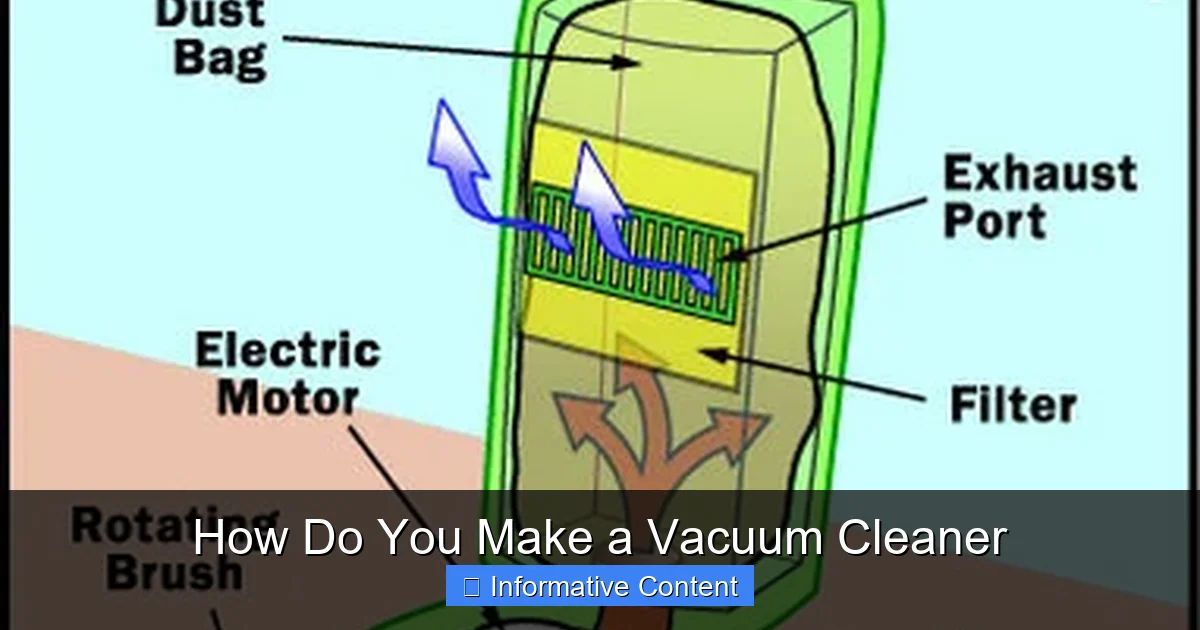
Making a vacuum cleaner involves a clever dance of engineering and manufacturing. At its heart, a powerful motor spins a fan, creating a pressure difference that sucks in air and debris. The process then layers in filtration, sturdy housing, and user-friendly design, transforming raw materials into an efficient cleaning machine ready for your home.
Have you ever stopped to think about the everyday marvel that is your vacuum cleaner? It’s a device we rely on to keep our homes spick and span, effortlessly banishing dust bunnies and crumbs into oblivion. But have you ever truly wondered about the magic behind its operation? How does it manage to suck up all that dirt? More specifically, have you ever asked yourself, “how do you make a vacuum cleaner?”
It’s a question that delves into the fascinating world of engineering, design, and manufacturing. From a simple idea to a complex machine humming away in your living room, the journey of a vacuum cleaner is intricate and surprisingly clever. It’s not just about turning on a switch; it’s about harnessing physics to create a powerful, efficient cleaning tool. Let’s peel back the layers and explore the detailed process of how these essential household appliances come to life.
The Core Principle: Suction and Airflow
At the heart of every vacuum cleaner lies a fundamental principle of physics: creating a pressure differential. Think of it like this: air naturally moves from an area of higher pressure to an area of lower pressure. A vacuum cleaner essentially creates a mini low-pressure zone, and the surrounding higher-pressure air, carrying all the dust and debris, rushes in to fill the void. This is the simple yet powerful answer to how do you make a vacuum cleaner effectively clean.
The Motor and Fan: Heart of Suction
The star players in this pressure-creating act are the electric motor and the fan (often called an impeller). When you switch on your vacuum, the motor springs to life, spinning the fan at incredibly high speeds. This fan isn’t just a simple propeller; its blades are designed to push air, but in a very specific way.
Creating a Pressure Differential
As the fan spins, it rapidly displaces the air within the vacuum cleaner’s housing, forcing it out through an exhaust port. This expulsion of air creates a partial vacuum, or an area of significantly lower air pressure, inside the cleaner’s body and, crucially, at the suction nozzle. The atmospheric air pressure outside the vacuum, which is relatively higher, then pushes against the lower pressure inside the vacuum, effectively “sucking” the air—and anything light enough carried within it, like dust, dirt, and pet hair—into the machine. This continuous cycle of air displacement and ingress is the very essence of how do you make a vacuum cleaner work.
Airflow Pathway
Once inside, the dirty air travels through a carefully designed pathway. It moves past the suction inlet, through various chambers, and eventually through a filtration system. This pathway is meticulously engineered to maintain airflow efficiency and prevent blockages, ensuring that debris reaches its designated collection point, be it a dust bag or a canister.
Essential Components of Every Vacuum Cleaner
While the core principle remains the same, a vacuum cleaner is a symphony of various components working in harmony. Understanding these parts is key to grasping how do you make a vacuum cleaner a functional and durable product.
The Motor
This is the powerhouse. Vacuum cleaner motors are typically universal motors, capable of running on both AC and DC current, making them suitable for household power outlets. They are designed for high speed and torque to drive the fan effectively. The motor’s size and wattage directly impact the suction power of the machine.
The Fan (Impeller)
Attached to the motor’s shaft, the fan is what actually moves the air. It consists of multiple blades, often made of durable plastic or lightweight metal. The design of these blades – their angle, curvature, and number – is critical for optimizing airflow and maximizing suction efficiency. Engineers spend considerable time refining fan designs to achieve the best balance of power and noise reduction when you consider how do you make a vacuum cleaner.
Filtration System
Once the dirty air is sucked in, it can’t just be expelled back into the room. This is where the filtration system comes in. It’s one of the most vital components for maintaining air quality.
- Dust Bags: Traditional vacuum cleaners use disposable bags that capture dirt and fine dust. These bags are often multi-layered to trap even microscopic particles.
- Canisters (Bagless): Many modern vacuums use a cyclonic separation system within a transparent canister. Air spins rapidly, forcing heavier dirt particles to the outside wall of the canister, where they drop into the collection bin, while cleaner air moves to further filters.
- Filters: Regardless of whether it’s bagged or bagless, all vacuum cleaners have additional filters, such as foam filters, cloth filters, or highly efficient particulate air (HEPA) filters. HEPA filters are particularly important for trapping allergens and very fine particles, making them crucial for homes with allergy sufferers.
Housing and Attachments
The outer shell of the vacuum cleaner, or its housing, protects all the internal components. It’s typically made from durable, lightweight plastics (like ABS or polypropylene) that can withstand bumps and knocks. The housing also incorporates ergonomic features like handles, wheels, and controls. A variety of attachments – brush tools, crevice tools, upholstery nozzles – are designed to tackle different surfaces and hard-to-reach areas, greatly enhancing the versatility of how do you make a vacuum cleaner truly useful.
Power Supply and Controls
This includes the power cord (or battery for cordless models), the on/off switch, and any other controls like suction power adjusters or brush roll selectors. For cordless models, rechargeable battery packs (often lithium-ion) and charging circuitry are integrated.
The Design and Engineering Process
Before a single part is manufactured, a vacuum cleaner goes through an intensive design and engineering phase. This is where ideas become blueprints, and potential problems are solved on paper, long before they become costly manufacturing issues. This stage is paramount for answering how do you make a vacuum cleaner that stands out in the market.
Ideation and Market Research
It all starts with an idea, often driven by market research. What do consumers need? Are there existing pain points? Perhaps a need for lighter vacuums, better pet hair removal, or improved filtration. Designers brainstorm concepts, sketching out initial forms and functionalities. This includes considering different types, like an upright, canister, or robotic vacuum, each with unique design challenges.
Prototyping and Testing
Once a concept takes shape, engineers create 3D CAD (Computer-Aided Design) models. These digital models allow for virtual testing and refinement. Then, physical prototypes are made, often using 3D printing or rapid machining. These prototypes are rigorously tested for suction power, noise levels, durability, ease of use, and safety. Every component, from the motor’s housing to the filter’s seal, is scrutinized. This iterative process of building, testing, and refining is essential to how do you make a vacuum cleaner reliable and efficient.
Material Selection
Choosing the right materials is critical. Plastics like ABS (Acrylonitrile Butadiene Styrene) are popular for housings due to their impact resistance and moldability. Metals like steel or aluminum might be used for shafts, internal structures, or brush rolls. Sustainability is also a growing concern, with manufacturers increasingly exploring recycled plastics and more eco-friendly alternatives.
Ergonomics and User Experience
A vacuum cleaner must be comfortable to use. Designers focus on handle grip, weight distribution, wheel maneuverability, and the intuitive placement of controls. Ease of maintenance, such as emptying a dust bin or changing filters, is also a key consideration. A well-designed vacuum isn’t just powerful; it’s also a pleasure to operate.
Manufacturing: Bringing a Vacuum Cleaner to Life
With designs finalized and prototypes approved, the journey moves to the factory floor. This is where the blueprint transforms into a tangible product, showcasing the large-scale effort of how do you make a vacuum cleaner.
Component Sourcing and Production
Many specialized components are sourced from expert manufacturers. Motors, for instance, are often produced by companies specializing in small electric motors. Plastic housing parts are made using injection molding, a process where molten plastic is injected into molds to create complex shapes. Metal parts are stamped, machined, or cast. Each component must meet strict specifications for dimension, material quality, and performance.
Assembly Line Operations
The assembly process typically happens on a moving conveyor belt or assembly line. Workers or robotic arms sequentially add components:
- The motor and fan assembly are mounted into the lower housing.
- Wiring for power and controls is connected.
- Filters and dust collection systems are installed.
- The upper housing and external covers are attached.
- Wheels, handles, and any accessories are fitted.
This highly organized process ensures efficiency and consistency in how do you make a vacuum cleaner.
Quality Control and Testing
Throughout and at the end of the assembly line, rigorous quality control checks are performed. This includes:
- Visual Inspections: Checking for cosmetic defects, proper alignment, and missing parts.
- Functional Tests: Each unit is powered on to ensure the motor runs, suction is adequate, and all controls work correctly.
- Safety Checks: Electrical safety tests, such as insulation resistance and ground continuity, are crucial.
- Performance Tests: Random samples might undergo more extensive tests, including prolonged running to check durability, or specific dirt pickup tests to ensure performance standards are met.
These checks are vital to ensure every unit leaving the factory meets the brand’s quality promise when answering how do you make a vacuum cleaner.
Packaging and Distribution
Finally, the finished vacuum cleaners are carefully packaged, often with protective foam or cardboard inserts to prevent damage during transit. Instruction manuals and warranty information are included. Packaged units are then shipped to warehouses, retailers, and ultimately, to consumers around the globe.
Different Types of Vacuum Cleaners and Their Unique Manufacturing Aspects
The general principles of how do you make a vacuum cleaner apply across the board, but specific designs bring their own manufacturing nuances.
Upright Vacuum Cleaners
These are common for carpets. Their manufacturing focuses on integrating the motor, fan, and brush roll into a single, vertical unit. Weight distribution is key for maneuverability, and ensuring robust brush roll mechanisms that can handle various carpet types is important.
Canister Vacuum Cleaners
Canister vacuums separate the motor and dust collection into a wheeled canister, connected to a cleaning head by a flexible hose. Manufacturing here emphasizes flexible yet durable hoses, secure connections, and often more powerful motors due to less restricted airflow.
Robot Vacuum Cleaners
These represent a significant leap in complexity. Manufacturing robot vacuums involves integrating a multitude of sensors (infrared, ultrasonic, optical, cliff sensors), complex navigation algorithms, smaller yet powerful motors, and sophisticated battery management systems. The compact design and autonomous features require precise micro-component assembly.
Handheld and Stick Vacuums
Designed for quick clean-ups and portability, these vacuums prioritize lightweight construction, powerful yet compact motors, and efficient battery technology. Manufacturing focuses on miniaturization of components and ergonomic design for single-hand use.
Innovations and Future Trends in Vacuum Cleaner Manufacturing
The world of vacuum cleaners is far from stagnant. Innovations continually push the boundaries of how do you make a vacuum cleaner better, smarter, and more sustainable.
Smart Features and Connectivity
For robot vacuums especially, Wi-Fi connectivity, app control, voice assistant integration, and smart mapping technologies are becoming standard. This requires integrating complex electronics, software development, and cybersecurity considerations into the manufacturing process.
Eco-Friendly Materials and Sustainability
Manufacturers are increasingly exploring the use of recycled plastics, bio-based materials, and components designed for easier recycling at the end of the product’s life. Energy efficiency of motors and better battery longevity are also key focuses for environmental impact reduction.
Advanced Filtration
Ongoing research aims to improve filter efficiency even further, potentially trapping smaller particles and neutralizing odors more effectively. Self-cleaning filters or those with longer lifespans are also areas of innovation.
Conclusion
So, how do you make a vacuum cleaner? It’s a journey that starts with a deep understanding of physics, particularly airflow and pressure. It then moves through meticulous design and engineering, where every component is chosen and placed with purpose. Finally, it culminates in a sophisticated manufacturing process that brings together countless parts into a cohesive, functional, and often indispensable, household appliance.
From the hum of the motor to the satisfying whoosh of suction, your vacuum cleaner is a testament to ingenious human design and manufacturing prowess. The next time you power it up, take a moment to appreciate the complex symphony of technology working silently to keep your home clean – a true marvel of modern engineering!
Key Takeaways
- The Core Principle is Airflow: Vacuum cleaners operate by creating a pressure differential. A motor-driven fan generates a high-speed airflow, reducing pressure inside the cleaner and allowing higher-pressure ambient air (carrying dirt) to rush in.
- Essential Components Work Together: Key parts include the motor (powering the fan), the fan (creating suction), a filtration system (trapping dust), durable housing (containing everything), and various attachments (for specific cleaning tasks).
- Design is Crucial for Performance: Before manufacturing, extensive design and engineering focus on optimizing airflow, selecting robust materials, ensuring effective filtration, and creating an ergonomic, user-friendly product.
- Manufacturing is a Multi-Stage Process: Production involves sourcing specialized components, precise assembly on lines, rigorous quality control checks, and careful packaging before distribution.
- Variety Dictates Specifics: The type of vacuum cleaner (upright, canister, robotic, handheld) significantly influences its design, component integration, and manufacturing process, adapting to different cleaning needs and form factors.
- Innovation Drives Evolution: Modern vacuum cleaner manufacturing constantly integrates new technologies like smart connectivity, advanced sensor arrays for robotics, and sustainable materials to enhance performance and user experience.
Quick Answers to Common Questions
What is the main principle behind a vacuum cleaner’s operation?
The main principle is creating a pressure differential. A motor-driven fan expels air from the vacuum cleaner, lowering the internal air pressure. Higher-pressure ambient air then pushes dirt and dust into the machine.
What are the three core components of any vacuum cleaner?
The three core components are the electric motor, the fan (impeller), and the filtration system.
Are all vacuum cleaner motors the same?
While most household vacuum cleaners use universal motors, their size, wattage, and specific design can vary significantly, impacting suction power and efficiency.
What is the purpose of the filtration system?
The filtration system is designed to trap dirt, dust, and other particles from the air sucked into the vacuum, preventing them from being expelled back into the room.
What is one key difference in manufacturing a robot vacuum cleaner compared to an upright one?
Manufacturing a robot vacuum cleaner involves integrating many complex sensors and sophisticated navigation electronics, which are not present in a typical upright vacuum.
Frequently Asked Questions
How long does it take to design a new vacuum cleaner model?
The design and engineering phase for a new vacuum cleaner model can take anywhere from 12 to 24 months, depending on the complexity of the innovation and the resources dedicated to the project. This includes ideation, prototyping, testing, and refinement.
What materials are commonly used for the housing of vacuum cleaners?
Most vacuum cleaner housings are made from durable and lightweight plastics like ABS (Acrylonitrile Butadiene Styrene) or polypropylene. These materials offer good impact resistance and are easily moldable into complex shapes.
Why is a HEPA filter important in a vacuum cleaner?
A HEPA (High-Efficiency Particulate Air) filter is important because it can capture 99.97% of airborne particles 0.3 micrometers in diameter. This includes allergens like pollen, pet dander, and dust mites, making it crucial for improving indoor air quality, especially for allergy sufferers.
How is suction power measured in vacuum cleaners?
Suction power can be measured in several ways, including Air Watts, Pascals (Pa), or cubic feet per minute (CFM) for airflow. Air Watts combine airflow and static pressure, giving a more comprehensive measure of cleaning power at the nozzle.
Are vacuum cleaners becoming more sustainable to produce?
Yes, there’s a growing trend towards sustainability in vacuum cleaner production. Manufacturers are increasingly using recycled plastics, designing components for easier end-of-life recycling, improving motor energy efficiency, and exploring longer-lasting battery technologies for cordless models.
What role do attachments play in a vacuum cleaner’s functionality?
Attachments significantly enhance a vacuum cleaner’s versatility. Tools like crevice nozzles, brush attachments, and upholstery tools allow the vacuum to effectively clean different surfaces, reach tight spaces, and tackle specific types of debris that the main cleaning head cannot.